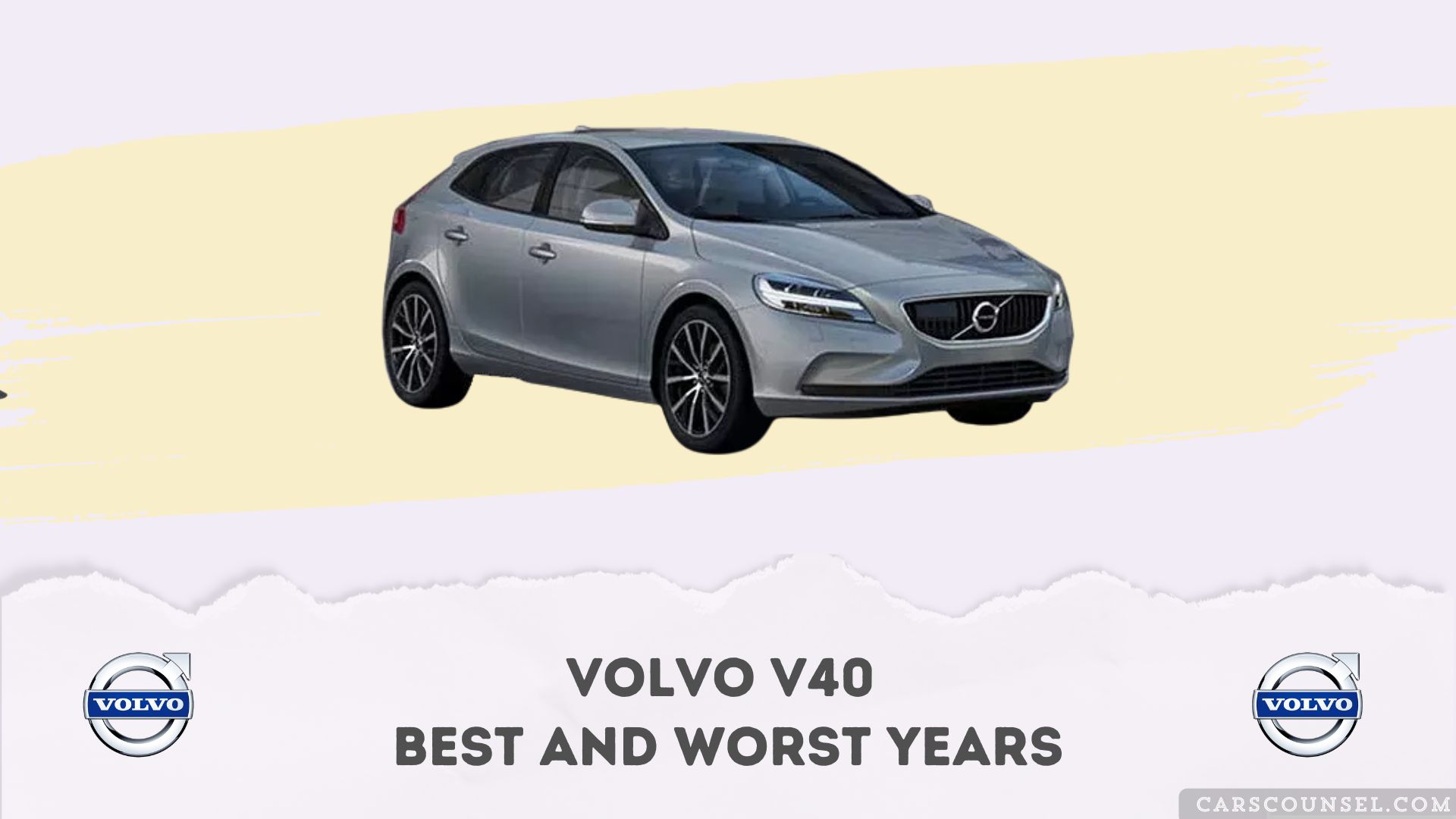
The best Volvo V40 model years for US buyers are 2000 through 2004, featuring improved build quality and robust turbocharged engines. Buyers should approach early 1995-1999 models carefully due to electrical gremlins.
Rankings are comparative, as no aging compact wagon is entirely flawless. Proper maintenance history and a thorough pre-purchase inspection remain essential for any used vehicle.
Significant differences exist between markets. The modern 2012-2019 V40 was never officially sold in the United States, leaving American buyers to focus on the 1995-2004 first generation.
Quick Navigation
Best and Worst Volvo V40 Years at a Glance
| Model Year | Verdict | Main Reason | Buyer Guidance |
|---|---|---|---|
| 1995-1999 | Approach Carefully | Early electrical and build issues | Verify wiring and rust |
| 2000-2004 | Best Older Choice | Facelift improvements, robust 2.0T | Top pick for US buyers |
| 2012-2019 | Explicit US Exclusion | Never officially sold in the US | Euro-market only |
Key Takeaways
- The 2000 through 2004 model years offer the most reliable experience for US buyers.
- Approach the 1995 through 1999 models with caution due to early first-generation electrical faults.
- The modern 2012-2019 V40 was never officially sold in the United States and is a Euro-market exclusive.
- US-market models rely on robust Mitsubishi-derived platforms and Volvo’s early turbocharged engines.
- Always verify the vehicle history for rust and arrange an independent inspection.
How We Evaluated the Volvo V40 Model Years
Our analysis considers official recalls, manufacturer service campaigns, and consumer complaint patterns across the Volvo lineup. We evaluate powertrain differences, generation changes, and repair complexity.
Complaints are not confirmed failure rates, and a recall does not automatically ruin a vehicle’s reputation. Older models require careful inspection, meaning our top picks represent comparatively stronger options rather than flawless guarantees.
Best Volvo V40 Years
2000-2004 (Best Older Choice)
These years benefit from the mid-cycle refresh, which resolved many early build-quality issues. The 2.0-liter turbocharged engine is robust, provided the timing belt and oil changes were strictly maintained.
Best Year by Buyer Type
Best Older Choice
The 2004 V40 represents the final and most refined year of the first generation, offering a unique blend of Swedish safety and compact wagon utility for US buyers.
Best Modern Alternative
US buyers needing a modern compact Volvo wagon should look at the V60 or the XC40 crossover, as the modern V40 was not imported to the United States.
Years to Approach Carefully
1995-1999 (Approach Carefully)
The earliest US-market V40 models suffer from aging wiring harnesses, brittle plastics, and minor electrical gremlins. Rust is also a significant concern on these older chassis.
Worst Volvo V40 Years
There are no US-market Volvo V40 model years that warrant a strict Avoid verdict. The 1995-1999 models are the least favorable due to age-related electrical vulnerabilities, but they remain viable if properly maintained.
Volvo V40 Reliability by Generation
First Generation (1995-2004)
Built on a platform shared with Mitsubishi, this generation was the only V40 officially sold in the United States. It introduced compact Swedish wagons to the US market before being replaced by the C30.
Second Generation (2012-2019)
Built on the Ford Global C-car platform, this generation was strictly a European and global market vehicle. It was never officially imported to the United States, meaning US buyers must look to the V60.
Common Volvo V40 Problems
Electrical Problems
The 1995-1999 models are prone to aging wiring harnesses and failing control modules. Verify that all power windows, locks, and dashboard displays function correctly during your test drive.
Corrosion Problems
Rust is a major concern for the 1995-2004 models, particularly on the rear wheel arches, sills, and tailgate. Inspect the undercarriage thoroughly if the car was driven in snowy climates.
Timing Belt Service
The 2.0-liter turbocharged engines require strict timing belt replacements every 60,000 to 90,000 miles. Failure to replace this component can result in catastrophic engine damage and expensive repairs.
What to Check Before Buying a Used Volvo V40
- Verify the vehicle history for any outstanding historical recalls or major accidents.
- Inspect the rear wheel arches and tailgate for severe rust or bubbling paint.
- Confirm the timing belt and water pump were replaced within the last 60,000 miles.
- Test all power windows, locks, and dashboard pixels for electrical faults.
- Arrange an independent pre-purchase inspection with a European specialist.
Related Buying Guides
- Volvo V50: The compact wagon successor that replaced the V40’s spirit in the US market, offering a newer platform and modernized safety features.
- Volvo V60: The modern mid-size wagon alternative for US buyers who want current technology, advanced safety, and official dealer support.
- Volvo S80: The flagship sedan alternative for buyers who prioritize interior space and luxury over compact wagon cargo utility.
Frequently Asked Questions
Which Volvo V40 year is the most reliable?
The 2000 through 2004 model years are the most reliable for US buyers. They benefit from the mid-cycle facelift, resolving early electrical issues and offering a robust turbocharged engine.
Was the Volvo V40 sold in the United States?
The first-generation V40 was sold in the US from 1995 to 2004. However, the modern second-generation V40 (2012-2019) was never officially sold in the United States.
Does the Volvo V40 have engine problems?
The US-market 2.0-liter turbocharged engines are generally robust but require strict timing belt and oil change intervals. Neglecting the timing belt can lead to severe engine failure.
Why do some V40 models have electrical issues?
The earliest 1995-1999 models suffer from aging wiring harnesses and brittle connectors. These age-related electrical gremlins can cause power window and dashboard display failures.
Are newer Volvo V40 models reliable?
The 2012-2019 models feature modernized powertrains and improved build quality. However, because they were never sold in the US, they are excluded from the US market and lack domestic parts support.
What should I check on a used V40?
Buyers must inspect the rear wheel arches for rust, verify the timing belt service history, and test all electrical components. An independent pre-purchase inspection is mandatory.
Choosing the Right Volvo V40 Model Year
Target the 2000 through 2004 model years for a refined, reliable compact wagon experience with sorted powertrains and improved build quality.
Approach the 1995 through 1999 models with caution due to early electrical defects. Always test the electronics, check for rust, and secure an independent inspection before purchasing.

