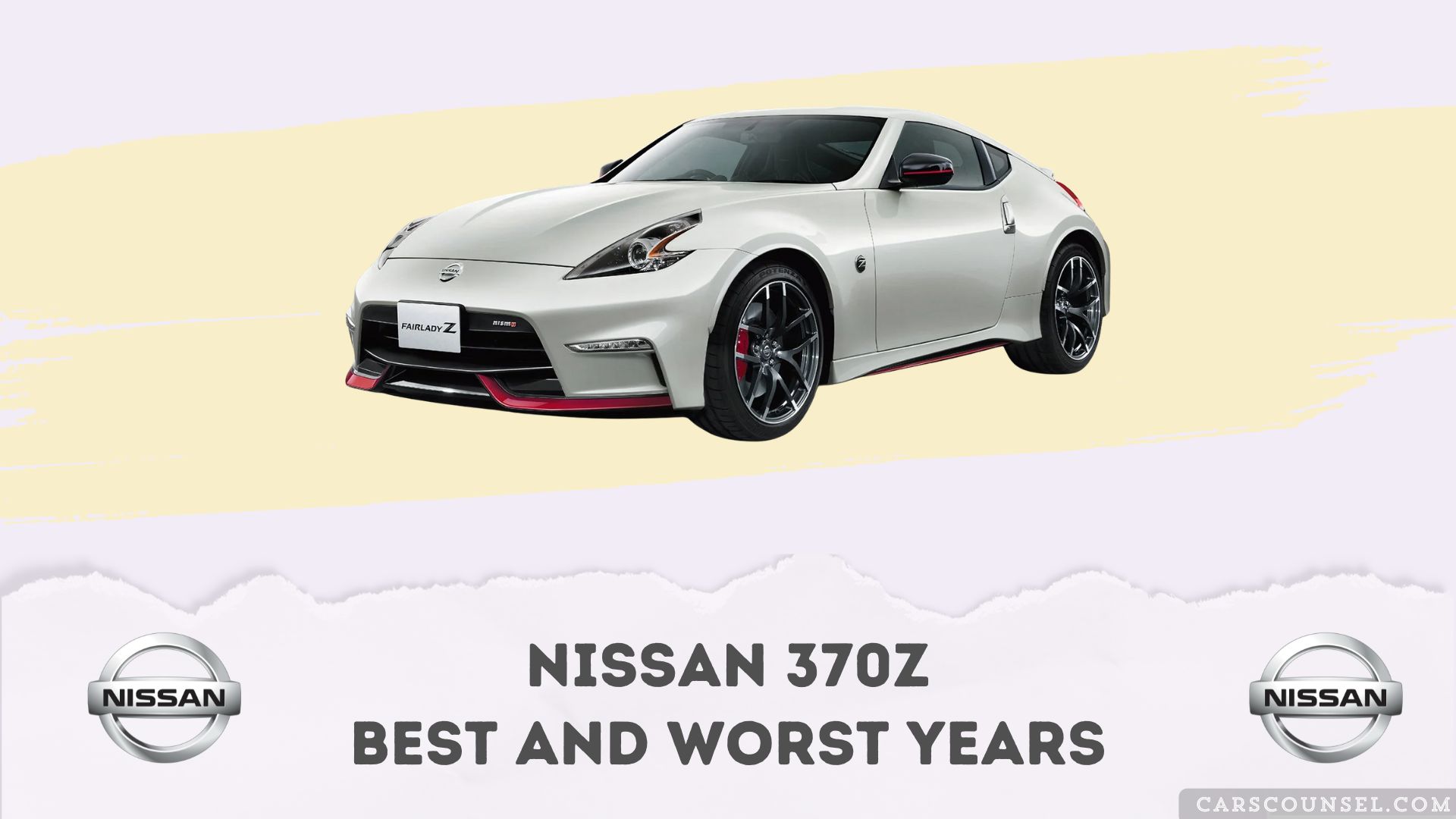
The best Nissan 370Z model years are 2017 through 2020, offering refined production and resolved early defects. Buyers should avoid the 2009 and 2010 model years due to prevalent steering lock module failures that prevent the engine from starting.
These rankings are comparative. No used sports car is flawless, and long-term reliability heavily depends on strict maintenance, driving habits, and whether previous owners addressed known manual transmission weaknesses.
Configuration matters significantly. Manual transmission models require careful inspection for clutch slave cylinder and synchro wear, while automatic models avoid these specific issues but offer a different driving experience.
Quick Navigation
Best and Worst Nissan 370Z Years at a Glance
| Model Year | Verdict | Main Reason | Buyer Guidance |
|---|---|---|---|
| 2017–2020 | Best Choice | Most refined production, fewest complaints | Inspect maintenance records and clutch |
| 2013–2016 | Good Choice | Mid-cycle refresh, reliable VQ37VHR engine | Verify oil consumption and gallery gaskets |
| 2011–2012 | Approach Carefully | Some lingering early production quirks | Check for steering lock and window recalls |
| 2009–2010 | Avoid | Steering lock module failures, first-year bugs | Look for 2013 or newer alternatives |
Key Takeaways
- Target 2017–2020 models for the most dependable ownership experience.
- Avoid 2009–2010 models due to steering lock immobilizer defects.
- Manual transmissions are prone to concentric slave cylinder failure.
- The VQ37VHR engine requires strict oil monitoring to prevent consumption issues.
- Always verify open recalls and service history before purchasing.
How We Evaluated the Nissan 370Z Model Years
Our analysis considers official recalls, manufacturer service campaigns, and long-term ownership data. We evaluate powertrain differences, generation changes, and repair complexity.
Consumer complaints are not confirmed failure rates, and a recall does not automatically make a vehicle unreliable. Recent years have less ownership history, and “best” means comparatively stronger, not flawless.
Best Nissan 370Z Years
2017–2020 Nissan 370Z
The final production years represent the most mature version of the Z34 platform. Nissan introduced a styling refresh in 2017, improving aerodynamics and exhaust notes.
These late-model years benefit from over a decade of manufacturing refinements. They exhibit the lowest complaint volumes and offer the most reliable ownership experience for used buyers.
2013–2016 Nissan 370Z
Nissan implemented a mid-cycle refresh for 2013, updating the bumpers, interior materials, and suspension tuning. These changes improved daily drivability without altering the proven powertrain.
These years avoid the severe first-year defects while maintaining strong mechanical reliability. Buyers should still verify maintenance records, particularly regarding oil changes and differential fluid.
Best Nissan 370Z Year by Buyer Type
Best Overall Choice: 2018 Nissan 370Z
The 2018 model balances modern refinements with strong reliability. It avoids the price premium of the final 2020 edition while offering a highly dependable sports car experience.
Best Enthusiast Choice: 2014 Nissan 370Z Nismo
The 2014 Nismo variant offers factory performance upgrades and unique styling. By this year, early production bugs were resolved, making it a solid choice for track-focused drivers.
Years to Approach Carefully
2011–2012 Nissan 370Z
These transitional years improved upon the 2009 launch but still carry some early production quirks. Certain 2012 models were subject to power window switch controller recalls.
While generally reliable, these years require careful inspection. Buyers must verify that all technical service bulletins and recall work were completed by a Nissan dealer.
Worst Nissan 370Z Years
2009–2010 Nissan 370Z
The inaugural model years suffer from a widespread steering lock module failure. This defect can permanently immobilize the vehicle, preventing the engine from starting even with the key fob present.
While Nissan issued service campaigns to address this, many early examples remain at risk. Combined with other first-year production issues, these years present unnecessary risks for used buyers.
Nissan 370Z Reliability by Generation
Z34 Generation (2009–2020)
The Z34 generation spans the entire 370Z production run. It utilizes the 3.7-liter VQ37VHR V6 engine, producing up to 350 horsepower in Nismo trims.
While the engine block is robust, ancillary components like the concentric slave cylinder and oil gallery gaskets require attention. The platform remained largely unchanged, allowing Nissan to perfect its assembly over time.
This generation replaced the older 350Z, offering more displacement and refined chassis dynamics before eventually being succeeded by the modern Nissan Z lineup.
Common Nissan 370Z Problems
Concentric Slave Cylinder Failure
Manual transmission models are notorious for premature concentric slave cylinder failure. This component operates the clutch and is prone to leaking fluid, resulting in a loss of hydraulic pressure.
Symptoms include a soft clutch pedal and difficulty shifting gears. Many owners upgrade to an aftermarket external slave cylinder setup to improve long-term reliability.
Oil Consumption and Gallery Gaskets
The VQ37VHR engine can consume oil rapidly, especially when driven aggressively. Low oil levels can lead to severe engine damage if not monitored frequently.
Additionally, the oil gallery gaskets can degrade over time. Failure of these gaskets causes a sudden drop in oil pressure, potentially resulting in catastrophic engine failure.
Manual Transmission Synchro Wear
Drivers frequently report synchro wear in second and third gears. This issue manifests as grinding or crunching noises during aggressive or rapid gear changes.
Using high-quality synthetic transmission fluid and performing regular drain-and-fill services can help mitigate premature synchro degradation in high-mileage examples.
Steering Lock Module Defect
Early models feature a flawed steering lock mechanism that can fail and immobilize the car. The module incorrectly reads the key fob signal or mechanically jams the steering column.
Nissan introduced a bypass procedure and updated parts to resolve this. Buyers must verify the steering lock system has been properly addressed or disabled.
Repair-Cost Overview
| Problem | Commonly Affected Years | Approximate Repair Range | Important Notes |
|---|---|---|---|
| Slave Cylinder Replacement | 2009–2020 (Manual) | $400 – $800 | Requires transmission removal |
| Oil Gallery Gaskets | 2009–2020 | $1,500 – $2,500 | Labor-intensive engine teardown |
| Steering Lock Bypass | 2009–2012 | $150 – $300 | Often performed via dealer software |
Repair costs vary significantly by region, labor rates, parts choice, and whether you visit a dealership or an independent specialist. These estimates are approximate and subject to change.
What to Check Before Buying a Used Nissan 370Z
- Verify the VIN for open recalls, especially steering lock and window switch campaigns.
- Inspect the clutch pedal feel and check for hydraulic fluid leaks near the transmission.
- Review service records to confirm frequent oil changes and differential fluid replacements.
- Test drive the vehicle to listen for synchro grinding in second and third gears.
- Check the exhaust and undercarriage for surface rust or structural corrosion.
- Monitor the oil pressure gauge during cold starts and high-RPM driving.
- Arrange an independent pre-purchase inspection focusing on the VQ37VHR engine health.
Related Buying Guides
- Nissan 350Z best and worst years: Explore the predecessor to the 370Z for a lighter, older sports car alternative.
- Nissan Z best and worst years: Discover the modern successor that replaced the 370Z with updated technology and turbocharged power.
Frequently Asked Questions
Is the Nissan 370Z a reliable sports car?
The Nissan 370Z is generally reliable, especially models from 2013 onward. However, manual transmission variants require strict maintenance to avoid clutch and synchro issues.
What is the most common Nissan 370Z problem?
Concentric slave cylinder failure is the most common issue on manual models. This hydraulic component leaks fluid, causing clutch disengagement problems and requiring transmission removal to fix.
Which Nissan 370Z years should I avoid?
Buyers should avoid the 2009 and 2010 model years. These inaugural models suffer from widespread steering lock module failures that can permanently immobilize the vehicle.
Do Nissan 370Z engines consume oil?
Yes, the VQ37VHR engine is known for oil consumption, particularly when driven hard. Owners must check oil levels frequently to prevent severe engine damage from oil starvation.
Is the automatic transmission more reliable?
The seven-speed automatic transmission avoids the concentric slave cylinder and synchro wear issues found in manuals. It offers comparable overall reliability with less demanding maintenance requirements.
How long can a Nissan 370Z last?
Well-maintained examples can reach high mileage. Longevity depends heavily on frequent oil changes, addressing oil consumption, and repairing manual transmission components before they cause collateral damage.
Choosing the Right Nissan 370Z Model Year
Target the 2017 through 2020 model years for the most dependable ownership experience. These late-production cars feature resolved early defects and offer the most refined driving dynamics.
Avoid the 2009 and 2010 models due to steering lock failures. Regardless of the year, always verify maintenance records, check for open recalls, and arrange an independent inspection.

