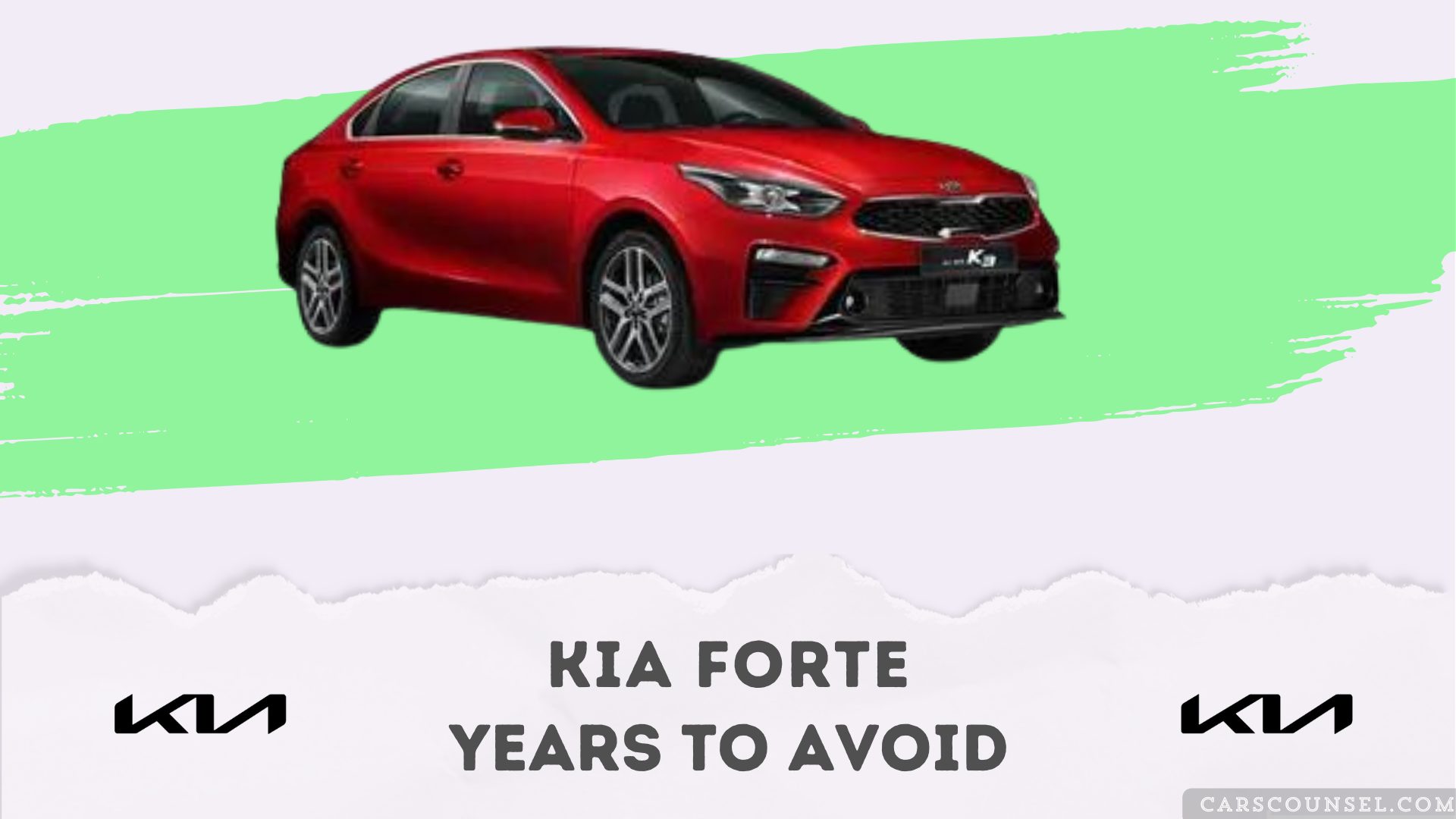
The best Kia Forte years are 2016, 2021, and 2022, offering strong reliability and refined features. Buyers should avoid the 2010, 2011, and 2012 models due to higher rates of electrical gremlins and steering complaints.
Rankings are comparative, meaning no used vehicle is entirely flawless. Routine maintenance, accident history, and overall condition heavily influence individual longevity and ownership satisfaction.
Reliability varies significantly between generations. Early models struggle with electronic bugs, while newer versions introduce continuously variable transmissions that require careful pre-purchase inspection.
Quick Navigation
Best and Worst Kia Forte Years at a Glance
| Model Year | Verdict | Main Reason | Buyer Guidance |
|---|---|---|---|
| 2010 – 2012 | Avoid | Electrical and steering faults | Seek newer alternatives |
| 2013 – 2014 | Approach Carefully | Transition year quirks | Require thorough inspection |
| 2015 – 2018 | Good Choice | Improved build quality | Verify maintenance records |
| 2016 | Best Older Choice | Peak second-generation reliability | Top pick for budget buyers |
| 2019 | Approach Carefully | First-year redesign bugs | Test transmission thoroughly |
| 2020 – 2022 | Best Late-Generation Choice | Mature platform and safety tech | Excellent modern option |
| 2023 – 2024 | Too New to Judge | Limited long-term data | Rely on warranty coverage |
Key Takeaways
- The 2016, 2021, and 2022 model years stand out as the most dependable options for used buyers.
- Early first-generation models (2010–2012) exhibit higher complaint volumes regarding steering and interior electronics.
- Excessive oil consumption affects some Nu four-cylinder engines, making regular fluid checks essential.
- First-year redesigns like 2014 and 2019 require careful scrutiny of transmission and infotainment operation.
- Always verify open safety recalls using the vehicle identification number before finalizing a purchase.
How We Evaluated the Kia Forte Model Years
Our analysis reviews official recalls, manufacturer service campaigns, and consumer complaint databases. We weigh defect severity, repair complexity, and long-term ownership costs.
Complaints are not confirmed failure rates, and a recall does not automatically render a vehicle unreliable. Recent models naturally have less road exposure, so we evaluate them conservatively.
Best Kia Forte Years
2016: Best Older Choice
The 2016 model represents a mature point in the second generation. Kia resolved many early-production electrical quirks, resulting in a comparatively stable ownership experience.
Standard features improved, and the naturally aspirated powertrain avoids the complexity of early turbocharged setups. It remains a smart pick for budget-conscious commuters.
2021 and 2022: Best Late-Generation Choice
These years benefit from a fully sorted third-generation platform. Kia refined the continuously variable transmission tuning, reducing the shudder complaints seen in earlier models.
Advanced driver assistance systems became more robust. While long-term data is still accumulating, these years offer excellent modern safety and daily drivability.
Best Kia Forte Year by Buyer Type
- Best Overall: 2021 offers the best balance of modern safety technology and proven mechanical reliability.
- Best Budget Option: 2016 provides dependable transportation without the premium attached to newer redesigns.
- Best Enthusiast Choice: The discontinued Forte Koup (specifically 2014–2016 turbo models) offers engaging dynamics, though it requires strict maintenance.
Years to Approach Carefully
2013 and 2014: First-Generation End and Second-Generation Start
The 2013 model carries over aging first-generation electronics. The 2014 launch year introduced a new chassis but suffered from early steering and infotainment bugs.
Buyers should thoroughly test all cabin functions and listen for unusual steering column noises during low-speed maneuvers.
2019: Third-Generation Launch
As the debut year for the current body style, the 2019 Forte experienced typical first-year growing pains. Some owners reported hesitant acceleration and infotainment reboots.
A comprehensive pre-purchase inspection is vital to ensure the transmission and software updates were properly addressed by previous owners.
Worst Kia Forte Years
2010, 2011, and 2012: Avoid
These early models exhibit higher frequencies of interior accessory failures and steering system complaints. Electrical gremlins often affect power windows and dashboard clusters.
While routine maintenance helps, the sheer volume of age-related electrical faults makes these years less desirable than slightly newer alternatives. Parts availability remains good, but diagnostic costs can add up.
Kia Forte Reliability by Generation
First Generation (2010–2013)
This era established the Forte nameplate but struggled with early-build quality. Steering knuckle concerns and interior rattles are more prevalent here than in later generations.
Second Generation (2014–2018)
Kia significantly improved cabin materials and structural rigidity. The middle years of this generation offer the most dependable used options for buyers seeking traditional automatic transmissions.
Third Generation (2019–Present)
The current generation prioritizes fuel economy and safety technology. The shift to intelligent variable transmissions changed the driving feel, requiring buyers to adapt to CVT characteristics.
If you are considering other compact options, comparing the Forte against the Kia Rio highlights differences in cargo space and ride refinement.
Common Kia Forte Problems
Excessive Oil Consumption
Some Nu four-cylinder engines may consume oil between scheduled changes. Ignoring this can lead to internal engine wear over high mileage.
Owners should check the dipstick monthly. If consumption exceeds manufacturer thresholds, warranty extensions or engine revisions may apply.
Electrical and Infotainment Glitches
Older models frequently report failing power window switches and unresponsive touchscreen displays. These issues rarely strand the driver but cause daily frustration.
Software updates resolve some touchscreen problems, while hardware failures require component replacement.
Transmission Hesitation
Early third-generation models with continuously variable transmissions occasionally exhibit shuddering during low-speed acceleration. This is often linked to software calibration or fluid degradation.
Ensuring the transmission fluid is clean and the ECU holds the latest dealer updates minimizes this concern.
Repair-Cost Overview
| Problem | Affected Years | Approximate Range | Notes |
|---|---|---|---|
| Alternator Replacement | 2010–2013 | $400 – $700 | Common electrical failure point |
| Window Motor/Regulator | 2010–2015 | $250 – $450 | Varies by door location |
| Ignition Coil Replacement | All Years | $150 – $300 | Often causes misfire codes |
Repair costs vary significantly by region, labor rates, parts choice, and vehicle configuration. Independent shops typically charge less than dealership service centers.
What to Check Before Buying a Used Kia Forte
- Verify the vehicle identification number for any open safety recalls or incomplete software campaigns.
- Inspect the engine bay for signs of excessive oil leaks around the valve cover and oil pan.
- Test every power window, door lock, and infotainment screen function to rule out electrical gremlins.
- Listen for unusual clicking or binding noises from the steering column during tight parking maneuvers.
- Request maintenance records to confirm regular oil changes, which are critical for four-cylinder longevity.
- Arrange an independent pre-purchase inspection to evaluate suspension bushings and transmission health.
Related Buying Guides
- Kia Soul years to avoid: Discover which boxy hatchback years suffer from steering and engine concerns.
- Kia Optima years to avoid: Learn about the midsize sedan’s historical engine recall campaigns and best alternatives.
Frequently Asked Questions
What is the most reliable Kia Forte year?
The 2016 and 2021 model years are generally considered the most reliable. They benefit from mature production cycles and resolved early-generation software issues.
Are Kia Fortes expensive to maintain?
No, the Forte is relatively inexpensive to maintain. Routine services are affordable, and parts availability is excellent due to its platform sharing with other compact models.
Does the Kia Forte have engine problems?
Some four-cylinder engines are prone to oil consumption if maintenance is neglected. However, it does not suffer from the widespread catastrophic engine failures seen in some larger Kia SUVs.
How long do Kia Fortes usually last?
Well-maintained examples can easily reach high mileage. Longevity depends heavily on consistent fluid changes, driving conditions, and addressing minor issues before they escalate.
Is the Kia Forte good in the snow?
Front-wheel-drive Fortes perform adequately in light snow with proper winter tires. They lack the ground clearance and all-wheel-drive traction of dedicated crossover SUVs.
Did Kia recall the Forte for engine fires?
Kia issued various recalls for anti-lock brake modules and tow hitch harnesses that could pose fire risks. Always check your specific vehicle identification number for open campaigns.
Choosing the Right Kia Forte Model Year
The Kia Forte remains a practical, fuel-efficient compact car when you select the right production year. Targeting the 2016, 2021, or 2022 models provides the best balance of reliability and modern features.
Avoid the earliest first-generation models to sidestep frustrating electrical and steering complaints. Regardless of the year chosen, verifying maintenance history and completing a pre-purchase inspection are essential steps.
Always run the vehicle identification number through official databases to ensure all safety recalls are resolved before signing any paperwork.

