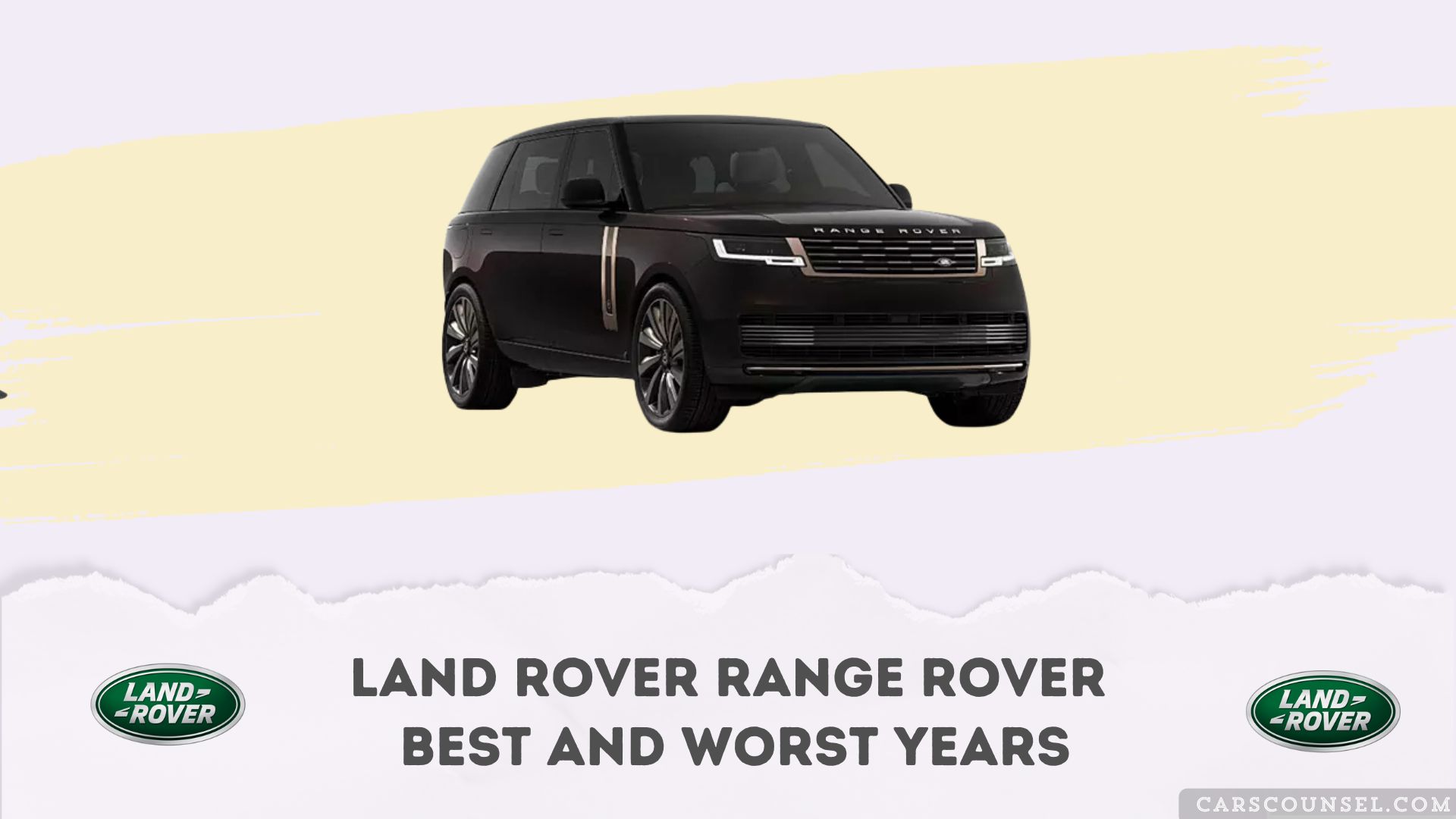
The best Land Rover Range Rover years for used buyers are 2016 through 2019 and the final L405 generation years of 2020 and 2021. Buyers should approach early aluminum-body models carefully and avoid the earliest third-generation examples due to severe electrical and mechanical complexities.
Rankings are comparative, as no luxury vehicle is entirely immune to expensive repairs. Proper maintenance history and a thorough pre-purchase inspection matter more than the badge on the hood when evaluating long-term ownership costs.
Reliability varies significantly by engine and generation. The supercharged V6 and V8 engines require strict cooling system upkeep, while newer mild-hybrid inline-six configurations remain too new to judge for long-term durability in this SUV.
Quick Navigation
Best and Worst Land Rover Range Rover Years at a Glance
| Model Year | Verdict | Main Reason | Buyer Guidance |
|---|---|---|---|
| 2022-2024 | Too New to Judge | New L460 platform | Wait for long-term data |
| 2020-2021 | Good Choice | Refined L405 | Verify maintenance records |
| 2016-2019 | Best Older Choice | Improved electronics | Inspect cooling system |
| 2013-2015 | Approach Carefully | Early aluminum bugs | Check coolant pipes |
| 2006-2012 | Approach Carefully | Air suspension issues | Budget for repairs |
| 2003-2005 | Avoid | Severe electrical faults | Seek newer alternatives |
Key Takeaways
- The 2016-2019 model years represent the best older choices, offering improved infotainment and refined powertrains.
- Early fourth-generation models (2013-2015) require careful inspection of plastic coolant crossover pipes.
- Third-generation models (2006-2012) are prone to air suspension failures and timing chain guide wear.
- The current L460 generation (2022-present) is too new to judge for long-term reliability.
- Always verify open recalls and insist on a comprehensive pre-purchase inspection by a Land Rover specialist.
How We Evaluated the Land Rover Range Rover Model Years
Our analysis of the Land Rover lineup considers official recalls, manufacturer service campaigns, and long-term ownership patterns. We evaluate powertrain differences and repair complexity to identify comparative reliability.
Consumer complaints are not confirmed defects, and a recall does not automatically make a vehicle unreliable. Recent models have limited ownership history, meaning best indicates comparatively stronger, not flawless.
Best Land Rover Range Rover Years
2016-2019: Best Older Choice
The fourth-generation L405 received significant mid-cycle updates during this period. Land Rover addressed many early infotainment bugs and refined the supercharged V6 and V8 powertrains for better daily usability.
While maintenance remains expensive, these years offer a more sorted ownership experience. Buyers should still verify that the plastic coolant crossover pipes have been updated to prevent severe overheating.
2020-2021: Good Choice
As the final years of the L405 generation, these models benefit from a decade of platform refinements. The interior technology is more responsive, and major mechanical failures are less common.
They remain a good choice for buyers seeking modern luxury without the early-production risks of the newest generation. A strict service history is mandatory for any example you consider.
Best Year by Buyer Type
Best Overall: 2018-2019
These years balance modern technology with proven platform maturity. They avoid the earliest L405 bugs and the high depreciation of the newest models.
Best Modern Alternative: Range Rover Velar
Buyers who want flagship styling but prefer a smaller footprint should review our guide on the Range Rover Velar best and worst years.
Best Family Alternative: Land Rover Discovery
If third-row seating and practicality matter more than prestige, the Land Rover Discovery best and worst years guide explores a more family-oriented SUV.
Years to Approach Carefully
2013-2015: Approach Carefully
The launch of the aluminum-bodied L405 brought weight savings but introduced new complexities. Early models suffer from brittle plastic coolant pipes that can crack and cause rapid engine overheating.
Infotainment systems from this era are also notoriously slow and prone to freezing. Only consider these years if the cooling system has been proactively updated and service records are flawless.
2006-2012: Approach Carefully
The third-generation L322 is a classic, but it demands a dedicated maintenance budget. The air suspension system is prone to leaking struts and failing compressors as the vehicles age.
Later 5.0-liter V8 models also experience timing chain guide wear, which requires an expensive engine-out repair. Budget carefully for immediate suspension and cooling system overhauls.
Worst Land Rover Range Rover Years
2003-2005: Avoid
The earliest third-generation models feature complex BMW-era electronics that are highly prone to failure. Diagnosing and repairing these aging wiring harnesses and control modules is difficult and costly.
Combined with early air suspension fragility and scarce replacement parts, these initial L322 examples present a massive financial risk. Buyers seeking reliable transportation should consult our guides on years to avoid and seek newer alternatives.
Land Rover Range Rover Reliability by Generation
The L322 generation (2003-2012) established the modern luxury template but suffers from aging air suspension and timing chain vulnerabilities. Parts availability is shrinking as these vehicles age.
The L405 generation (2013-2021) introduced an aluminum unibody that resists rust but requires specialized collision repair. Cooling system plastics remain the primary mechanical weakness across all V6 and V8 trims.
The current L460 generation (2022-present) features mild-hybrid inline-six and twin-turbo V8 engines. Long-term reliability remains unproven, and early software glitches suggest buyers should wait for the platform to mature.
Common Land Rover Range Rover Problems
Cooling System Leaks
Many supercharged V6 and V8 engines use plastic coolant crossover pipes that become brittle over time. A sudden crack can drain the cooling system rapidly, leading to severe engine damage.
Timing Chain Guide Wear
The 5.0-liter V8 engines are known for premature timing chain guide wear. Listen for a distinct rattling noise during cold starts, which indicates the guides are failing and require replacement.
Air Suspension Failures
Aging air struts and compressors frequently fail on older models, causing the vehicle to sag on one corner. Replacing all four corners is a significant financial undertaking for used buyers.
What to Check Before Buying a Used Land Rover Range Rover
- Verify the VIN for open safety recalls and incomplete software updates.
- Inspect the plastic coolant pipes for signs of cracking, weeping, or previous replacement.
- Listen for timing chain rattle during a cold engine start.
- Test the air suspension by cycling through all ride height settings.
- Review service records to confirm strict adherence to manufacturer maintenance intervals.
Related Buying Guides
- Land Rover Evoque best and worst years: A subcompact luxury option for urban buyers who do not need flagship size.
- Land Rover LR3 years to avoid: Important reading for buyers considering older, rugged off-road alternatives.
- Land Rover Defender best and worst years: A rugged off-road option for buyers prioritizing trail capability over highway luxury.
Frequently Asked Questions
What is the most reliable Range Rover year?
The 2018 and 2019 model years are comparatively the most reliable. They benefit from late-generation L405 refinements, updated infotainment, and improved cooling system components compared to earlier models.
Do Range Rovers have air suspension problems?
Yes, air suspension failures are common on older models. Air struts leak and compressors burn out over time, requiring expensive replacements to restore proper ride height and handling.
Is the Range Rover V6 or V8 better?
The supercharged V6 is generally less stressed and avoids some of the timing chain issues found on the 5.0-liter V8. However, both engines require strict cooling system maintenance.
How long do Range Rover engines last?
Engine longevity depends entirely on maintenance. Well-maintained examples can reach high mileage, but neglected cooling systems or ignored timing chain noises will lead to catastrophic engine failure.
Are used Range Rovers expensive to maintain?
Yes, maintenance and repair costs are significantly higher than average. Buyers must budget for premium parts, specialized labor, and unexpected electronic or suspension repairs throughout ownership.
Should I buy a Range Rover with over 100,000 miles?
Only if it has a flawless, documented service history. High-mileage examples often require immediate air suspension, cooling system, and gasket replacements that can exceed the vehicle’s purchase price.
Which Land Rover Range Rover Year Should You Buy?
Target the 2016 through 2019 model years for the best balance of modern luxury and platform maturity. Avoid the earliest third-generation examples due to severe electrical and parts availability issues.
Regardless of the year, a pre-purchase inspection by a Land Rover specialist is mandatory. Verify the VIN for open recalls, confirm the cooling system is updated, and demand complete service records.

