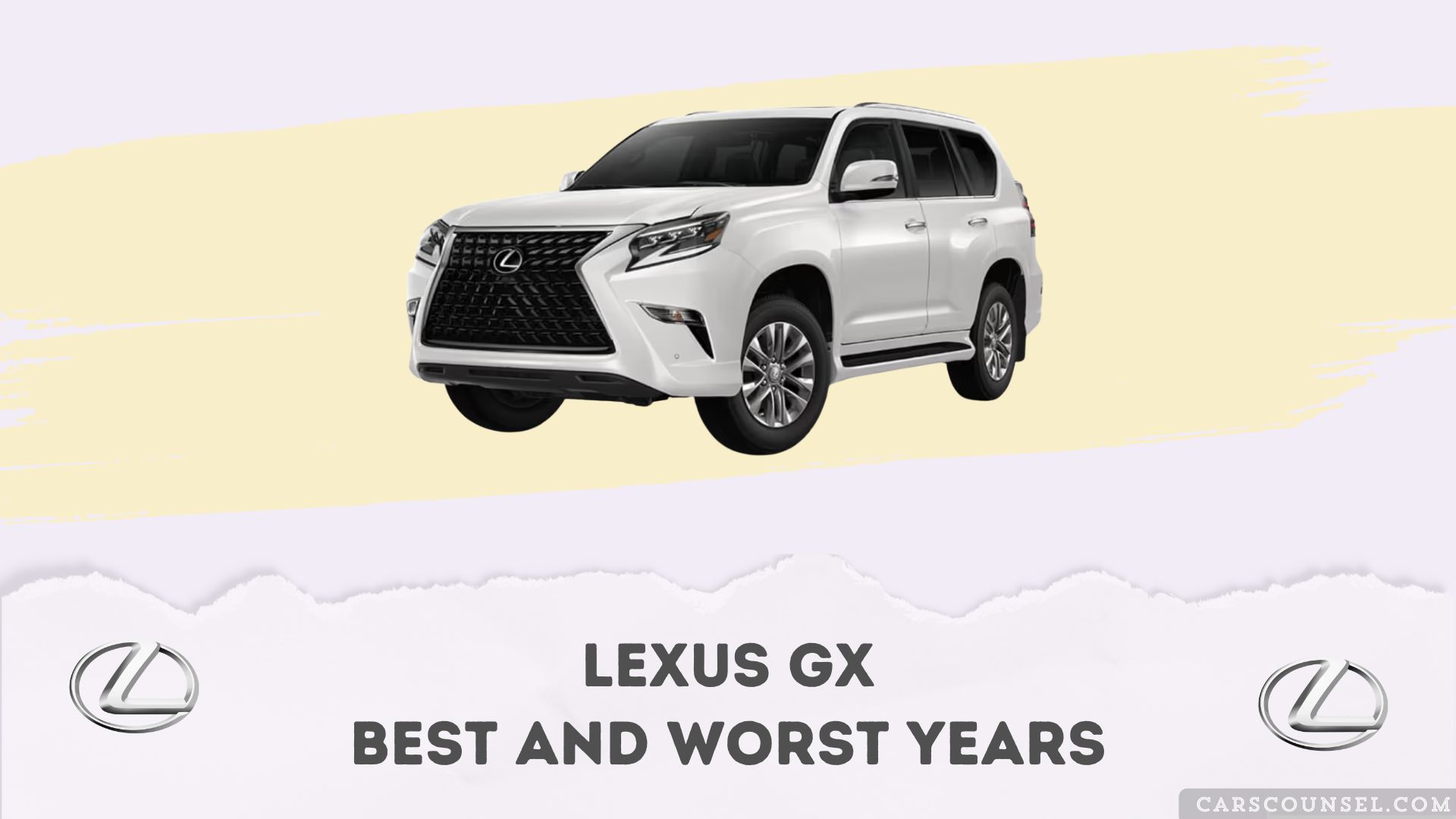
The best Lexus GX years are 2021 and 2022, representing the peak of the second generation. Buyers should approach 2024 and newer models carefully due to a major engine recall, and inspect 2003 through 2007 examples closely for aging components.
These rankings are comparative within the luxury body-on-frame SUV segment. No model year is entirely flawless, and long-term dependability relies heavily on consistent maintenance, rust prevention, and verifying recall completion.
Meaningful differences exist between the naturally aspirated V8 engines of the first two generations and the twin-turbo V6 introduced for 2024. Suspension configurations, specifically the Kinetic Dynamic Suspension System, also require specialized inspection.
Quick Navigation
Best and Worst Lexus GX Years at a Glance
| Model Year | Verdict | Main Reason | Buyer Guidance |
|---|---|---|---|
| 2024-2026 | Approach Carefully | First-year redesign, engine debris recall | Verify recall completion, expect early-production quirks |
| 2021-2022 | Best Late-Generation Choice | Peak J150 platform refinement, proven V8 | Top choice for used buyers seeking maximum dependability |
| 2014-2020, 2023 | Good Choice | Strong reliability, aging wear items | Inspect water pump, KDSS, and timing cover |
| 2010-2013 | Good With Inspection | Early 2nd-gen teething, KDSS concerns | Verify stall recall and suspension condition |
| 2008-2009 | Best Older Choice | Refined 1st-gen, fewer early defects | Check for frame rust and air suspension health |
| 2003-2007 | Approach Carefully | First-year issues, aging electronics, frame rust | Strict pre-purchase inspection required |
Key Takeaways
- 2021 and 2022 GX 460 models offer the strongest combination of proven reliability and modern features.
- First-generation GX 470 models require strict inspections for frame rust and air suspension failures.
- The 2024 and newer GX 550 models face an engine manufacturing debris recall.
- Kinetic Dynamic Suspension System (KDSS) components often require expensive repairs on second-generation models.
- Water pump and timing chain cover leaks are common maintenance items on the 4.6-liter V8.
- Always verify the complete VIN history for open NHTSA safety campaigns.
- Arrange a pre-purchase inspection focusing on the undercarriage and suspension components.
How We Evaluated the Lexus GX Model Years
Our analysis considers official NHTSA recall campaigns, manufacturer service programs, and verified owner feedback. We evaluate powertrain evolution, generation changes, and build-quality maturity across the entire production run.
Consumer complaints are not confirmed failure rates. A recall does not automatically ruin a vehicle’s dependability if the remedy was completed. Recent model years simply have less long-term ownership history to evaluate.
Best Lexus GX Years
2021-2022 Lexus GX 460
These late second-generation models represent the peak of the J150 platform development. The naturally aspirated 4.6-liter V8 and six-speed automatic transmission are thoroughly proven after over a decade of continuous refinement.
Build quality and electronics reliability improved significantly compared to earlier years. While some wear items like water pumps may still require attention, these model years offer the strongest overall dependability for used buyers.
2008-2009 Lexus GX 470
The final years of the first generation benefit from extensive platform refinements. The legendary 4.7-liter V8 engine is exceptionally durable, and Lexus resolved many of the early air suspension and electrical gremlins.
These older models remain excellent choices for enthusiasts and off-road buyers. However, buyers must carefully inspect the undercarriage for frame rust and verify that the aging suspension components are in good condition.
Best Year by Buyer Type
Best Overall
The 2021 and 2022 GX 460 models provide the best balance of modern luxury, advanced safety features, and proven long-term mechanical dependability.
Best Enthusiast Choice
The 2008 and 2009 GX 470 models offer a rugged, body-on-frame experience with the highly tunable 4.7-liter V8, making them ideal for off-road modifications and overlanding.
Best Modern Alternative
Buyers seeking a more refined, unibody family hauler might also research the Lexus TX. It offers three rows of passenger space and better fuel economy, sacrificing off-road capability for on-road comfort.
Years to Approach Carefully
2024-2026 Lexus GX 550
The third generation introduces a new twin-turbo V6 engine and a completely redesigned platform. First-year redesigns often experience early production teething issues, and long-term reliability data remains entirely unavailable.
More importantly, certain 2024 models are subject to a serious recall regarding machining debris left inside the engine block. This defect can cause bearing failure, stalling, or complete engine seizure.
2003-2007 Lexus GX 470
Early first-generation models require careful scrutiny due to their age and first-year production challenges. The 2003 and 2004 model years experienced higher rates of electrical complaints and drivetrain clunking noises.
Frame rust is a significant concern for first-generation models, particularly in regions that use road salt. The complex rear air suspension system is also prone to costly failures as these vehicles age.
2010-2013 Lexus GX 460
The early second-generation years introduced the new 4.6-liter V8 and updated electronics. The 2010 model year was subject to a notable recall regarding unexpected stalling related to the traction control system.
Early implementations of the Kinetic Dynamic Suspension System also experienced fluid leaks and bushing failures. Buyers should verify that all recall work was completed and inspect the suspension thoroughly.
Lexus GX Reliability by Generation
First Generation (2003-2009)
The GX 470 shares related body-on-frame architecture with the Toyota 4Runner and global Land Cruiser Prado. It features the legendary 4.7-liter V8, known for exceptional longevity when properly maintained.
Early models struggled with rear air suspension failures and frame rust. Later years resolved many electrical and drivetrain teething issues, making them the most desirable first-generation examples for off-road enthusiasts.
Second Generation (2010-2023)
The GX 460 introduced a 4.6-liter V8 and a six-speed automatic transmission. This generation is renowned for its mechanical durability, though the complex KDSS suspension and aging water pumps require diligent maintenance.
A mid-cycle refresh for 2014 updated the exterior styling and infotainment systems. The final production years of this generation represent some of the most dependable luxury SUVs available on the used market.
Third Generation (2024-Present)
The GX 550 moved to the GA-F platform, adopting a twin-turbo V6 and a 10-speed automatic transmission. This generation prioritizes modern technology, improved on-road manners, and enhanced towing capacity over the previous V8 setup.
Long-term reliability remains unproven, and early production models face a significant engine manufacturing recall. Buyers should rely heavily on the factory warranty and verify recall completion before purchasing.
Common Lexus GX Problems
Engine and Cooling System Leaks
The 4.6-liter V8 in the GX 460 is prone to water pump coolant leaks as mileage approaches 70,000 miles. The timing chain cover gasket can also develop oil seepage, requiring labor-intensive repairs.
Addressing these leaks promptly is critical to prevent overheating or oil starvation. The older 4.7-liter V8 is generally more robust but still requires regular inspection of its cooling system components.
Suspension and KDSS Failures
The Kinetic Dynamic Suspension System uses complex hydraulic cylinders and fluid lines to manage body roll. These components are exposed to the elements and frequently develop leaks or suffer from degraded bushings.
First-generation models equipped with rear air suspension often experience strut and compressor failures. Many owners choose to replace the aging air suspension with traditional coil springs to improve long-term reliability.
Frame Corrosion
First-generation GX 470 models are susceptible to severe frame rust, particularly in regions that use road salt during winter. This corrosion can compromise structural integrity and cause expensive inspection failures.
Buyers in snowy climates must thoroughly inspect the undercarriage of any first-generation example. Applying rust-prevention treatments early in the vehicle’s life is essential for long-term preservation.
What to Check Before Buying a Used Lexus GX
- Verify the complete VIN history for open NHTSA safety campaigns and recall completion.
- Inspect the undercarriage thoroughly for frame rust, especially on 2003-2009 models.
- Check the engine bay for water pump coolant leaks and timing cover oil seepage.
- Test the KDSS suspension for fluid leaks, uneven ride height, or clunking noises.
- Verify the condition of the rear air suspension on first-generation models.
- Scan for diagnostic codes related to the traction control and transmission systems.
- Arrange a pre-purchase inspection through a qualified independent technician.
Related Buying Guides
- Lexus GX 470 best and worst years: Dive deeper into the first-generation V8 model and its specific maintenance requirements.
- Toyota 4Runner years to avoid: Research the rugged platform sibling that shares related body-on-frame architecture.
Frequently Asked Questions
Is the Lexus GX reliable?
The Lexus GX offers strong long-term reliability, particularly the second-generation GX 460. The naturally aspirated V8 engines are exceptionally durable, though complex suspension systems and aging seals require diligent maintenance.
What year of the Lexus GX is most dependable?
The 2021 and 2022 GX 460 models are the most dependable choices. They benefit from over a decade of platform refinement, avoiding the early defects of previous generations while retaining the proven V8 powertrain.
What year Lexus GX should you approach carefully?
Approach 2024 and newer models carefully due to a major engine debris recall and limited long-term data. Early first-generation models also require strict inspections for frame rust and aging air suspension components.
What are the most common Lexus GX problems?
Common issues include water pump and timing chain cover leaks on the 4.6-liter V8. KDSS suspension fluid leaks, rear air suspension failures on older models, and frame rust are also frequent concerns.
How long does a Lexus GX last?
Well-maintained examples frequently reach high mileage, thanks to their robust body-on-frame construction and durable V8 engines. Longevity depends heavily on rust prevention, timely fluid changes, and addressing suspension leaks promptly.
Should I buy a used Lexus GX?
A used GX represents an excellent value if you target the 2014-2022 model years and verify maintenance history. Avoid early first-generation examples with severe rust, and verify recall completion on newer twin-turbo models.
Choosing the Right Lexus GX Model Year
The best Lexus GX years are 2021 and 2022, offering the ultimate refinement of the proven second-generation platform. These models provide exceptional dependability for both daily driving and off-road use.
Approach 2024 and newer models carefully until the engine recall is fully addressed and long-term reliability is established. Early first-generation models require strict inspections for frame rust and aging suspension components.
Always verify the complete service history and arrange an independent pre-purchase inspection. Proper maintenance and rust prevention remain essential for maximizing the lifespan of any body-on-frame luxury SUV.

