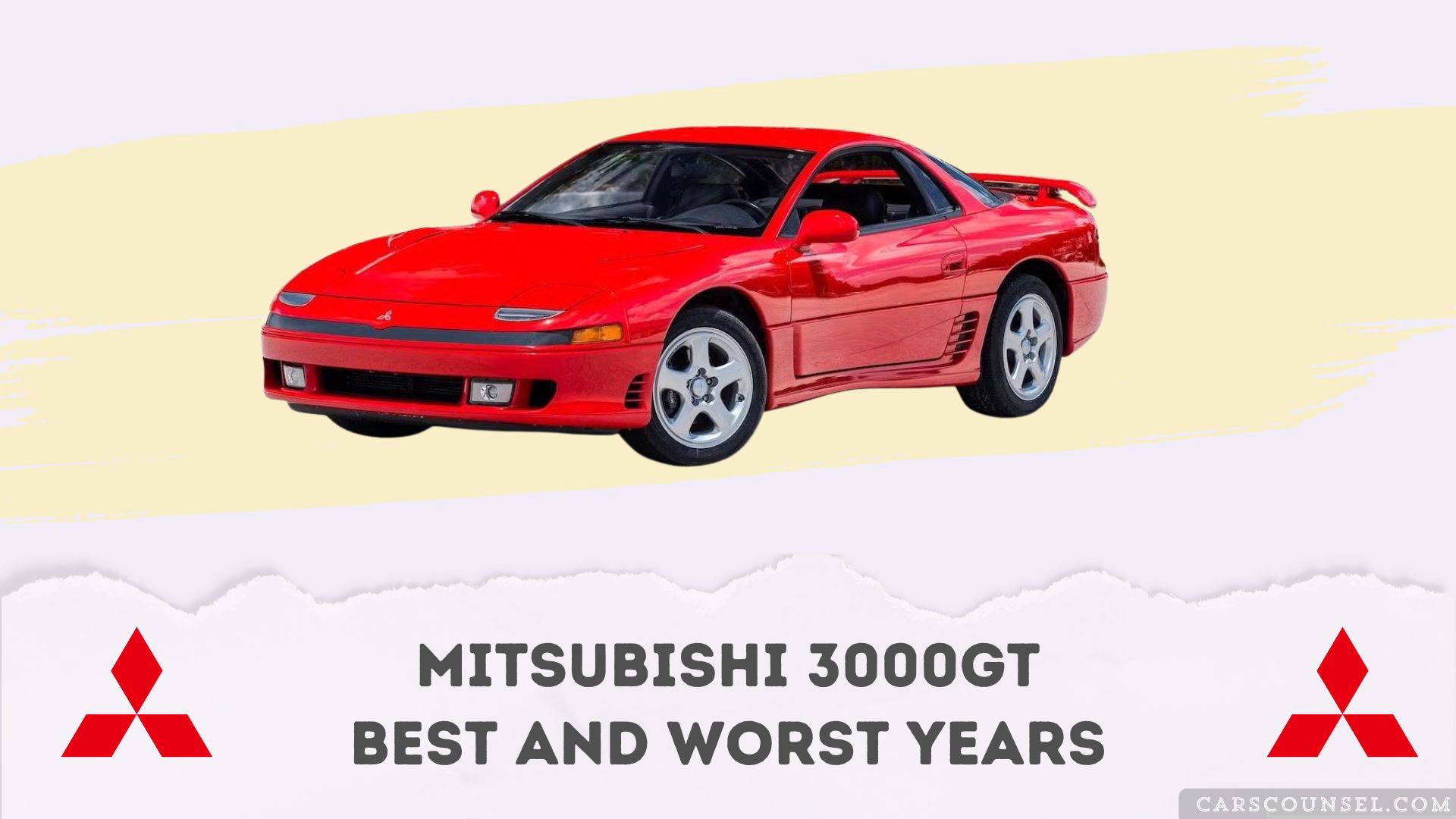
The best Mitsubishi 3000GT years are 1991 through 1993, offering the most complete technology suite. Approach 1997 through 1999 models carefully, as they lost key features while retaining high maintenance complexity.
Rankings are comparative and no 30-year-old sports car is flawless. Maintenance history, rust, and overall condition matter far more than the specific model year badge.
Reliability varies heavily by configuration. Twin-turbo all-wheel-drive VR-4 models demand strict upkeep, while naturally aspirated front-wheel-drive variants offer simpler, albeit slower, ownership experiences.
Quick Navigation
Best and Worst Mitsubishi 3000GT Years at a Glance
| Model Year or Range | Verdict | Main Reason | Buyer Guidance |
|---|---|---|---|
| 1991–1993 | Best Enthusiast Choice | Feature-complete with active aero and ECS | Verify ECU capacitors and recall completion |
| 1994–1996 | Good With Inspection | Getrag 6-speed added, but feature deletions began | Inspect transfer case and active systems |
| 1997–1999 | Approach Carefully | Stripped of halo features but remains complex | Budget for aging electronics and suspension |
Key Takeaways
- Strongest choices include the 1991 through 1993 feature-complete models.
- Approach 1997 through 1999 models carefully due to feature deletions.
- VR-4 twin-turbo models require significantly higher maintenance budgets.
- Front-wheel-drive base and SL models avoid the most complex AWD failures.
- ECU and TCU capacitor leaks are a major age-related electrical threat.
- Always verify the VIN for outstanding transfer case and brake campaigns.
- Arrange an independent inspection focusing on the oil pan and suspension.
How We Evaluated the Mitsubishi 3000GT Model Years
Our analysis considers official safety campaigns, long-term ownership data, and powertrain configurations. We separate genuine engineering flaws from normal wear on 30-year-old Japanese sports cars.
Complaints do not equal confirmed defects, and a recall does not automatically ruin a vehicle. Recent data is limited as production ended in 1999. Best means comparatively stronger for enthusiasts, not trouble-free.
Best Mitsubishi 3000GT Years
1991–1993
These early production years represent the peak of Mitsubishi engineering ambition. VR-4 models included active aerodynamics, electronically controlled suspension, and all-wheel steering.
These feature-complete examples justify their high maintenance costs. Buyers must verify that the front brake hose and transfer case campaigns were completed by a dealer.
Best Year by Buyer Type
Best Enthusiast Choice
The 1991 through 1993 VR-4 models offer the ultimate experience. They retain the advanced electronic systems that defined the platform’s legacy.
Best Budget Option
Naturally aspirated front-wheel-drive models from any year avoid the twin-turbo and transfer case complexities. They provide grand touring comfort with vastly lower repair bills.
Years to Approach Carefully
1997–1999 (Approach Carefully)
Late production models eliminated active aerodynamics and adjustable suspension to cut costs. This simplified the car but removed the very features that justified its heavy, complex nature.
These final years still suffer from the same aging electronics and expensive drivetrain repairs. Buyers should negotiate the price down to reflect the missing technology.
1994–1996 (Good With Inspection)
This mid-cycle refresh introduced the robust Getrag six-speed manual to the VR-4. However, Mitsubishi began deleting expensive features like the valved exhaust and adjustable suspension.
These transitional years require careful inspection of the remaining active systems. Ensure the transfer case output splines and front drivetrain components remain in good condition.
Mitsubishi 3000GT Reliability by Production Phase
Early Production (1991–1993)
The launch phase featured pop-up headlights and the full technological suite. While mechanically overbuilt, the complex wiring harnesses for active systems are now highly prone to age-related failure.
Mid-Cycle Refresh (1994–1996)
Fixed headlights replaced the pop-ups, and the Spyder convertible debuted. Reliability slightly improved as Mitsubishi removed failure-prone components, though the core engine remained unchanged.
Late Production (1997–1999)
The final facelift streamlined the exterior and interior. With fewer electronic motors to fail, these are mechanically simpler, but they lack the enthusiast appeal of earlier examples.
Common Mitsubishi 3000GT Problems
Oil Pan Design and Bearing Failure
The factory oil pan features a dimple near the oil pickup tube. Improper jacking can dent this dimple inward, restricting oil flow and causing catastrophic spun rod bearings.
Transfer Case and Drivetrain Wear
VR-4 models utilize a complex transfer case bolted to the transmission. Output shaft spline wear and oil seal leaks can lead to a complete loss of all-wheel drive.
ECU and TCU Capacitor Leaks
Engine and transmission control units from the early nineties use electrolytic capacitors that leak corrosive fluid over time. This destroys the circuit boards and causes sudden running issues.
Active System Failures
The motors controlling the active aerodynamics and electronically controlled suspension frequently fail due to age and moisture ingress. Many owners permanently disable these systems to avoid costly repairs.
What to Check Before Buying a Used Mitsubishi 3000GT
- Verify the VIN for completed transfer case and brake hose campaigns.
- Inspect the oil pan closely for upward dents near the pickup tube dimple.
- Check the engine and transmission control units for leaked capacitor fluid.
- Test the operation of the active aerodynamics and adjustable suspension.
- Listen for clutch fork pivot ball wear or throwout bearing noise on manuals.
- Inspect the transfer case and rear differential for proper fluid levels.
- Evaluate the condition of the timing belt and water pump service records.
- Arrange an independent inspection by a specialist familiar with nineties Mitsubishis.
Related Buying Guides
- Mitsubishi Lancer Evolution best and worst years: Explore this rally-bred sedan if you want modern all-wheel-drive performance with better parts availability.
- Mitsubishi Eclipse best and worst years: Consider this smaller coupe if you prefer a lighter, more affordable platform that shares the same basic engine family.
Frequently Asked Questions
Is the Mitsubishi 3000GT reliable?
The 3000GT has below-average reliability due to its extreme complexity and age. Twin-turbo VR-4 models demand dedicated owners willing to invest heavily in preventive maintenance and aging electronics.
What year of the Mitsubishi 3000GT is most dependable?
The 1991 through 1993 models are the most desirable because they include the full feature set. Front-wheel-drive variants from any year are mechanically simpler and generally more dependable.
What Mitsubishi 3000GT years should you avoid?
No year is strictly forbidden, but approach 1997 through 1999 models carefully. They lost the advanced features that justify the car’s weight and maintenance costs, offering diminished enthusiast value.
What are the most common Mitsubishi 3000GT problems?
Common issues include oil pan denting causing engine failure, transfer case spline wear, leaking ECU capacitors, and failing active aerodynamic motors. Age-related rubber and plastic degradation is also universal.
How long does a Mitsubishi 3000GT last?
Well-maintained examples can reach high mileage, but longevity depends entirely on strict upkeep. The engine is robust if the timing belt is changed and the oil pan remains undented.
How much does it cost to maintain a Mitsubishi 3000GT?
Maintenance costs are significantly higher than typical Japanese sports cars. VR-4 owners should budget for expensive drivetrain repairs, specialized labor, and the rising cost of discontinued electronic components.
Choosing the Right Mitsubishi 3000GT Model Year
The Mitsubishi 3000GT delivers its best experience in the 1991 through 1993 model years. These early examples justify their high upkeep costs with a feature set that defined an era.
Approach the 1997 through 1999 models carefully, as they lack the technology that made the platform famous. Always verify the VIN, inspect the oil pan, and budget for extensive age-related repairs.