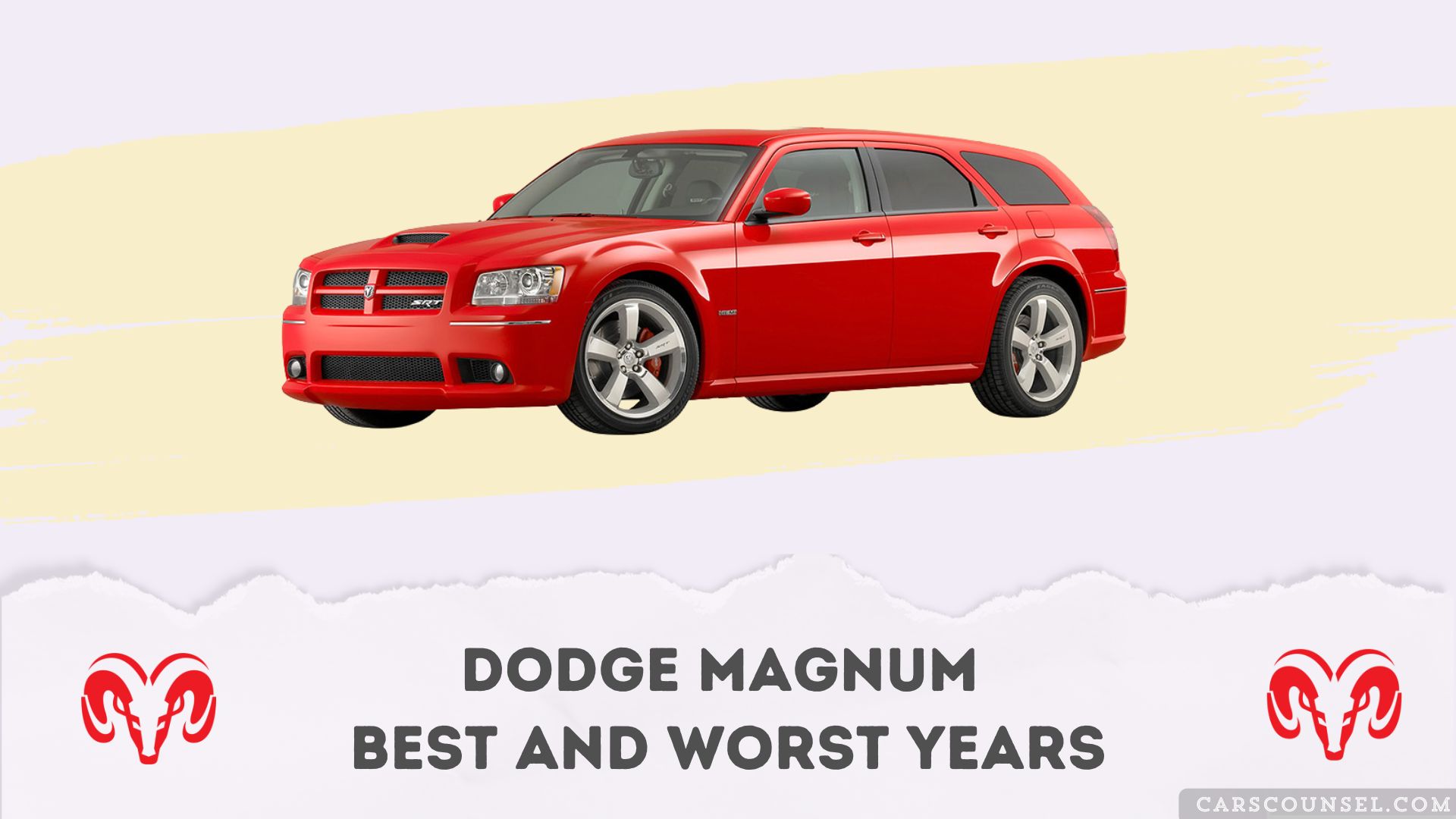
The 2008 Dodge Magnum is the best year for buyers seeking the most refined version of this modern station wagon. The 2005 model year requires careful inspection due to first-year production quirks and higher complaint volumes.
Rankings for used vehicles are comparative, and no year is flawless. Long-term reliability depends entirely on maintenance history, previous accident damage, and the condition of high-wear components rather than just the original factory build date.
Meaningful differences exist between the base V6 engines and the powerful HEMI V8 configurations. The Mercedes-derived five-speed automatic transmission found in higher trims also requires specialized service compared to the standard four-speed automatic.
Quick Navigation
Best and Worst Dodge Magnum Years at a Glance
| Model Year | Verdict | Main Reason | Buyer Guidance |
|---|---|---|---|
| 2008 | Best Late-Generation Choice | Peak manufacturing refinement | Verify recall completion |
| 2007 | Good Choice | Solid mainstream production | Inspect ignition and electrical |
| 2006 | Good Choice | SRT8 performance peak | Check transmission and suspension |
| 2005 | Approach Carefully | First-year assembly quirks | Require thorough pre-purchase inspection |
| 1978-1979 | Best Enthusiast Choice | Classic collector appeal | Inspect for rust and structural integrity |
Key Takeaways
- The 2008 model year represents the most refined Magnum production run.
- Early 2005 examples require extra scrutiny for first-year LX platform inconsistencies.
- The 6.1L HEMI V8 in the SRT8 offers peak performance but demands strict maintenance.
- Takata airbag inflator recalls affect all 2005-2008 model years and must be verified.
- The Mercedes-derived five-speed automatic requires specialized fluid and service procedures.
- Always verify the VIN to ensure all official safety campaigns have been completed.
- Classic 1978-1979 models are collector vehicles requiring specialized classic car inspections.
How We Evaluated the Dodge Magnum Model Years
Because the modern Magnum was discontinued after 2008, our analysis relies on historical NHTSA records, manufacturer service campaigns, and long-term ownership consensus. We evaluate running changes, powertrain configurations, and known engineering traits of the LX platform.
A recall does not automatically make a year unreliable, but unresolved safety campaigns pose significant risks. Best means comparatively stronger for a used vehicle, not trouble-free. Long-term evidence is extensive for these models, though age-related wear is now a primary factor.
Best Dodge Magnum Years
2008 Dodge Magnum
The 2008 model year represents the final and most refined Magnum production run. Manufacturing processes improved after three years of LX platform assembly, resulting in better interior fitment and fewer electrical gremlins. The lineup benefited from previous running changes.
Buyers should still expect typical age-related maintenance for a vehicle of this era. While 2008 models are comparatively stronger, the Takata airbag recall and potential rear axle hub nut campaigns require meticulous verification. Documented service history remains the most critical factor.
2007 Dodge Magnum
The 2007 model year serves as a solid mainstream choice for the modern Magnum. Most running changes from the initial 2005 launch were integrated, making these examples reliable options when properly maintained. The available 5.7L HEMI V8 provides excellent performance.
Electrical faults and ignition switch campaigns may still affect certain build dates. The FOBIK ignition key recall applies to specific vehicles built between May 2007 and May 2008. A thorough pre-purchase inspection is mandatory to assess decades of wear and suspension condition.
Best Year by Buyer Type
Best Overall Choice
The 2008 model year offers the best combination of late-production refinement and original platform maturity. It avoids first-year teething problems while retaining the iconic wagon practicality and available HEMI V8 power.
Best Enthusiast Choice
The 2006 SRT8 provides the ultimate performance option with its 6.1L HEMI V8. The bulk of SRT8 production occurred in 2006, making it the most accessible year for enthusiasts seeking the high-output engine and track-tuned suspension.
Years to Approach Carefully
2005 Dodge Magnum
First-year 2005 models experienced typical new-platform teething problems. As the launch year for the modern LX chassis, early electrical systems and suspension components suffered from higher failure rates. The gearshift cable mounting bracket also required attention on police-package models.
Despite these concerns, the fundamental mechanical design remained sound when properly maintained. Buyers must budget for immediate sorting of aging rubber components, suspension bushings, and potential electrical gremlins. Verify that all seven original recalls have been addressed.
1978-1979 Dodge Magnum
The first-generation Magnum is a classic collector vehicle rather than a practical daily driver. Produced briefly on the Chrysler B platform, these coupes require specialized classic car knowledge to evaluate properly.
Hidden rust, aging wiring harnesses, and obsolete carbureted engine systems define ownership. Buyers should approach these models as restoration projects or weekend cruisers, requiring specialized marque expert inspections before purchase.
Common Dodge Magnum Problems
Airbag and Safety-System Problems
All 2005-2008 Dodge Magnum vehicles are affected by the massive Takata airbag inflator recall. Excessive internal pressure can cause the inflator to rupture during deployment, posing a severe safety risk. Buyers must verify the VIN to confirm this critical repair was completed.
Electrical and Ignition Problems
Certain 2008 models and late-2007 builds face ignition switch defects involving the FOBIK key. The key may independently move from the run position, causing the engine to shut down and disabling power steering and braking. This requires an official dealer repair.
Transmission and Drivetrain Issues
The Mercedes-derived five-speed automatic transmission requires specific fluid and careful maintenance. Owners report slipping in early gears or harsh shifts when service intervals are neglected. The four-speed automatic is simpler but still prone to solenoid pack failures as mileage accumulates.
Rear Axle Hub Problems
Certain 2008 models suffered from missing torque retention crimps on rear axle hub nuts. This defect allows the halfshaft to disengage from the wheel hub, potentially causing a loss of power. Affected vehicles required replacement of the hub nuts under recall.
Suspension and Steering Wear
The heavy LX platform places significant stress on front suspension components. Worn control arm bushings, tie rod ends, and sway bar links frequently cause clunking noises and uneven tire wear. These wear items are expected on high-mileage examples and require routine replacement.
Repair-Cost Overview
| Problem | Commonly Affected Years | Approximate Repair Range | Important Notes |
|---|---|---|---|
| Takata Airbag Inflator | 2005-2008 | Free (Recall) | Must be completed at authorized dealer |
| Front Suspension Overhaul | All | $800 – $1,500 | Includes control arms and alignment |
| Mercedes 5-Speed Service | 2005-2008 | $300 – $600 | Requires specific OEM fluid and filter |
| Ignition Switch Replacement | 2007-2008 | Free (Recall) | Verify FOBIK campaign completion |
Classic car and discontinued model repair costs vary dramatically by region, specialist labor rates, and parts availability. These approximate ranges reflect current market rates for independent shops and can fluctuate based on vehicle configuration and damage severity.
What to Check Before Buying a Used Dodge Magnum
- Commission an independent inspection to evaluate the LX platform suspension and chassis.
- Verify the VIN to ensure the Takata airbag and FOBIK ignition recalls were completed.
- Test the transmission for smooth shifting and check for Mercedes-specific fluid leaks.
- Inspect the rear axle hub nuts on 2008 models to confirm the retention crimp recall was addressed.
- Check for uneven tire wear indicating worn control arm bushings or tie rod ends.
- Review service history to verify consistent maintenance of the HEMI V8 or V6 engines.
- Test all power accessories and the FOBIK key fob for proper electrical communication.
Related Buying Guides
- Dodge Challenger best and worst years – Explore the modern muscle car alternative that shares the LX platform architecture.
- Dodge Charger years to avoid – Investigate the four-door sedan sibling that shares the Magnum’s powertrain and chassis.
- Dodge Avenger best and worst years – Review a more practical, front-wheel-drive alternative for daily commuting.
Frequently Asked Questions
Is the Dodge Magnum reliable?
The Magnum has mixed reliability, with later years showing significant improvement over the problematic 2005 launch. Age-related wear and unresolved safety recalls now pose the biggest threats to long-term dependability.
What year of the Dodge Magnum is most dependable?
The 2008 model year is generally considered the most dependable due to late-production manufacturing refinements. However, all years require identical levels of meticulous maintenance and recall verification to remain roadworthy today.
What year should you avoid?
The 2005 model year ranks lowest due to first-year LX platform assembly quirks and higher complaint volumes. Buyers should approach early examples carefully and prioritize vehicles with comprehensive service records.
What are the most common problems?
Unresolved Takata airbag recalls, FOBIK ignition switch defects, and front suspension wear are the most severe threats. The Mercedes-derived five-speed transmission also demands strict adherence to specialized service intervals.
How long does a Dodge Magnum last?
A properly maintained Magnum can reach high mileage, particularly with the robust 5.7L HEMI V8. Longevity depends entirely on rust prevention, suspension upkeep, and the timely completion of all official safety campaigns.
What engine options were available?
The modern Magnum offered a 2.7L V6, a 3.5L V6, a 5.7L HEMI V8, and a 6.1L HEMI V8 in the SRT8. The V8 engines provide significantly better performance and long-term durability than the base V6 options.
Choosing the Right Dodge Magnum Model Year
The 2008 Dodge Magnum represents the best production year for buyers seeking late-platform refinement and reliable wagon practicality. Early 2005 examples require extra patience, while the 2006 SRT8 remains the ultimate enthusiast choice.
Success with any used Magnum depends entirely on documented service history and recall completion. Buyers must prioritize a thorough pre-purchase inspection to evaluate the suspension, transmission, and critical Takata airbag status before purchasing.

