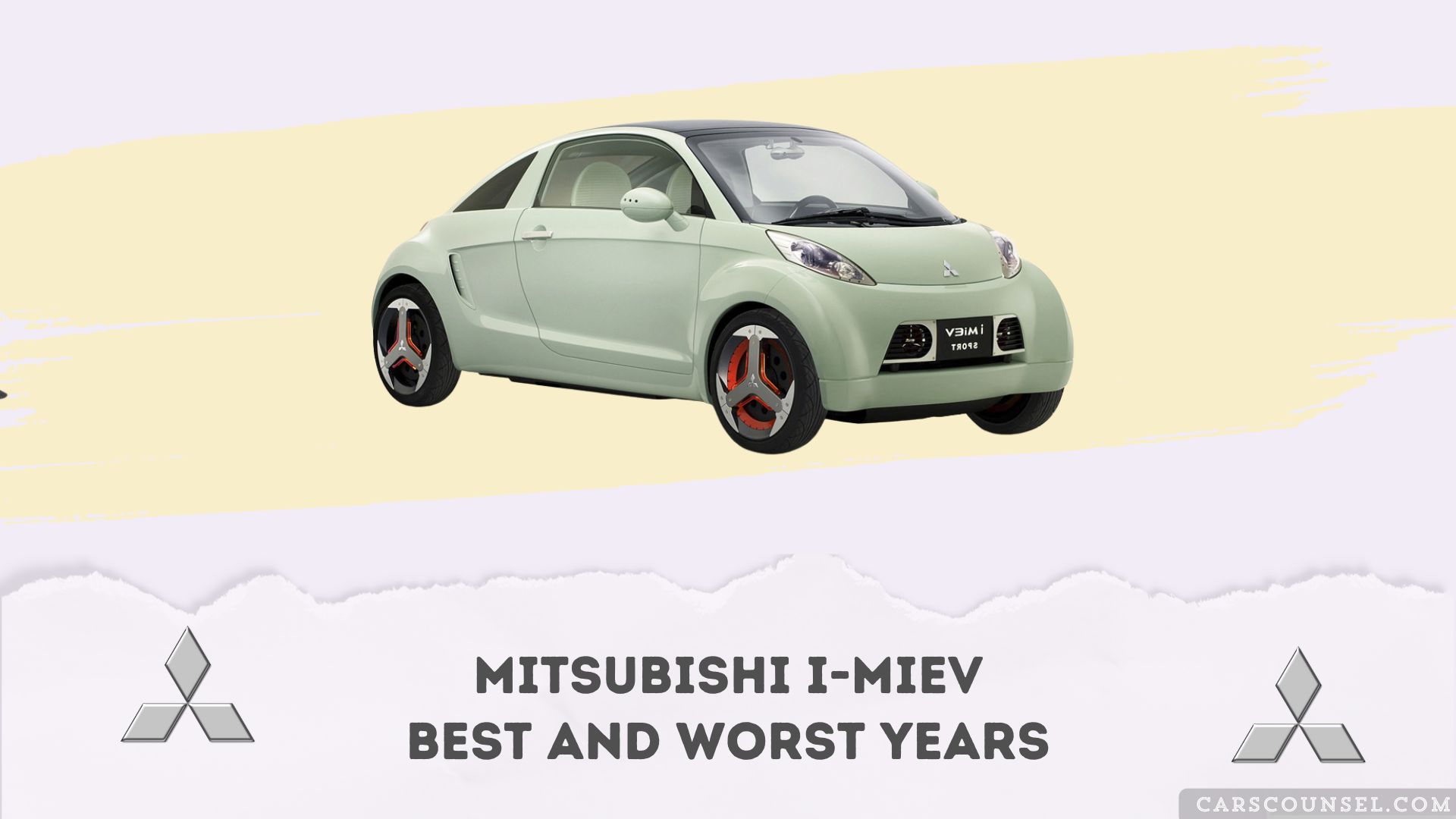
The 2017 Mitsubishi i-MiEV is the best model year for used buyers, offering the most refined experience before its discontinuation. We recommend avoiding the 2012 and 2013 models due to frequent onboard charger failures and significant battery degradation.
These rankings are comparative within a very niche, low-range electric vehicle market. No used i-MiEV is flawless, and long-term reliability depends entirely on battery health, maintenance, and whether critical components have been replaced.
Meaningful differences exist between early and late models. Later years benefit from software refinements and improved build quality, while early models suffer from expensive electrical failures that can easily exceed the vehicle’s total value.
Quick Navigation
Best and Worst Mitsubishi i-MiEV Years at a Glance
| Model Year | Verdict | Main Reason | Buyer Guidance |
|---|---|---|---|
| 2012 | Avoid | First-year electrical bugs, high OBC failure rate | Too risky unless OBC and battery are verified |
| 2013 | Avoid | Severe battery degradation, vacuum pump recalls | Check battery State of Health before considering |
| 2014 | Approach Carefully | OBC remains a risk, limited parts availability | Pre-purchase inspection with EV scanner required |
| 2015-2016 | Good Choice | Fewer electrical issues, mature platform | Verify battery capacity and complete service history |
| 2017 | Best Late-Generation Choice | Final US model year, most refined | Best option for dedicated city commuters |
Key Takeaways
- The 2017 model is the strongest choice, benefiting from late-production refinements.
- Avoid 2012 and 2013 models due to expensive onboard charger and battery issues.
- Battery State of Health is the single most critical factor for any used i-MiEV.
- The Onboard Charger is a known failure point; verify if it has been replaced.
- Real-world range is often below 60 miles, making this strictly a city vehicle.
- Always check the VIN for open recalls, including brake vacuum pump campaigns.
- An independent pre-purchase inspection with an EV-capable scanner is mandatory.
How We Evaluated the Mitsubishi i-MiEV Model Years
Our analysis considers official recalls, manufacturer service campaigns, and consumer complaints. We evaluate powertrain durability, electrical system reliability, and battery degradation patterns specific to early electric vehicles.
Complaints are not failure rates, and a recall does not automatically make a year unreliable. Recent years have less ownership history. Best means comparatively stronger, not flawless.
Best Mitsubishi i-MiEV Years
2017
The 2017 model is the final year sold in the United States. It benefits from late-production software refinements and improved build quality compared to early models.
While battery degradation remains a factor for all vehicles of this era, the 2017 model generally shows better long-term cell balancing. It remains the most refined option for buyers.
2015-2016
These middle years represent a mature phase of the platform. Mitsubishi addressed several early electrical gremlins, resulting in fewer reported onboard charger failures.
Buyers must still verify the battery State of Health. A well-maintained 2016 model with a documented OBC replacement can be a solid, budget-friendly city commuter.
Best Year by Buyer Type
Best City Commuter: 2017
The 2017 model offers the most predictable reliability for daily urban driving. Its refined electronics reduce the risk of being stranded by a charging system failure.
Best Budget EV: 2015-2016
These years are often priced lower than the 2017 model. They are viable only if the battery health is verified and critical recalls have been performed.
Years to Approach Carefully
2014
The 2014 model sits between the problematic early years and the refined later models. It still carries a notable risk of onboard charger failure.
Parts availability for the charging system is limited. Buyers should only consider this year if a comprehensive diagnostic scan confirms the charging system is healthy.
Worst Mitsubishi i-MiEV Years
2012-2013
These early US model years are plagued by expensive electrical failures. The onboard charger is prone to catastrophic failure, which can also damage the DC-DC converter.
Additionally, these years suffer from severe battery degradation. Replacing the high-voltage battery easily exceeds the vehicle’s total value, making these years a massive financial risk.
Mitsubishi i-MiEV Reliability by Generation
The i-MiEV represents a unique, experimental era for Mitsubishi in the United States. It was sold as a single generation from 2012 through 2017.
Early models struggled with charging hardware and battery management software. Later models received crucial updates that improved charging reliability and cell longevity.
Buyers looking for a traditional vehicle with more range and conventional reliability might consider the Mitsubishi Outlander or the compact Mitsubishi Mirage.
Common Mitsubishi i-MiEV Problems
Onboard Charger (OBC) Failure
The OBC is notorious for failing, particularly in 2012-2014 models. When it fails, the vehicle cannot charge from a standard wall outlet.
In some cases, a failing OBC can send a voltage spike that destroys the DC-DC converter. This dual failure results in a very expensive repair.
Battery Degradation
Like all early electric vehicles, the i-MiEV’s 16 kWh battery loses capacity over time. Many older examples now struggle to achieve 40 miles of real-world range.
Unlike some modern EVs, replacement battery packs are virtually nonexistent on the aftermarket. Buyers must check the battery State of Health via an OBDII scanner.
12-Volt Battery Drain
The i-MiEV relies on the high-voltage battery to maintain the standard 12-volt accessory battery. If the car sits unplugged for extended periods, the 12-volt battery will die.
A dead 12-volt battery prevents the vehicle’s computers from booting, making it impossible to start or charge the car until the 12-volt unit is replaced.
Brake Vacuum Pump Issues
Some model years experienced failures of the brake vacuum pump, which provides power assist to the braking system. Mitsubishi issued recalls for this issue on certain vehicles.
Buyers must verify that all brake-related recall work has been completed by a certified dealer to ensure safe stopping performance.
Repair-Cost Overview
| Problem | Commonly Affected Years | Approximate Repair Range | Important Notes |
|---|---|---|---|
| Onboard Charger Replacement | 2012-2014 | $2,000 – $3,500 | May require DC-DC converter replacement if damaged |
| 12-Volt Battery Replacement | All Years | $150 – $250 | Requires specific AGM or compatible EV auxiliary battery |
| Brake Vacuum Pump | 2012-2014 | $400 – $800 | Often covered if included in an open safety recall |
Repair costs vary significantly by region, labor rates, and parts availability. Because the i-MiEV is a discontinued, low-volume EV, sourcing original parts can be difficult and expensive. Always get a quote from an EV-certified technician before purchasing.
What to Check Before Buying a Used Mitsubishi i-MiEV
- Verify the VIN for open recalls, especially brake vacuum pump and airbag campaigns.
- Use an EV-capable OBDII scanner to check the high-voltage battery State of Health.
- Confirm if the Onboard Charger has been replaced and check for DC-DC converter health.
- Inspect the 12-volt battery age and ensure the charging system maintains it properly.
- Test the regenerative braking system and listen for unusual noises from the brake vacuum pump.
- Review service records to confirm the cabin air filter and brake fluid have been changed.
- Arrange an independent pre-purchase inspection with a technician experienced in early EVs.
Related Buying Guides
- Mitsubishi Eclipse best and worst years: A look at Mitsubishi’s iconic discontinued coupe for buyers wanting sporty styling instead of electric commuting.
- Mitsubishi Lancer Evolution best and worst years: Explore the legendary rally-bred sedan for enthusiasts seeking performance and all-wheel-drive capability.
- Mitsubishi Galant best and worst years: Review the traditional midsize sedan alternative for buyers who need more interior space and highway range.
Frequently Asked Questions
What is the best year for a used Mitsubishi i-MiEV?
The 2017 model is the best choice. As the final US model year, it features the most refined electronics and generally shows better battery cell balancing than earlier versions.
Should I avoid the 2012 Mitsubishi i-MiEV?
Yes, we recommend avoiding the 2012 model. It suffers from frequent onboard charger failures and severe battery degradation, making it a significant financial risk for used buyers.
How far can a used i-MiEV actually drive?
While early EPA estimates suggested 62 miles, real-world range for a used i-MiEV is often between 40 and 50 miles. Battery degradation heavily impacts older models.
Is the Mitsubishi i-MiEV good for highway driving?
No, the i-MiEV is strictly a city commuter. Its top speed is limited, and highway driving drains the small battery pack extremely fast, reducing an already short range.
What happens if the onboard charger fails?
If the onboard charger fails, the car cannot charge from a standard wall outlet. In severe cases, it can send a voltage spike that destroys the DC-DC converter.
Are replacement batteries available for the i-MiEV?
Replacement high-voltage batteries are virtually nonexistent on the aftermarket. If the battery degrades severely, the cost and difficulty of replacement usually exceed the car’s value.
Choosing the Right Mitsubishi i-MiEV Model Year
The 2017 Mitsubishi i-MiEV remains the strongest choice for buyers seeking a budget-friendly electric city commuter. It avoids the severe electrical gremlins that plagued early models.
Buyers should strictly avoid the 2012 and 2013 models due to the high risk of catastrophic charging system failures. Battery health is the ultimate deciding factor for any year.
Always verify the VIN for open recalls and arrange an independent inspection with an EV-capable scanner. Proper maintenance and careful charging habits are essential for long-term ownership.

