You’ve likely heard stories of kids getting hurt in car accidents due to improper seat belt use.
Quick Navigation
Key Takeaways
- Nebraska requires booster seats until a certain weight or height.
- Children must ride in back seats with child safety seats.
- Booster seats position seat belts correctly over shoulders.
- Fines for non-compliance can reach up to $25.
- One point is added to driving record for non-compliance.
Understanding Nebraska’s Child Safety Seat Requirements
Understanding Nebraska’s child safety seat requirements is essential for you to guarantee your child’s safety while traveling in a vehicle.
You must use a booster seat until your child reaches a certain weight or height. Nebraska law requires children to ride in a back seat equipped with child safety seats.
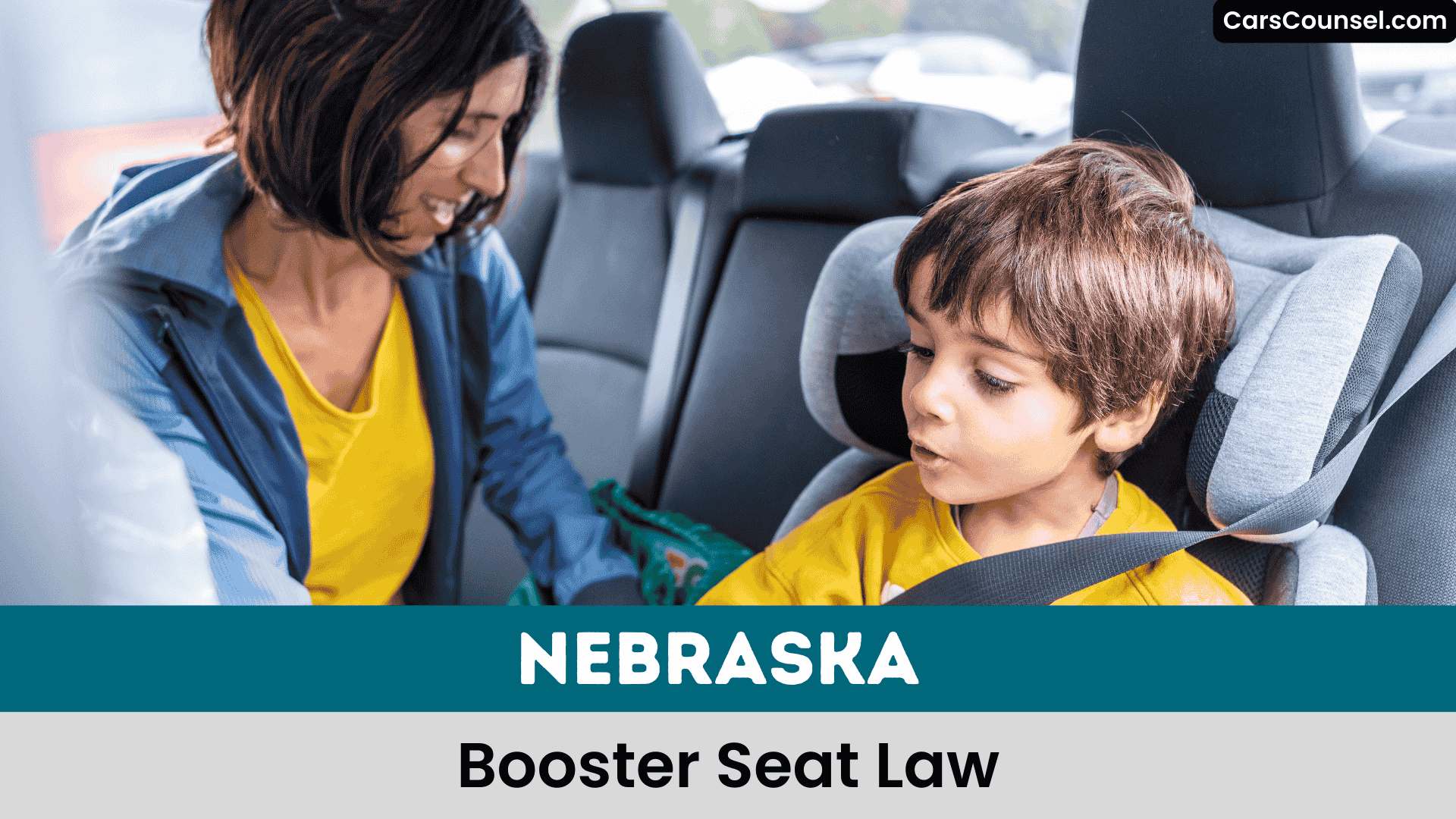
A booster seat properly positions the seat belt over your child’s shoulder and hips, ensuring safety. This helps reduce serious injuries in crashes, so it’s important to follow these regulations.
Penalties for Non-Compliance With Car Seat Laws
You’ll face penalties if you don’t comply with Nebraska’s car seat laws.
- Fines up to $25
- One point on your record
- Reduced financial recovery for injuries, as per seat belt law and booster seats guidance by a Child Passenger Safety Technician.
Safety Tips for Proper Car Seat Installation and Use
You’ll ascertain your child’s safety by following the vehicle owner’s manual and the car seat manufacturer’s instructions for proper installation.
To verify that the car seat is correctly installed, you should check that it’s securely fastened and doesn’t move more than an inch in any direction when pulled.
You can also utilize online resources and have your installation inspected by a certified technician to confirm safe installation and proper use of the car seat.
Safe Installation
Proper installation of a booster seat is essential for guaranteeing your child’s safety while traveling in a vehicle.
You’ll find proper installation guidelines in the booster seat manual.
To install,
- check the upper weight and height limits
- make sure it’s securely fastened
- follow guidelines for your child’s size.
Proper Use
After installing a booster seat, it’s time to focus on using it correctly.
You’ll want to make sure the seat belt provides proper restraint. The lap belt should fit snugly across your child’s hips, and the shoulder strap should rest on their collarbone.
This makes certain the child restraint system works correctly, keeping your child safe in booster seats.
Check the seat belt fit regularly to confirm it’s providing proper restraint as your child grows.
Types of Car Seats and Their Usage Guidelines
You’ll need to understand the different types of car seats, including booster seats, to guarantee you’re using the correct one for your child.
Car seat types vary based on a child’s age, weight, and height, and you must follow specific usage guidelines to maximize safety.
As you investigate the types of car seats and their usage guidelines, you’ll learn when to transition from one type to another, such as from a forward-facing car seat to a booster seat, to keep your child protected while traveling in a vehicle.
Car Seat Types
Car seats come in various types, each designed for a specific age and weight range, and it’s essential to choose the right one for your child.
You’ll consider factors like weight limit and height limits.
Key options include:
- Booster seats
- Forward-facing seats
- Rear-facing seats, all adhering to the car seat manufacturer guidelines.
Seat Usage
As parents confirm their child’s safety, they must consider the guidelines for using different types of car seats, which are essential in preventing injuries and fatalities.
You’ll use booster seats for children under eight years until they properly fit into a seat belt. The height limit allowed is typically 4’9″.
Verify the seat belt fits correctly, with the shoulder strap on the collarbone and lap belt across the hips, to keep your child safe while traveling in a vehicle with booster seats.
Choosing the Right Car Seat for Your Child
Typically, around 4 years old or 40 pounds, children outgrow forward-facing car seat limits and it’s time to switch to a booster seat.
You’ll need to choose one that guarantees proper seat belt positioning. Consider the following:
- Height or weight limits
- Certified Child Passenger Safety features
- Correct lap and shoulder belt fit.
Verify the booster seat meets your child’s needs and complies with safety standards for maximum protection.
School-Age Child Boosters and Their Importance
When your child outgrows their forward-facing seat, you’ll need to transition them to a booster seat that secures proper seat belt positioning.
Booster seats are essential for children up to age 8, as they reduce the risk of injury. A properly fitted booster seat guarantees the seat belt fits correctly, decreasing the likelihood of serious injuries.
Using booster seats can reduce the risk of injury by 45% for children aged 4 to 8, making them an important safety measure.
Additional Resources for Car Seat Safety and Installation
You’ll find numerous resources available to help you guarantee your child’s car seat or booster seat is installed correctly.
- Get your car seat checked by a certified technician.
- Review installation tips from the manufacturer.
- Utilize online resources for guidance, ensuring a correctly installed seat.
Heatstroke Awareness and Prevention Measures
As heatstroke can occur rapidly in vehicles, even on mild days, it’s essential that caregivers take preventive measures to protect children from this severe risk.
You must prioritize children’s safety to prevent heatstroke and vehicle crashes. Never leave children alone in a car, as their bodies heat up faster than adults’, increasing vulnerability to heat-related illnesses, compromising their safety.
Protecting Your Children With the Right Car Seat and Seeking Legal Support
Protecting your children with the right car seat is essential, because it significantly reduces the risk of injury or fatality in a crash.
You should guarantee proper installation of booster seats and child safety seats.
Consider:
- Checking height and age requirements
- Confirming proper seat belt fit
- Seeking legal support for compliance and accidents, making sure you’re protected with the right car seat and legal support.
State-by-State Booster Seat Laws: Age/Weight Requirements, Rules & Penalties
| Alabama | Alabama requires children age 5 and under to ride in a child safety seat; booster seats are mandated for children who outgrow forward-facing seats until age/weight limits are met. Penalties include fines for noncompliance. |
| Alaska | Alaska’s law mandates booster seats for children who exceed forward-facing limits up to age 8 or height thresholds. Failure to comply can result in citations and fines. |
| Arizona | Arizona requires children under age 5 in appropriate child restraints; boosters are required until children reach height/weight guidelines. Violations may lead to fines. |
| Arkansas | Arkansas requires booster seats for children ages 4–8 who outgrow forward-facing seats until they meet height/weight requirements; noncompliance can lead to penalties. |
| California | California mandates booster seats for children under age 8 unless they are 4’9″ tall. Violations result in fines and may increase insurance costs. |
| Colorado | Colorado law requires boosters for children over forward-facing limits through age 8 or until height/weight thresholds are met. Fines apply for nonuse. |
| Connecticut | Connecticut requires booster seats for children under age 8 who have outgrown forward-facing seats. Penalties include fines for noncompliance. |
| Delaware | Delaware mandates booster seats for children who exceed forward-facing limits up to age 8; infractions can lead to monetary penalties. |
| Florida | Florida requires children under age 6 to be in an appropriate child restraint; boosters are recommended until height/weight limits are met. Violations can result in fines. |
| Georgia | Georgia law requires boosters for children ages 4–7 who exceed forward-facing seat limits until they reach height/weight thresholds. Penalties include fines. |
| Hawaii | Hawaii mandates booster seats for children who have outgrown forward-facing limits up to age 8 or height/weight requirements; fines apply for nonuse. |
| Idaho | Idaho requires booster seats for children after forward-facing stage through age 7 or until height/weight thresholds are met. Noncompliance carries fines. |
| Illinois | Illinois law requires booster seats for children under age 8 unless they exceed height/weight limits; violations result in fines. |
| Indiana | Indiana mandates boosters for children who outgrow forward-facing seats through age 7 or until meeting height/weight standards; penalties include fines. |
| Iowa | Iowa requires booster seats for children ages 4–7 who exceed forward-facing stage until they reach height/weight limits; fines may be imposed. |
| Kansas | Kansas mandates booster seats for children who have outgrown forward-facing seats through age 8 or until height/weight limits are met; violations carry fines. |
| Kentucky | Kentucky law requires boosters for children over forward-facing limits through age 8 or height/weight criteria; infractions result in fines. |
| Louisiana | Louisiana mandates booster seats for children after the forward-facing stage up to age 8 or until proper height/weight is reached; fines apply. |
| Maine | Maine requires booster seats for children who outgrow forward-facing seats until age 8 or height/weight criteria are met; noncompliance may lead to fines. |
| Maryland | Maryland law mandates boosters for children beyond forward-facing limits until age 8 or height/weight thresholds; penalties include fines. |
| Massachusetts | Massachusetts requires booster seats for children who exceed forward-facing stages until age 8 or height/weight limits; fines apply for violations. |
| Michigan | Michigan mandates booster seats for children after forward-facing stage through age 8 or until height/weight requirements are met; fines may be assessed. |
| Minnesota | Minnesota requires boosters for children who exceed forward-facing limits until age 8 or height/weight criteria are met; noncompliance results in fines. |
| Mississippi | Mississippi mandates booster seats for children beyond forward-facing limits through age 8 or until proper height/weight; violations carry fines. |
| Missouri | Missouri’s booster seat law requires usage for children who outgrow forward-facing seats until age 7 or height/weight thresholds; fines may apply. |
| Montana | Montana requires booster seats for children after forward-facing limits until age 7 or height/weight benchmarks; fines for noncompliance. |
| Nevada | Nevada’s law requires boosters for children after forward-facing limits until age 6 or height/weight criteria are met; fines may be imposed. |
| New Hampshire | New Hampshire requires booster seats for children beyond forward-facing limits up to age 7 or until height/weight thresholds apply; fines for violations. |
| New Jersey | New Jersey mandates booster seats for children who exceed forward-facing stages until age 8 or height/weight limits; noncompliance results in fines. |
| New Mexico | New Mexico requires booster seats after forward-facing limits through age 7 or height/weight thresholds; violations may lead to fines. |
| New York | New York’s booster seat law requires usage until age 8 or until height/weight limits are met. Penalties include fines and possible points. |
| North Carolina | North Carolina mandates booster seats for children who outgrow forward-facing seats until age 8 or height/weight criteria; fines apply. |
| North Dakota | North Dakota requires booster seats after forward-facing stage through age 7 or until height/weight thresholds; penalties include fines. |
| Ohio | Ohio mandates booster seats for children beyond forward-facing limits until age 8 or height/weight criteria are met; fines may be assessed. |
| Oklahoma | Oklahoma requires booster seats for children who exceed forward-facing limits through age 8 or height/weight benchmarks; fines apply. |
| Oregon | Oregon’s booster seat law mandates usage for children after forward-facing limits until age 8 or height/weight requirements; penalties include fines. |
| Pennsylvania | Pennsylvania requires boosters for children who outgrow forward-facing seats until age 8 or height/weight limits; fines apply for noncompliance. |
| Rhode Island | Rhode Island mandates boosters until age 8 or height/weight criteria are met. Violations may result in fines. |
| South Carolina | South Carolina requires booster seats for children beyond forward-facing limits through age 8 or height/weight benchmarks; fines apply. |
| South Dakota | South Dakota mandates boosters for children after forward-facing stage until age 7 or height/weight limits; penalties include fines. |
| Tennessee | Tennessee requires booster seats for children who outgrow forward-facing limits until age 8 or height/weight criteria; fines may be imposed. |
| Texas | Texas mandates booster seats for children beyond forward-facing seats until age 8 or height/weight thresholds; violations result in fines. |
| Utah | Utah’s booster seat law requires usage until age 8 or until height/weight requirements are met; fines apply for violations. |
| Vermont | Vermont requires booster seats for children who exceed forward-facing seat limits until age 8 or height/weight benchmarks. Noncompliance carries fines and possible points. |
| Virginia | Virginia mandates booster seats until age 8 or until height/weight criteria; violations may lead to fines and points. |
| Washington | Washington requires boosters for children who outgrow forward-facing limits up to age 8 or height/weight limits; fines can be assessed. |
| West Virginia | West Virginia mandates booster seats until age 8 or height/weight thresholds are met; penalties include fines. |
| Wisconsin | Wisconsin requires booster seats for children beyond forward-facing limits through age 8 or height/weight criteria; fines may apply. |
| Wyoming | Wyoming’s booster seat law mandates usage for children who outgrow forward-facing seats until age 8 or height/weight limits; noncompliance results in fines. |
Frequently Asked Questions
What Are the Height and Weight Requirements for a Booster Seat in Nebraska?
You must use a booster seat until you’re at least 4 feet 9 inches tall, following booster seat guidelines to guarantee child safety and adhering to safety standards.
What Age and Weight Can a Child Get Out of a Booster Seat?
You can get your child out of a booster seat at 8 years old, following booster seat guidelines and safety regulations, as a child passenger, adhering to car seat laws.
Should My 7 Year Old Be in a Backless Booster Seat?
You should consider a backless booster for your 7-year-old, weighing its safety benefits against child passenger guidelines and various booster seat types to guarantee proper fit and ideal backless booster safety.
When to Move a Kid Into a Booster Seat?
You’re steering through booster seat safety, so shift your kid when they outgrow their forward-facing seat, following changing guidelines and legal requirements for various child seat types, ensuring proper fit.
Conclusion
You’ll be safeguarding your child’s safety by following Nebraska’s booster seat law. Significantly, the National Highway Traffic Safety Administration reports that booster seats reduce the risk of fatal injury by 45% for children aged 4-8. You’re taking an essential step in protecting your child, so make sure you’re using the right car seat and seeking guidance when needed.

