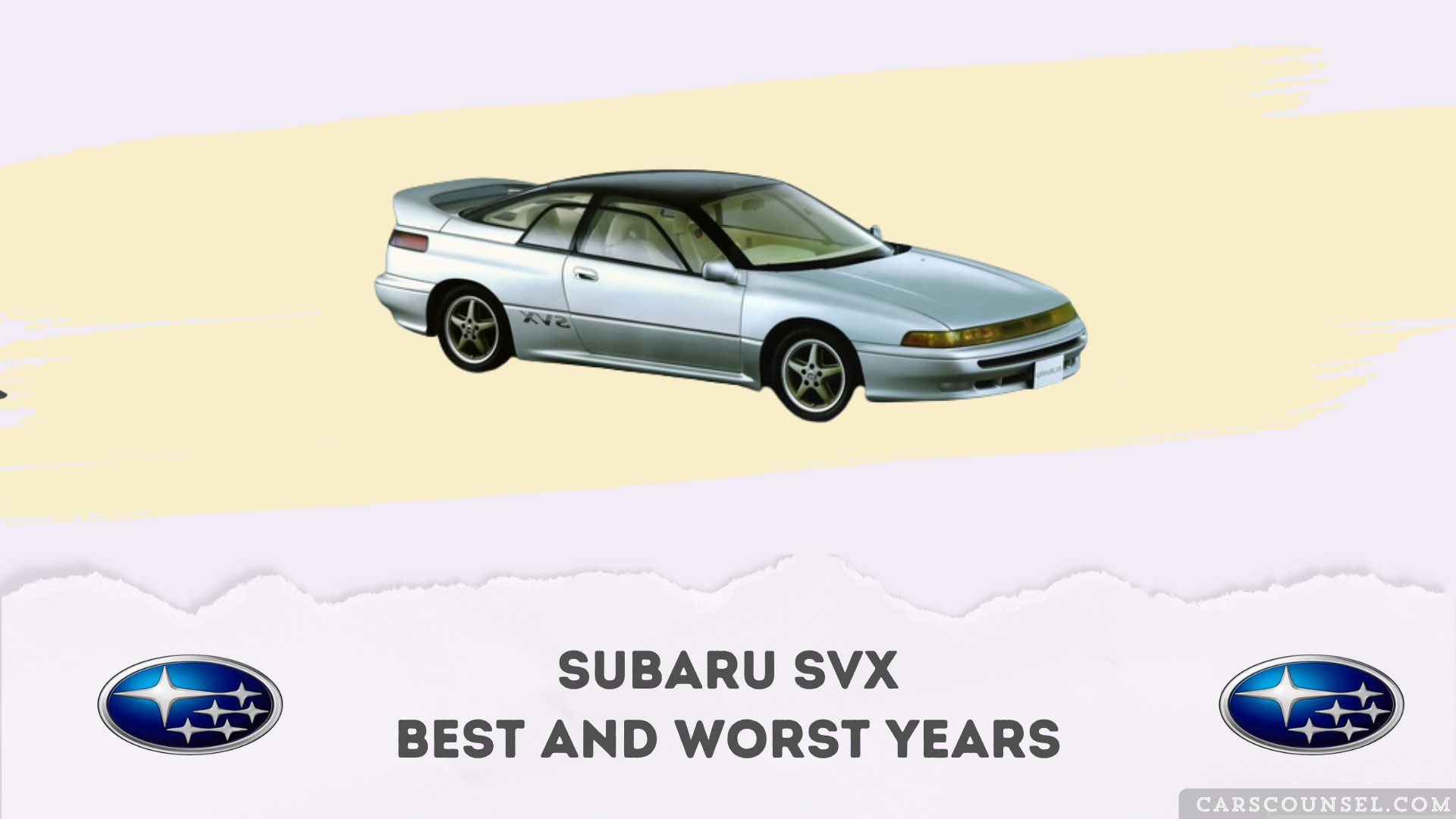
The best Subaru SVX model years are 1993 through 1997, offering mature production of the brand’s unique flat-six grand tourer. Buyers should approach the 1992 model year carefully due to first-year electrical quirks and early transmission cooling flaws.
Rankings for classic Japanese grand tourers remain comparative. No thirty-year-old vehicle is flawless, and individual maintenance history matters far more than the factory build year.
Meaningful differences are minimal across the production run. The 3.3L EG33 engine and 4-speed automatic transmission remained largely unchanged, making condition and upkeep the primary deciding factors.
Quick Navigation
Best and Worst Subaru SVX Years at a Glance
| Model Year Range | Verdict | Main Reason | Buyer Guidance |
|---|---|---|---|
| 1992 | Approach Carefully | First-year production quirks and early transmission cooling flaws. | Verify early electrical sorting and install an aftermarket transmission cooler. |
| 1993-1997 | Best Enthusiast Choice | Mature production with the robust 3.3L flat-six and permanent AWD. | Demand strict timing belt records and inspect window motors. |
Key Takeaways
- The 1993-1997 models are the strongest choices for enthusiasts seeking Subaru‘s unique flat-six grand tourer.
- Buyers researching years to avoid should note that no model year carries a strict Avoid verdict, but 1992 requires the most scrutiny.
- The 3.3L EG33 flat-six engine is robust, but the 4-speed automatic transmission is prone to overheating without an aftermarket cooler.
- All years require strict timing belt maintenance, as the EG33 is an interference engine.
- Window motors, ABS modules, and wheel bearings are common failure points across all model years.
- Always verify the vehicle’s maintenance history and arrange an independent pre-purchase inspection.
How We Evaluated the Subaru SVX Model Years
Our analysis considers factory powertrain configurations, unique platform engineering, and long-term enthusiast ownership patterns. We evaluate transmission cooling requirements, timing belt intervals, and the critical importance of specialized maintenance.
Consumer complaints and forum reports highlight recurring mechanical flaws. Individual condition and service history dictate value and reliability. Best means comparatively stronger for collectors, not flawless.
Best Subaru SVX Years
1993-1997: Best Enthusiast Choice
The 1993 through 1997 model years represent the mature production of the SVX. The factory ironed out most first-year assembly gremlins, leaving a highly capable all-wheel-drive grand tourer with a smooth 230-horsepower flat-six engine.
While these later years are the most desirable, they still require strict adherence to maintenance schedules. The 4-speed automatic transmission benefits greatly from an aftermarket cooler to prevent overheating and premature failure.
Best Subaru SVX Year by Buyer Type
Best Enthusiast Choice: 1994-1997 LSi
The LSi trim with the permanent AWD system offers the ultimate SVX experience. The 3.3L flat-six delivers smooth torque, and the 1994 model year saw the highest production numbers.
Years to Approach Carefully
1992: Approach Carefully
The inaugural 1992 model year suffers from first-year production quirks. Early examples are more prone to electrical gremlins, and the transmission cooling system was inadequate for the heavy coupe‘s performance.
Buyers should prioritize 1992 examples that have already received an aftermarket transmission cooler. Documented evidence of sorted electrical components and window regulators is also essential for these early cars.
Subaru SVX Reliability by Generation
First Generation (1992-1997)
The SVX spans a single generation built on a dedicated platform. It shares no meaningful architectural components with the contemporary Legacy, making its parts supply highly specialized and distinct from mainstream models.
The 3.3L EG33 flat-six engine is remarkably durable when properly maintained. However, the lack of a manual gearbox and the complex wiring harnesses define the ownership experience for this unique grand tourer.
Common Subaru SVX Problems
Transmission Problems
The 4-speed automatic transmission is the most significant mechanical weak point. The factory cooling system is inadequate, leading to overheated transmission fluid and premature failure, especially in warmer climates.
Installing an aftermarket transmission cooler is considered mandatory by enthusiasts to ensure the longevity of the drivetrain. Buyers must verify whether this critical upgrade has already been performed.
Engine Problems
The EG33 flat-six is an interference engine. If the timing belt snaps or jumps time, the pistons will strike the valves, resulting in catastrophic engine damage and extremely expensive repairs.
Electrical Problems
The SVX is notorious for failing power window motors and regulators. The complex wiring harnesses and heavy glass panels place immense strain on the factory motors, frequently requiring rebuilds or aftermarket replacements.
Steering and Suspension Problems
Wheel bearing failures and ABS modules are common issues. The heavy weight of the vehicle places significant stress on the bearings, while the ABS control modules are prone to internal solder joint failures.
What to Check Before Buying a Used Subaru SVX
- Verify comprehensive service records proving strict timing belt and water pump replacements.
- Inspect the transmission fluid for signs of overheating and verify the installation of an aftermarket cooler.
- Test all power windows, as the motors and regulators are expensive and difficult to source.
- Check the ABS warning light on the dashboard to ensure the ABS control module is functioning correctly.
- Inspect the unique “window-within-a-window” glass seals for dry rot and water leaks.
- Arrange an independent pre-purchase inspection with a classic specialist.
Related Buying Guides
- Subaru WRX best and worst years: A modern performance alternative for enthusiasts who want all-wheel-drive rally heritage and turbocharged power without the grand tourer weight and maintenance burden of the SVX.
- Subaru Baja best and worst years: A practical utility alternative for buyers who want unique styling and all-weather capability, though it lacks the flat-six refinement and premium coupe experience.
Frequently Asked Questions
Which Subaru SVX year is the most desirable?
The 1993 through 1997 model years are the most desirable. They feature mature production, sorted electrical systems, and the robust 3.3L flat-six engine, with 1994 offering the highest availability.
Is the Subaru SVX reliable?
The SVX is a complex, low-volume classic car, not a reliable daily driver. It requires constant, meticulous maintenance and specific aftermarket upgrades, like a transmission cooler, to prevent major failures.
What is the most common Subaru SVX problem?
Transmission overheating and power window motor failures are the most common problems. The factory transmission cooler is inadequate, and the heavy window glass frequently destroys the factory regulators and motors.
Will the Subaru SVX hold its value?
Yes, clean, well-maintained examples with the LSi trim and all-wheel drive have seen steady appreciation. They are highly sought after by collectors as a unique piece of 1990s Japanese grand touring history.
Does the SVX share parts with the Subaru Legacy?
No, the SVX was built on a dedicated platform with a unique 3.3L flat-six engine. It shares very few mechanical, electrical, or body components with the contemporary Legacy or Impreza models.
Should I buy a used Subaru SVX?
You should only buy an SVX if you have access to a specialist and a substantial maintenance budget. Individual condition, documented timing belt service, and transmission cooling upgrades are critical.
Choosing the Right Subaru SVX Model Year
The 1993 through 1997 model years offer the ultimate classic SVX experience, delivering mature production and the smooth 3.3L flat-six engine. Buyers should approach the 1992 first-year models with caution.
Because these are complex, thirty-year-old grand tourers, individual condition and comprehensive maintenance records dictate the vehicle’s true value. Never finalize a purchase without verifying the timing belt history and arranging an independent inspection.

