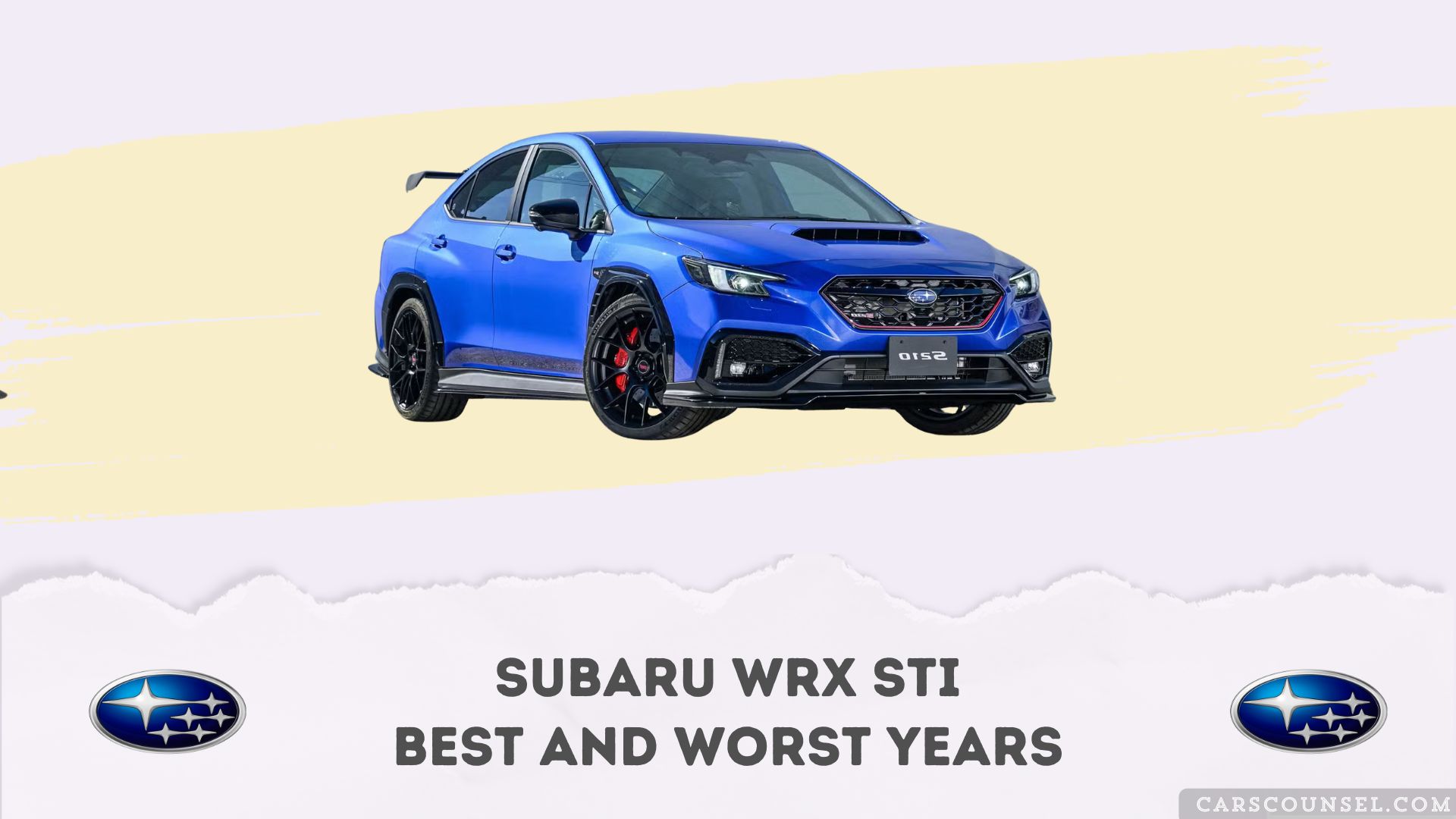
The best Subaru WRX STI model years are 2018 through 2021, offering the most refined version of the VA chassis with updated technology and mature reliability. The 2006 and 2007 “Hawkeye” models remain top enthusiast choices for their raw analog feel and collector appeal.
No WRX STI is entirely flawless, as the turbocharged EJ257 engine demands strict maintenance and is highly sensitive to previous owner modifications. Condition and service history matter far more than the badge on the trunk.
Buyers must also weigh configuration differences, primarily the transition from the widebody hatchback to the sedan, and the introduction of the VA generation in 2015, which brought updated safety features but new steering rack quirks.
Quick Navigation
Best and Worst Subaru WRX STI Years at a Glance
| Model Year Range | Verdict | Main Reason | Buyer Guidance |
|---|---|---|---|
| 2018-2021 | Best Choice | Final, most refined VA generation | Verify steering rack and service history |
| 2015-2017 | Good Choice | Modern sedan with early VA quirks | Check infotainment and clutch condition |
| 2011-2014 | Good With Inspection | GV sedan return, mature EJ257 | Inspect for ringland failure and abuse |
| 2008-2010 | Approach Carefully | Early GR hatchback teething issues | Demand extensive engine rebuild records |
| 2006-2007 | Best Enthusiast Choice | Iconic Hawkeye design, collector demand | Expect high mileage and modification risks |
| 2004-2005 | Best Enthusiast Choice | First USDM STI, raw performance | Verify structural integrity and rust |
Key Takeaways
- The 2018-2021 models represent the strongest overall choices for modern daily driving and track use.
- Early GR hatchbacks (2008-2010) require extreme caution due to higher reports of internal engine failures.
- The EJ257 engine is vulnerable to ringland failure and rod knock, especially if previously tuned or poorly maintained.
- The 2015-2017 VA models introduced a new steering rack that is prone to clunking and premature wear.
- Recent model years are discontinued, meaning long-term support relies on the aftermarket and specialist shops.
- Always verify the VIN for open recalls and demand a pre-purchase inspection by a Subaru specialist.
- Heavily modified examples should generally be avoided unless professionally built and fully documented.
How We Evaluated the Subaru WRX STI Model Years
Our analysis considers official recalls, NHTSA investigations, manufacturer service campaigns, and long-term ownership patterns. We weigh powertrain differences, generation changes, and the severity of recurring defects.
Complaints are not failure rates, nor are they confirmed defects. A recall does not automatically make a year unreliable, and recent models simply have less ownership history. Best means comparatively stronger within a specialized, high-performance lineup, not flawless.
Best Subaru WRX STI Years
2018-2021 (Best Choice)
The final iteration of the VA generation represents the most complete and refined WRX STI ever sold in the United States. Subaru addressed many early VA infotainment and interior complaints while keeping the legendary 2.5-liter EJ257 flat-four engine.
These years benefit from mature manufacturing processes and updated exterior styling. Buyers should still inspect the steering rack for clunking, but overall ownership satisfaction is exceptionally high for this specialized vehicle.
2006-2007 (Best Enthusiast Choice)
Known affectionately as the “Hawkeye” generation, these GD-chassis models are highly sought after by collectors and purists. They offer a raw, analog driving experience that newer cars cannot replicate.
While they are older and command premium prices in clean condition, their mechanical layout is well understood by the aftermarket community. Finding an unmodified, meticulously maintained example is rare but deeply rewarding.
Best Year by Buyer Type
- Best Overall: 2019-2021
- Best Enthusiast Choice: 2006-2007
- Best Budget Option: 2011-2014
Years to Approach Carefully
2008-2010 (Approach Carefully)
The transition to the widebody GR hatchback brought aggressive styling but also a spike in engine-related complaints. Early examples of this generation saw higher rates of ringland failure and spun bearings.
If you are considering these years, demand comprehensive documentation of any engine rebuilds or internal upgrades. A stock, unmodified example with strict maintenance records is essential to mitigate financial risk.
2015-2017 (Good Choice)
The launch of the VA chassis introduced a dedicated sedan platform with improved rigidity. However, first-year models and early VA builds experienced notable issues with the electric power steering rack and infotainment freezing.
These years are generally solid choices today, provided the steering rack has been inspected or replaced under warranty, and the previous owner avoided aggressive aftermarket tuning.
Worst Subaru WRX STI Years
The Subaru WRX STI does not have traditional “avoid” years in the same way a mass-market commuter car might. Instead, the worst examples are defined by their condition rather than their model year.
Heavily modified examples with undocumented tuning, removed emissions equipment, or abused clutches represent the highest financial risk. The EJ257 engine does not tolerate neglect or poor fuel quality, making a poorly maintained 2019 just as dangerous to buy as a neglected 2008.
Subaru WRX STI Reliability by Generation
GD/GG Generation (2004-2007)
This era established the STI’s rally heritage in the US market. The 2.5-liter EJ257 was introduced, providing massive torque. These cars are now collector items, meaning reliability is entirely dependent on preservation and specialist care.
GR/GV Generation (2008-2014)
Subaru introduced the widebody hatchback in 2008 and brought back the sedan in 2011. This generation refined the aerodynamics and suspension geometry. The powertrain remained largely unchanged, carrying over the EJ257’s specific maintenance requirements.
VA Generation (2015-2021)
Built on a dedicated sedan platform, the VA generation improved daily drivability and safety technology. The 2018 refresh brought necessary updates to the interior and exterior. Subaru discontinued the STI after 2021, ending an era of factory-built rally replicas.
For more on the standard turbocharged sibling, review our guide on the Subaru WRX.
Common Subaru WRX STI Problems
Engine Problems
The EJ257 engine is notorious for ringland failure (cracking of the piston ring lands) and rod knock. These issues are often triggered by detonation, poor maintenance, or aggressive aftermarket tuning.
Steering and Suspension Problems
The 2015-2021 VA models frequently suffer from a clunking or knocking sound in the electric power steering rack. This can require premature replacement and is a known pain point for newer owners.
Clutch and Transmission Wear
As a high-performance all-wheel-drive vehicle, the STI’s clutch and transfer case endure significant stress. Premature wear is common if the vehicle was used for track days or launched frequently by previous owners.
What to Check Before Buying a Used Subaru WRX STI
- Verify the VIN for open recalls and campaign completions.
- Demand a pre-purchase inspection by an independent Subaru specialist.
- Perform a compression and leak-down test to check for ringland failure.
- Inspect the steering rack for play or clunking on VA models.
- Check for unauthorized aftermarket tunes or removed emissions equipment.
- Review service records for strict adherence to severe-duty oil change intervals.
- Inspect the undercarriage for rust, especially on older GD and GR models.
- Test the all-wheel-drive system and center differential for binding or noise.
Related Buying Guides
- Mitsubishi Lancer Evolution best and worst years: The STI’s historic rally rival, offering a different approach to all-wheel-drive performance.
- Subaru BRZ years to avoid: A rear-wheel-drive alternative for buyers who prefer naturally aspirated handling over turbocharged grip.
- Subaru Impreza years to avoid: The practical, non-turbocharged foundation of the STI platform for daily commuting.
Frequently Asked Questions
Is the Subaru WRX STI reliable?
The STI is reliable only when strictly maintained and kept completely stock. The EJ257 engine is fragile when modified or neglected, making condition far more important than the model year.
Why was the WRX STI discontinued?
Subaru discontinued the STI after the 2021 model year to focus on electrification and new safety platforms. The standard WRX continues, but the dedicated STI trim is currently retired.
What is the most common WRX STI engine failure?
Ringland failure and spun rod bearings are the most common catastrophic engine failures. These are usually caused by detonation, poor fuel quality, or aggressive aftermarket tuning.
Do all WRX STI models have a manual transmission?
Yes, every US-market Subaru WRX STI was equipped exclusively with a six-speed manual transmission. There was never a factory automatic STI offered in the United States.
Are WRX STIs expensive to maintain?
Yes, maintenance costs are significantly higher than a standard commuter car. The all-wheel-drive system, turbocharged engine, and performance brakes require frequent, high-quality fluid changes and specialist care.
How can I tell if an STI has been tuned?
Look for aftermarket intake pipes, downpipes, or access ports. A specialist can also check the ECU for flashed software, which often voids the powertrain warranty and increases engine stress.
Which Subaru WRX STI Year Should You Buy?
The 2018 through 2021 model years offer the best balance of modern refinement, updated technology, and mature manufacturing for the VA chassis. They represent the final and most complete evolution of the legendary STI.
Enthusiasts seeking raw analog feedback should target the 2006 and 2007 Hawkeye models, provided they can find a pristine, unmodified example. Avoid heavily modified vehicles regardless of the year, as undocumented tuning is the primary cause of catastrophic engine failure.
Always verify the VIN, demand extensive service records, and secure an independent inspection before finalizing your purchase.

