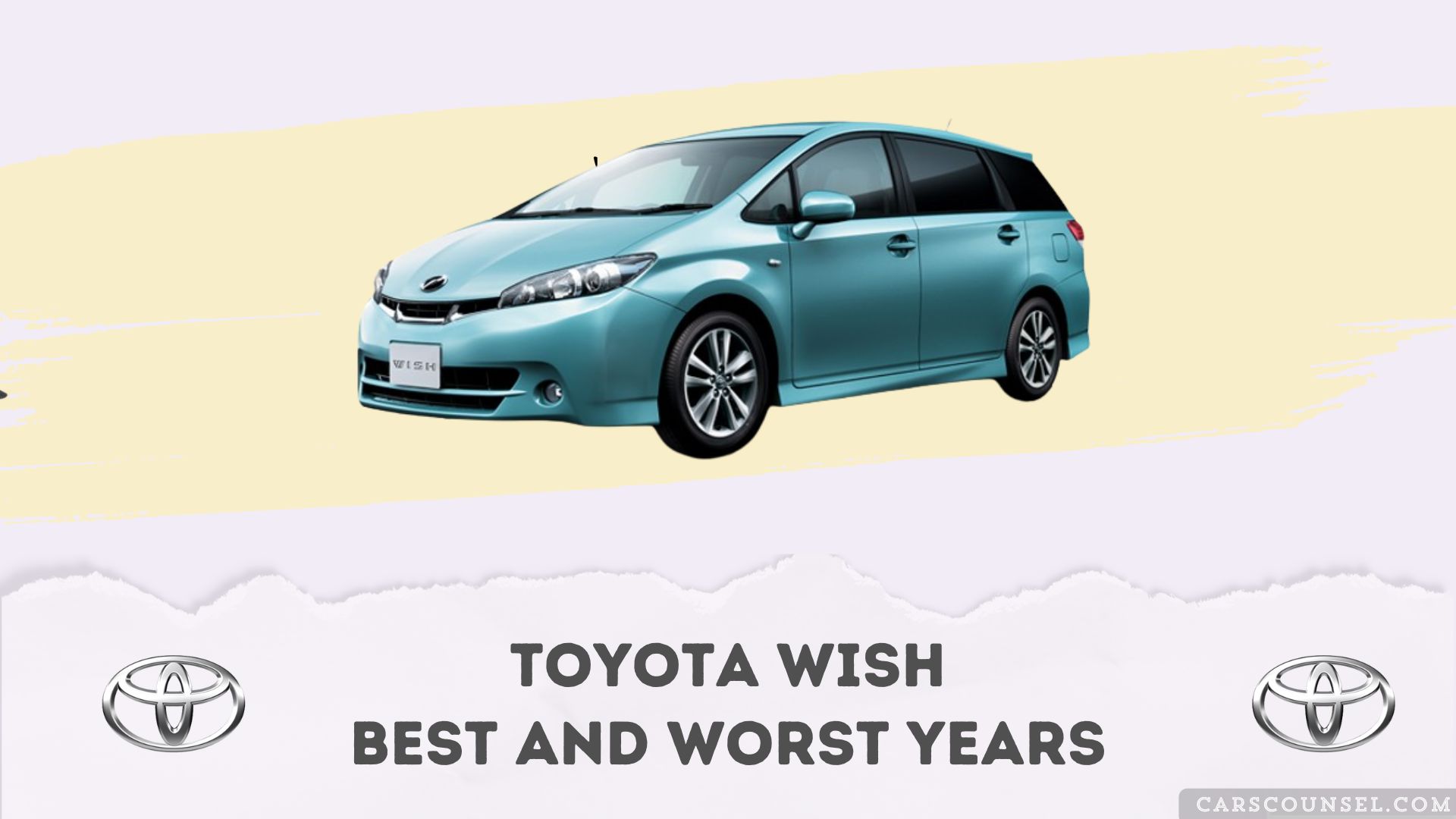
The best Toyota Wish model years are 2012 through 2017, benefiting from mature powertrains and refined electronics. The worst years are 2003 through 2006, plagued by early first-generation engine defects.
Rankings are comparative, and no used vehicle is flawless. Maintenance history and overall condition remain the most critical factors for any imported or used compact MPV.
Because the Wish was never officially sold in the United States, this guide focuses on its Japanese and Asian market specifications, highlighting engine differences that affect grey-market imports.
Quick Navigation
Best and Worst Toyota Wish Years at a Glance
| Model Year Range | Verdict | Main Reason | Buyer Guidance |
|---|---|---|---|
| 2012–2017 | Best Choice | Mature powertrains, reliable CVT | Prioritize 1.8L and 2.0L Valvematic |
| 2009–2011 | Good Choice | Solid engines, minor early second-gen bugs | Check CVT fluid history |
| 2007–2008 | Mixed | Late first-gen, better than early models | Inspect for oil consumption |
| 2003–2006 | Avoid | 1AZ-FSE head bolt issues, 1ZZ-FE oil burning | High risk of expensive engine repairs |
Key Takeaways
- The 2012–2017 models are the strongest choices for long-term dependability.
- Avoid 2003–2006 models due to severe first-generation engine defects.
- The early 2.0L engine is prone to cylinder head bolt thread failure.
- Later 1.8L and 2.0L engines are significantly more durable and efficient.
- Verify import documentation and grey-market compliance before purchasing.
- Always check the chassis code for outstanding recalls in the origin market.
How We Evaluated the Toyota Wish Model Years
Our analysis considers manufacturer service campaigns, consumer complaints, powertrain differences, and generation changes. We evaluate defect severity, recurrence, and repair complexity for this specific compact MPV.
Consumer complaints are not confirmed failure rates. A recall does not automatically make a specific year unreliable. Furthermore, recent models have less long-term ownership history available for evaluation.
Best means comparatively stronger, not flawless. Because the Wish is primarily a Japanese domestic market vehicle, our data reflects its actual production markets rather than United States specifications.
Best Toyota Wish Years
2012–2017 (Best Choice)
The second-generation facelift models offer the most refined ownership experience. Toyota addressed earlier electrical and powertrain complaints, resulting in a much more dependable compact MPV.
The 1.8L 2ZR-FE and 2.0L 3ZR-FAE engines are robust. The continuously variable transmission operates smoothly when properly maintained. Interior materials and infotainment systems also received notable upgrades.
2009–2011 (Good Choice)
The early second-generation models introduced significantly improved engines. The problematic first-generation powertrains were replaced, drastically reducing the risk of catastrophic engine failure.
Some early second-year models may exhibit minor electrical gremlins or CVT shudder if fluid was neglected. However, they remain solid choices compared to the first generation.
Best Year by Buyer Type
Best Overall: 2017
The final production year benefits from over a decade of continuous refinement. It offers the most advanced safety features, updated styling, and the most reliable powertrain configurations.
Best Budget Option: 2010
Early second-generation models provide excellent value. They avoid the severe engine defects of the first generation while remaining highly affordable on the used import market.
Years to Approach Carefully
2007–2008 (Mixed)
These late first-generation models received minor updates but still rely on older engine architectures. The 1.8L engine remains susceptible to oil consumption issues as mileage climbs.
Buyers should thoroughly inspect the engine for sludge and verify compression. A well-maintained example can be reasonable, but neglected vehicles will require expensive repairs.
Worst Toyota Wish Years
2003–2006 (Avoid)
The earliest first-generation models suffer from severe, well-documented engine defects. The 2.0L 1AZ-FSE engine is notorious for cylinder head bolt threads stripping out of the engine block.
This failure leads to massive coolant leaks, overheating, and catastrophic engine damage. The 1.8L 1ZZ-FE engine also suffers from excessive oil consumption due to flawed piston ring designs.
Repairing these engines often requires complete replacement or extensive machine shop work. The financial risk heavily outweighs the low initial purchase price of these early imports.
Toyota Wish Reliability by Generation
First Generation (2003–2009)
The original Wish offered practical seating and versatile cargo space. However, its early powertrains were fundamentally flawed. The cylinder head bolt and oil consumption issues define this generation’s poor reliability.
Later first-generation models saw minor improvements, but the core engine architectures remained vulnerable. Buyers should approach any first-generation import with extreme caution and a strict inspection regimen.
Second Generation (2009–2017)
Toyota completely overhauled the Wish for its second generation. The introduction of the ZR engine family resolved the catastrophic head bolt failures and significantly reduced oil consumption.
The platform was stiffened, and the CVT was refined for better durability. This generation represents a massive leap forward in dependability, making it the clear target for used buyers.
Common Toyota Wish Problems
Engine Problems
The 2.0L 1AZ-FSE engine in early models suffers from cylinder head bolt thread failure. The aluminum block threads strip, causing coolant to mix with oil and destroying the engine.
The 1.8L 1ZZ-FE engine is prone to excessive oil consumption. Faulty piston rings allow oil to enter the combustion chamber, leading to fouled spark plugs and catalytic converter damage.
Transmission Issues
Early continuously variable transmissions may develop shudder or hesitation during acceleration. This is usually caused by degraded CVT fluid or a failing torque converter clutch.
Regular fluid changes are critical for longevity. Neglected transmissions will eventually require complete replacement, which is highly expensive and difficult to source in some import markets.
Water Pump Failures
Both the 1.8L and 2.0L engines in later generations use mechanical water pumps that can fail prematurely. A failing pump causes coolant leaks and potential engine overheating.
Owners should monitor coolant levels closely. Replacing the water pump and thermostat together is recommended to prevent sudden overheating events.
What to Check Before Buying a Used Toyota Wish
- Verify grey-market import legality and local registration requirements.
- Check the chassis code for outstanding recalls in the Japanese market.
- Inspect the 2.0L engine block for evidence of head bolt thread repair.
- Monitor the exhaust for blue smoke indicating excessive oil consumption.
- Test the CVT for smooth operation without shudder or hesitation.
- Scan for JDM-specific diagnostic codes using a compatible reader.
- Inspect the undercarriage for severe rust, common in Japanese imports.
- Verify the operation of all power folding mirrors and interior electronics.
Related Buying Guides
If you are considering practical Toyota alternatives or imported compact vehicles, explore our detailed reliability guides below.
- Toyota C-HR best and worst years: A modern subcompact crossover alternative with distinct styling and reliable powertrains.
- Toyota Yaris best and worst years: A highly dependable compact hatchback that offers excellent fuel economy and low running costs.
Frequently Asked Questions
Is the Toyota Wish reliable?
The second-generation Toyota Wish is generally reliable, especially models from 2012 onward. The first generation suffers from severe engine defects that make early models highly problematic.
What year of the Toyota Wish is most dependable?
The 2017 model year is the most dependable. It represents the final production year with the most refined electronics, updated safety features, and mature powertrain configurations.
What year should you avoid?
Buyers should strictly avoid 2003 through 2006 models. These early first-generation vehicles are plagued by catastrophic engine block failures and excessive oil consumption issues.
What are the most common problems?
Common problems include cylinder head bolt thread failure, excessive oil consumption, CVT shudder, and premature water pump failures. Early models carry the highest risk of severe engine damage.
Was the Toyota Wish sold in the United States?
No, the Toyota Wish was never officially sold in the United States. It was built primarily for the Japanese domestic market and is only available internationally as a grey-market import.
How long does a Toyota Wish last?
Well-maintained second-generation models can reach high mileage. Longevity depends heavily on strict maintenance, rust prevention, and avoiding the flawed first-generation engine configurations.
Which Toyota Wish Year Should You Buy?
The best Toyota Wish years are 2012 through 2017. These second-generation models offer mature powertrains, refined continuously variable transmissions, and vastly improved long-term dependability.
Buyers should avoid 2003 through 2006 models due to the high risk of catastrophic engine block failures. Always verify import documentation, check for rust, and arrange an independent pre-purchase inspection.

