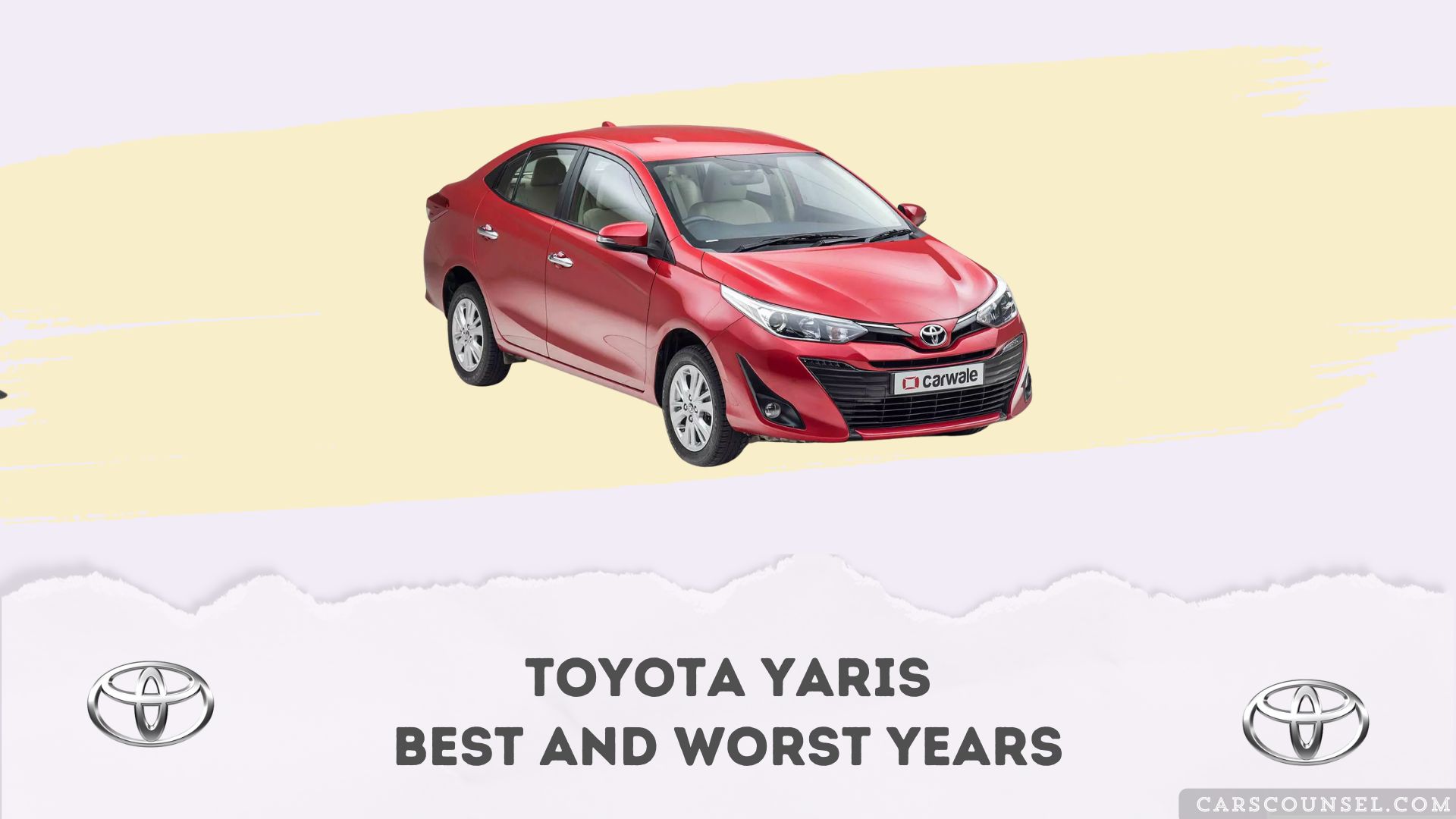
The best Toyota Yaris model years are 2012 through 2018. These years offer peak reliability and mature engineering. Buyers should approach the 2007 through 2011 models with caution due to age-related rust and open airbag recalls.
Rankings are comparative, as no subcompact car is entirely flawless. Proper maintenance history, immediate repair of fluid leaks, and a thorough pre-purchase inspection remain essential for any used vehicle.
Significant differences exist between generations. Early models use traditional Toyota powertrains, while the final 2019 and 2020 models are based on the Mazda2 platform with different engines and transmissions.
Quick Navigation
Best and Worst Toyota Yaris Years at a Glance
| Model Year | Verdict | Main Reason | Buyer Guidance |
|---|---|---|---|
| 2007-2011 | Good With Inspection | Aging electronics, rust, Takata recalls | Verify airbag recall completion |
| 2012-2018 | Best Older Choice | Mature 1.5L powertrain, minimal defects | Top pick for budget buyers |
| 2019-2020 | Good Choice | Mazda2 platform, fuel pump recall | Verify fuel pump replacement |
Key Takeaways
- The 2012 through 2018 model years offer the most balanced and reliable ownership experience.
- Approach the 2007 through 2011 models with caution due to age, rust risks, and critical airbag recalls.
- The 2019 and 2020 models are based on the Mazda2 platform, featuring different powertrains and a fuel pump recall.
- The Toyota Yaris was discontinued in the United States after the 2020 model year.
- Consult our guide on years to avoid for more details on problematic vehicles.
How We Evaluated the Toyota Yaris Model Years
Our analysis considers official NHTSA recalls, manufacturer service campaigns, and consumer complaint patterns across the broader Toyota lineup. We evaluate powertrain differences, generation changes, and repair complexity.
Complaints are not confirmed failure rates, and a recall does not automatically ruin a vehicle’s reputation. Recent models have limited long-term exposure, meaning our top picks represent comparatively stronger options rather than flawless guarantees.
Best Toyota Yaris Years
2012-2018 (Best Older Choice)
The third-generation US Yaris represents the peak of the model’s traditional engineering. The 1.5-liter 1NZ-FE engine is exceptionally durable, and the four-speed automatic transmission is proven. These years offer excellent fuel efficiency and minimal major defects.
2019-2020 (Good Choice)
The final US-market Yaris hatchback is based on the Mazda2 platform. It features a Skyactiv-G engine and a six-speed automatic transmission. While very reliable, buyers must verify that the factory fuel pump recall was completed.
Best Year by Buyer Type
Best Overall
The 2015 Yaris combines the mature third-generation platform with updated styling and exceptional long-term reliability, making it the safest used choice for budget buyers.
Best Family Alternative
Buyers needing more rear legroom and cargo capacity should consider the Toyota Corolla, which shares the brand’s legendary reliability but offers a larger, more practical footprint.
Years to Inspect Carefully
2007-2011 (Good With Inspection)
The second-generation US Yaris is mechanically robust but suffers from age-related issues. Buyers must inspect the undercarriage for structural rust and verify that the critical Takata passenger airbag inflator recall has been completed.
Worst Toyota Yaris Years
There are no Toyota Yaris model years that warrant a strict Avoid verdict. The nameplate is built on Toyota’s renowned engineering principles, resulting in one of the most dependable subcompact cars. Even the least favorable years only require specific inspections.
Toyota Yaris Reliability by Generation
Second Generation US (2007-2011)
The first Yaris sold in the US features a tall hatchback and sedan body style. The 1.5-liter engine is bulletproof, but early models are prone to clear coat peeling, rust, and aging ignition coils.
Third Generation US (2012-2018)
This generation brought improved aerodynamics and a refined interior. The powertrain remained largely unchanged, ensuring excellent reliability. The hatchback continued through 2018, while the traditional sedan was replaced after 2015.
Mazda-Based Generation (2016-2020)
Toyota partnered with Mazda to produce the Yaris sedan (2016-2020) and hatchback (2019-2020). These use Mazda’s Skyactiv powertrains, offering a sportier drive and different reliability patterns, including a notable fuel pump campaign.
Common Toyota Yaris Problems
Takata Airbag Inflator Recalls
The 2007 through 2011 models are included in the massive Takata airbag recall. The passenger-side inflator can rupture during deployment. Buyers must verify the VIN to ensure this critical safety repair was performed.
Fuel Pump Failures
The Mazda-based 2019 and 2020 models were subject to a recall for defective fuel pumps that could fail, causing the engine to stall. Ensure the dealer has installed the updated impeller.
Water Pump Leaks
The 1NZ-FE engine used in 2007 through 2018 models can develop water pump leaks as it ages. While not catastrophic, ignoring the leak can lead to overheating and severe engine damage.
What to Check Before Buying a Used Toyota Yaris
- Verify the VIN for any open NHTSA recalls, particularly the Takata airbag and fuel pump campaigns.
- Inspect the undercarriage, wheel arches, and sills for structural rust on 2007 through 2011 models.
- Check the engine bay for water pump weeping or coolant residue on traditional Toyota models.
- Test the transmission for smooth shifting and ensure the clutch engages properly on manual examples.
- Arrange an independent pre-purchase inspection with a qualified technician.
Related Buying Guides
- Toyota Corolla: A slightly larger compact alternative for buyers who need more rear passenger space and a larger trunk for daily commuting.
- Toyota Camry: A mid-size sedan alternative that offers a significantly smoother ride, more power, and better highway comfort for long road trips.
- Toyota 4Runner: An off-road alternative for buyers transitioning from a subcompact commuter car to a rugged, body-on-frame SUV with serious towing capability.
- Toyota Avalon: A full-size luxury alternative for buyers who want maximum interior volume and a premium ride quality without the luxury brand price tag.
Frequently Asked Questions
Which Toyota Yaris year is the most reliable?
The 2012 through 2018 model years are the most reliable. They benefit from a mature platform, a proven 1.5-liter engine, and lower consumer complaint volumes compared to the early launch years.
Does the Toyota Yaris have transmission problems?
No, the Toyota Yaris does not suffer from widespread transmission failures. Both the traditional four-speed automatic and the five-speed manual are exceptionally durable when maintained properly, contributing to the model’s strong dependability reputation.
Why was the Toyota Yaris discontinued?
Toyota discontinued the Yaris in the United States after the 2020 model year. The brand streamlined its subcompact lineup, shifting buyer focus toward the larger Corolla and the growing crossover SUV segments.
Is the 2019 Toyota Yaris a real Toyota?
The 2019 and 2020 Yaris hatchbacks are based on the Mazda2 platform. While they feature Mazda engineering and Skyactiv powertrains, they were sold through Toyota dealerships and carry the Toyota badge.
Are older Toyota Yaris models reliable?
The 2007 through 2011 models are mechanically robust but require careful inspection. Buyers must check for structural rust and verify that the critical Takata passenger airbag inflator recall has been completed.
Does the Toyota Yaris hold its value well?
Yes, the Yaris holds its value remarkably well due to its exceptional reliability and low running costs. Buyers should expect to pay a premium for well-maintained examples with documented service history.
Choosing the Right Toyota Yaris Model Year
Target the 2012 through 2018 model years for proven traditional Toyota reliability, excellent fuel efficiency, and low maintenance costs.
Approach the 2007 through 2011 models with caution due to rust and airbag recalls. Always verify the VIN for unrepaired safety campaigns and secure an independent inspection before purchasing.

