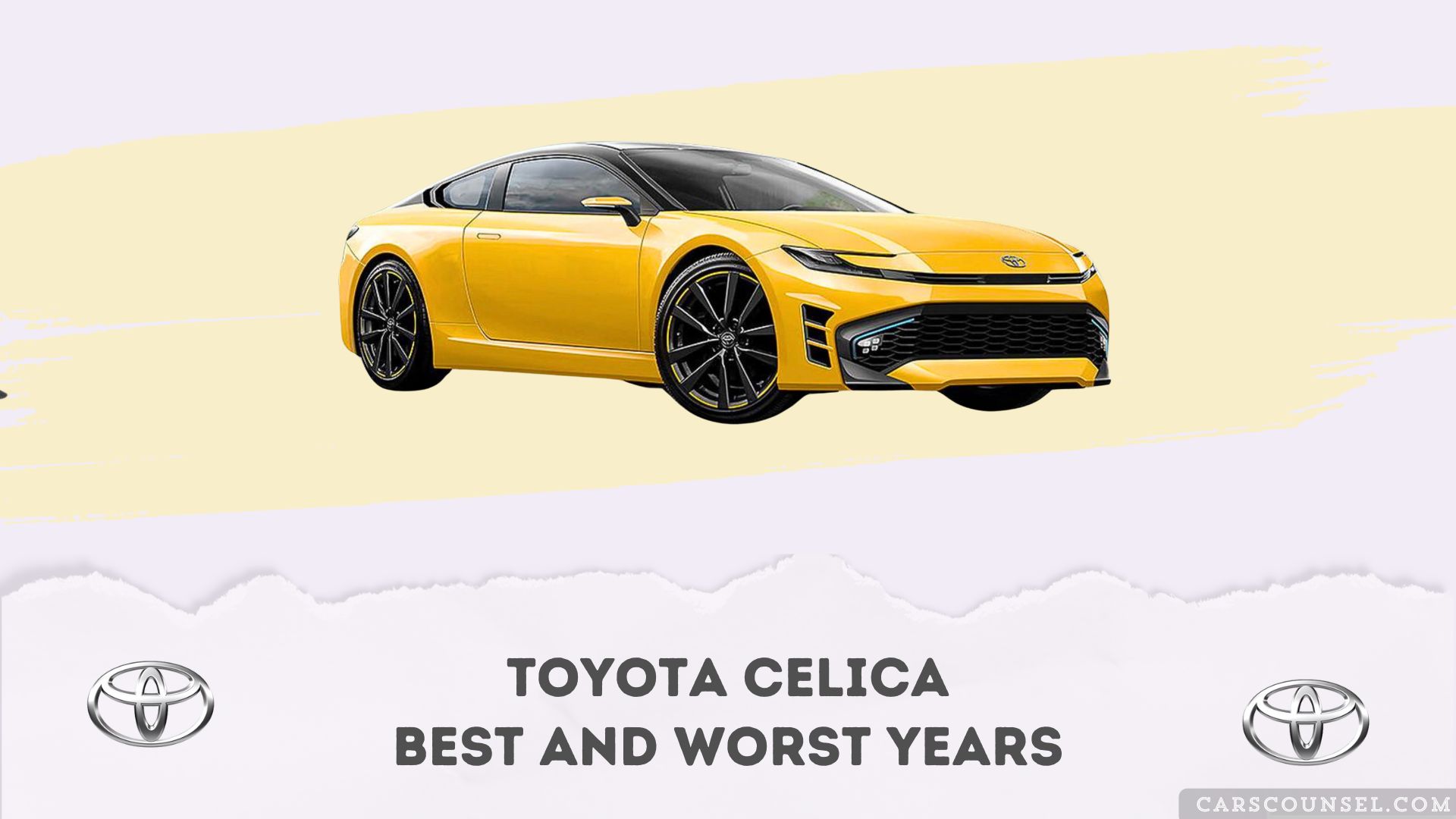
The best Toyota Celica years are 2004-2005, 1998-1999, and 1990-1993. These models offer mature engineering and strong enthusiast appeal. Buyers should strictly avoid the 2000-2002 GT models due to severe, well-documented engine oil consumption issues that can lead to catastrophic failure.
Rankings are comparative, and no vintage or discontinued sports car is entirely flawless. Long-term reliability heavily depends on previous maintenance, rust prevention, and whether critical technical service bulletins were performed by prior owners.
Meaningful differences exist between trim levels and engines. The GT-S features a high-revving engine, while the standard GT uses a different powertrain with specific vulnerabilities. Drivetrain and generation changes also heavily influence long-term ownership costs.
Quick Navigation
Best and Worst Toyota Celica Years at a Glance
| Model Year Range | Verdict | Main Reason | Buyer Guidance |
|---|---|---|---|
| 2004-2005 | Best Late-Generation Choice | Updated engine components and facelift | Verify oil consumption history |
| 2003 | Good With Inspection | Transitional year for engine updates | Check for piston ring TSB completion |
| 2000-2002 | Avoid | Severe 1ZZ-FE oil consumption defects | Look for engine replacements or avoid |
| 1998-1999 | Best Older Choice | Mature sixth-generation platform | Inspect for age-related wear |
| 1994-1997 | Good Choice | Reliable but aging components | Check suspension and rust |
| 1990-1993 | Best Enthusiast Choice | All-Trac and GT performance legacy | Verify turbo and AWD maintenance |
| 1986-1989 | Good With Inspection | Classic status with aging rubber | Expect collector-level maintenance |
| 1971-1985 | Approach Carefully | Vintage collector vehicles | Require specialist inspection |
Key Takeaways
- The 2004-2005 models represent the final and most refined years of the seventh generation.
- Early seventh-generation GT models (2000-2002) suffer from defective piston rings causing massive oil burning.
- The 1998-1999 models offer a reliable, mature platform before the major redesign.
- All-Trac variants from the early 1990s are highly desirable but require strict maintenance verification.
- Always check the VIN for open recalls and verify if engine replacement or technical service bulletins were completed.
How We Evaluated the Toyota Celica Model Years
Our analysis of the best and worst years considers official manufacturer programs, technical service bulletins, and long-term ownership patterns. We weigh powertrain differences, generation changes, and repair complexity heavily.
Consumer complaints are not confirmed failure rates, and a single recall does not automatically make a vehicle unreliable. Because the Celica is discontinued, recent years simply mean the final production runs, which have more ownership history than modern new cars.
Best means comparatively stronger within this specific lineage, not flawless. Age, maintenance, and rust play massive roles in any discontinued sports car’s current reliability.
Best Toyota Celica Years
2004-2005: Best Late-Generation Choice
These final production years benefit from late-cycle manufacturing refinements and updated engine components. Toyota addressed several early seventh-generation shortcomings by this point.
The GT-S models with the 2ZZ-GE engine are particularly sought after for their high-revving performance. While generally more reliable than earlier years, buyers must still verify that no excessive oil consumption is present.
1998-1999: Best Older Choice
The final years of the sixth generation feature a highly mature platform. The engines used in these models are renowned for their durability when properly maintained.
These years avoid the severe oil-burning issues that plagued the subsequent generation. Buyers should focus on finding well-preserved examples with documented timing belt and water pump services.
1990-1993: Best Enthusiast Choice
This era includes the legendary All-Trac Turbo models, which offer rally-bred all-wheel-drive performance. The GT variants also provide engaging naturally aspirated driving dynamics.
These vehicles are now collector items. Reliability depends entirely on enthusiast-level care, turbo maintenance, and the preservation of complex vintage electrical systems.
Best Toyota Celica Years by Buyer Type
Best Overall
The 1998-1999 models offer the best balance of modern reliability, parts availability, and engaging driving dynamics without the severe engine defects of the early 2000s.
Best Performance Configuration
The 1991-1992 All-Trac Turbo remains the ultimate performance choice for enthusiasts willing to maintain a complex, vintage all-wheel-drive turbocharged system that delivers impressive horsepower and torque.
Best Modern Alternative
If you want the final iteration of the nameplate, the 2005 GT-S provides the most contemporary features and refined chassis dynamics of the entire lineup.
Years to Approach Carefully
2003: Good With Inspection
The 2003 model year represents a transitional period. Toyota introduced updated dipsticks and revised engine components to mitigate oil consumption, but some vehicles still left the factory with problematic piston rings.
Buyers must verify if the engine was replaced under warranty or if the technical service bulletin was successfully performed. Check the oil level and exhaust for blue smoke before purchasing.
1986-1989: Good With Inspection
These fourth-generation models are transitioning into classic car territory. While the engines are robust, age-related rubber, suspension, and electrical degradation is guaranteed.
Purchase only if you are prepared for collector-level maintenance and can source increasingly rare cosmetic and interior trim pieces.
1971-1985: Approach Carefully
The first three generations are purely vintage collector vehicles today. They lack modern safety equipment and require specialized knowledge to maintain.
Parts availability is limited, and daily driving is generally not recommended. These are best suited for dedicated restorers and classic car enthusiasts.
Worst Toyota Celica Years
2000-2002: Avoid
The standard GT models from 2000 to 2002 are equipped with the 1ZZ-FE engine, which suffers from a notorious manufacturing defect. Faulty piston rings allow excessive oil to enter the combustion chamber.
This leads to rapid oil depletion, catalytic converter failure, and eventual engine seizure if the owner does not constantly monitor fluid levels. Many engines required complete replacement under warranty.
Unless the previous owner has definitive proof of a complete engine replacement, these years represent a massive financial risk. This engine defect also affects related vehicles, as noted in our Toyota Corolla and Toyota Matrix guides.
Toyota Celica Reliability by Generation
Seventh Generation (2000-2005)
This final generation shifted entirely to front-wheel drive and introduced the controversial 1ZZ-FE and 2ZZ-GE engines. Early years are plagued by oil consumption, while late models are significantly improved.
Sixth Generation (1994-1999)
Often considered the most reliable daily-driver generation. The styling became more rounded, and the powertrains were exceptionally durable. Rust and aging suspension bushings are the primary concerns today.
Fifth Generation (1990-1993)
This generation introduced the iconic All-Trac turbocharged all-wheel-drive system. While mechanically robust, the complexity of the turbo and AWD systems requires strict, knowledgeable maintenance.
Fourth Generation (1986-1989)
Marking the shift to front-wheel drive for most trims, this generation is highly regarded by classic enthusiasts. Reliability is entirely dependent on decades of preservation and storage conditions.
Common Toyota Celica Problems
Engine Problems
The most severe issue affects the 1ZZ-FE engine found in 2000-2002 GT models. Defective piston rings cause extreme oil consumption, often burning a quart every few hundred miles.
This starves the engine of lubrication, leading to scored cylinder walls and catastrophic failure. The 2ZZ-GE in the GT-S is less prone to this but can suffer from oil feed line leaks or valve seat wear in early examples.
Transmission and Drivetrain Issues
Manual transmissions in the seventh generation can experience premature synchro wear, especially in the GT-S models that were frequently revved to the redline.
All-Trac models from the early 1990s may develop center differential leaks or transfer case whine if the specialized AWD fluid was neglected over the decades.
Suspension and Steering
Given the age of these vehicles, worn strut mounts, degraded control arm bushings, and tired engine mounts are nearly universal. These issues cause clunking noises and vague steering feel.
Fortunately, suspension components are generally straightforward to replace, and aftermarket support remains strong for the most popular generations.
What to Check Before Buying a Used Toyota Celica
- Verify the VIN for any outstanding technical service bulletins or open recalls.
- Check the oil level and inspect the exhaust for blue smoke, especially on 2000-2005 models.
- Review service records for timing belt and water pump replacements on older generations.
- Test the manual transmission for grinding during second and third gear shifts.
- Inspect the undercarriage for structural rust, particularly in the rear subframe mounting points.
- Verify that all vacuum lines and turbo plumbing are intact on All-Trac models.
- Arrange an independent pre-purchase inspection with a mechanic familiar with vintage performance cars.
When looking at other vehicles, make sure to check out our guides on models like the Toyota Yaris, Toyota 4Runner, Toyota Avalon and Toyota Camry.
Related Buying Guides
- Toyota Solara years to avoid: The Solara serves as a larger, more comfortable coupe alternative based on the Camry platform.
- Toyota Supra best and worst years: The Supra remains the ultimate enthusiast alternative for buyers seeking legendary rear-wheel-drive performance.
Frequently Asked Questions
What is the most reliable Toyota Celica year?
The 1998 and 1999 model years are widely considered the most reliable. They feature a mature platform and durable engines that avoid the severe oil consumption defects of the early 2000s.
Why should I avoid the 2000-2002 Toyota Celica GT?
These years use the 1ZZ-FE engine, which suffers from defective piston rings. This causes extreme oil burning, catalytic converter damage, and potential engine seizure if not constantly monitored.
Is the Toyota Celica GT-S better than the GT?
The GT-S features the high-revving 2ZZ-GE engine, offering significantly more power. It also avoids the worst of the extreme oil consumption issues that plagued the standard GT’s 1ZZ-FE engine.
Are Toyota Celicas expensive to maintain?
Routine maintenance is affordable, but age-related repairs and sourcing rare cosmetic parts can be costly. Turbocharged All-Trac models require specialized, expensive maintenance compared to standard front-wheel-drive models.
Did Toyota fix the oil burning issue in later Celicas?
Toyota introduced revised piston rings and updated dipsticks around 2003. The 2004 and 2005 models are significantly less prone to severe oil consumption, though verification is still required.
Is the Toyota Celica a good daily driver today?
A well-maintained 1998-1999 or 2004-2005 model can serve as a daily driver. However, buyers must accept the lack of modern safety features and the inevitability of aging rubber and suspension components.
Choosing the Right Toyota Celica Model Year
The Toyota Celica remains an iconic nameplate, but buyers must navigate significant generational differences. The 2004-2005 and 1998-1999 models offer the strongest blend of reliability and driving enjoyment.
Strictly avoid the 2000-2002 GT models unless the engine has been definitively replaced. Always verify maintenance records, check for excessive oil consumption, and arrange an independent inspection before purchasing.

