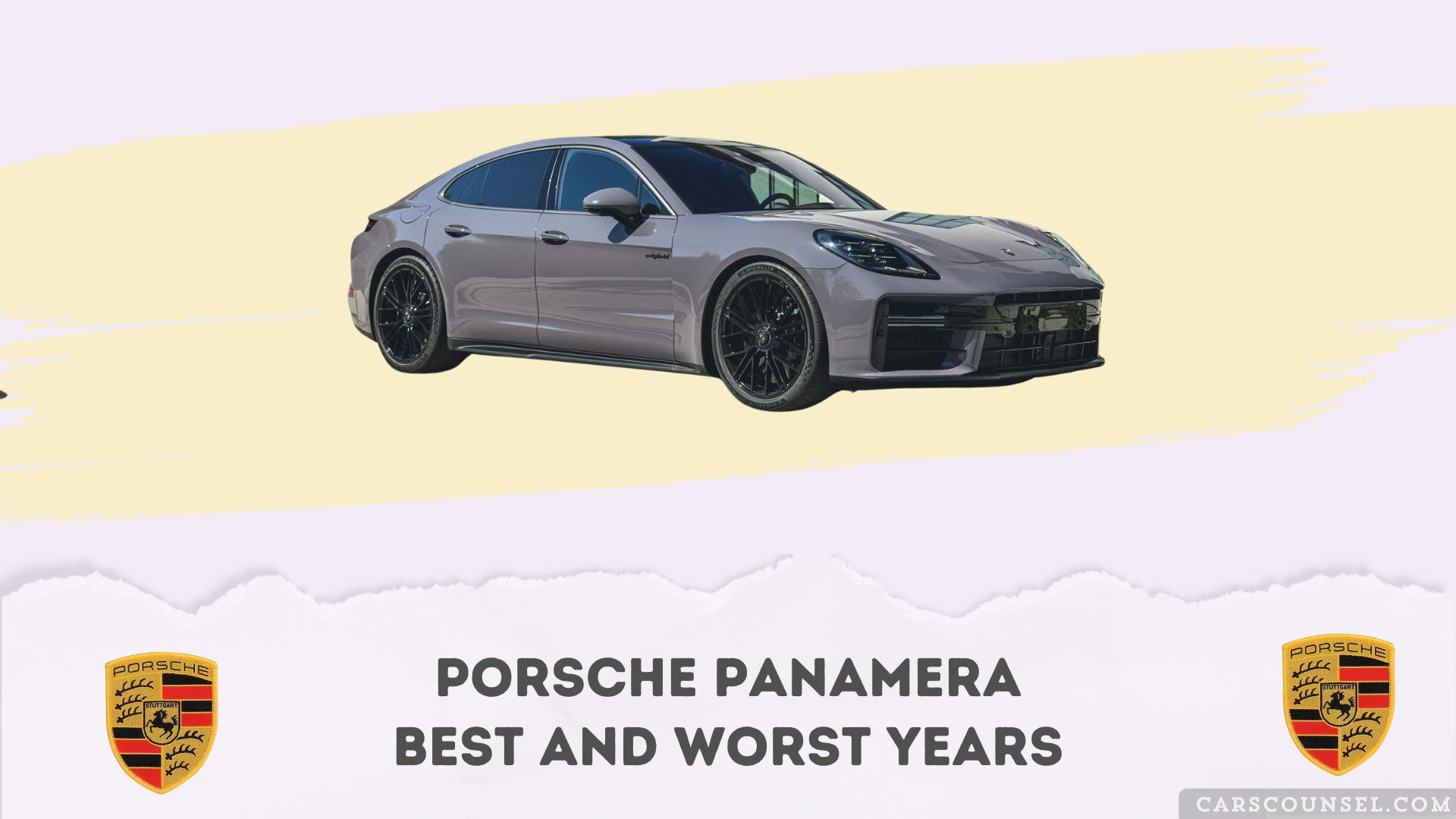
The best Porsche Panamera model years are 2017 through 2023. These second-generation models offer vastly improved electronics and build quality. Buyers should approach the 2010 through 2012 models carefully due to severe coolant pipe defects on early V8 engines.
Rankings are comparative, as no complex German luxury car is entirely flawless. Proper maintenance history, immediate repair of fluid leaks, and a thorough pre-purchase inspection remain essential for any used vehicle.
Significant differences exist between generations and trims. Early models require strict cooling system and transmission inspections, while newer versions feature updated powertrains and sophisticated air suspension systems that demand specialized care.
Quick Navigation
Best and Worst Porsche Panamera Years at a Glance
| Model Year | Verdict | Main Reason | Buyer Guidance |
|---|---|---|---|
| 2010-2012 | Approach Carefully | 4.8L V8 coolant pipe failures, early PDK issues | Verify coolant pipe replacement |
| 2013-2016 | Best Older Choice | Facelift, improved 3.0L V6, sorted electronics | Budget for air suspension |
| 2017-2023 | Best Late-Generation Choice | MSB platform, ZF 8-speed PDK, refined tech | Top pick for modern luxury |
| 2024-2025 | Too New to Judge | Third generation, limited long-term data | Rely on factory warranty |
Key Takeaways
- The 2017 through 2023 model years offer the most balanced and reliable luxury sedan experience.
- Approach the 2010 through 2012 models with caution due to the 4.8L V8 coolant pipe defect and early transmission issues.
- The 2013 facelift introduced a more reliable 3.0L twin-turbo V6, resolving many early engine concerns.
- Air suspension and complex electronics require strict maintenance across all generations.
- Consult our guide on the best and worst years for more details on problematic vehicles.
- Always verify the VIN for open recalls and test all electronic features before purchasing.
How We Evaluated the Porsche Panamera Model Years
Our analysis considers official NHTSA recalls, manufacturer service campaigns, and consumer complaint patterns across the broader Porsche lineup. We evaluate powertrain differences, generation changes, and repair complexity.
Complaints are not confirmed failure rates, and a recall does not automatically ruin a vehicle’s reputation. Recent models have limited long-term exposure, meaning our top picks represent comparatively stronger options rather than flawless guarantees.
Best Porsche Panamera Years
2017-2023 (Best Late-Generation Choice)
The second-generation 971 platform represents a massive leap forward. Porsche moved to the Volkswagen Group MSB architecture, introducing the ZF 8-speed PDK transmission. These years feature vastly improved infotainment, better build quality, and robust twin-turbo V6 and V8 engines.
2013-2016 (Best Older Choice)
The first-generation facelift brought significant mechanical refinements. Porsche introduced the 3.0-liter twin-turbo V6 for the Base and S trims, which lacks the problematic plastic coolant pipes of the earlier 4.8-liter V8. The PDK transmission software was also heavily revised for smoother operation.
Best Year by Buyer Type
Best Overall
The 2018 Panamera 4S combines the refined second-generation platform with a powerful 2.9-liter twin-turbo V6 and modern driver assistance technology.
Best Enthusiast Choice
The 2014-2016 Panamera GTS offers a naturally aspirated 4.8-liter V8 and a sport-tuned chassis, delivering classic Porsche feedback for driving purists.
Years to Approach Carefully
2010-2012 (Approach Carefully)
The launch years of the Panamera suffer from severe first-generation growing pains. The 4.8-liter V8 engines use plastic coolant pipes located in the engine valley that become brittle and fail, potentially causing catastrophic engine damage if coolant leaks into the cylinders.
Additionally, the early seven-speed PDK transmission is prone to mechatronic unit failures and sensor faults. Buyers must verify that the coolant pipes were replaced with updated aluminum components and that the transmission has a flawless service history.
Worst Porsche Panamera Years
There are no Porsche Panamera model years that warrant a strict Avoid verdict. The nameplate is built on Porsche’s renowned engineering principles. Even the least favorable years only require specific, verifiable mechanical inspections and a strict maintenance budget.
Porsche Panamera Reliability by Generation
First Generation 970 (2010-2016)
The original Panamera established the luxury performance sedan segment. Early years are plagued by cooling system and transmission defects, but the 2013 facelift brought necessary improvements. Air suspension and active anti-roll bars remain expensive wear items across the entire generation.
Second Generation 971 (2017-2023)
A complete redesign brought the MSB platform, shared with the Bentley Continental GT. The build quality, electrical stability, and powertrain reliability improved vastly. The ZF 8-speed PDK is robust, making this the definitive choice for used buyers.
Third Generation 972 (2024-Present)
The latest iteration features updated powertrains, advanced hybrid systems, and a heavily revised interior. Because these vehicles have minimal long-term ownership history, they remain too new to judge for lasting durability beyond the factory warranty period.
Common Porsche Panamera Problems
Coolant Pipe Failure
The 2010 through 2012 models equipped with the 4.8-liter V8 suffer from brittle plastic coolant pipes. This defect can lead to severe coolant leaks and engine hydrolock. Porsche later issued updated aluminum pipes to resolve this expensive failure point.
Air Suspension Leaks
Models equipped with adaptive air suspension frequently experience leaking air struts and failing compressors. A sagging corner or loud compressor noise indicates imminent failure. Replacing these components requires expensive OEM parts and specialized labor.
Transfer Case Wear
Early all-wheel-drive models from 2010 through 2012 can experience premature transfer case wear. Symptoms include shuddering during acceleration or warning lights on the dashboard. Regular fluid changes are critical to extending the life of this complex component.
What to Check Before Buying a Used Porsche Panamera
- Verify the VIN for open NHTSA recalls and active warranty extensions.
- Inspect the 4.8-liter V8 engine valley for signs of coolant leaks or verify the aluminum pipe upgrade.
- Test the air suspension by raising and lowering the vehicle in all modes.
- Scan all control modules for stored transmission and chassis fault codes.
- Review the service history to confirm strict adherence to Porsche’s maintenance schedule.
- Arrange an independent pre-purchase inspection with a European luxury specialist.
Related Buying Guides
If the performance focus and high maintenance costs of the Panamera do not align with your needs, buyers often pivot to other Porsche models that offer different utility profiles or driving experiences.
- Porsche 996: A classic sports car alternative for enthusiasts who prefer a lightweight, two-door driving experience over a heavy luxury sedan.
- Porsche 997: A modern classic alternative that offers similar performance pedigree but with a more engaging, driver-focused chassis and manual transmission options.
- Porsche Boxster: A mid-engine roadster alternative for buyers who prioritize open-air driving and balanced handling over rear passenger space and daily practicality.
- Porsche Cayenne: A performance SUV alternative for buyers who require maximum cargo utility, higher ground clearance, and family-friendly seating without sacrificing Porsche dynamics.
Frequently Asked Questions
Which Porsche Panamera year is the most reliable?
The 2017 through 2023 model years are the most reliable. They benefit from the refined MSB platform, robust ZF transmissions, and vastly improved build quality compared to the complex first-generation models.
Does the Porsche Panamera have engine problems?
The 2010 through 2012 models equipped with the 4.8-liter V8 suffer from plastic coolant pipe failures. This is an expensive defect to repair, making these specific years require careful inspection and verification of the aluminum pipe upgrade.
Is the 2013 Porsche Panamera a good used buy?
Yes, the 2013 facelift is a solid choice. It introduced the more reliable 3.0-liter twin-turbo V6 for most trims, resolving the major cooling system defects found on the earlier 4.8-liter V8 engines.
What changed in the 2017 Panamera redesign?
The 2017 redesign introduced the MSB platform, a ZF 8-speed transmission, and a completely modernized interior. It significantly improved on-road comfort, electrical stability, and long-term reliability while retaining the legendary performance credentials.
Are newer Porsche Panamera models reliable?
The 2024 and newer models feature advanced hybrid systems and updated technology. Because they have limited long-term ownership history, they are currently too new to judge for lasting durability beyond the warranty period.
What should I check on a used Panamera?
Buyers must inspect the air suspension for leaks, verify the condition of the PDK transmission, and ensure all aging electrical modules are functioning correctly. An independent pre-purchase inspection is mandatory for any used example.
Choosing the Right Porsche Panamera Model Year
Target the 2017 through 2023 model years for a refined, reliable modern luxury experience with sorted electronics and robust powertrains.
Approach the 2010 through 2012 models with caution due to severe engine and transmission defects. Always test the air suspension, scan for codes, and secure an independent inspection before purchasing.

