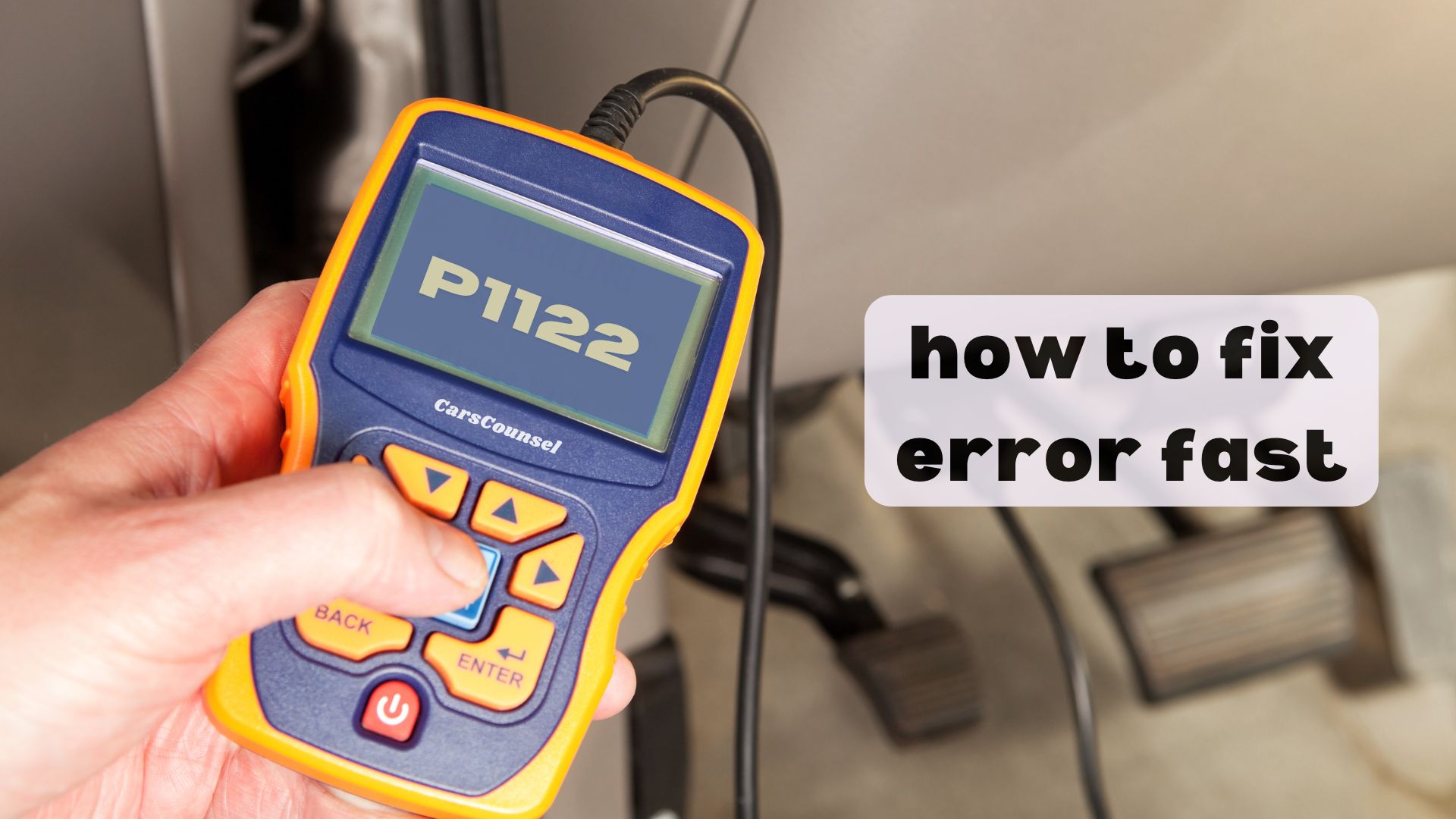
P1122 is a manufacturer-specific diagnostic trouble code, meaning its exact definition depends entirely on the vehicle make. On verified applications, it relates to the throttle position sensor, electronic throttle control, or specific coolant flow valves.
Because the code definition varies, the exact application must be verified before testing any components. The code alone does not prove that a specific sensor or actuator has failed.
Quick Navigation
Key Takeaways
- P1122 is a manufacturer-specific code, and its definition varies significantly by vehicle make and model.
- On certain GM applications, it indicates a Throttle Position Sensor (TPS) circuit intermittent low voltage condition.
- On some Nissan and Infiniti applications, it points to an Electric Throttle Control Actuator or TPS fault.
- Diagnosis requires verifying the exact factory definition and testing the relevant throttle control circuits.
P1122 Code Description and Implications
P1122 is a manufacturer-specific powertrain code, and its exact definition depends on the vehicle application.
Certain GM applications: P1122 indicates a Throttle Position Sensor (TPS) Circuit Intermittent Low Voltage condition.
The powertrain control module detects an unstable or dropping signal from the throttle position sensor circuit.
Some Nissan and Infiniti applications: P1122 signifies an Electric Throttle Control Actuator fault or a TPS intermittent circuit issue.
The engine control module detects that the throttle control function is not operating properly or the signal is erratic.
Certain Honda and Acura applications: P1122 points to a Throttle Position Higher Than Expected condition.
The control module detects that the throttle plate angle or sensor voltage exceeds the expected parameters for the current operating state.
Specific Toyota (e.g., Prius) applications: P1122 indicates a Coolant Flow Control Valve Position Sensor Circuit Low.
The system detects a low voltage signal from the valve sensor, affecting engine cooling and preheating.
Common Causes of the P1122 Code
Because the code definition varies, the causes depend entirely on the verified system.
For GM and Nissan TPS applications, a failing throttle position sensor or damaged wiring is a possible cause.
Corroded connectors, poor grounds, or a failing electronic throttle body actuator can also trigger this fault code.
For Honda applications, a binding throttle plate, carbon buildup, or a misadjusted TPS can cause the position to read higher than expected.
For Toyota Prius applications, a failed coolant flow control valve, a wiring short, or a faulty sensor are possible causes.
Symptoms Associated With P1122
Symptoms vary based on the affected system and the exact vehicle application.
On GM and Nissan applications, symptoms may include an illuminated Check Engine Light and the vehicle entering a reduced power or fail-safe mode.
The driver may experience erratic throttle response, hesitation, or rough idling.
On Honda applications, symptoms may include a high idle speed or poor acceleration due to the incorrect throttle position reading.
On Toyota applications, symptoms may include improper engine warm-up or cooling system performance issues.
Diagnosing the P1122 Trouble Code
Diagnosis must begin by confirming the exact factory definition for your specific make, model, and engine.
For GM and Nissan applications, technicians use a scan tool to monitor the TPS live data while operating the throttle to check for signal dropouts.
They also inspect the wiring harness for damage or shorts to ground.
For Honda applications, diagnosis involves inspecting the throttle body for mechanical binding and testing the TPS signal circuit for proper voltage and correlation.
For Toyota applications, technicians test the coolant flow control valve operation and check the sensor circuit for continuity and resistance.
Repairing the P1122 Issue
Repairs must follow confirmed diagnosis and vary significantly by implementation.
If testing confirms a failing TPS or wiring short on a GM or Nissan application, repairing the wiring or replacing the confirmed failed sensor is necessary.
If the electronic throttle body assembly is faulty, replacing the unit restores normal operation.
For Honda applications, cleaning carbon buildup from the throttle plate and performing a throttle relearn procedure may resolve the issue.
For Toyota applications, replacing the confirmed failed coolant flow control valve restores proper cooling system operation.
Cost Considerations for P1122 Repairs
Repair costs depend heavily on the underlying fault and the specific vehicle application.
Replacing a standalone throttle position sensor involves moderate parts costs and standard labor time.
Replacing a complete electronic throttle body assembly or a coolant flow control valve involves higher parts costs and specialized calibration or bleeding procedures.
Addressing a wiring issue or cleaning a dirty throttle body primarily involves diagnostic time and minor materials.
Costs will also vary based on diagnostic time, required parts, and local labor rates.
Prevention Strategies for Future Occurrences
Prevention strategies are tied to the specific failure mechanisms of the affected system.
Keeping the throttle body clean and using high-quality fuel can help prevent carbon buildup that interferes with the throttle plate operation.
Inspecting exposed wiring near the throttle body or pedal assembly can help identify developing damage.
Some internal electronic sensor or valve failures occur without warning and cannot be reliably prevented through routine maintenance.
Troubleshooting Tips and Best Practices
Always verify the exact manufacturer definition for P1122 before purchasing parts or beginning repairs.
Do not assume a throttle position sensor has failed solely based on the code without checking for wiring issues or mechanical binding.
On Honda applications, verify that the throttle cable is not sticking or binding before replacing the sensor.
Consult the exact manufacturer service information for your specific vehicle to ensure accurate diagnostic routines and proper idle relearn procedures.
More OBD-II Codes
| P1116 | P1117 | P1118 | P1119 |
| P1120 | P1121 | P1123 | P1124 |
| P1125 | P1126 | P1127 | P1128 |
| P0122 | P0123 | P0222 | P0223 |
| P1129 | P1130 | P1131 | P1132 |
| P1133 | P1134 | P1135 | P1136 |
Frequently Asked Questions
Is P1122 a generic OBD-II code?
No. P1122 is a manufacturer-specific code, meaning its exact definition depends entirely on the vehicle make. It indicates a TPS circuit fault, an electronic throttle control issue, or a coolant valve fault on verified applications.
Can a dirty throttle body cause a P1122 code?
Yes. On applications where P1122 indicates a throttle position higher than expected or an intermittent signal, heavy carbon buildup can mechanically bind the throttle plate, causing erratic sensor readings or correlation faults.
Will disconnecting the battery clear a P1122 code?
Disconnecting the battery may temporarily clear the code, but it does not repair the underlying sensor or wiring fault. The code will likely return, and battery disconnection resets readiness monitors and throttle idle memory.
Does P1122 always mean the sensor is bad?
No. While a failed sensor is a cause, damaged wiring, corroded connectors, a binding throttle plate, or a failed coolant valve can also trigger the code. Targeted circuit and mechanical testing is required before replacement.
Can I drive my vehicle with a P1122 code?
Driving is not recommended when this code is active. Many applications will enter a reduced power or fail-safe mode, severely limiting acceleration and making it unsafe to drive in traffic or on highways.
What Should You Do About the P1122 Code?
Confirm the exact factory definition for your specific vehicle before attempting any repairs.
Because P1122 is manufacturer-specific, testing the wrong system will waste time and money.
Follow the applicable manufacturer diagnostic procedure to inspect the relevant system and components, then repair or replace the confirmed failed part.

