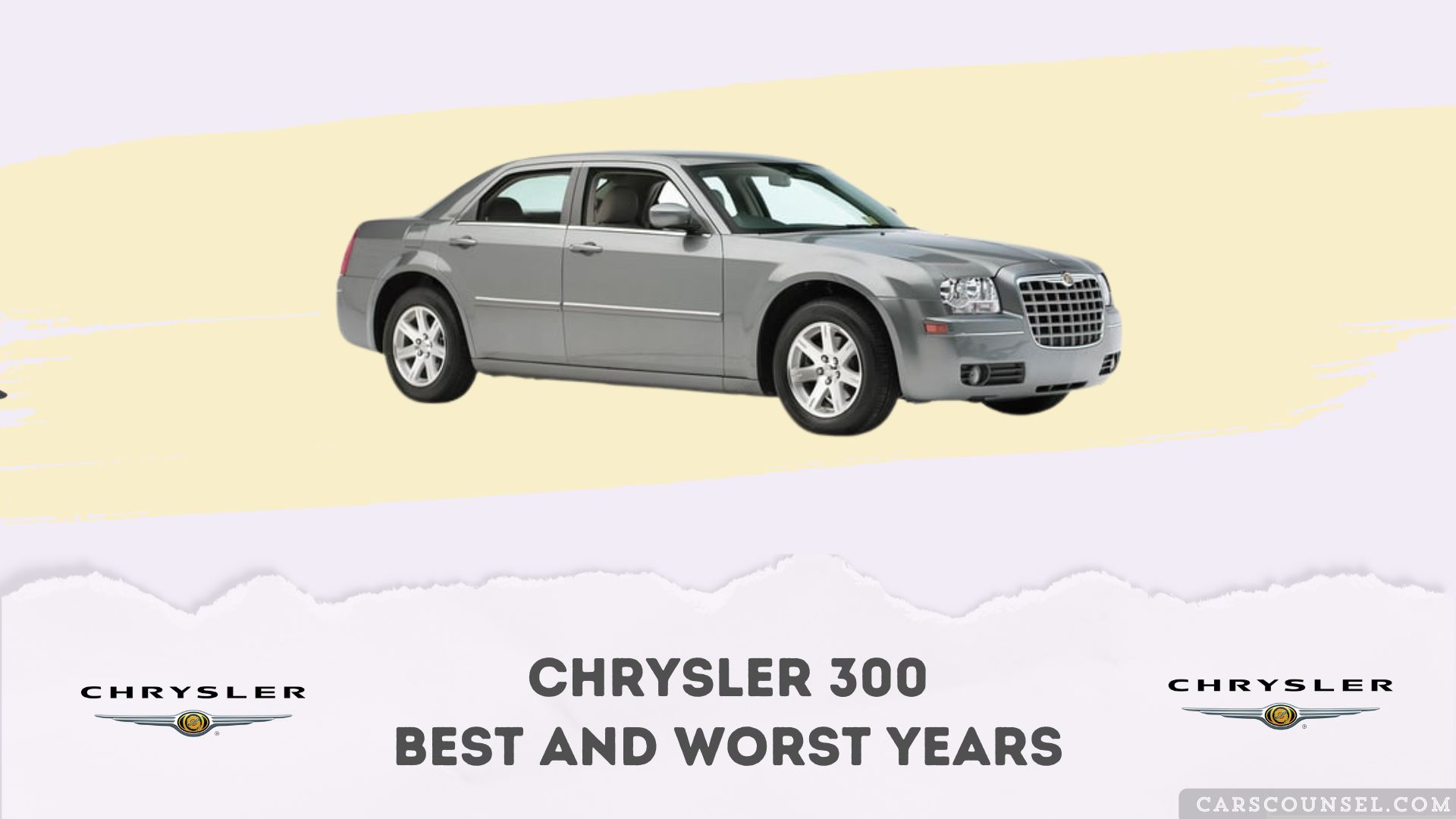
The best Chrysler 300 model years are 2015 through 2023. These late-generation models offer a refined ride, updated technology, and significantly improved reliability. Buyers should avoid the 2005 through 2007 model years due to severe electrical and engine issues.
Rankings are comparative, and no used vehicle is flawless. Maintenance history, current condition, and accident history matter just as much as the model year. Always verify open recalls before purchasing.
Reliability varies greatly by engine choice. The early 2.7-liter V6 is prone to catastrophic failure, while the later 3.6-liter Pentastar V6 and 5.7-liter Hemi V8 are much more durable when properly maintained.
Quick Navigation
Best and Worst Chrysler 300 Years at a Glance
| Model Year Range | Verdict | Main Reason | Buyer Guidance |
|---|---|---|---|
| 2015-2023 | Best Choice | Mature platform, refined tech | Top recommendation for used buyers |
| 2012-2014 | Best Older Choice | Solid V6 and V8 options | Check for rotary shifter recalls |
| 2011 | Good With Inspection | Redesign year, early V6 heads | Verify cylinder head replacement |
| 2008-2010 | Approach Carefully | Aging first generation | Inspect TIPM and electrical systems |
| 2005-2007 | Avoid | Severe engine and electrical flaws | Skip these early models entirely |
Key Takeaways
- The 2015-2023 models are the strongest choices, featuring mature powertrains and modern infotainment.
- Avoid 2005-2007 models entirely due to the unreliable 2.7L V6 and widespread electrical gremlins.
- The Totally Integrated Power Module (TIPM) is a common failure point on 2007-2014 models.
- Early 3.6L Pentastar V6 engines (2011-2013) may suffer from cylinder head cracking.
- Always check the VIN for open recalls, especially regarding the rotary shift dial and airbags.
How We Evaluated the Chrysler 300 Model Years
We analyze official NHTSA recalls, manufacturer service campaigns, and long-term ownership data. We separate confirmed mechanical defects from isolated owner complaints.
Complaints are not failure rates, and a recall does not automatically make a vehicle unreliable. Recent models have less long-term exposure, while older models require careful inspection of maintenance records.
Best Chrysler 300 Years
2015-2023 (Best Choice)
The 2015 facelift brought crucial updates, including standard eight-speed automatic transmissions and the excellent Uconnect infotainment system. These late-generation models benefit from years of platform refinement.
Long-term ownership data shows these years have fewer powertrain and electrical grievances. The 3.6-liter V6 and 5.7-liter Hemi V8 are reliable if maintenance records are present.
2012-2014 (Best Older Choice)
These years introduced the ZF eight-speed transmission and the 3.6-liter Pentastar V6. They offer a great balance of modern performance and lower used prices.
Buyers must verify that the rotary shift dial recall was performed. Some early eight-speed models experienced software quirks, but most were resolved via dealer updates.
Best Year by Buyer Type
- Best Overall: 2018-2023 (Peak refinement, advanced safety features)
- Best Budget Option: 2012-2014 (Great value, modern powertrain)
- Best Performance Configuration: 2015-2023 SRT or Scat Pack (6.4L Hemi V8)
Years to Approach Carefully
2011 (Good With Inspection)
The 2011 model year marked a massive interior and exterior redesign. However, it was the first year for the 3.6-liter Pentastar V6 engine.
Early production Pentastar engines were prone to cylinder head cracking and overheating. Buyers must verify if the cylinder heads were replaced under the manufacturer’s customer satisfaction program.
2008-2010 (Approach Carefully)
These late first-generation models are better than the 2005-2007 cars, but they still share the aging LX platform architecture.
Electrical gremlins and interior accessory failures remain common. A thorough pre-purchase inspection is mandatory to check for failing power windows and alternator issues.
Worst Chrysler 300 Years
2005-2007 (Avoid)
The inaugural model years are plagued by severe mechanical and electrical defects. The 2.7-liter V6 engine is notorious for timing chain tensioner failures and catastrophic engine sludge.
These years also suffer from premature transmission failures and widespread electrical shorts. Repair costs often exceed the vehicle’s value, making them a poor investment.
Chrysler 300 Reliability by Generation
First Generation (2005-2010)
Built on the LX platform, this generation shares its underlying architecture with the Dodge Charger. While the Hemi V8 models are robust, the V6 options and electrical systems are problematic.
The Dodge Charger shares this platform and exhibits similar electrical and powertrain patterns.
Second Generation (2011-2023)
Chrysler heavily revised the platform, renaming it LD, and completely overhauled the interior. The introduction of the Pentastar V6 and ZF eight-speed transmission vastly improved driving dynamics and reliability.
The 2015 refresh finalized the platform’s maturity, making the second generation a highly competitive full-size sedan.
Common Chrysler 300 Problems
Engine Problems
The 2.7-liter V6 is prone to timing chain failure and severe sludge buildup, often leading to complete engine replacement. The early 3.6-liter V6 can suffer from cracked cylinder heads.
The Hemi V8 engines are generally stout but may experience exhaust manifold bolt breakage and lifter failures if oil changes are neglected.
Electrical and TIPM Failures
The Totally Integrated Power Module controls most of the vehicle’s electrical functions. On 2007-2014 models, internal solder joints and relays frequently fail.
Symptoms include random stalling, no-start conditions, and fuel pump failures. Replacing or bypassing the TIPM fuel pump relay is a common but complex repair.
Sunroof and Water Leaks
Models equipped with the panoramic sunroof often experience clogged drain tubes. When water cannot escape, it leaks into the cabin and pools near the floorboards.
This moisture can short-circuit interior control modules and cause severe electrical malfunctions. Clearing the sunroof drains is a vital maintenance task.
Repair-Cost Overview
| Problem | Affected Years | Approximate Repair Range | Important Notes |
|---|---|---|---|
| TIPM Replacement | 2007-2014 | $800 – $1,200 | Bypass harness is a cheaper alternative |
| 2.7L V6 Engine Replacement | 2005-2010 | $3,500 – $5,500 | Often exceeds vehicle value |
| Cylinder Head Replacement | 2011-2013 | $1,500 – $2,500 | Check for customer satisfaction coverage |
| Panoramic Sunroof Drain Service | 2011-2023 | $150 – $300 | Preventative maintenance is crucial |
Repair costs vary significantly by region, labor rates, parts choice, and vehicle configuration. Independent shops typically charge less than dealerships.
Always get multiple quotes before approving major repairs.
What to Check Before Buying a Used Chrysler 300
- Verify the VIN for open recalls, especially the rotary shifter and airbag campaigns.
- Inspect the TIPM for signs of aftermarket bypass harnesses or corrosion.
- Check for sunroof water leaks by inspecting the front floor carpets for dampness.
- Review service records to confirm regular oil changes, especially on Hemi V8 models.
- Test all power windows, locks, and infotainment functions for electrical gremlins.
- Arrange an independent pre-purchase inspection to check for cylinder head issues on early V6 models.
Related Buying Guides
- Chrysler Pacifica best and worst years (If you need minivan versatility instead of a sedan)
- Chrysler 200 best and worst years (A smaller, more fuel-efficient sedan alternative)
Frequently Asked Questions
What is the most reliable Chrysler 300 year?
The 2018 through 2023 model years are the most reliable. They feature a fully mature platform, refined eight-speed transmissions, and updated electronics with fewer reported defects than earlier generations.
Should I avoid the 2.7-liter V6 engine?
Yes, buyers should avoid the 2.7-liter V6 found in 2005-2010 models. It is notorious for timing chain failures, sludge buildup, and catastrophic engine damage that is costly to repair.
Do Chrysler 300s have transmission problems?
Early first-generation models experienced premature transmission failures. Later models with the ZF eight-speed automatic are generally reliable, though early rotary shift dials required software updates and recalls.
What is the TIPM on a Chrysler 300?
The Totally Integrated Power Module is the main electrical fuse box and relay center. Internal relay failures in 2007-2014 models can cause stalling, no-starts, and fuel pump issues.
Is the Chrysler 300 a good used car?
The Chrysler 300 is a good used car if you select the right model year. Late-generation models offer excellent comfort and reliability, while early models are risky purchases.
How long do Chrysler 300s last?
Well-maintained examples with the Pentastar V6 or Hemi V8 can reach high mileage. Longevity depends heavily on strict maintenance, rust prevention, and addressing electrical issues promptly.
Which Chrysler 300 Year Should You Buy?
Focus your search on the 2015 through 2023 model years. These vehicles offer the best combination of modern technology, ride comfort, and long-term reliability.
Avoid the 2005 through 2007 models entirely. If considering a 2011 through 2014 model, verify that all recalls and cylinder head service campaigns were completed.
Always check the VIN, review maintenance records, and arrange an independent inspection before finalizing your purchase.

