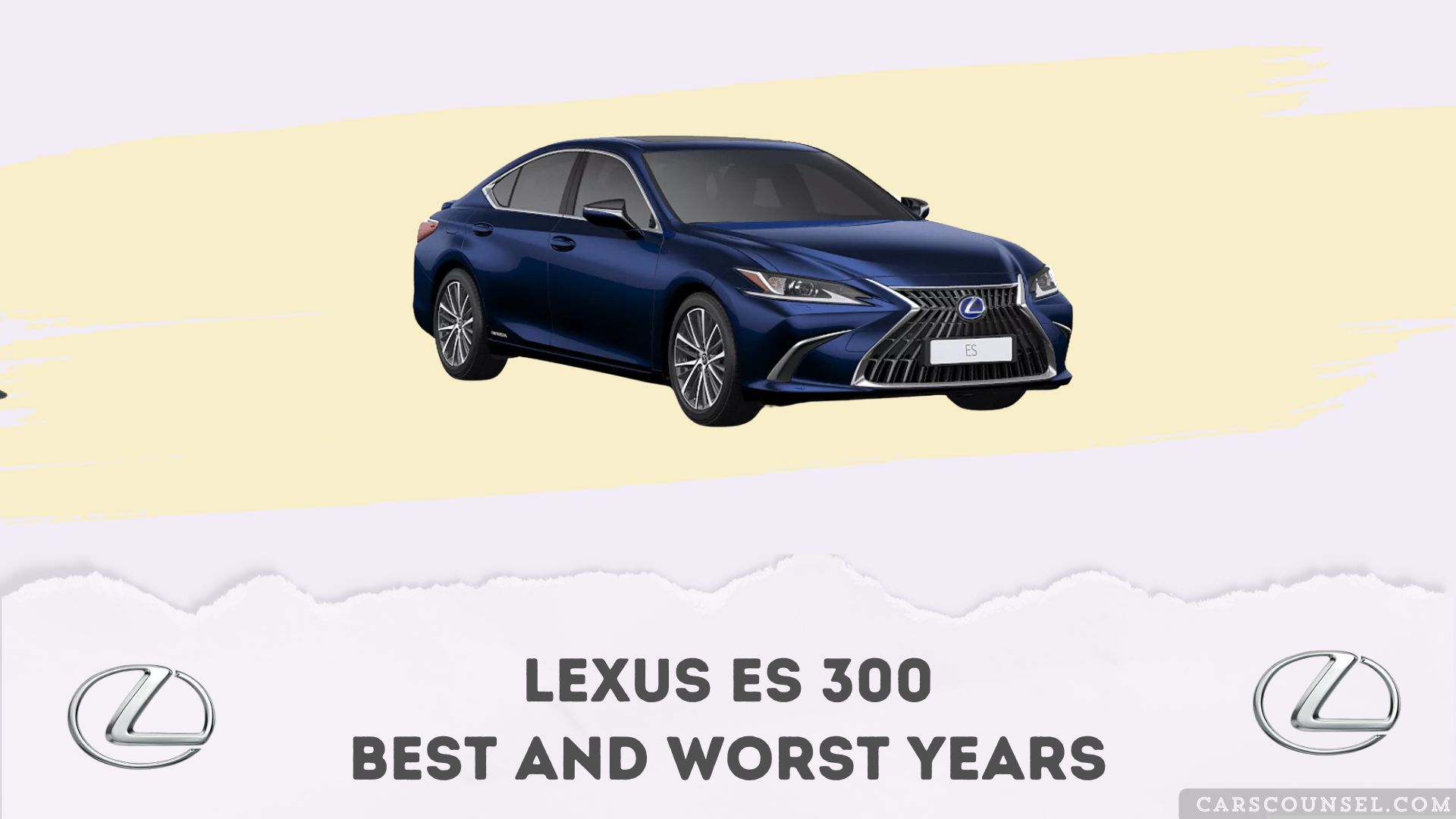
The best Lexus ES years include the 2013-2018 sixth-generation models, the 2010-2012 ES 350, and the 2004-2006 ES 330. These years offer mature powertrains and exceptional long-term reliability.
You should approach the 2007-2009 and 2002-2003 model years with caution due to first-year redesign quirks and interior complaints.
Reliability varies by engine and generation. Later V6 and hybrid configurations generally outperform early fourth-generation and fifth-generation examples in long-term dependability.
Quick Navigation
Best and Worst Lexus ES Years at a Glance
| Model Year or Range | Verdict | Main Reason | Buyer Guidance |
|---|---|---|---|
| 2013-2018 | Best Choice | Exceptional reliability, mature hybrid system | Prioritize for daily driving |
| 2010-2012 | Good Choice | Sorted fifth-generation, strong V6 | Inspect suspension components |
| 2004-2006 | Best Older Choice | Reliable ES 330, minimal major defects | Verify timing belt service |
| 2019-Present | Best Late-Generation Choice | TNGA platform, advanced safety | Check infotainment operation |
| 2007-2009 | Approach Carefully | Interior accessory and dash complaints | Inspect dashboard and trim |
| 2002-2003 | Mixed | First-year electrical and AC quirks | Test all electronics and AC |
| 1989-1996 | Approach Carefully | Age-related wear and early electronics | Require comprehensive inspection |
Key Takeaways
- The 2013-2018 models represent the most reliable era for the Lexus ES lineup.
- The 2004-2006 ES 330 offers excellent reliability for buyers seeking an older, budget-friendly luxury sedan.
- Early fifth-generation (2007-2009) models suffer from dashboard melting and interior accessory complaints.
- The 2002-2003 ES 300 introduced new electronics that occasionally cause AC and sensor issues.
- Hybrid ES 300h models from 2013 onward feature robust battery and drivetrain longevity.
- Always verify open recalls and maintenance history using the vehicle identification number.
- A pre-purchase inspection is vital for any luxury vehicle exceeding ten years of age.
How We Evaluated the Lexus ES Model Years
Our analysis reviews official recalls, manufacturer service campaigns, and consumer complaint databases. We also track powertrain changes, generation redesigns, and long-term ownership costs.
Consumer complaints indicate owner frustration but do not represent confirmed mechanical failure rates. A single recall does not automatically render a vehicle unreliable.
Recent model years have limited long-term ownership data. Our verdicts reflect comparative reliability, meaning a recommended year is stronger than its neighbors, not entirely flawless.
Best Lexus ES Years
2013-2018 (Sixth Generation)
The sixth-generation Lexus ES 350 and ES 300h are widely considered the most dependable in the lineage. The powertrain is highly refined, and major mechanical complaints are exceptionally rare.
The ES 300h hybrid variant introduced during this era uses a proven Toyota hybrid synergy drive system. Battery and inverter longevity generally exceed buyer expectations with basic maintenance.
2010-2012 (Late Fifth Generation)
By the end of the fifth generation, Lexus resolved most early production quirks. The 3.5-liter V6 engine and six-speed automatic transmission form a durable, smooth-shifting combination.
Buyers should still inspect suspension components. Sway bar links and struts may require replacement on higher-mileage examples to maintain the signature quiet ride quality.
2004-2006 (ES 330)
The ES 330 replaced the ES 300 and benefited from a mature 3.3-liter V6 engine. This generation avoids the severe transmission issues that plagued some earlier Toyota and Lexus V6 models.
Routine maintenance is critical for these older vehicles. Ensure the timing belt and water pump have been replaced at the manufacturer’s recommended intervals.
Best Year by Buyer Type
- Best Overall: 2016 Lexus ES 350 (Mid-cycle refresh, peak reliability)
- Best Budget Option: 2005 Lexus ES 330 (Low cost of entry, proven V6)
- Best Fuel Economy: 2018 Lexus ES 300h (Mature hybrid system, excellent MPG)
- Best Modern Alternative: 2022 Lexus ES 350 (Updated infotainment, TNGA platform)
Years to Approach Carefully
2007-2009 (Early Fifth Generation)
The 2007 redesign introduced a new platform and interior. While the drivetrain is solid, owners frequently report issues with interior accessories and the infamous dashboard melting problem.
Sun exposure causes the dashboard material to degrade, crack, and become sticky. This cosmetic defect can create dangerous glare on the windshield during bright days.
2002-2003 (Early Fourth Generation)
The 2002 ES 300 debuted a new chassis. Some owners report premature failures of the air conditioning system, oxygen sensors, and the ignition coil.
These issues are rarely catastrophic but can be frustrating. Test the climate control system thoroughly and scan for lingering check engine lights before purchasing.
Worst Lexus ES Years
1989-1996 (First and Second Generations)
We classify the earliest Lexus ES models as years to approach carefully rather than strictly avoid. However, finding a reliable example today is difficult.
These early sedans suffer from age-related electrical gremlins, worn suspension bushings, and deteriorating wiring harnesses. Parts availability is also becoming a significant challenge.
The 1991 and 1992 model years specifically show higher complaint rates for early automatic transmission failures and power window motor burnouts. Unless you are an enthusiast, look newer.
Lexus ES Reliability by Generation
The ES lineage shares much of its architecture with the Toyota Camry and Avalon. This shared engineering provides excellent parts availability and predictable maintenance schedules.
The third generation (1997-2001) is a robust classic, though age is now the primary enemy. The fourth generation (2002-2006) brought more luxury but introduced complex electronics.
The fifth generation (2007-2012) prioritized styling, leading to some interior material compromises. The sixth generation (2013-2018) returned to core reliability, making it a used-market favorite.
The current seventh generation (2019-present) utilizes the TNGA platform. It offers vastly improved driving dynamics and standard safety features, with strong initial reliability ratings.
Common Lexus ES Problems
Interior Accessories and Dash Melting
The 2007-2009 models are notorious for dashboard degradation. The soft-touch material reacts poorly to heat and UV light, causing it to melt, crack, and reflect glare.
Lexus previously offered a warranty enhancement program for this issue, but coverage has largely expired. Replacing the dashboard pad is an expensive out-of-pocket repair.
Infotainment and Electronics
Newer models (2019-2021) faced criticism for the early touchpad infotainment interface. While not a mechanical failure, the system is frustrating to use and distracts from the driving experience.
Later models received touchscreen updates. Older fourth-generation models may suffer from failing LCD climate control displays or sticky navigation screen motors.
Belt Squeak and Engine Accessories
Some fourth and fifth-generation owners report serpentine belt squeaks during cold starts. This is often caused by a worn belt tensioner or misaligned pulley rather than the belt itself.
Ignoring the noise can lead to premature accessory failure. Replacing the tensioner assembly usually resolves the issue permanently and restores quiet operation.
What to Check Before Buying a Used Lexus ES
- Verify the vehicle identification number for open safety recalls.
- Inspect the dashboard for cracking, melting, or excessive glare.
- Test the air conditioning system for immediate cold air delivery.
- Check the maintenance records for timing belt and water pump service on older V6 models.
- Listen for suspension clunks over bumps, indicating worn sway bar links or struts.
- Ensure the infotainment screen responds accurately to touch or touchpad inputs.
- Scan the onboard computer for pending diagnostic trouble codes.
- Arrange an independent pre-purchase inspection focusing on fluid leaks and rust.
Related Buying Guides
- Lexus LS 430 best and worst years: Explore the flagship sedan that defined modern Lexus luxury and reliability.
- Lexus IS 300 best and worst years: Discover the sporty alternative for buyers wanting a smaller, more engaging rear-wheel-drive chassis.
- Lexus GX 470 best and worst years: Read our guide on the rugged, body-on-frame SUV for buyers needing serious off-road capability.
- Lexus RX 350 best and worst years: Compare the ES sedan with the best-selling luxury crossover for family hauling duties.
Frequently Asked Questions
What is the most reliable Lexus ES year?
The 2013-2018 sixth-generation models are the most reliable. They feature mature powertrains, minimal major defects, and excellent long-term ownership records across both V6 and hybrid configurations.
Are Lexus ES 300h hybrids expensive to maintain?
No, the ES 300h is generally inexpensive to maintain. The hybrid synergy drive system is proven, and regenerative braking significantly extends the lifespan of the friction brake pads.
Why should I avoid the 2007 Lexus ES 350?
The 2007 model year suffers from interior accessory complaints and the dashboard melting issue. While mechanically sound, the cosmetic and glare problems make later fifth-generation years preferable.
Do older Lexus ES models have transmission problems?
Most ES models feature highly reliable automatic transmissions. However, neglected fluid changes on high-mileage examples from the 1990s and early 2000s can lead to premature shifting issues.
Is the Lexus ES just a fancy Toyota Camry?
The ES shares its underlying platform and powertrains with the Toyota Camry and Avalon. However, it features unique suspension tuning, superior sound deadening, and a more luxurious interior.
How many miles can a Lexus ES last?
Well-maintained examples frequently reach high mileage. Longevity depends heavily on strict adherence to service intervals, rust prevention, and addressing minor issues before they become major failures.
Which Lexus ES Year Should You Buy?
Target the 2013-2018 models for the best blend of modern features and proven reliability. The 2004-2006 ES 330 remains a fantastic budget option if maintenance records are complete.
Avoid early fifth-generation models with degraded dashboards, and approach 1990s examples with extreme caution. Always verify the VIN for open recalls and invest in a thorough independent inspection.

