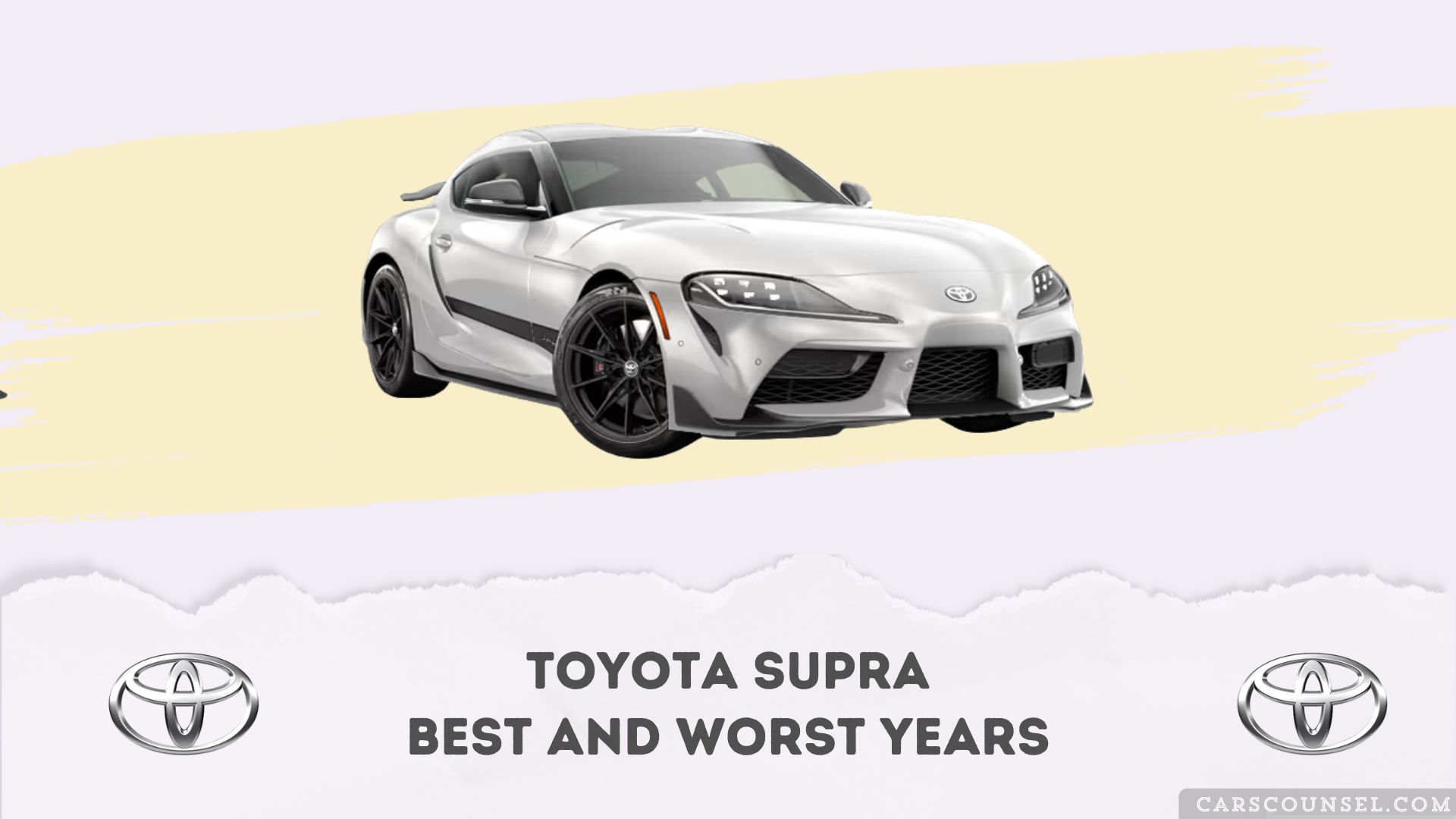
The best Toyota Supra years are the 1993-1998 fourth-generation models for enthusiasts and the 2022-2025 fifth-generation models for modern reliability. Buyers should approach the 2020 launch year and 1987-1988 third-generation turbo models carefully due to early production recalls and historical engine vulnerabilities.
These rankings are comparative. No classic or modern sports car is flawless. Long-term reliability heavily depends on strict maintenance, rust prevention, and verifying that previous owners avoided abusive track use or unsupported modifications.
Significant differences exist between naturally aspirated and turbocharged engines, as well as manual and automatic transmissions. The modern fifth-generation models also feature distinct powertrains compared to their classic predecessors, requiring different inspection priorities.
Quick Navigation
Best and Worst Toyota Supra Years at a Glance
| Model Year Range | Verdict | Main Reason | Buyer Guidance |
|---|---|---|---|
| 2022-2025 | Best Late-Generation Choice | Proven powertrain and sorted early-production issues. | Verify service history and check for track abuse. |
| 2021 | Good Choice | Increased horsepower and improved infotainment over 2020. | Inspect for alignment and suspension wear. |
| 2020 | Approach Carefully | First year of the modern revival with early build-quality recalls. | Confirm all strut tower and safety recalls are completed. |
| 1993-1998 | Best Enthusiast Choice | Legendary engine capability and iconic styling. | Demand extensive maintenance records and inspect for rust. |
| 1989-1992 | Mixed | Improved styling but aging turbocharged components. | Verify turbo health and cooling system upgrades. |
| 1987-1988 | Approach Carefully | Notorious factory head gasket vulnerabilities. | Confirm head gasket replacement with updated studs. |
| 1979-1986 | Approach Carefully | Classic status but plagued by age and parts scarcity. | Reserve for dedicated collectors with restoration budgets. |
Key Takeaways
- The 1993-1998 fourth-generation models remain the ultimate enthusiast choice, provided they have extensive maintenance records.
- Modern 2022-2025 models offer excellent reliability, featuring a proven platform shared with the BMW Z4.
- The 2020 launch year requires strict VIN checks to ensure early strut tower weld recalls were performed.
- Third-generation 1987-1988 turbo models require proof of head gasket and head stud upgrades to avoid major failures.
- Rust, aging vacuum lines, and previous track abuse are the primary enemies of all classic Supra generations.
How We Evaluated the Toyota Supra Model Years
Our analysis considers official recalls, manufacturer service campaigns, and long-term ownership patterns. We separate verified mechanical defects from normal aging issues common in classic sports cars.
Consumer complaints are not failure rates, and a recall does not automatically make a year unreliable. Recent models have less ownership history, while classic models depend entirely on individual maintenance.
Best Toyota Supra Years
2022-2025: Best Late-Generation Choice
The 2022 through 2025 model years represent the most refined versions of the modern fifth-generation Supra. Toyota and BMW resolved early software quirks, resulting in a highly capable sports car.
The 2023 introduction of a manual transmission for the 3.0-liter models significantly increased enthusiast appeal. These years benefit from a mature platform and proven turbocharged inline-six reliability.
1993-1998: Best Enthusiast Choice
The fourth-generation Supra remains a global icon. The twin-turbo models feature the legendary engine block, known for handling immense power when properly maintained.
Naturally aspirated versions are less powerful but offer simpler maintenance. Buyers must prioritize rust-free chassis examples and demand thick folders of service records to verify timing belt and turbo care.
Best Year by Buyer Type
Best Overall: 1997-1998
The final years of the fourth generation introduced variable valve timing and a six-speed manual transmission. These updates improved drivability and cemented their status as premier collector cars.
Best Modern Alternative: 2023-2025
Buyers wanting modern safety tech, warranty coverage, and a manual transmission should target these recent years. They offer modern performance without the extreme price premium of classic models.
Best Budget Performance: Toyota GR86
While not a Supra, buyers priced out of the classic market should consider the Toyota GR86. It offers modern reliability, naturally aspirated thrills, and vastly lower maintenance costs.
Years to Approach Carefully
2020: First-Year Launch Quirks
The 2020 model year marked the return of the Supra nameplate. As a first-year redesign, it experienced early build-quality challenges, including a notable recall regarding front strut tower welds.
Buyers must verify that the VIN shows completed recall work. Some early owners also reported factory alignment issues requiring aftermarket suspension corrections for optimal tire wear and handling.
1987-1988: Third-Generation Turbo Vulnerabilities
The early third-generation turbo models are famous for a critical factory flaw. The cast-iron block and aluminum head combination, paired with inadequate factory head studs, led to frequent head gasket failures.
These years are only safe to purchase if the current owner can provide definitive receipts proving the head gasket was replaced with updated metal studs and an upgraded metal head gasket.
1979-1986: Classic Collector Risks
The first and second-generation models are deeply rooted in their Toyota Celica origins. They are best suited for patient collectors rather than daily drivers.
Finding pristine, rust-free examples is increasingly difficult. Furthermore, sourcing specific interior trim and early fuel injection components can become a time-consuming and expensive endeavor.
Toyota Supra Reliability by Generation
Fifth Generation (2020-Present)
The modern era relies on a collaborative architecture. The turbocharged inline-six and eight-speed automatic transmissions have proven robust in daily driving and spirited use.
Reliability is generally excellent, provided owners adhere to strict oil change intervals and avoid unsupported software tuning that stresses the cooling systems.
Fourth Generation (1993-1998)
This era is defined by over-engineered bottom ends. The sequential turbo system on early models is complex and prone to vacuum leaks, while the later single-turbo setups are simpler.
Age is the primary reliability factor today. Rubber hoses, wiring harnesses, and suspension bushings require comprehensive replacement to maintain factory reliability standards.
Third Generation (1987-1992)
Reliability varies drastically based on engine configuration. The naturally aspirated models are relatively robust but slow by modern standards.
The turbocharged models require meticulous cooling system maintenance. Neglect quickly leads to severe engine damage, making documented mechanical upgrades essential for long-term survival.
Common Toyota Supra Problems
Third-Generation Head Gasket Failures
Early turbocharged third-generation models suffer from inadequate factory head clamping force. Under boost, the head gasket can fail, leading to coolant intrusion and catastrophic engine damage.
Resolving this requires machine shop work and upgraded aftermarket head studs. Buyers should never assume this repair was done without physical proof and detailed receipts.
Modern Strut Tower Welds
Select early fifth-generation models left the factory with incomplete welds on the front strut towers. This can cause structural flex and compromise suspension geometry over time.
This issue was addressed through an official manufacturer recall. Buyers must run the vehicle identification number through a dealer database to confirm the structural inspection was completed.
Classic Vacuum and Boost Leaks
Fourth-generation twin-turbo models utilize a complex network of small rubber vacuum lines. Decades of engine bay heat cause these lines to become brittle and crack.
This results in boost loss, rough idling, and erratic turbo transitions. A complete vacuum line replacement using modern silicone hoses is a mandatory maintenance item for classic buyers.
What to Check Before Buying a Used Toyota Supra
- Verify the vehicle identification number for open safety and structural recalls.
- Inspect the chassis rails, wheel arches, and hatch area for signs of deep corrosion.
- Demand comprehensive service records, specifically for timing belts, water pumps, and turbo servicing.
- Check for aftermarket engine tuning, which may indicate unsupported track abuse and hidden stress.
- Test the sequential turbo transition on early fourth-generation models for smooth operation.
- Inspect the condition of all engine bay vacuum lines and replace them if they appear original.
- Arrange an independent pre-purchase inspection with a specialist familiar with classic or modern sports cars.
Related Buying Guides
- BMW Z4 best and worst years: The modern Supra shares its underlying architecture and powertrain with the Z4, making this guide essential for cross-shopping modern roadsters.
- Toyota Celica best and worst years: Explore the liftback and coupe models that originally shared platforms with the first three generations of the Supra.
- Toyota Crown best and worst years: Buyers seeking Toyota luxury and comfort over track-focused performance should review our comprehensive Crown reliability analysis.
Frequently Asked Questions
Is the modern Toyota Supra just a BMW?
The fifth-generation Supra shares its platform, engine, and transmission with the BMW Z4. However, Toyota engineers uniquely tuned the suspension, steering, and chassis bracing for a distinct driving experience.
Which Supra year is the most valuable?
The 1997 and 1998 models command the highest collector premiums. These years feature variable valve timing, a six-speed manual transmission, and represent the final production run of the classic era.
Are classic Supras reliable daily drivers?
Classic models require dedicated maintenance and are generally not suited for harsh winter climates. Age-related wear on rubber components and wiring makes them better suited as weekend enthusiast vehicles.
Did the 2020 Supra have major engine problems?
The engine itself is highly reliable. The primary concerns for the 2020 model year involve early build-quality recalls regarding chassis welds and factory alignment settings, rather than internal engine defects.
What causes the third-generation turbo to fail?
The factory head studs were insufficient for the turbocharged engine. This allows the cylinder head to lift under boost, blowing the head gasket and potentially mixing coolant with engine oil.
Should I buy a tuned fourth-generation Supra?
Heavily modified examples carry significant hidden risks. Unless the builder is renowned and every modification is meticulously documented, a stock, unmodified example is a much safer investment for long-term reliability.
Which Toyota Supra Year Should You Buy?
The ideal choice depends entirely on your budget and mechanical tolerance. Modern buyers should target the 2022 through 2025 model years for proven reliability and modern safety technology.
Enthusiasts chasing classic status must focus on the 1993 through 1998 generation. However, securing a pristine example requires deep pockets, extensive verification of maintenance records, and a strict rust inspection.
Regardless of the generation, always verify recall completion and arrange an independent specialist inspection before finalizing your purchase.

