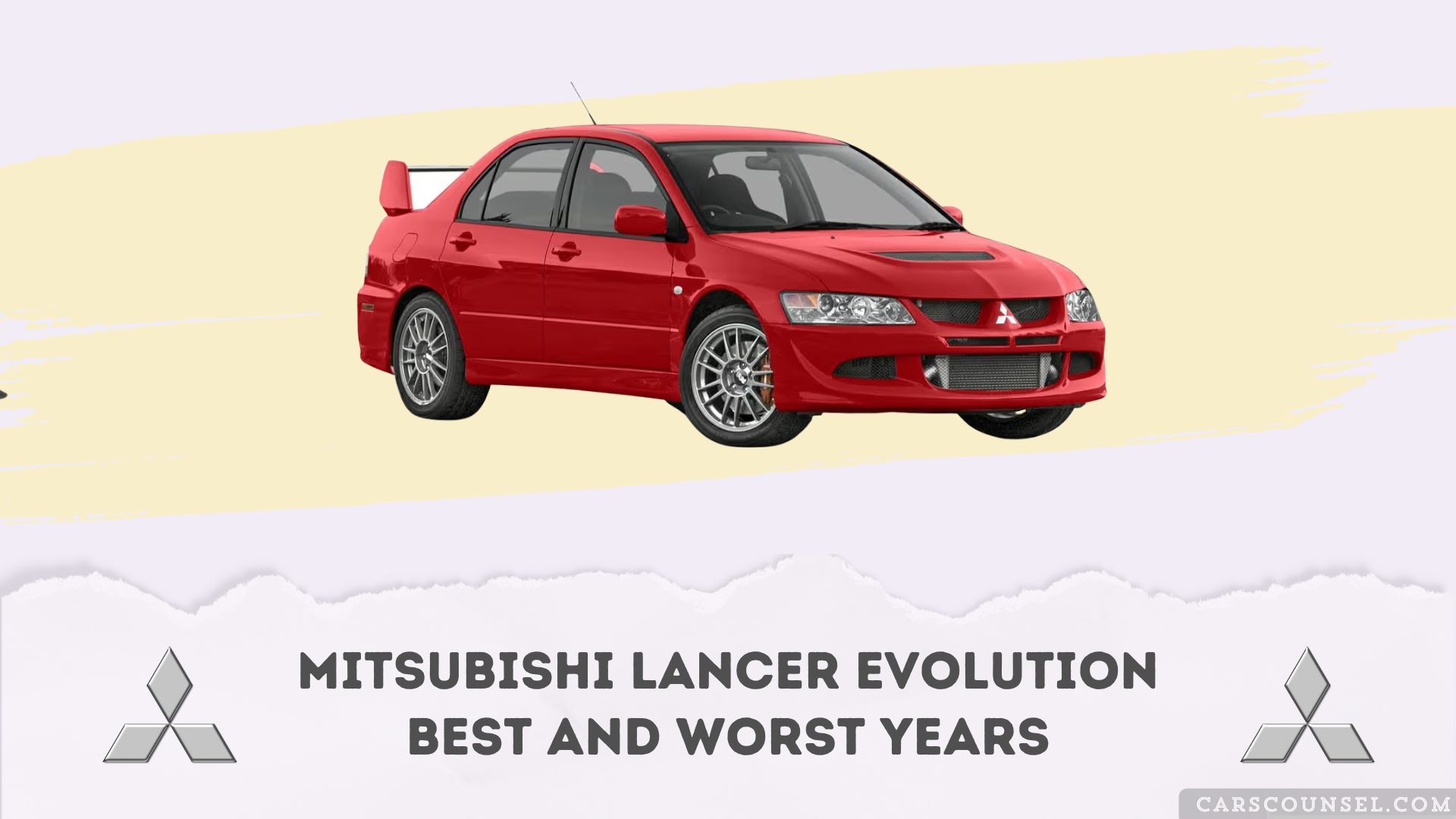
The 2006 and 2015 Mitsubishi Lancer Evolution model years offer the strongest reliability for used buyers. The 2003 to 2005 models appeal to enthusiasts but require careful inspection. Buyers should approach early twin-clutch automatic models with caution due to expensive transmission risks.
These rankings are comparative, as no performance vehicle is entirely flawless. Long-term durability heavily depends on rigorous maintenance, rust prevention, and whether previous owners installed aggressive aftermarket modifications.
Reliability varies significantly by transmission and generation. The traditional manual transmission remains the most robust choice, while the later twin-clutch automatic introduces complex mechatronic vulnerabilities that demand specialized maintenance and careful evaluation.
Quick Navigation
Best and Worst Mitsubishi Lancer Evolution Years at a Glance
| Model Year | Verdict | Main Reason | Buyer Guidance |
|---|---|---|---|
| 2003-2005 | Best Enthusiast Choice | Iconic engine, manual focus | Inspect for modifications and transfer case wear |
| 2006 | Best Older Choice | Refined Evo IX, mature platform | Verify timing belt and differential pump condition |
| 2008-2010 (Manual) | Good With Inspection | Early engine teething issues | Check for oil consumption and clutch wear |
| 2008-2015 (SST) | Approach Carefully | Twin-clutch transmission complexity | Avoid if used for track duty; verify service history |
| 2011-2014 (Manual) | Good Choice | Improved build, sorted powertrain | Inspect suspension components and fluid lines |
| 2015 | Best Late-Generation Choice | Final Edition, highly sought after | Expect premium pricing; verify stock condition |
Key Takeaways
- The 2006 and 2015 model years represent the strongest overall choices for reliability and refinement.
- Early 2003-2005 examples are enthusiast favorites but frequently suffer from aftermarket abuse.
- The SST twin-clutch automatic transmission found in 2008-2015 models introduces expensive repair risks.
- Active Yaw Control and Active Center Differential pump failures are common across all generations.
- Buyers researching years to steer clear of should avoid heavily modified examples and early automatic transmissions.
- Always verify the VIN for open recalls and conduct a compression test before purchasing.
How We Evaluated the Mitsubishi Lancer Evolution Model Years
Our analysis reviews official recalls, manufacturer service campaigns, and long-term ownership patterns. We separate verified mechanical defects from normal wear and tear associated with high-performance driving.
Consumer complaints are considered but not treated as definitive failure rates. A recall does not automatically condemn a model year, and low complaint counts on newer vehicles simply reflect limited road exposure.
We also distinguish between configurations. A problem affecting a complex twin-clutch automatic does not necessarily apply to the traditional manual transmission, and verdicts reflect these specific mechanical differences.
Market Context and Alternatives
When evaluating the Mitsubishi lineup, we note that buyers seeking practical alternatives often cross-shop with Nissan, Kia, and Hyundai vehicles. Others research the Mitsubishi Outlander, Mitsubishi Mirage, Mitsubishi I-Miev, or Mitsubishi Pajero.
Best Mitsubishi Lancer Evolution Years
2015 (Best Late-Generation Choice)
As the Final Edition, the 2015 model benefits from a decade of platform refinements. It remains the most sorted iteration of the Evo X generation, offering improved build quality and resolved early-engine concerns.
Buyers should expect to pay a premium for these examples. Because they are highly collectible, verifying that the vehicle remains completely stock is the primary inspection priority.
2006 (Best Older Choice)
The 2006 Evo IX represents the pinnacle of the legendary engine era. It features variable valve timing and a more mature chassis setup compared to earlier models, resulting in a remarkably cohesive performance sedan.
While robust, these vehicles are now approaching two decades old. Buyers must verify timing belt service intervals and inspect the transfer case for spline wear.
2003-2005 (Best Enthusiast Choice)
These early Evo VIII models introduced the platform to the United States. They are prized for their raw, analog driving experience and the massive tuning potential of the iron-block engine.
Finding an unmodified example is exceptionally rare. A thorough compression test and a careful undercarriage inspection for rust and track-day damage are mandatory before purchase.
Best Year by Buyer Type
Best Overall
The 2015 Final Edition offers the best balance of modern reliability, daily-drivable comfort, and long-term collectibility, provided the buyer can secure an unmodified example.
Best Budget Option
The 2003 to 2005 models typically command lower entry prices than the Final Edition. However, buyers must budget for immediate baseline maintenance and potential suspension repairs.
Years to Approach Carefully
2008-2010 Manual Models (Good With Inspection)
The transition to the aluminum-block engine introduced some early teething issues. Some owners report higher oil consumption and timing chain tensioner concerns on these earlier Evo X models.
A pre-purchase inspection should include a thorough check for oil burning and verification of all technical service bulletins related to the valvetrain.
2008-2015 SST Models (Approach Carefully)
The Twin-Clutch SST automatic transmission offers rapid shifts but lacks the durability of the manual gearbox. The mechatronic unit and clutch packs are highly sensitive to overheating and aggressive launch control.
Repairs for the SST transmission are exceptionally expensive and require specialized technicians. These models are best avoided if you plan to track the vehicle or tune it heavily.
Common Mitsubishi Lancer Evolution Problems
Drivetrain and Differential Pumps
The Active Yaw Control and Active Center Differential systems rely on specialized hydraulic pumps. These pumps are mounted in vulnerable locations and frequently fail due to internal corrosion or fluid degradation.
Symptoms include warning lights on the dash and a noticeable loss of cornering traction. Replacing these pumps requires specialized bleeding procedures and genuine fluids.
Transfer Case and Clutch Wear
Manual transmission models utilize a complex all-wheel-drive transfer case. The splines connecting the transmission to the transfer case can wear prematurely, especially if the vehicle is launched aggressively or driven on sticky tires.
Clutch wear is also a normal but expensive maintenance item. Buyers should test for slipping under heavy load and check for abnormal drivetrain binding during tight turns.
Engine Oil Consumption
Early engines found in the 2008 to 2010 models occasionally suffer from piston ring issues that lead to excessive oil consumption. If left unchecked, this can cause severe internal engine damage.
Monitoring the oil level between every fuel fill-up is critical for these specific model years. A compression and leak-down test will reveal the health of the piston rings.
What to Check Before Buying a Used Mitsubishi Lancer Evolution
- Verify the VIN for open airbag and fuel system recalls.
- Perform a compression and leak-down test to assess engine health.
- Inspect the transfer case and rear differential for fluid leaks or whining noises.
- Check the Active Yaw Control pump reservoirs for proper fluid levels and contamination.
- Look for signs of heavy aftermarket tuning, boost controllers, or unprofessional turbochargers.
- Examine the undercarriage, suspension arms, and subframe for track-day damage or severe rust.
- Inspect the manual clutch for slipping or the SST transmission for jerky low-speed shifts.
- Review service records to confirm timely timing belt and differential fluid changes.
Related Buying Guides
- Subaru WRX STI best and worst years: The direct historical rival to the Evolution, offering a similarly aggressive all-wheel-drive performance sedan experience.
- Subaru WRX best and worst years: A more practical and daily-drivable alternative for buyers who want all-wheel-drive performance without the extreme track focus.
- Mitsubishi Eclipse best and worst years: A sporty coupe alternative from the same brand, suited for buyers prioritizing styling over rally-bred all-wheel-drive capability.
Frequently Asked Questions
Which Mitsubishi Lancer Evolution year is the most reliable?
The 2015 Final Edition is generally the most reliable, benefiting from a decade of manufacturing refinements. The 2006 model is also highly regarded for its mature powertrain and sorted chassis dynamics.
Should I avoid the SST automatic transmission?
You should approach the SST automatic with caution. While it shifts quickly, the mechatronic components and clutch packs are vulnerable to overheating and are exceptionally expensive to repair or replace.
Are modified Lancer Evolutions safe to buy?
Modified examples carry significant financial risk. Aggressive tuning often reduces engine lifespan and voids reliability. Always prioritize stock, unmodified vehicles with documented service histories to ensure long-term durability.
Do all model years suffer from rust issues?
Rust is a major concern across all generations, particularly for vehicles driven in salt-belt states. The rear subframe, suspension components, and differential pump housings require careful inspection during any pre-purchase evaluation.
Is the 2007 model year available in the United States?
Mitsubishi did not sell a 2007 Lancer Evolution in the United States. The North American market skipped from the 2006 Evo IX directly to the redesigned 2008 Evo X model.
How expensive is routine maintenance?
Routine maintenance is significantly higher than a standard commuter car. Frequent differential fluid changes, premium synthetic oil, and expensive consumables like tires and brakes require a dedicated ownership budget.
Choosing the Right Mitsubishi Lancer Evolution Model Year
The 2015 Final Edition and the 2006 Evo IX remain the strongest choices for used buyers seeking reliability and performance. Manual transmission models consistently outperform their automatic counterparts in long-term durability.
Avoid examples with heavy aftermarket modifications or neglected service histories. Always conduct a thorough pre-purchase inspection, verify the VIN for open recalls, and budget for the premium maintenance this rally-bred sedan demands.

