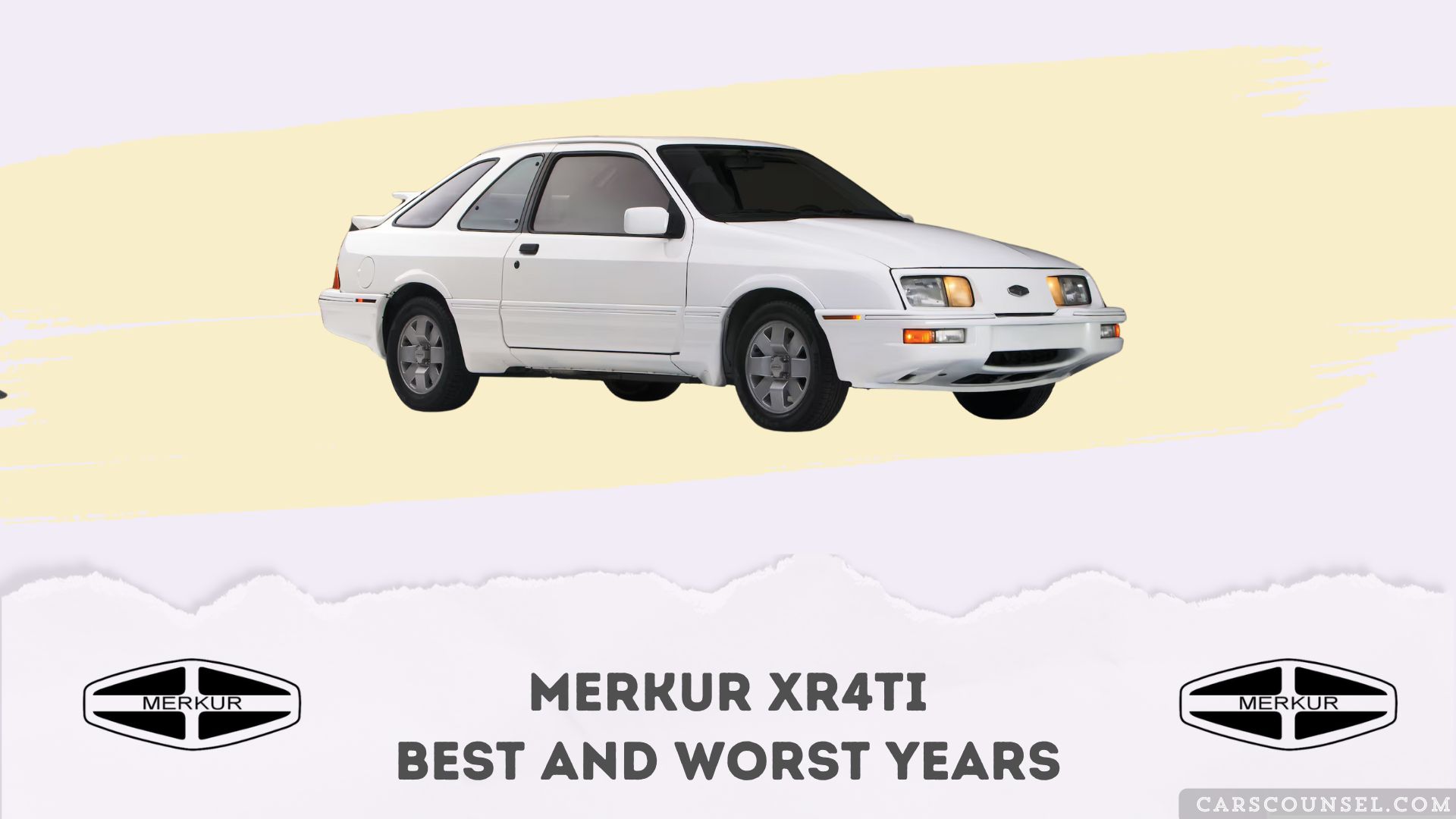
The best Merkur XR4Ti years are the entire 1985 through 1989 production run, provided the vehicle is equipped with the 5-speed manual transmission. Buyers should approach automatic examples carefully due to the sluggish 3-speed gearbox and increased heat-related wear.
Rankings for this discontinued captive import are strictly comparative. Because the XR4Ti is now a classic car, individual condition, rust prevention, and meticulous maintenance matter far more than the specific model year.
Meaningful differences exist primarily between the manual and automatic transmissions. The 2.3-liter turbocharged engine and basic chassis remained largely unchanged throughout the brief five-year production run.
Quick Navigation
Best and Worst Merkur XR4Ti Years at a Glance
| Model Year | Verdict | Main Reason | Buyer Guidance |
|---|---|---|---|
| 1985-1989 (Manual) | Best Enthusiast Choice | Preferred transmission for performance and reliability. | Verify TFI module and head gasket condition. |
| 1985-1989 (Automatic) | Approach Carefully | 3-speed automatic saps performance and generates excess heat. | Inspect transmission cooling and engine bay wiring. |
Key Takeaways
- The 1985-1989 manual models are the most desirable for enthusiasts seeking the intended performance.
- Automatic examples (1985-1989) should be approached carefully due to the weak 3-speed transmission.
- The 2.3-liter turbocharged Lima engine requires strict maintenance and is prone to head gasket failures.
- Engine bay wiring harnesses degrade severely from heat and age, causing mysterious electrical gremlins.
- The Thick Film Ignition (TFI) module on the distributor is a notorious failure point.
- Always verify the VIN, inspect for severe rust, and arrange an independent inspection by a classic Ford specialist.
How We Evaluated the Merkur XR4Ti Model Years
Our analysis considers the unique realities of owning a discontinued 1980s captive import, enthusiast community data, and the known traits of the Ford 2.3-liter turbocharged engine. We evaluate parts scarcity, wiring degradation, and the impact of age.
Complaints and traditional reliability metrics do not apply to a 35-year-old classic car. Collector condition, specialist support, and verifiable maintenance history provide the only tangible evidence of long-term survivability.
Best Merkur XR4Ti Years
1985-1989 Merkur XR4Ti (Manual)
The entire production run of the XR4Ti is highly desirable for collectors when equipped with the T-9 5-speed manual transmission. This setup unlocks the 175 horsepower potential of the 2.3-liter turbocharged engine and provides the engaging driving experience Ford intended.
Buyers must verify the condition of the custom engine bay wiring and the structural integrity of the hatchback chassis. These cars offer unparalleled 1980s turbo exclusivity for serious enthusiasts.
Best Year by Buyer Type
Best Enthusiast Choice: 1985-1989 Merkur XR4Ti (Manual)
For collectors seeking a unique piece of 1980s Ford motorsport history, the manual XR4Ti offers unparalleled exclusivity. Its European Ford Sierra roots and distinctive bi-plane rear wing make it a standout classic.
Years to Approach Carefully
Approach Carefully: 1985-1989 Merkur XR4Ti (Automatic)
While the entire production run shares the same basic chassis, automatic examples require careful inspection. The 3-speed C3 automatic transmission severely limits the turbo engine’s performance and traps excess heat in the engine bay.
Buyers should approach these automatic cars carefully, ensuring that the transmission cooler lines and degraded engine wiring harnesses have been thoroughly addressed by a specialist.
Worst Merkur XR4Ti Years
There are no definitively worst model years to avoid, as every Merkur XR4Ti is a valuable collector’s item. However, buyers should avoid examples suffering from severe structural rust, hacked wiring harnesses, or undocumented, unsafe engine modifications.
Neglecting the cooling system or the aging electrical components will result in expensive repair bills. Always prioritize documented mechanical sorting and rust-free body panels over low mileage alone.
Merkur XR4Ti Reliability by Generation
First Generation (1985-1989)
The Merkur XR4Ti exists as a single, short-lived generation based on the European Ford Sierra. It utilized a turbocharged 2.3-liter inline-four engine and rear-wheel drive.
Production ceased after 1989 due to slow sales and the impending requirement for driver-side airbags, which would have required costly redesigns for the low-volume import. This makes long-term factory support virtually non-existent.
Common Merkur XR4Ti Problems
Electrical and Wiring Harness Degradation
The engine bay wiring harness is highly susceptible to heat degradation and brittle insulation. This leads to mysterious electrical gremlins, sensor failures, and poor running conditions that are difficult to diagnose without a complete harness replacement.
TFI Module and Ignition Failures
The Thick Film Ignition (TFI) module, mounted directly on the distributor, is notorious for failing due to extreme under-hood heat. When it fails, the engine stalls or refuses to start, requiring immediate replacement and ideally a remote relocation kit.
Head Gasket and Cooling System Issues
The 2.3-liter turbocharged Lima engine is prone to cylinder head gasket failures if the cooling system is neglected or if the engine is heavily modified without proper tuning. Maintaining the stock boost levels and cooling system is critical for engine survival.
Body and Chassis Rust
Like many 1980s European-derived vehicles, the XR4Ti is highly susceptible to rust. The rear hatch, wheel arches, and floor pans require careful inspection, as structural corrosion can render the vehicle unsafe and financially unviable to restore.
What to Check Before Buying a Used Merkur XR4Ti
- Inspect the engine bay wiring harness for brittle insulation, exposed copper, and previous hack repairs.
- Verify the condition of the TFI module and check if a remote relocation kit has been installed.
- Perform a cooling system pressure test and check for signs of head gasket failure or coolant intrusion.
- Inspect the rear hatch, wheel arches, and floor pans for severe structural rust.
- Test the operation of the manual transmission, clutch, and limited-slip differential if equipped.
- Arrange an independent inspection by a specialist familiar with vintage Ford turbo engines.
Related Buying Guides
- Saab 900 best and worst years: A classic 1980s turbocharged alternative that offers similar enthusiast appeal, unique styling, and a dedicated community for sourcing parts and maintenance advice.
- Volvo 240 Series best and worst years: A practical, mass-market classic alternative for buyers who want 1980s European styling and legendary durability without the extreme financial risks of a rare captive import.
Frequently Asked Questions
Is the Merkur XR4Ti reliable?
It is a 35-year-old discontinued classic that requires constant specialist attention. Traditional reliability metrics do not apply, and ownership is a mechanical undertaking due to extreme parts scarcity and aging wiring.
What engine is in the XR4Ti?
It features a 2.3-liter turbocharged inline-four engine derived from the Ford Lima family. In manual-equipped cars, it produced 175 horsepower, while automatic models were rated at 145 horsepower.
How many Merkur XR4Tis were sold?
Approximately 42,000 units were sold in the United States between 1985 and 1989. This low production volume makes finding clean, unmodified examples increasingly difficult today.
Why did Ford discontinue the Merkur brand?
The Merkur brand suffered from poor sales, high import costs, and a lack of consumer understanding. Upcoming safety regulations requiring driver-side airbags made continuing the low-volume XR4Ti financially unviable.
Are XR4Ti parts hard to find?
Yes, Merkur-specific body panels, interior trim, and badges are exceptionally rare. Owners rely heavily on the enthusiast community, European Ford Sierra parts, and vintage Mustang components for mechanical repairs.
Can I daily drive a Merkur XR4Ti?
It is not recommended for daily driving due to the lack of modern safety features, fragile aging wiring, extreme repair costs, and the severe lack of dealership support or replacement body parts.
Choosing the Right Merkur XR4Ti Model Year
The 1985 through 1989 Merkur XR4Ti manual models are the definitive choices for serious collectors. They represent a unique era of Ford’s experimental captive import strategy and 1980s turbocharged performance.
Avoid any example with severe structural rust, hacked engine wiring, or neglected cooling systems. The condition of the brittle engine bay wiring harness is the most critical factor in determining long-term viability.
Always verify the VIN and arrange an independent inspection. Checking the TFI module, head gasket, and manual transmission is essential for securing a capable and enjoyable 1980s classic.