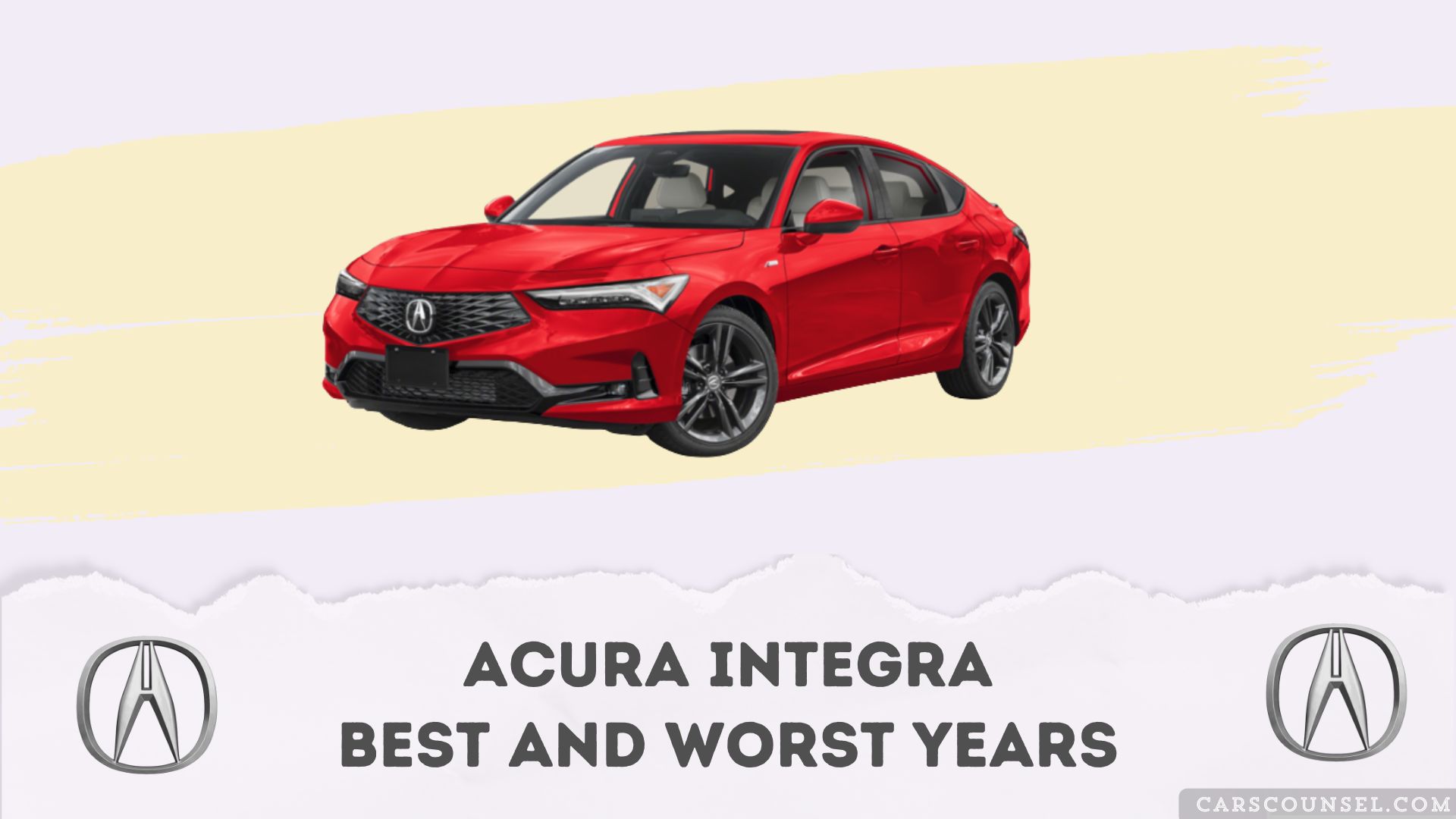
The best Acura Integra years are 2000 through 2001 and the 1992 through 1993 GS-R models. Approach the 2023 launch year carefully due to steering recalls. Avoid 1996 through 1998 entirely because of severe electrical and distributor failures.
Rankings are comparative and no vintage or modern sports compact is flawless. Strict maintenance history, rust prevention, and overall condition matter far more than the specific model year badge on these vehicles.
Reliability varies heavily by engine and transmission configuration. The VTEC engines demand strict timing belt upkeep, while the modern turbocharged liftback requires careful monitoring of its steering gearbox and electrical systems.
Quick Navigation
Best and Worst Acura Integra Years at a Glance
| Model Year or Range | Verdict | Main Reason | Buyer Guidance |
|---|---|---|---|
| 2024–Present | Too New to Judge | Type S added, long-term data lacking | Monitor steering and powertrain health |
| 2023 | Approach Carefully | First-year redesign, steering gearbox recall | Verify recall completion and alignment |
| 2002–2006 (RSX) | Target-Market Exclusion | Rebadged for the US market | Consult our dedicated RSX coverage |
| 2000–2001 | Best Older Choice | Refined third-generation engineering | Inspect for clear coat peeling |
| 1999 | Good With Inspection | Solid chassis but aging synchros | Test manual transmission shifting |
| 1996–1998 | Avoid | SRS module and distributor failures | High risk of electrical and no-start issues |
| 1994–1995 | Good Choice | Early third-gen with fewer gremlins | Check for timing belt service records |
| 1992–1993 | Best Enthusiast Choice | Introduction of the GS-R VTEC engine | Verify engine originality and maintenance |
| 1990–1991 | Good With Inspection | Independent rear suspension debut | Inspect suspension bushings and rust |
| 1986–1989 | Good With Inspection | Classic first-generation styling | Budget for age-related rubber and wiring |
Key Takeaways
- Strongest choices include the 2000 through 2001 mature third-generation models.
- Avoid 1996 through 1998 models due to SRS module and distributor failures.
- Approach the 2023 first-year redesign carefully regarding steering gearbox recalls.
- The 2002 through 2006 models were badged as the RSX in the US market.
- VTEC engines require strict timing belt and oil pump seal maintenance.
- Always verify the VIN for outstanding safety campaigns and steering repairs.
- Arrange an independent inspection focusing on transmission synchros and rust.
How We Evaluated the Acura Integra Model Years
Our analysis considers official safety campaigns, long-term ownership data, and powertrain configurations. We separate genuine engineering flaws from normal wear on aging Japanese sport compacts.
Complaints do not equal confirmed defects, and a recall does not automatically ruin a vehicle. Recent models have less road exposure, making long-term reliability harder to predict. Best means comparatively stronger, not trouble-free.
Best Acura Integra Years
2000–2001
These late-production third-generation models benefit from established manufacturing processes. They avoided the electrical gremlins and distributor failures that plagued the 1996 through 1998 model years.
Buyers should still verify that all scheduled maintenance was performed. The B18 engines require strict adherence to timing belt service intervals to prevent catastrophic valve interference.
1992–1993
The introduction of the GS-R trim brought the high-revving B17 VTEC engine to the lineup. These early second-generation models offer genuine enthusiast appeal with a relatively simple and robust mechanical layout.
Inspect the transmission for third-gear synchro wear. The VTEC solenoid and oil pressure switches should also be checked for leaks during a pre-purchase inspection.
Best Year by Buyer Type
Best Older Choice
The 2000 and 2001 models offer the best balance of modern usability and classic VTEC performance. They represent the most refined versions of the legendary third-generation chassis.
Best Enthusiast Choice
The 1992 and 1993 GS-R models provide the purest vintage driving experience. Their naturally aspirated engines and lightweight frames remain highly sought after by collectors and track builders.
Years to Approach Carefully
2023 (Approach Carefully)
The first year of the fifth generation introduced the new turbocharged liftback platform. Owners reported frustrating steering gearbox issues that prompted a major manufacturer recall.
Buyers must verify that the steering recall repair was completed by a dealer. Early-build interior rattles and minor electrical gremlins also surfaced during this launch year.
1999 (Good With Inspection)
This late third-generation model refined the chassis but introduced increased reports of oil consumption. Manual transmission examples frequently exhibit worn third-gear synchros at higher mileages.
Inspect the valve cover gasket and distributor O-ring for leaks. Ensure the timing belt and water pump were replaced using high-quality OEM components.
1994–1995 (Good Choice)
The launch years of the third generation featured the excellent B18C1 VTEC engine in the GS-R. They avoided the severe SRS warning light issues that plagued later years.
Check the condition of the aging plastic cooling system components. The radiator and upper radiator hoses should be replaced proactively to prevent overheating.
1990–1991 and 1986–1989 (Good With Inspection)
These early first and second-generation models are now considered vintage classics. They offer simple mechanicals but suffer from severe age-related rubber, plastic, and wiring degradation.
Budget for extensive suspension bushing replacements and fuel system cleaning. Rust is a major concern for any surviving examples from these early production runs.
Worst Acura Integra Years
1996–1998 (Avoid)
These mid-third-generation years experienced widespread SRS module failures, causing the airbag warning light to illuminate constantly. Repairing these aging safety modules is difficult and expensive.
The 1996 through 1998 models also suffer from notorious distributor failures that cause sudden no-start conditions. Combined with transmission synchro wear, these years present too many risks for casual buyers.
Acura Integra Reliability by Generation
First and Second Generations (1986–1993)
The original liftbacks established Acura’s performance credentials. While mechanically robust when new, surviving examples require extensive restoration due to their extreme age and collector abuse.
Third Generation (1994–2001)
This iconic generation introduced the GS-R and Type R to the US market. The 1994 through 1995 and 2000 through 2001 years are highly reliable, while the 1996 through 1998 models are problematic.
RSX Era (2002–2006)
Acura dropped the Integra nameplate in North America, replacing it with the RSX. This generation shares the excellent K20 engine family but is evaluated separately in our RSX coverage.
Fifth Generation (2023–Present)
The modern revival utilizes a turbocharged engine shared with the Civic Si. It offers excellent daily usability, though the first-year steering recall requires immediate verification before purchase.
Common Acura Integra Problems
Distributor and Ignition Failures
The 1996 through 1998 models frequently experience internal distributor bearing and coil failures. This causes sudden stalling or no-start conditions, requiring a complete distributor assembly replacement.
Transmission Synchro Wear
Manual transmissions across the second and third generations suffer from premature synchro wear, particularly in third gear. Grinding during downshifts indicates the need for a transmission rebuild.
Steering Gearbox Defects
The 2023 model year experienced widespread sticky steering issues. A manufacturer recall addresses the internal gearbox components that can bind, creating dangerous highway driving conditions.
Oil Leaks and Consumption
The VTEC engines are prone to valve cover gasket and oil pump seal leaks. Late third-generation models also exhibit increased oil consumption as piston rings age and carbon accumulates.
What to Check Before Buying a Used Acura Integra
- Verify the VIN for open safety campaigns and steering recall eligibility.
- Inspect the timing belt service records, as interference engines will destroy themselves if it snaps.
- Test the manual transmission for grinding during second-to-third gear shifts.
- Check the dashboard for a persistent SRS airbag warning light on 1996 through 1998 models.
- Inspect the distributor cap and rotor for oil contamination or internal bearing play.
- Evaluate the condition of the clear coat, as early 2000s paint is prone to severe peeling.
- Scan the vehicle for hidden fault codes using a Honda-specific diagnostic tool.
- Arrange an independent pre-purchase inspection by a qualified Japanese car specialist.
Related Buying Guides
- Acura TLX Type S best and worst years: Consider this performance sedan if you require modern luxury and a powerful turbocharged engine for daily grand touring.
- Acura TLX best and worst years: Explore the standard TLX if you want a comfortable, technology-focused four-door alternative to the lightweight Integra hatchback.
- Acura ILX best and worst years: Look at the ILX if you prefer a compact, fuel-efficient sedan that shares underlying architecture with the Honda Civic platform.
- Acura ZDX best and worst years: Investigate the ZDX if you need a larger, electric or crossover alternative that prioritizes family passenger space over track performance.
Frequently Asked Questions
Is the Acura Integra reliable?
The Integra offers above-average reliability for a sport compact when strictly maintained. The 2000 through 2001 models demonstrate excellent dependability, while the 1996 through 1998 years suffer from severe electrical and ignition flaws.
What year of the Acura Integra is most dependable?
The 2000 and 2001 model years represent the most dependable choices. These late-production vehicles benefited from sorted manufacturing processes and avoided the distributor and airbag module failures of earlier third-generation examples.
What Acura Integra years should you avoid?
Buyers should avoid the 1996 through 1998 model years due to widespread distributor failures and SRS warning light defects. The 2023 launch year also requires careful inspection to ensure the steering gearbox recall was completed.
What are the most common Acura Integra problems?
Manual transmission synchro wear, valve cover oil leaks, and distributor failures are the most frequent complaints. The 2023 model also experienced a major steering gearbox recall that must be verified before purchase.
How long does an Acura Integra last?
Well-maintained examples can reach high mileage, but longevity depends entirely on strict upkeep. The VTEC engines are robust if the timing belt is changed and the oil pump seals remain free of leaks.
Are Acura Integra repairs expensive?
Maintenance costs are reasonable for a vintage Japanese sport compact. However, finding clean OEM replacement parts for the interior and specialized VTEC components is becoming increasingly difficult and expensive.
Choosing the Right Acura Integra Model Year
The Acura Integra delivers its best ownership experience in the 2000 through 2001 model years. These mature examples offer a refined blend of classic VTEC performance and sorted third-generation engineering.
Avoid the problematic 1996 through 1998 models due to severe ignition and safety system flaws. Always verify the VIN for outstanding campaigns, inspect the timing belt, and arrange an independent inspection before purchasing.

