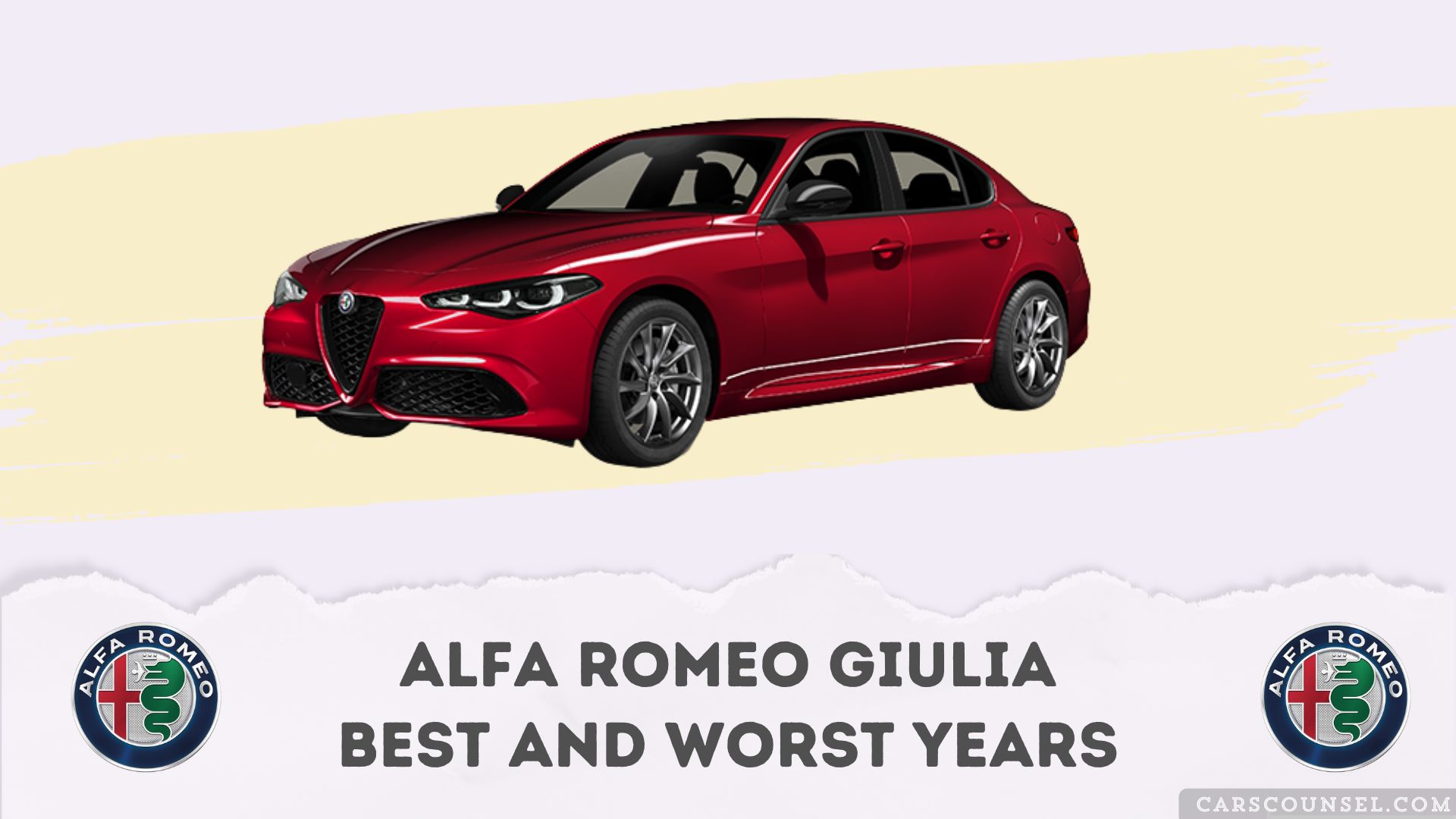
Best and Worst Alfa Romeo Giulia Years: What to Buy & Avoid

Betti Holt

Betti Holt

The Alfa Romeo Giulia returned to the market in 2016 as a performance-focused sedan designed to compete with the BMW 3 Series and Mercedes-Benz C-Class. Production of the modern generation began in 2015 at the Cassino plant in Italy, with sales starting in 2016.

This article breaks down the best and worst model years of the Alfa Romeo Giulia based on reliability data, owner complaints, recalls, and long-term dependability. Understanding which years to pursue and which to avoid can save you time and money.

Alfa Romeo Giulia Best And Worst Years

The Giulia is available with rear-wheel drive or all-wheel drive across multiple trim levels. Engine options include a 2.0-liter turbocharged four-cylinder and the high-performance Quadrifoglio with a Ferrari-derived 2.9-liter twin-turbo V6.

Alfa Romeo Giulia Generational Overview

First Generation (2016-Present)

The modern Alfa Romeo Giulia launched in 2016 as an all-new model after a decades-long absence from the sedan market. The base models feature a 2.0-liter turbocharged four-cylinder engine producing 280 horsepower, paired with an eight-speed automatic transmission.

The range-topping Quadrifoglio trim debuted with a 2.9-liter twin-turbo V6 producing 505 horsepower, built with assistance from Ferrari engineers. Early 2017-2019 models suffered from numerous electrical problems, engine electronics failures, and brake system issues. The 2020 model year marked a significant improvement with software updates addressing many early problems and added features like an updated infotainment touchscreen and LED rear lighting.

Subsequent years from 2021 onward have shown improved reliability ratings with fewer owner complaints. The Giulia received minor updates throughout its production run, including revised styling elements and technology upgrades.

Best Years for the Alfa Romeo Giulia

The most reliable Alfa Romeo Giulia model years offer fewer mechanical issues and better long-term ownership experiences.

  • 2020: This model year represents a turning point for Giulia reliability. Software updates resolved many electrical gremlins that plagued earlier models, and the addition of touchscreen functionality improved the infotainment experience. Owners report significantly fewer dashboard warning lights and electrical faults compared to 2017-2019 models.

  • 2021: Building on 2020 improvements, the 2021 Giulia shows strong dependability ratings. This year benefits from all previous software updates being applied at the factory, reducing the need for post-purchase service visits. Owner complaints dropped substantially compared to launch years.

  • 2022: The 2022 model continues the reliability trend with minimal reported issues. Factory quality control improvements are evident in better panel fitment and fewer initial defects. This year offers excellent value for used buyers seeking a dependable performance sedan.

  • 2023-2025: Recent model years benefit from years of production refinements and problem-solving. These models incorporate all lessons learned from early production, making them the most reliable Giulias available. Warranty coverage provides additional peace of mind for new and certified pre-owned buyers.

Worst Years for the Alfa Romeo Giulia

Certain Alfa Romeo Giulia model years experienced significant reliability problems that resulted in frequent dealer visits and expensive repairs.

  • 2017: The launch year suffered from widespread electrical problems including premature battery failures and faulty sensors. Brake system module software issues affected nearly 20,000 vehicles and required recalls. Fuel pump failures caused loss of drive power in numerous examples. Engine electronics malfunctions resulted in check engine lights and limp mode activation.

  • 2018: This year continued experiencing electrical gremlins and brake system problems from 2017. Infotainment screens became unresponsive or dark, requiring multiple dealer visits for software updates. Brake fluid line contact with coolant hose clamps created fire risk and prompted recalls. Electronic throttle control warnings appeared repeatedly, with some owners reporting 80 days of downtime over 12 months.

  • 2019: The final year of early production problems saw ongoing electrical issues and sensor failures. Adaptive cruise control malfunctions related to brake system module software affected thousands of vehicles. Fuel pump failures continued, causing dangerous loss of power situations. Overall owner satisfaction remained low due to unreliability.

Common Problems Across the Alfa Romeo Giulia Lineup

Battery Failure

The 12-volt battery located in the trunk fails prematurely on many Giulias. Warning lights illuminate as various assistance modules stop functioning, starting with the start-stop system. Software updates reprogrammed power management to reduce drain, but early models remain susceptible.

Engine Electronics Malfunctions

Early 2016 and 2017 models experience engine electronics failures causing check engine lights and limp mode. The electronic throttle control system generates repeated service warnings requiring dealer reprogramming. Some vehicles require multiple visits to resolve these intermittent faults.

Infotainment System Failures

The center touchscreen and dashboard display become dark or unresponsive on affected vehicles. Software updates typically resolve the issue, but some owners report recurring problems. The infotainment screen is also prone to scratches and cracks, requiring replacement glass plates.

Brake System Issues

Brake system module software prevents drivers from disabling adaptive cruise control after detecting wheel slip. Electronic parking brake malfunctions cause the brake to lock up or fail. Brake fluid lines can contact coolant hose clamps on AWD models, creating leak and fire risks.

Fuel Pump Failures

Fuel pumps fail without warning, resulting in complete loss of drive power. Over 53,000 vehicles from 2017-2019 were affected by this dangerous defect. Fuel pump replacement under warranty addresses the problem.

Electrical Sensor Problems

Multiple sensors fail prematurely, including oil level sensors that trigger false low-oil warnings. Faulty parking sensors are reported by Consumer Reports. Dashboard warning lights illuminate without actual malfunctions, a problem owners call “Christmas error lights.”

Body and Interior Issues

Uneven spacing between body panels affects numerous examples. Poor panel fitment may indicate previous accident damage on used vehicles. The infotainment screen scratches easily and cracks more readily than expected for a luxury vehicle.

Engine Problems

The 2.0-liter T57 engine experiences jerky starts and check engine light activations. Rough idling proves difficult to resolve even after dealer service. Quadrifoglio models require frequent turbo coolant seal replacements.

Reliability Breakdown by Year

2025 Alfa Romeo Giulia Reliability Rating

The 2025 model represents the most refined Giulia available, benefiting from nearly a decade of production improvements. This year incorporates all previous reliability fixes and receives positive early owner feedback. Limited long-term data exists due to recent release.

2024 Alfa Romeo Giulia Reliability Rating

The 2024 Giulia continues strong reliability performance from previous years. Owner complaints remain minimal compared to early production models. This year offers excellent dependability for buyers seeking a performance sedan with Italian character.

2023 Alfa Romeo Giulia Reliability Rating

The 2023 model maintains the improved reliability established in 2020-2022. Software and hardware refinements reduce the frequency of electrical issues. Warranty coverage provides protection against unexpected repairs.

2022 Alfa Romeo Giulia Reliability Rating

The 2022 Giulia ranks among the most reliable model years with minimal reported problems. Factory quality improvements result in better build quality and fewer initial defects. This year represents excellent value in the used market.

2021 Alfa Romeo Giulia Reliability Rating

The 2021 model benefits from all 2020 improvements being factory-installed. Owner satisfaction increases significantly compared to launch years. Electrical problems occur less frequently than earlier models.

2020 Alfa Romeo Giulia Reliability Rating

The 2020 model year marks a reliability turning point with extensive software updates. Added features include touchscreen functionality and LED rear lights. Owner complaints drop substantially, making this the first truly dependable Giulia.

2019 Alfa Romeo Giulia Reliability Rating

The 2019 model continues suffering from electrical gremlins and brake system problems. Fuel pump failures affect thousands of vehicles, creating dangerous drive power loss. Adaptive cruise control malfunctions require recalls and software updates.

2018 Alfa Romeo Giulia Reliability Rating

The 2018 Giulia experiences widespread reliability issues including electrical faults and brake problems. Infotainment system failures require multiple dealer visits. Brake fluid line defects create fire risk on AWD models.

2017 Alfa Romeo Giulia Reliability Rating

The launch year suffers from numerous problems including premature battery failures and faulty sensors. Brake system module software issues affect nearly 20,000 vehicles. Engine electronics malfunctions cause check engine lights and limp mode. Some owners report 80 days of downtime over 14 months.

2016 Alfa Romeo Giulia Reliability Rating

Early 2016 production models experience significant engine electronics issues. These pre-production and early launch vehicles suffer from software calibration problems. Most 2016 examples sold in Europe, with limited U.S. availability until 2017.

Warranty and Ownership Costs

The Alfa Romeo Giulia comes with a 4-year/50,000-mile limited warranty and 4-year unlimited-mileage roadside assistance. Certified pre-owned models receive extended warranty coverage, providing additional protection against expensive repairs.

Maintenance costs run higher than mass-market brands but remain competitive with German luxury rivals. Spark plugs cost $49 each and require more frequent replacement than competitors. Tires wear quickly on performance models, adding to ownership expenses.

Early model years incur significant repair costs from repeated electrical system failures and sensor replacements. The 2020 and newer models require fewer unscheduled repairs, reducing long-term ownership costs. Independent repair shops may lack proper diagnostic equipment for Italian vehicles, necessitating dealer service.

Buying Guide: What to Look For

Years Offering Best Value

The 2020-2022 model years provide the optimal balance of reliability, features, and price. These years addressed major problems while remaining more affordable than brand-new models. The 2020 model specifically offers excellent value as the first truly dependable Giulia.

Years to Avoid

Avoid 2017, 2018, and 2019 models unless heavily discounted and accompanied by extended warranty coverage. These years experienced widespread electrical problems, brake failures, and fuel pump defects. Repair frequency and downtime make these years poor choices for daily transportation.

Key Components to Inspect

Check for dashboard warning lights during test drives, as electrical gremlins remain the primary concern. Test the infotainment system thoroughly for responsiveness and screen functionality. Verify the electronic parking brake operates correctly without sticking.

Examine body panel gaps for evenness, as poor fitment may indicate accident history. Request service records showing software updates were completed at the dealership. Test brake system operation and ensure adaptive cruise control can be disabled properly.

Mileage Thresholds

Look for examples under 50,000 miles to maximize remaining factory warranty coverage. Higher mileage Quadrifoglio models may require expensive turbo coolant seal replacements. Battery replacement typically becomes necessary around 40,000-60,000 miles on early models.

Certified Pre-Owned Benefits

CPO Giulias receive extended warranty coverage and multipoint inspections. Manufacturer certification ensures recall work and software updates were completed. The added warranty protection proves valuable given the model’s electrical system history.

When looking at performance cars, make sure to check out our guides on models like the Alfa Romeo Giulia Quadrifoglio, Alfa Romeo Stelvio, Alfa Romeo 4C and Alfa Romeo Giulietta. Knowing which model years to target and which to avoid is crucial. Our expert reviews break down these models, providing insights into the years that are celebrated for their engineering excellence and driving satisfaction, as well as those that are best to avoid due to potential issues.

FAQs

Is the Alfa Romeo Giulia reliable?

The 2020 and newer Giulias demonstrate good reliability with significantly fewer problems than 2017-2019 models. Early years suffered from electrical issues and recalls, but software updates and engineering improvements resolved most concerns.

What year of the Alfa Romeo Giulia is most dependable?

The 2020 model year represents the most dependable choice, marking the turning point where major reliability problems were addressed. The 2021 and 2022 models build on these improvements with even fewer owner complaints.

What year should you avoid?

Avoid the 2017, 2018, and 2019 model years due to widespread electrical problems, brake system failures, and fuel pump defects. These years experienced recalls affecting tens of thousands of vehicles and excessive dealer downtime.

What are the most common problems?

The most common problems include premature battery failure, electrical sensor malfunctions, infotainment system failures, and electronic throttle control warnings. Early models also suffer from brake system module software issues and fuel pump failures.

How long does an Alfa Romeo Giulia last?

With proper maintenance, the Giulia should last 150,000-200,000 miles, though early model years may require more frequent repairs. The 2020 and newer models show potential for better longevity due to resolved electrical issues.

Are Alfa Romeo Giulia parts expensive?

Parts costs run higher than mainstream brands but remain competitive with BMW and Mercedes-Benz. Specialized components like spark plugs cost $49 each, and performance tires wear quickly on high-output models. Dealer service rates match other European luxury brands.

Conclusion

The Alfa Romeo Giulia offers compelling performance and Italian style, but model year selection proves critical for reliability. The 2020, 2021, and 2022 model years provide the best ownership experience with resolved electrical problems and improved build quality. These years represent the sweet spot for used buyers seeking dependability without the depreciation hit of new models.

Avoid the 2017-2019 model years unless extensive warranty coverage protects against electrical system failures, brake issues, and fuel pump defects. These early production years experienced recalls affecting tens of thousands of vehicles and unacceptable levels of downtime. The reliability improvements starting in 2020 demonstrate Alfa Romeo’s commitment to addressing quality concerns and making the Giulia a viable alternative to German luxury sedans.

Betti Holt
About the author
Betti Holt
Betti holt, the customer service manager at CarsCounsel, has a decade of experience in client relations and service management. Betti ensures that customers are informed about their vehicle’s status and that their service needs are promptly met.

Leave a Comment