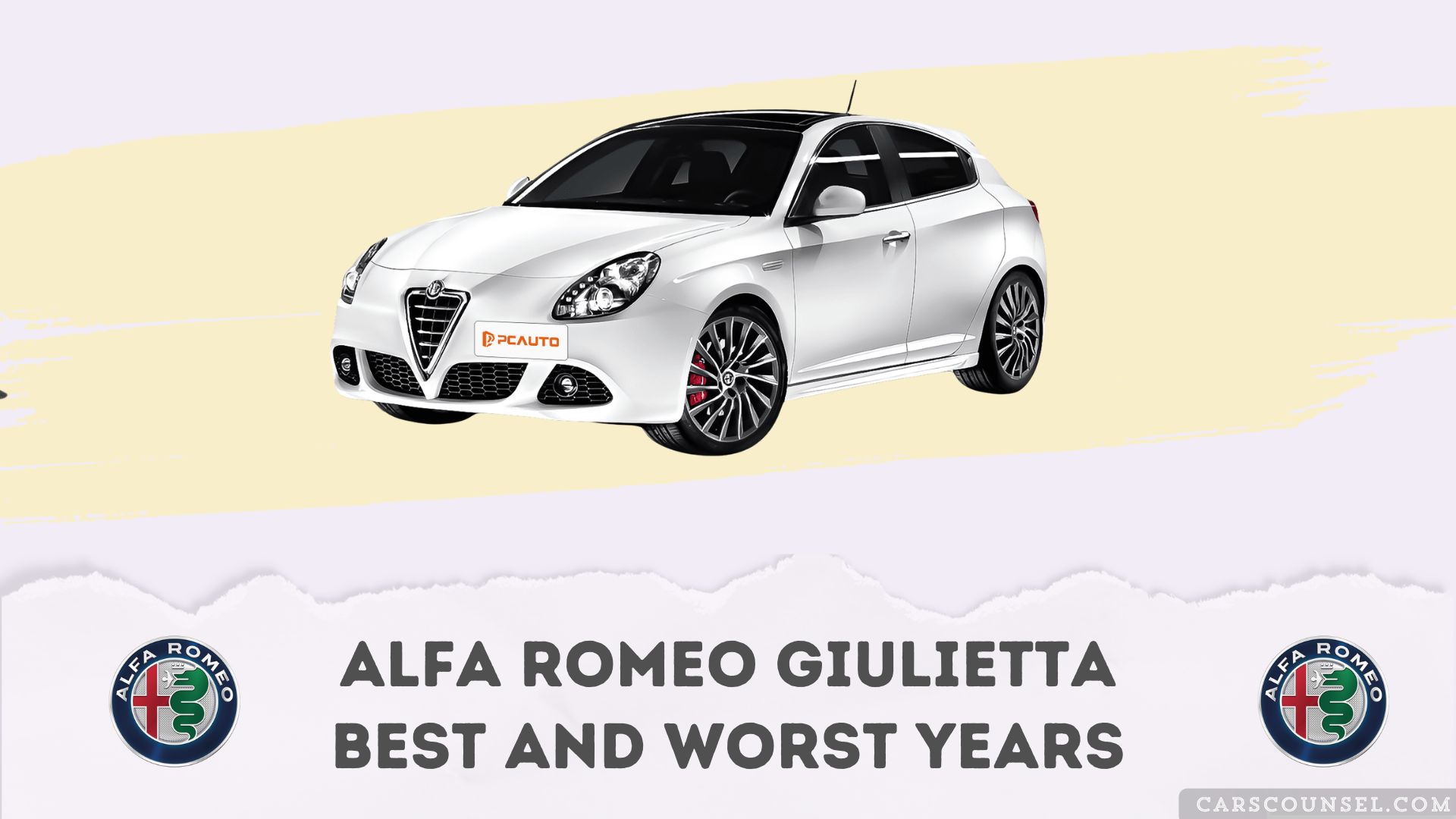
The best modern Alfa Romeo Giulietta years are 2016 through 2020, offering improved infotainment and refined engines. The worst years are 2010 through 2012, suffering from early production teething issues and expensive component failures.
Rankings are comparative, and no vintage or modern Italian compact is flawless. Long-term dependability relies heavily on strict maintenance records, rust prevention, and the completion of all manufacturer service campaigns.
The modern Giulietta was not sold new in the United States. This evaluation reflects global market data, highlighting distinct reliability differences between the petrol engines and the diesel variants.
Quick Navigation
Best and Worst Alfa Romeo Giulietta Years at a Glance
| Model Year | Verdict | Main Reason | Buyer Guidance |
|---|---|---|---|
| 2016–2020 | Best Late-Generation Choice | Refined engines and updated technology | Prioritize petrol models with full service history |
| 2013–2015 | Good Choice | Improved reliability over early models | Inspect emissions systems and electrical components |
| 2010–2012 | Approach Carefully | Early production electrical and engine faults | Demand extensive repair records before purchasing |
| 1954–1965 | Best Enthusiast Choice | Classic design and driving dynamics | Requires specialist inspection for rust and authenticity |
| 1977–1985 | Mixed | Alfetta-based mechanics and aging parts | Check thoroughly for structural corrosion |
Key Takeaways
- The 2016–2020 models represent the most dependable modern examples.
- Early 2010–2012 models carry higher risks of expensive component failures.
- The modern Giulietta was not officially sold in the US market.
- Diesel models require strict highway driving to prevent emissions issues.
- Always verify the tailgate wiring loom for chafing and breaks.
- Check the vehicle history for outstanding global recall campaigns.
- Arrange an independent pre-purchase inspection with a specialist.
How We Evaluated the Alfa Romeo Giulietta Model Years
Our analysis considers official global recalls, manufacturer service campaigns, and long-term owner feedback from primary markets like Europe and Australia. Because the modern Giulietta was not sold in the United States, we rely on international reliability data.
We evaluate powertrain differences, generation changes, and repair complexity. Complaints are not failure rates, and a recall does not automatically make a year unreliable. Recent years have less ownership history, and “best” means comparatively stronger, not flawless.
Best Alfa Romeo Giulietta Years
2016–2020: Best Late-Generation Choice
The final production years benefit from significant mid-cycle revisions. Alfa Romeo updated the interior materials and replaced early infotainment systems with more stable units. The 1.4-liter MultiAir petrol engines received revised software mapping, reducing early-module failure rates.
Petrol models from this era are generally preferred over diesels for mixed driving. Buyers should still verify that the timing chain and MultiAir unit have been serviced according to strict manufacturer intervals.
2013–2015: Good Choice
These middle years show noticeable improvements over the launch models. Electrical gremlins were reduced, and build quality improved. The 1.4-liter petrol engines are robust if maintained correctly, while the diesel variants offer excellent highway fuel economy.
Buyers must inspect the exhaust gas recirculation system on diesel models. City-driven examples may suffer from premature clogging, requiring expensive cleaning or replacement.
Best Year by Buyer Type
Best Overall: 2017 Petrol
This year represents a mature platform with updated technology and refined engine mapping. It offers the best balance of modern usability and classic Italian styling.
Best Enthusiast Choice: 1960s Sprint or Spider
The original 101-series cars offer legendary driving dynamics. They require dedicated storage, specialist mechanics, and a tolerance for classic car maintenance.
Best Modern US Alternative: Alfa Romeo Tonale
Since the Giulietta was not sold in the US, buyers seeking a modern Italian compact should look to the Tonale, which shares similar design DNA but offers US-market support.
Years to Approach Carefully
2013–2015 Diesel Models: Good With Inspection
The JTDm diesel engines are highly efficient on the highway but struggle in stop-and-go traffic. The diesel particulate filter and EGR valve are prone to clogging if the vehicle is not driven at sustained speeds regularly.
Buyers should only consider these models if they have a verified highway commute. Otherwise, the petrol variants are a much safer choice for daily urban driving.
Worst Alfa Romeo Giulietta Years
2010–2012: Approach Carefully
The launch years of the modern Giulietta are plagued by first-generation teething issues. The early 1.4-liter MultiAir engines experienced premature failures of the electrohydraulic valve control module, leading to sudden power loss.
Electrical systems were also problematic. The early Blue&Me infotainment system was notorious for causing severe battery drain, often leaving owners stranded. Wiring harnesses in the tailgate hinge area were prone to chafing and breaking.
Alfa Romeo Giulietta Reliability by Generation
First Generation (1954–1965)
The original Giulietta is a highly sought-after classic. While the twin-cam engines are durable, the unibody chassis is extremely susceptible to rust. Electrical systems use older dynamo or early alternator setups that require constant attention.
Buyers should consult our guide on the Alfa Romeo Spider for more information on classic twin-cam maintenance and rust prevention strategies.
Second Generation (1977–1985)
Based on the Alfetta platform, this rear-wheel-drive sedan is rare today. Mechanical parts are robust, but interior trim and exterior metal panels suffer from severe degradation over time. Finding replacement trim pieces is exceptionally difficult.
Third Generation (2010–2020)
This front-wheel-drive hatchback was built for global markets. While it offers sharp steering and attractive styling, it lacks the US-market infrastructure of its successors. For US buyers wanting modern Italian performance, the Alfa Romeo Giulia provides a practical sedan alternative.
Common Alfa Romeo Giulietta Problems
MultiAir System Failures (Petrol)
The 1.4-liter MultiAir engine uses an electrohydraulic system to control valve timing. If the specialized oil filter is neglected or incorrect oil is used, the MultiAir module can fail, causing severe misfires and engine limp modes.
EGR and DPF Clogging (Diesel)
Diesel models equipped with the JTDm engine rely on high exhaust temperatures to clean the diesel particulate filter. Short trips cause soot buildup, leading to restricted exhaust flow, warning lights, and expensive forced regenerations.
Tailgate Wiring Loom Damage
The wiring harness that passes between the body and the hatchback is poorly routed. Repeated opening and closing causes the wires to bend, chafe, and eventually snap, resulting in failed rear wipers, broken defrosters, and erratic lighting.
Blue&Me Infotainment Faults
Early models equipped with the Microsoft-based Blue&Me system frequently experience software crashes. In severe cases, the module fails to enter sleep mode, draining the battery completely overnight and requiring a jump start or module replacement.
What to Check Before Buying a Used Alfa Romeo Giulietta
- Verify the chassis number for outstanding global service campaigns.
- Inspect the rubber boot and wiring harness at the tailgate hinge.
- Listen for timing chain rattle on cold petrol engine starts.
- Verify the MultiAir unit service history and oil change intervals.
- Check for active dashboard warning lights related to emissions systems.
- Test the battery health and check for parasitic electrical drains.
- Inspect classic models on a lift for structural floor pan corrosion.
- Arrange an independent pre-purchase inspection with a marque specialist.
Related Buying Guides
- Alfa Romeo Tonale best and worst years: The modern US-market compact crossover that serves as the spiritual successor to the Giulietta hatchback.
- Alfa Romeo MiTo best and worst years: A smaller platform sibling that shares similar Fiat-based architecture and MultiAir engine configurations.
- Alfa Romeo 4C best and worst years: A mid-engine sports car for enthusiasts seeking raw, uncompromised Italian driving dynamics without modern hatchback practicality.
Frequently Asked Questions
Is the Alfa Romeo Giulietta reliable?
The modern Giulietta has mixed reliability. Later petrol models are reasonably dependable with strict maintenance, while early models and city-driven diesels suffer from frequent electrical and emissions system faults.
What year of the Alfa Romeo Giulietta is most dependable?
The 2016 through 2020 model years are the most dependable. They benefit from late-production refinements, updated infotainment systems, and revised engine software that addressed early component failures.
Was the Giulietta sold in the United States?
No, the modern Giulietta hatchback was not officially sold in the United States. US buyers must rely on gray market imports or consider modern US-market alternatives like the Tonale or Giulia.
What are the most common problems?
Common issues include MultiAir module failures on petrol engines, diesel particulate filter clogging, tailgate wiring loom damage, and severe battery drain caused by early infotainment control modules.
How long does a modern Giulietta last?
Well-maintained petrol examples can reach high mileage, provided the timing chain and MultiAir systems are serviced correctly. Diesel longevity depends heavily on highway driving to prevent emissions system failures.
What year should you avoid?
Buyers should approach the 2010 through 2012 model years carefully. These early production vehicles carry the highest risk of expensive MultiAir failures and severe electrical gremlins.
Which Alfa Romeo Giulietta Year Should You Buy?
The best years for the modern Alfa Romeo Giulietta are 2016 through 2020, offering refined engines and updated technology. The 2010 through 2012 models require extreme caution due to early production faults.
Because the Giulietta was not sold in the US, parts and specialist knowledge are required. Always verify the service history, inspect the tailgate wiring, and arrange an independent inspection before purchasing.

