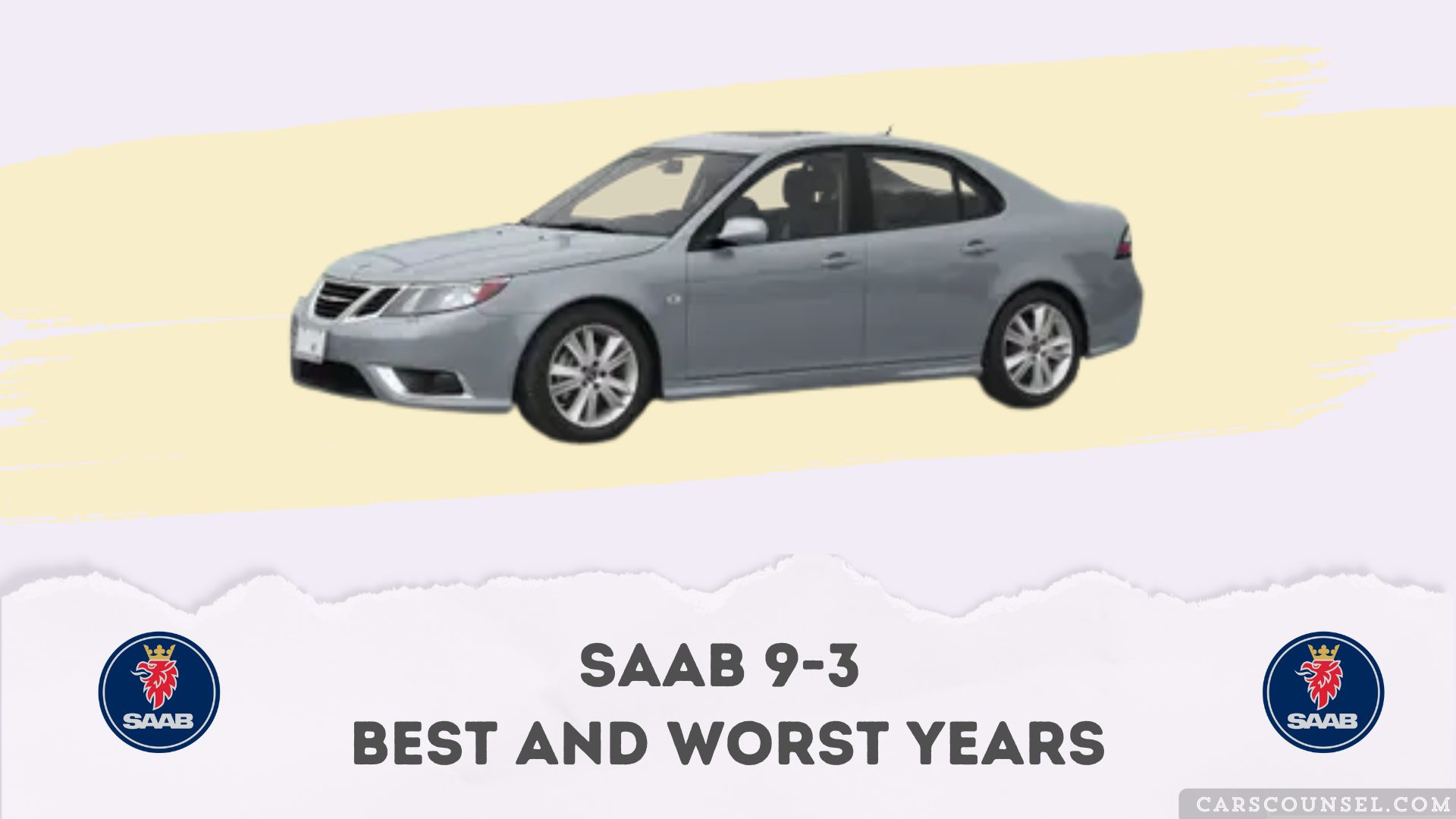
The best Saab 9-3 model years are 2006 and the 2010 through 2011 final production run. Buyers should avoid the 2003 and 2004 models due to first-year redesign gremlins and critical safety recalls.
Rankings are comparative, and no discontinued Swedish luxury car is flawless. Long-term dependability heavily depends on strict synthetic oil maintenance, rust prevention, and securing a reliable parts source.
Reliability varies significantly by engine and generation. The older B205 engines require sludge prevention, while the newer B207 engines demand careful timing chain and valvetrain inspections.
Quick Navigation
Best and Worst Saab 9-3 Years at a Glance
| Model Year | Verdict | Main Reason | Buyer Guidance |
|---|---|---|---|
| 2010–2011 | Best Late-Generation Choice | Final production years with sorted engineering. | Secure parts sources and verify history. |
| 2008–2009 | Good Choice | Refined electronics and improved build quality. | Test all electrical modules. |
| 2006 | Best Choice | Mature platform with traditional Saab interior. | Confirm maintenance and rust-free body. |
| 2007 | Approach Carefully | Early B207 valvetrain and timing chain concerns. | Check for timing chain rattle. |
| 2005 | Good With Inspection | Solid engine but requires suspension checks. | Inspect turbo and suspension bushings. |
| 2003–2004 | Avoid | First-year redesign gremlins and safety recalls. | Seek later second-generation models. |
| 1999–2002 | Approach Carefully | Early sludge risks and aging components. | Verify strict synthetic oil history. |
Key Takeaways
- The 2006 and 2010–2011 models represent the strongest choices for used buyers.
- The 2003 and 2004 models carry severe first-year redesign risks and safety recalls.
- The turbocharged engines demand strict adherence to synthetic oil change intervals to prevent sludge.
- Later B207 engines require careful inspection of the timing chain and valve seats.
- Always verify the VIN for open recalls and inspect the chassis for structural rust.
How We Evaluated the Saab 9-3 Model Years
Our analysis considers official manufacturer records, safety recalls, and long-term ownership data. We evaluate powertrain revisions, generation changes, and the severity of recurring mechanical or electrical faults.
Consumer complaints indicate potential trouble spots but do not represent confirmed failure rates. A recall or service campaign does not automatically render a specific model year unreliable if properly repaired.
Recent production years generally show fewer complaints due to limited road exposure. The term “best” indicates comparatively stronger ownership experiences rather than absolute perfection or guaranteed longevity.
Best Saab 9-3 Years
2006 (Best Choice)
The 2006 model year represents the most dependable iteration of the early second generation. By this point, Saab had resolved the initial electrical gremlins and improved overall assembly consistency.
The 2.0-liter turbocharged B205 engine delivers smooth power without the severe valvetrain issues found in later builds. While some minor sensor glitches may occur, the core mechanical components are robust.
2010–2011 (Best Late-Generation Choice)
The final model years before Saab’s bankruptcy benefit from continuous manufacturing refinements. The platform is fully mature, offering a highly refined luxury sedan experience with minimal teething issues.
Long-term evidence remains limited compared to older vehicles due to the brand’s demise. However, the established GM Epsilon architecture provides a solid foundation for dependable daily commuting.
Best Year by Buyer Type
Best Enthusiast Choice: 2006 Aero
The 2006 Aero variant features the higher-output turbocharged engine and sport-tuned suspension. It provides unparalleled driving dynamics in the compact luxury segment, utilizing the highly sorted mid-generation chassis.
Years to Approach Carefully
2007 (Approach Carefully)
The 2007 model year introduced the newer B207 engine, which brought new valvetrain and timing chain vulnerabilities. Owners frequently report timing chain rattle and premature valve seat wear.
Buyers targeting this year must verify the service history and ensure all engine management software updates were applied. A thorough pre-purchase diagnostic scan is essential to identify pending faults.
1999–2002 (Approach Carefully)
The first-generation models suffer from severe engine sludge risks if previous owners neglected strict synthetic oil intervals. The aging wiring harnesses and vacuum lines also require extensive refurbishment.
Buyers must demand exhaustive documentation of oil changes and inspect the valve cover for sludge deposits. These early examples are best suited for dedicated enthusiasts rather than daily drivers.
Worst Saab 9-3 Years
2003–2004 (Avoid)
The inaugural second-generation models suffer from critical safety defects and severe first-year electrical gremlins. Multiple recalls affected the seat belt pretensioners and various chassis control modules.
Additionally, these early production vehicles exhibit inferior interior material quality and numerous sensor failures. Buyers are much better served by targeting the heavily revised 2006 and newer model years instead.
Saab 9-3 Reliability by Generation
First Generation (1999–2003)
The original 9-3 utilized a heavily revised version of the classic Saab 900 platform. While the early turbocharged engines are robust when maintained, the aging electronics and sludge risks demand constant vigilance.
Second Generation (2004–2011)
The complete redesign brought GM’s Epsilon platform, improving structural rigidity and safety. After resolving the initial first-year electrical hurdles, this generation proved to be a highly dependable luxury contender.
Common Saab 9-3 Problems
Engine Sludge Buildup
A severe defect affects the early B205 engines if synthetic oil intervals are extended. Sludge blocks the oil pickup screen, leading to catastrophic engine failure and requiring complete engine replacement.
Timing Chain and Valvetrain Wear
The later B207 engines introduced in 2007 are prone to timing chain stretch and valve seat degradation. These faults trigger check engine lights, rough idling, and catastrophic interference engine damage if ignored.
Electrical and Ignition Gremlins
Owners across all generations report recurring ignition coil failures and sensitive battery management systems. A weak battery can cause cascading electrical faults, disabling the immobilizer and fuel pump modules.
What to Check Before Buying a Used Saab 9-3
- Verify the VIN for open safety recalls, especially the seat belt and chassis control campaigns.
- Remove the oil filler cap to inspect for thick sludge deposits on the early B205 engines.
- Listen for timing chain rattle on cold starts for the later B207 engines.
- Inspect the chassis, rocker panels, and wheel arches for structural rust penetration.
- Arrange an independent pre-purchase inspection focusing on the turbocharger and electrical modules.
Related Buying Guides
- Volvo S60 years to avoid: Explore the direct Swedish competitor if you prefer a more traditional inline-five engine layout and mainstream parts availability.
- BMW 3-Series best and worst years: Consider this German alternative if you prioritize rear-wheel-drive driving dynamics and a vast enthusiast support network.
Frequently Asked Questions
Is the Saab 9-3 a reliable luxury sedan?
Later second-generation models offer solid reliability for the segment. Early production years require intense scrutiny regarding safety recalls, while mature examples provide a dependable and unique ownership experience.
Which Saab 9-3 engine is most dependable?
The earlier B205 four-cylinder turbo is highly proven and robust, provided it receives strict synthetic oil changes. The newer B207 engines offer excellent performance but demand careful timing chain inspections.
Do all Saab 9-3 models suffer from engine sludge?
The severe sludge defect primarily affects the early B205 engines when owners neglect strict maintenance intervals. Buyers must physically inspect the valve cover and demand exhaustive oil change documentation.
What causes the timing chain rattle on newer models?
The B207 engine introduced in 2007 features a timing chain prone to stretching and tensioner failure. This leads to a distinct rattle on cold starts and requires immediate component replacement.
Are Saab 9-3 parts difficult to find?
Following the brand’s bankruptcy, some proprietary interior and body parts are scarce. However, the second generation shares GM Epsilon architecture, making many mechanical and suspension components readily available.
How long can a well-maintained Saab 9-3 last?
Longevity depends heavily on proactive maintenance and rust prevention. Well-maintained examples can reach high mileage, though discontinued luxury sedans require expensive upkeep and specialized knowledge as electronic modules age.
Choosing the Right Saab 9-3 Model Year
The 2006 and 2010 through 2011 model years provide the best ownership experience, combining a mature platform with sorted engineering. These examples minimize the risks associated with early production faults.
Buyers targeting earlier years must avoid the 2003 and 2004 models due to severe safety defects. Always verify the VIN, demand comprehensive service records, and secure an independent mechanical inspection.


Comments are closed.