The best Saturn Vue years are 2004 through 2007 equipped with the Honda 3.5-liter V6. Buyers must strictly avoid 2002 and 2003 four-cylinder models due to catastrophic CVT transmission failures.
These rankings are comparative, meaning no used vehicle is entirely flawless. Long-term reliability depends heavily on maintenance records, previous ownership habits, and overall vehicle condition.
Significant differences exist between the first-generation GM powertrains and the second-generation Opel-based models. The availability of the legendary Honda V6 makes certain configurations vastly superior to others.
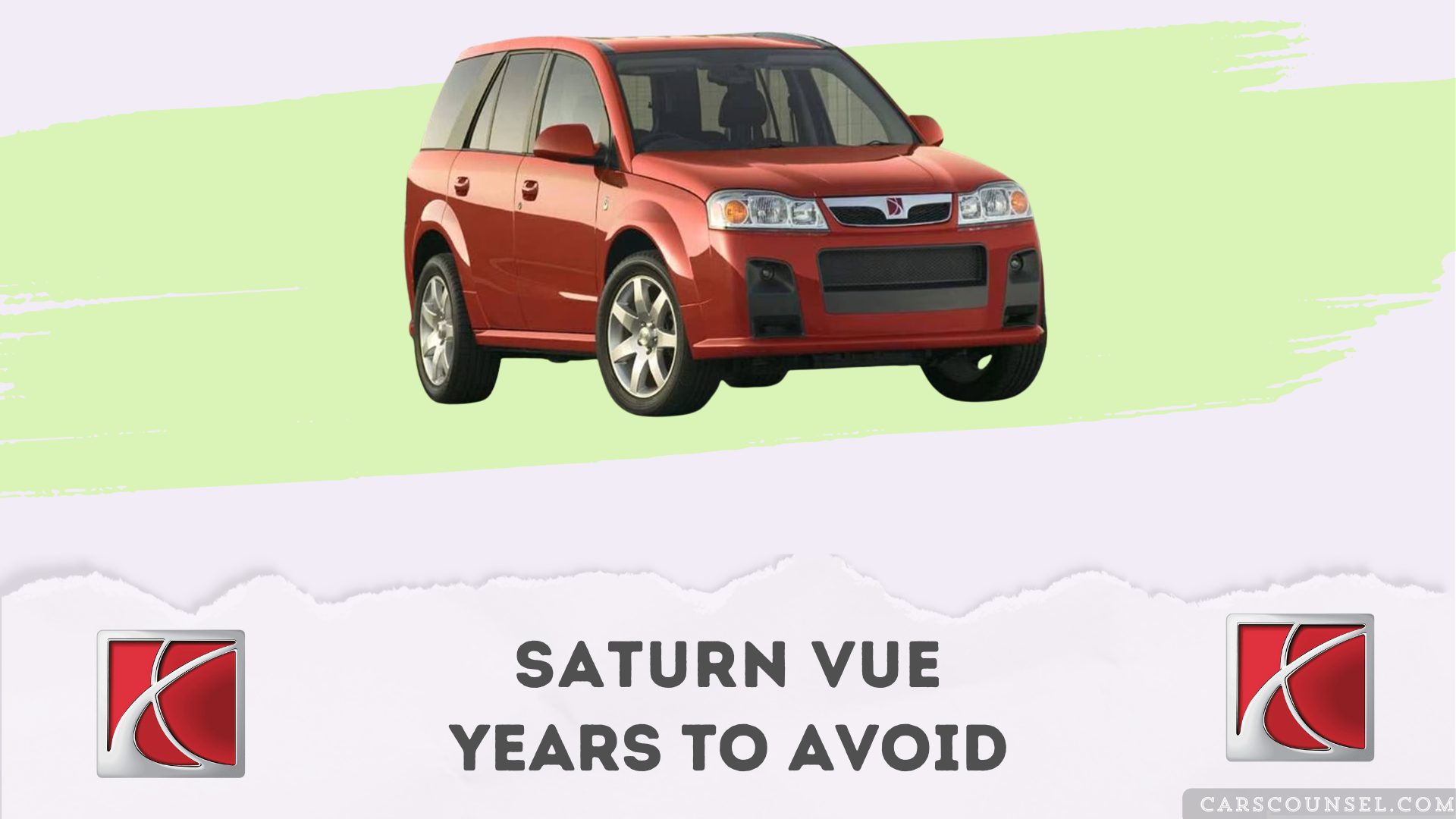
Quick Navigation
Best and Worst Saturn Vue Years at a Glance
| Model Year Range | Verdict | Main Reason | Buyer Guidance |
|---|---|---|---|
| 2009–2010 | Good Choice | Gen 2 refinements | Inspect 3.6L V6 timing chain. |
| 2008 | Approach Carefully | First-year Gen 2 redesign | Check for electrical gremlins. |
| 2004–2007 (Honda V6) | Best Choice | Exceptional Honda J35 reliability | Top pick for used buyers. |
| 2004–2007 (GM Engines) | Good Choice | Solid conventional powertrains | Verify standard maintenance. |
| 2002–2003 (4-Cyl CVT) | Avoid | Notorious VT25 CVT failures | Strictly avoid these configurations. |
| 2002–2003 (V6 / Manual) | Good With Inspection | Age-related wear | Inspect suspension and rust. |
Key Takeaways
- Strongest Choices: The 2004–2007 models equipped with the Honda 3.5-liter V6 offer exceptional longevity and reliability.
- Years to Avoid: The 2002–2003 four-cylinder models suffer from catastrophic VT25 CVT transmission failures.
- Powertrain Distinction: The first generation offered a rare Honda V6 engine, while the second generation relies entirely on GM powertrains.
- Major Verified Concern: The 3.6-liter V6 in 2008–2010 models is prone to expensive timing chain stretch issues.
- Recent-Year Limitation: Production ended in 2010, so all examples require strict age-related inspections.
- Inspection Reminder: Always verify the VIN for open recalls and arrange an independent pre-purchase inspection.
How We Evaluated the Saturn Vue Model Years
Our analysis examines official safety recalls, manufacturer service campaigns, and long-term ownership patterns. We weigh the severity and recurrence of mechanical failures against repair complexity.
Consumer complaints indicate owner frustration but do not automatically confirm a widespread mechanical defect. Similarly, a safety recall does not inherently make a specific model year unreliable if repaired.
Because Saturn discontinued the Vue in 2010, all models lack recent ownership history. Therefore, our recommendations focus on comparative powertrain strength and proven mechanical maturity.
Best Saturn Vue Years
2004–2007 (Honda V6 Configuration) (Best Choice)
These specific configurations feature the legendary Honda J35 3.5-liter V6 and a Honda five-speed automatic transmission. This powertrain is renowned for its durability and easily surpasses high mileage with basic maintenance.
Buyers gain a surprisingly robust crossover with excellent power delivery. Finding an unmolested example with verified service records represents the absolute pinnacle of Saturn Vue reliability.
Best Year by Buyer Type
Best Overall Value: 2006 Saturn Vue (Honda V6)
The 2006 model year sits perfectly in the reliability curve. It features the proven Honda powertrain and updated interior trim, avoiding the first-year quirks of the 2004 introduction.
Best Practical Alternative: Chevrolet Equinox
Buyers needing more modern safety features and parts availability should consider the Chevrolet Equinox years to avoid. It shares GM’s corporate architecture but offers a more contemporary design and widespread dealership support.
Years to Approach Carefully
2008 (Approach Carefully)
The 2008 model year marks the debut of the second generation, which is a rebadged Opel Antara. First-year redesigns often carry early production gremlins, particularly regarding interior electronics and build quality.
The available 3.6-liter V6 engine is also susceptible to timing chain stretch. Buyers must verify if this expensive repair was completed or budget for the engine teardown.
2009–2010 (Good Choice)
These final production years feature a more sorted second-generation platform. The electrical gremlins were largely addressed, and the four-cylinder and V6 powertrains are generally robust.
However, the 3.6-liter V6 still requires strict timing chain inspection. The 2.4-liter four-cylinder is a safer bet for buyers prioritizing lower maintenance costs over outright power.
2004–2007 (GM Engines) (Good Choice)
Models equipped with the GM 3.4-liter or 3.5-liter V6 engines are reliable but lack the legendary durability of the Honda V6. The four-speed and five-speed automatic transmissions are conventional and generally stout.
Buyers should inspect for standard age-related wear, including power steering leaks and suspension component degradation.
Worst Saturn Vue Years
2002–2003 (4-Cylinder CVT) (Avoid)
The inaugural model years equipped with the 2.2-liter four-cylinder and VT25 continuously variable transmission are notorious for catastrophic failures. The CVT design was fundamentally flawed and prone to sudden, complete breakdowns.
Saturn eventually dropped the CVT entirely due to overwhelming warranty claims. Repairing or replacing this transmission is economically unviable, making these specific configurations a severe financial risk.
Saturn Vue Reliability by Generation
First Generation (2002–2007)
This generation is defined by its powertrain lottery. The 2002–2003 four-cylinder CVT models are best avoided entirely. However, the 2004–2007 models featuring the Honda V6 are among the most reliable crossovers of their era.
Second Generation (2008–2010)
Built on the Opel Antara platform, this generation abandoned the Honda partnership. While the styling is more modern, the GM powertrains require stricter maintenance, particularly regarding the 3.6-liter V6 timing chains.
Common Saturn Vue Problems
VT25 CVT Transmission Failure
Affecting only 2002–2003 four-cylinder models. The continuously variable transmission suffers from internal belt and pulley failures, leading to a complete loss of propulsion. Replacement parts are virtually nonexistent today.
3.6L V6 Timing Chain Stretch
Found in 2008–2010 models equipped with the LY7 engine. The timing chains stretch prematurely, triggering check engine lights and potentially causing catastrophic engine interference if the chain skips a tooth.
Power Steering Rack Leaks
A widespread issue across both generations. The power steering racks develop leaks at the seals, leading to low fluid levels, whining noises, and eventually complete steering assist failure.
What to Check Before Buying a Used Saturn Vue
- Verify Powertrain: Confirm whether the 2004–2007 model has the Honda V6 (check the valve cover) or a GM engine.
- Inspect Timing Chains: On 2008–2010 3.6L V6 models, listen for cold-start rattling that indicates stretched chains.
- Test the Transmission: Ensure the automatic shifts smoothly without flaring or harsh engagements.
- Check for Rust: Inspect the subframe and rear suspension mounting points for severe structural corrosion.
- Scan for Codes: Use an OBD2 scanner to check for hidden camshaft position sensor or timing codes.
Related Buying Guides
- GMC Terrain years to avoid: A slightly more upscale platform sibling that shares underlying GM architecture while offering a quieter cabin and premium interior materials.
Frequently Asked Questions
What are the worst years for the Saturn Vue?
The 2002 and 2003 model years equipped with the four-cylinder engine and VT25 CVT are the worst. These transmissions suffer from catastrophic, unrepairable failures that render the vehicle economically totaled.
What is the most reliable Saturn Vue year?
The 2006 model year equipped with the Honda 3.5-liter V6 is widely considered the most reliable. It combines a bulletproof Honda powertrain with mature first-generation build quality and updated interior features.
Did the Saturn Vue use Honda engines?
Yes, Saturn used the Honda 3.5-liter J35 V6 engine and Honda five-speed automatic transmission in all-wheel-drive and Red Line models from 2004 through 2007. These are the most desirable configurations.
Do Saturn Vues have transmission problems?
Only the 2002–2003 four-cylinder models with the VT25 CVT have severe transmission problems. The conventional automatic transmissions used in the V6 and later models are generally robust with standard fluid maintenance.
Why did Saturn discontinue the Vue?
Saturn discontinued the Vue after the 2010 model year when General Motors shut down the entire Saturn brand. The second-generation Vue was a rebadged Opel Antara, which also ceased North American imports.
What causes Saturn Vue power steering failure?
The power steering racks on both generations are prone to developing seal leaks. This leads to low fluid levels, whining noises, and eventual loss of steering assist, requiring a complete rack replacement.
Which Saturn Vue Year Should You Buy?
For the best balance of reliability and performance, target the 2004 through 2007 models equipped with the Honda 3.5-liter V6. These rare configurations offer exceptional longevity and robust power delivery.
Strictly avoid the 2002 and 2003 four-cylinder models due to the catastrophic VT25 CVT transmission failures. Always verify the exact powertrain configuration before finalizing any purchase.
Finally, arrange an independent pre-purchase inspection to assess timing chain health, power steering leaks, and structural rust. Proper maintenance remains the most critical factor in preserving any discontinued vehicle.

