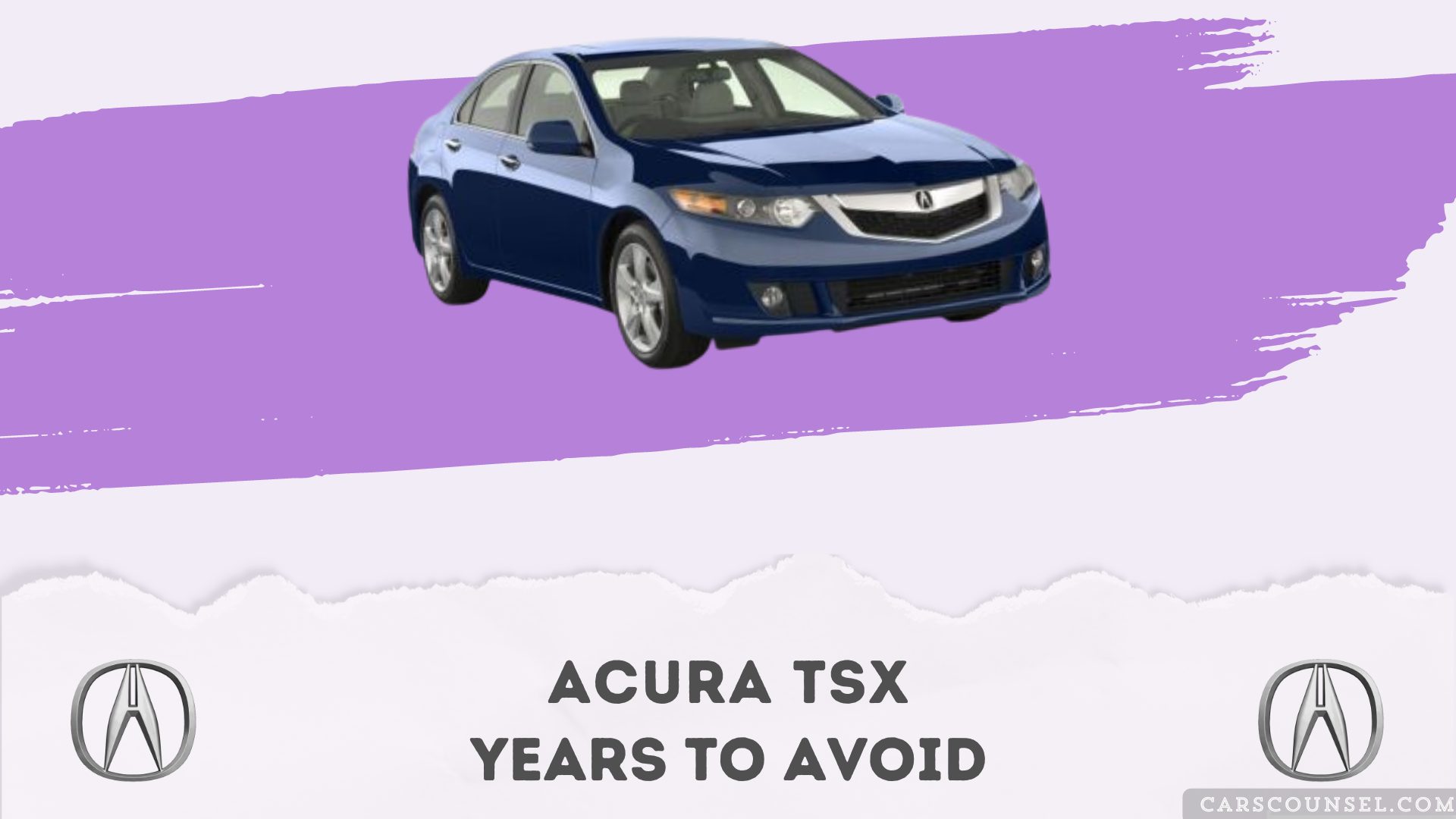
The best Acura TSX years are 2007-2008 and 2012-2014 four-cylinder models. These years offer mature engineering and fewer systemic defects. Buyers should avoid 2009-2011 four-cylinder models due to severe oil consumption issues. Early 2004-2006 models require careful inspection, making them years to avoid for inexperienced buyers.
Rankings are comparative, meaning no used vehicle is entirely flawless. Maintenance history, current condition, and rust matter more than mileage alone. Always verify open recalls and service records before purchasing any luxury compact sedan.
Reliability varies significantly by powertrain. The four-cylinder and V6 engines have distinct failure points. Manual transmissions generally outlast automatics. Buyers must match the specific configuration to their risk tolerance and mechanical inspection capabilities.
Quick Navigation
Best and Worst Acura TSX Years at a Glance
| Model Year | Verdict | Main Reason | Buyer Guidance |
|---|---|---|---|
| 2004-2006 | Approach Carefully | Power steering leaks, A/C failures | Inspect rack and compressor clutch |
| 2007-2008 | Best Older Choice | Facelift improvements, solid K24 engine | Verify timing chain and maintenance |
| 2009-2011 (4-Cyl) | Avoid | Excessive oil consumption from piston rings | Check warranty repair completion |
| 2010-2014 (V6) | Mixed | VCM-related oil and engine mount wear | Inspect active mounts and oil levels |
| 2012-2014 (4-Cyl) | Best Late-Generation Choice | Mature platform, oil issues addressed | Confirm remaining powertrain coverage |
Key Takeaways
- 2007-2008 and 2012-2014 four-cylinder models are the strongest choices.
- Avoid 2009-2011 four-cylinder models unless the piston ring repair is documented.
- Early 2004-2006 models frequently suffer from power steering rack leaks.
- The V6 configuration introduces Variable Cylinder Management complexities.
- Manual transmissions are generally more durable than the five-speed automatics.
- Always check the VIN for open recalls and warranty extensions.
- Arrange an independent pre-purchase inspection to verify steering and engine health.
How We Evaluated the Acura TSX Model Years
Our analysis reviews official recalls, manufacturer warranty extensions, and consumer complaint patterns. We separate powertrain configurations to identify exact failure points.
Complaints are not confirmed defects or failure rates. A recall does not automatically make a vehicle unreliable. Recent models simply have less long-term ownership data available.
Best means comparatively stronger within the lineup. No used luxury sedan is completely free of age-related maintenance needs.
Best Acura TSX Years
2007-2008: Best Older Choice
The first generation received a crucial facelift for 2007. Acura addressed many early electrical and interior grievances. The 2.4-liter four-cylinder engine is highly durable when properly maintained.
Manual transmission examples are particularly robust. They avoid the automatic transmission wear seen in earlier years. Buyers should prioritize documented service histories to ensure longevity.
2012-2014 (4-Cylinder): Best Late-Generation Choice
The second generation matured significantly by 2012. Honda addressed the severe oil consumption issues that plagued earlier four-cylinder models. The platform feels refined and reliable.
These final production years benefit from factory bug fixes. The electric power steering system is generally stable. They represent the safest choice for buyers wanting newer safety features.
Best Year by Buyer Type
Best Overall: 2013-2014 (4-Cylinder)
These final model years offer the best balance of modern features and proven reliability. The oil consumption flaws were largely resolved. They provide excellent daily commuting capability.
Best Enthusiast Choice: 2006-2008 (6-Speed Manual)
The first-generation chassis with a manual transmission is a modern classic. The high-revving K24 engine delivers engaging performance. Enthusiasts appreciate the direct hydraulic steering feel.
Years to Approach Carefully
2004-2006: Approach Carefully
Early first-generation models struggle with power steering rack leaks. The hydraulic fluid often seeps from the seals, requiring expensive rack replacements. The A/C compressor clutch is also prone to premature failure.
Some five-speed automatic transmissions exhibit rough shifting. Buyers must inspect the steering boots and climate system thoroughly. A clean maintenance record is absolutely essential for these older examples.
2010-2014 (V6): Mixed
The V6 model introduces the J35 engine and Variable Cylinder Management. While the engine block is strong, the cylinder deactivation system causes oil burning and active engine mount failures.
Owners report premature wear to the rear engine mounts. Disabling the VCM system is a common enthusiast modification. Buyers should inspect all mounts and monitor oil levels closely.
Worst Acura TSX Years
2009-2011 (4-Cylinder): Avoid
These second-generation four-cylinder models suffer from severe excessive oil consumption. Defective piston rings allow oil to enter the combustion chamber. This can lead to fouled spark plugs and catalytic converter damage.
Honda issued a warranty extension for this exact defect. However, many used examples never received the necessary short-block replacement. Buying one requires absolute proof of the factory repair.
Without documented warranty work, these engines risk catastrophic failure. The repair costs easily exceed the vehicle’s value. It is much safer to choose a later model year or a different powertrain.
Acura TSX Reliability by Generation
First Generation (2004-2008)
The original TSX introduced Honda’s excellent K-series engine to the luxury compact segment. Early years suffered from hydraulic steering leaks and climate control faults.
The 2007 refresh significantly improved interior quality and reliability. The Acura TL shares related architecture, but the TSX remained strictly four-cylinder during this era across the Acura lineup.
Second Generation (2009-2014)
This generation grew larger and introduced a V6 option in 2010. The transition to electric power steering eliminated the hydraulic rack leaks of the past.
However, the four-cylinder oil consumption issue severely damaged the early second-generation reputation. Late production years corrected these assembly line defects, restoring the nameplate’s reliability.
Common Acura TSX Problems
Engine Problems
Excessive oil consumption is the most critical engine defect. It primarily affects 2009-2011 four-cylinder models due to poorly designed piston rings. Owners must check the dipstick weekly to prevent engine seizure.
V6 models experience oil consumption related to the cylinder deactivation system. Timing chain tensioners on high-mileage four-cylinder engines may also require eventual replacement.
Steering and Suspension Problems
First-generation models frequently leak power steering fluid from the rack and pinion assembly. The fluid often drips onto the exhaust, creating a burning smell.
Second-generation models use electric steering, which is mostly reliable. However, lower control arm compliance bushings tear prematurely across all years, causing clunking noises over bumps.
HVAC Problems
The 2004 model year is notorious for A/C compressor clutch failures. The electromagnetic coil burns out, leaving the cabin without cold air.
Later models improved the compressor design. However, blower motor resistors can still fail, causing the cabin fan to operate only on the highest speed setting.
What to Check Before Buying a Used Acura TSX
- Verify the VIN for open recalls and warranty extension eligibility.
- Check the engine oil level and inspect for blue exhaust smoke.
- Inspect the power steering rack and boots for fluid leaks.
- Test the A/C system for cold air and compressor engagement.
- Listen for clunking from the front lower control arm bushings.
- Review service records for timing chain and transmission fluid changes.
- Scan the OBD2 port for hidden misfire or catalyst codes.
- Arrange an independent pre-purchase inspection to verify engine compression.
Related Buying Guides
- Acura TLX best and worst years: Explore the modern successor to the TSX with updated technology and powertrains.
- Acura RDX years to avoid: Research the compact luxury crossover alternative for buyers needing more cargo space and ground clearance.
- Acura MDX years to avoid: Investigate the three-row family SUV option when passenger capacity is your primary concern.
Frequently Asked Questions
Which Acura TSX year is the most reliable?
The 2013 and 2014 four-cylinder models are the most reliable. They benefit from late-production refinements and lack the severe oil consumption issues of earlier second-generation cars.
Do all Acura TSX models burn oil?
No, oil consumption primarily affects 2009-2011 four-cylinder models and V6 models with cylinder deactivation. First-generation and late second-generation four-cylinder engines are generally stable.
Is the Acura TSX expensive to maintain?
Maintenance costs are moderate for a luxury compact sedan. It shares many parts with the Honda Accord, keeping routine service affordable. Major failures like steering racks can be costly.
Does the Acura TSX require premium fuel?
Acura recommends premium fuel for optimal performance and efficiency. However, the four-cylinder engine can tolerate regular unleaded with a slight reduction in power output.
Are manual transmission TSX models more reliable?
Yes, the six-speed manual transmission is exceptionally durable. It avoids the automatic transmission wear and torque converter issues that occasionally affect high-mileage five-speed automatic examples.
What replaced the Acura TSX?
Acura discontinued the TSX after 2014. It was effectively replaced by the TLX, which merged the compact TSX and midsize TL into a single, modern sport sedan lineup.
Choosing the Right Acura TSX Model Year
The Acura TSX remains a compelling used luxury sedan when you select the right configuration. Target the 2007-2008 or 2012-2014 four-cylinder models for the best ownership experience.
Strictly avoid 2009-2011 four-cylinder examples unless the factory piston ring repair is fully documented. Always verify the VIN, check fluid levels, and demand a thorough independent inspection.

