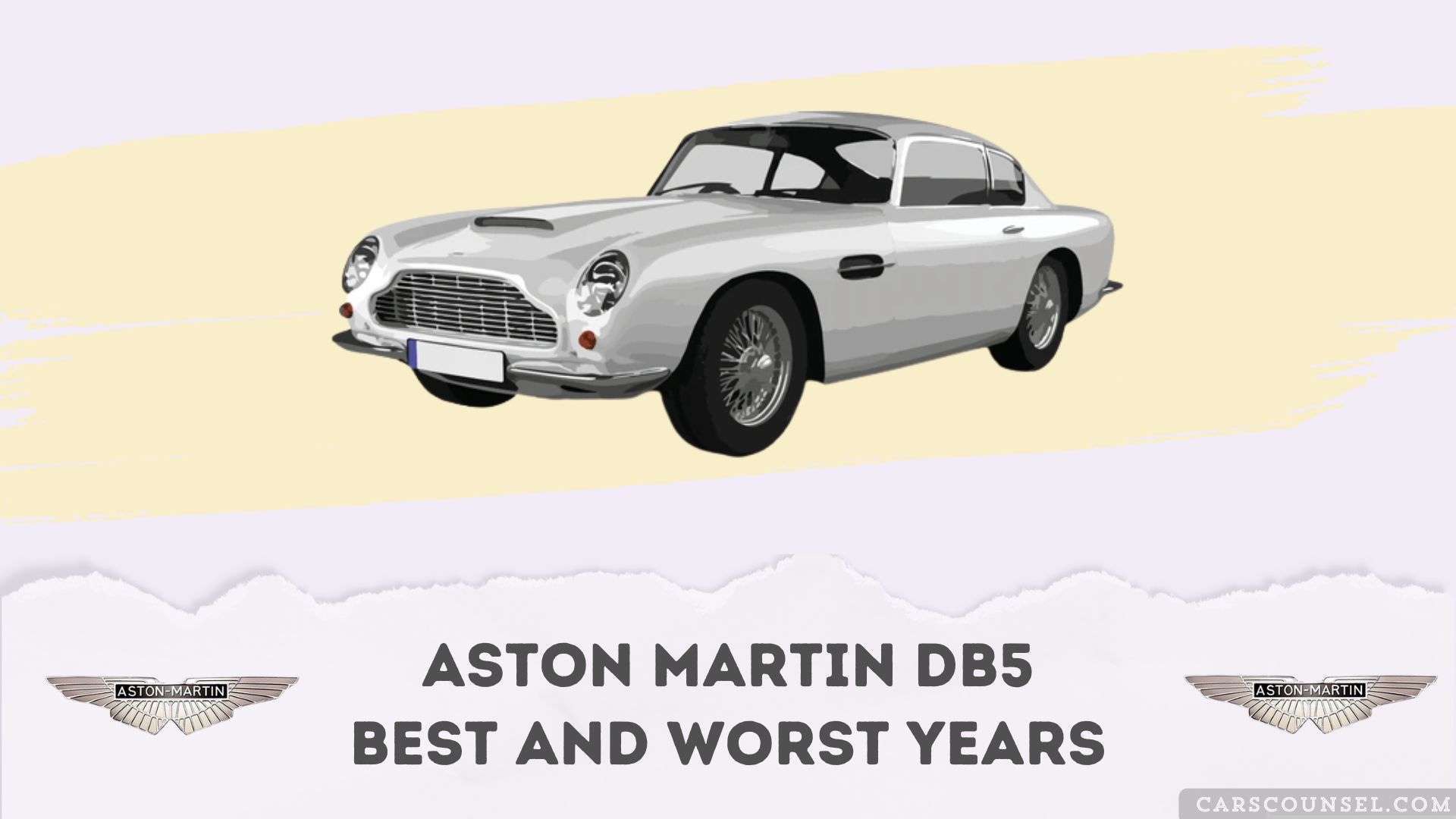
The 1965 Aston Martin DB5 is the best year for buyers seeking the most refined example of this classic grand tourer. Early 1963 models require careful inspection for first-year assembly quirks, while Radford Shooting Brake conversions should generally be avoided due to structural compromises.
Rankings for classic vehicles are comparative, and no hand-built 1960s British car is flawless. Long-term reliability depends entirely on decades of maintenance, proper storage, and the quality of previous restorations rather than just the original factory build date.
Meaningful differences exist between standard saloons, drophead coupes, and coachbuilt shooting brakes. The Superleggera construction method also means that structural rust inspection is far more critical than evaluating minor mechanical variations between the 1963, 1964, and 1965 model years.
Quick Navigation
Best and Worst Aston Martin DB5 Years at a Glance
| Model Year | Verdict | Main Reason | Buyer Guidance |
|---|---|---|---|
| 1965 | Best Choice | Peak manufacturing refinement | Prioritize documented service history |
| 1964 | Good Choice | Solid mainstream production | Verify Superleggera frame condition |
| 1963 | Approach Carefully | First-year assembly quirks | Inspect Lucas electrical and ZF gearbox |
| Shooting Brake | Avoid | Compromised tubular frame | Require specialized structural inspection |
Key Takeaways
- The 1965 model year represents the most refined DB5 production run.
- Early 1963 examples require extra scrutiny for first-year assembly inconsistencies.
- Radford Shooting Brake conversions compromised the original Superleggera frame rigidity.
- Lucas electrical components remain a universal weakness across all production years.
- Structural rust in the tubular steel frame is the most expensive threat.
- Always verify the chassis number and commission an independent marque expert inspection.
- Classic car databases replace modern NHTSA recalls for this 1960s vehicle.
How We Evaluated the Aston Martin DB5 Model Years
Because the DB5 is a classic vehicle produced from 1963 to 1965, modern databases like NHTSA recalls and consumer complaint trackers do not apply. Our analysis relies on historical factory records, marque registry data, and consensus from established classic Aston Martin restoration specialists.
We evaluate running changes, coachbuilder modifications, and known engineering traits of the era. A recall does not apply here, but structural integrity and maintenance history dictate reliability. Best means comparatively stronger for a hand-built classic, not trouble-free.
Best Aston Martin DB5 Years
1965 Aston Martin DB5
The 1965 model year represents the final and most refined DB5 production run. Manufacturing processes improved after two years of hand-built assembly, resulting in better panel gaps and interior fitment. The inline-six engine benefited from tighter assembly tolerances.
Buyers should still expect typical classic car maintenance. While 1965 models are comparatively stronger, the Lucas electrical system and Superleggera tubular frame still require meticulous inspection. Documented service history remains the most critical factor for any late-production example.
1964 Aston Martin DB5
The 1964 model year serves as the core production period for the DB5. Most running changes from the initial 1963 launch were integrated, making these examples solid choices for collectors. The ZF five-speed manual gearbox shows improved synchromesh engagement.
Electrical faults persist at similar rates to other years due to inherent Lucas component design. Carburetor tuning requires regular professional adjustment to maintain optimal performance. A thorough pre-purchase inspection is mandatory to assess decades of wear and storage conditions.
Best Year by Buyer Type
Best Overall Choice
The 1965 Standard Saloon offers the best combination of late-production refinement and original structural integrity. It avoids first-year teething problems while retaining the iconic Superleggera design.
Best Enthusiast Choice
The rare Vantage Sports Saloon provides a higher-performance engine tune. However, authenticity is paramount, as many standard cars were later modified to Vantage specifications by previous owners.
Years to Approach Carefully
1963 Aston Martin DB5
First-year 1963 models experienced typical new-model teething problems. Early electrical systems suffered from higher failure rates due to Lucas component inconsistencies. Synchromesh engagement in the ZF gearbox proved less refined in initial production units.
Oil leaks from valve covers and gaskets were more prevalent in early 1963 cars. Despite these concerns, the fundamental mechanical design remained sound. Buyers must budget for immediate sorting of electrical and fuel system components.
Worst Aston Martin DB5 Years
Shooting Brake Conversions
Shooting Brake conversions created structural weaknesses regardless of the donor car’s production year. Coachbuilder Harold Radford replaced the original tubular roof structure with steel fabrications. This compromised the Superleggera system’s inherent rigidity and created long-term structural concerns.
These conversions are prone to body flex, stress cracks around hatch mounting points, and water intrusion. The added weight reduced performance and increased suspension wear. Buyers should avoid these unless a specialized structural restoration has been fully documented.
Aston Martin DB5 Reliability by Generation
The DB5 was produced for a single, brief generation from 1963 to 1965. It replaced the DB4 and featured an enlarged 4.0-liter inline-six engine. The car utilized Touring of Milan’s Superleggera construction, pairing lightweight aluminum bodywork with a steel tubular frame.
Unlike modern vehicles with distinct generational redesigns, DB5 reliability is defined by its hand-built nature and age. All examples share the same fundamental architecture, meaning condition and maintenance history matter far more than the specific model year.
Common Aston Martin DB5 Problems
Engine Oil Leaks
Oil leaks from valve covers and gaskets represent the most frequent DB5 engine issue. The inline-six requires frequent oil changes and regular top-ups. Gasket degradation occurs rapidly when maintenance intervals are extended, leading to messy engine bays.
Lucas Electrical System Failures
The Lucas electrical system is prone to malfunctions affecting lights, wipers, and instrumentation. Corroded connections in aging wiring harnesses cause intermittent failures. Driving at night becomes challenging when electrical faults affect lighting systems, requiring constant troubleshooting.
Cooling System Weaknesses
Cooling system problems frequently lead to overheating in the 4.0-liter engine. Radiator core deterioration and corroded hose connections cause coolant leaks. The cooling system requires complete inspection to prevent severe engine damage during modern traffic conditions.
Superleggera Frame Corrosion
The tubular steel Superleggera structure is highly susceptible to hidden corrosion. Moisture trapped inside the steel tubes causes internal rust that eventually bubbles the outer aluminum panels. Structural failure requires an incredibly expensive, body-off frame restoration.
Carburetor Tuning Issues
The three SU carburetors require regular synchronization and tuning. Poor adjustment causes rough idling, hesitation, and reduced performance. Fuel mixture imbalances increase spark plug fouling and exhaust valve wear, demanding specialized classic car mechanic expertise.
Repair-Cost Overview
| Problem | Commonly Affected Years | Approximate Repair Range | Important Notes |
|---|---|---|---|
| Gasket and Seal Replacement | All | $1,000 – $2,500 | Requires partial engine disassembly |
| Electrical System Sorting | All | $1,500 – $4,000 | Labor-intensive troubleshooting |
| Cooling System Overhaul | All | $2,000 – $5,000 | Custom radiator fabrication often needed |
| Superleggera Frame Restoration | All | $25,000 – $60,000+ | Requires complete body removal |
Classic car repair costs vary dramatically by region, specialist labor rates, parts availability, and the extent of previous restorations. These approximate ranges reflect current US market specialist rates and can fluctuate based on vehicle configuration and damage severity.
What to Check Before Buying a Used Aston Martin DB5
- Commission an independent inspection by a recognized Aston Martin marque specialist.
- Verify the chassis and engine numbers match the factory build records.
- Inspect the Superleggera tubular frame for hidden internal rust and aluminum bubbling.
- Test the Lucas electrical system, checking all gauges, lights, and wipers.
- Evaluate the ZF gearbox for smooth synchromesh engagement across all gears.
- Check for oil leaks around the valve covers, rear main seal, and sump.
- Inspect the Girling disc brake system for corrosion in the hydraulic lines.
- Review decades of service history to verify consistent maintenance and storage.
Related Buying Guides
- Aston Martin Valkyrie best and worst years – Explore the modern hypercar evolution of Aston Martin’s engineering.
- Aston Martin DBS best and worst years – Review the modern grand tourer that carries the DB legacy forward.
- Aston Martin DB11 best and worst years – Investigate the recent V12 and V8 grand tourer generations.
- Aston Martin Vantage best and worst years – Compare the classic DB5 era to the modern V8 sports car lineup.
Frequently Asked Questions
Is the Aston Martin DB5 reliable?
The DB5 requires extensive, specialized maintenance to remain reliable. Lucas electrical systems are notoriously temperamental, and the Superleggera frame is vulnerable to hidden rust. It is a collectible classic, not a dependable daily driver.
What year of the Aston Martin DB5 is most dependable?
The 1965 model year is generally considered the most dependable due to late-production manufacturing refinements. However, all years require identical levels of meticulous maintenance and specialist care to remain roadworthy today.
What year should you avoid?
Early 1963 production models carry higher risks of first-year assembly defects. More importantly, buyers should avoid Radford Shooting Brake conversions due to the structural compromises made to the original Superleggera tubular roof framework.
What are the most common problems?
Hidden rust inside the Superleggera steel tubes is the most severe threat. Other frequent issues include Lucas electrical failures, SU carburetor tuning instability, and persistent engine oil leaks from aging gaskets and seals.
How long does an Aston Martin DB5 last?
A properly maintained DB5 can last indefinitely as a collectible. However, the engine and transmission will require periodic rebuilds every few decades, and the tubular frame may eventually need complete restoration regardless of mileage.
How much does DB5 maintenance cost?
Annual maintenance easily exceeds several thousand dollars for routine servicing, fluid changes, and specialist inspections. Major mechanical sorting or structural restorations can cost tens of thousands of dollars, reflecting its status as a rare classic.
Choosing the Right Aston Martin DB5 Model Year
The 1965 Aston Martin DB5 Standard Saloon represents the best production year for collectors seeking late-production refinement. Early 1963 examples require extra patience, while Shooting Brake conversions present significant structural risks.
Success with any DB5 depends entirely on documented service history and specialist care. Buyers must prioritize a thorough marque expert inspection to evaluate the Superleggera frame and Lucas electrical system before purchasing.