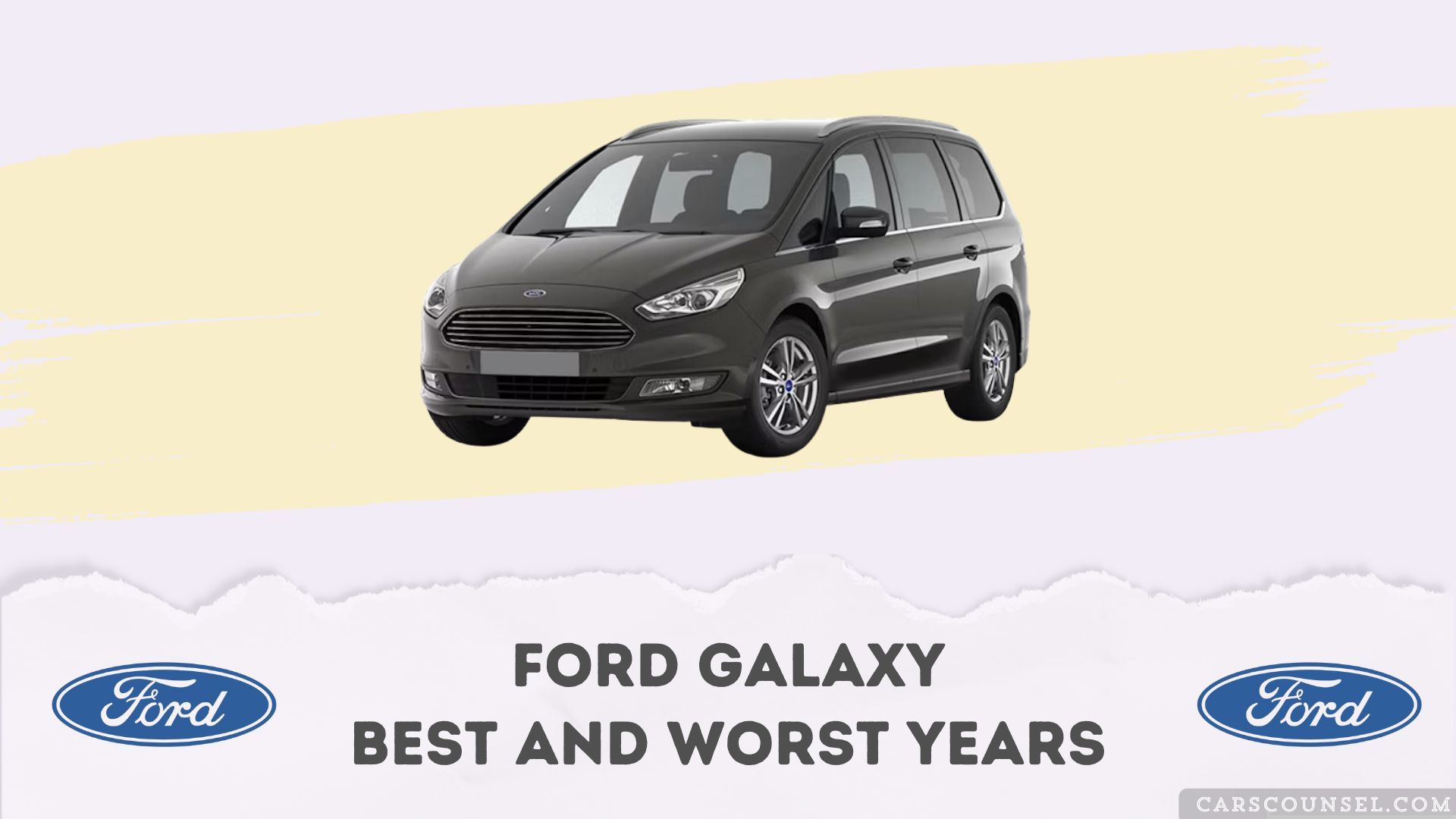
The Ford Galaxy is a European-market MPV never sold in the United States. The best years are 2010–2012 and 2018–2020. Approach early second and third-generation models carefully due to specific engine and transmission faults.
Rankings are comparative and no used vehicle is flawless. Maintenance history and overall condition matter more than the badge. A thorough pre-purchase inspection remains essential for any used Galaxy.
Reliability varies significantly between petrol and diesel engines. Diesel models face complex emissions and automatic transmission issues. Petrol variants generally offer simpler mechanics and fewer costly long-term repairs.
Quick Navigation
Best and Worst Ford Galaxy Years at a Glance
| Model Year or Range | Verdict | Main Reason | Buyer Guidance |
|---|---|---|---|
| 2018–2020 | Best Late-Generation Choice | Refined build quality and updated software | Verify service history and check for open recalls |
| 2010–2012 | Best Older Choice | Avoided early PowerShift and major electrical faults | Inspect clutch operation and timing belt records |
| 2013–2014 | Good With Inspection | Mid-cycle reliability improved but aging components remain | Check for A/C and suspension wear |
| 2021–2023 | Too New to Judge | Limited long-term ownership data available | Confirm warranty status and maintenance records |
| 2015–2017 | Approach Carefully | Oil sump cracking and clutch pressure plate recalls | Ensure recall repairs were completed by a dealer |
| 2006–2009 | Avoid | Multiple early-build recalls and severe electrical faults | High risk of expensive transmission and engine repairs |
Key Takeaways
- Strongest choices include 2010–2012 and 2018–2020 model years.
- Approach 2015–2017 models carefully due to specific engine recalls.
- Avoid 2006–2009 models because of concentrated early-build faults.
- Diesel engines require strict emissions and transmission maintenance.
- Petrol engines generally present fewer complex failure points.
- Always verify the VIN for outstanding European safety campaigns.
- Arrange an independent inspection before purchasing any used Galaxy.
How We Evaluated the Ford Galaxy Model Years
Our analysis considers official manufacturer campaigns, consumer complaints, and long-term ownership data. We separate genuine defects from normal wear and evaluate powertrain differences across generations.
Complaints do not equal confirmed defects, and a recall does not automatically ruin a vehicle’s reputation. Recent models have less road exposure, making long-term reliability harder to predict. Best means comparatively stronger, not perfect.
Best Ford Galaxy Years
2018–2020 (Third Generation)
These late-production years benefit from established manufacturing processes and updated transmission software. They avoided the early third-generation engine recalls that affected earlier builds.
Buyers should still verify that all scheduled maintenance was performed. Diesel models require strict adherence to service intervals to protect the turbocharger and emissions systems.
2010–2012 (Second Generation)
These mid-cycle years represent the most stable period of the second generation. Ford addressed many early electrical gremlins and initial build-quality concerns from the 2006 launch.
Mechanical components were generally robust, though age is now a factor. Inspect the suspension, steering, and timing belt service records carefully before purchase.
Best Year by Buyer Type
Best Overall Choice
The 2018–2020 third-generation models offer the best balance of modern safety features, refined interiors, and sorted mechanicals. They provide reliable family transportation when properly maintained.
Best Budget Option
The 2010–2012 second-generation models provide excellent passenger space at a lower entry price. They avoid the worst launch-year problems but require careful inspection for age-related wear.
Years to Approach Carefully
2015–2017 (Third Generation)
Early third-generation builds faced specific manufacturing defects that required official attention. Certain diesel engines were subject to an oil sump cracking recall if the engine overheated.
Additionally, some petrol models experienced clutch pressure plate fractures. Buyers must confirm that a Ford dealer completed all relevant recall repairs before taking ownership.
2013–2014 (Second Generation)
These final second-generation years are generally sound but feature aging components. The PowerShift automatic transmissions in diesel models require careful evaluation for smooth shifting.
Electrical systems and air conditioning units should be tested thoroughly. Budget for potential suspension and brake component replacements due to vehicle age.
Worst Ford Galaxy Years
2006–2009 (Second Generation)
The launch years of the second generation experienced a high concentration of early-build problems. Ford issued multiple campaigns addressing fuel system faults, glass roof detachment, and brake servo issues.
Electrical gremlins were widespread, and early PowerShift transmissions proved fragile. The cost of bringing these early models up to a reliable standard often exceeds their current market value.
Ford Galaxy Reliability by Generation
First Generation (1995–2006)
The original Galaxy was developed alongside the Volkswagen Sharan and SEAT Alhambra. It established Ford’s presence in the European large MPV segment.
These vehicles are now quite old, making parts availability and rust the primary concerns. They are generally considered classic or budget transport rather than reliable daily drivers.
Second Generation (2006–2015)
This generation moved to Ford’s own platform, sharing architecture with the Mondeo and S-Max. It introduced more car-like driving dynamics and improved safety.
Reliability improved significantly after the 2010 facelift. Buyers should prioritize later models and avoid the problematic 2006–2009 launch years.
Third Generation (2015–2023)
The final generation featured advanced technology, efficient EcoBlue diesel engines, and strong Euro NCAP safety ratings. Production ended in April 2023 without a direct successor.
While generally capable, early builds suffered from specific engine recalls. Later models from 2018 onward represent the most dependable versions of this generation.
Common Ford Galaxy Problems
PowerShift Transmission Faults
The PowerShift dual-clutch automatic transmission requires strict maintenance. Models equipped with the wet-clutch variant need regular fluid and filter changes to prevent mechatronic unit failures.
Neglected transmissions exhibit jerky shifts, hesitation, and eventual clutch pack degradation. Always review the transmission service history before purchasing an automatic diesel model.
Diesel Emissions System Blockages
Diesel Particulate Filters and Exhaust Gas Recirculation valves frequently clog on vehicles used primarily for short trips. This triggers warning lights and reduces engine performance.
Forced regeneration or component replacement can be expensive. Diesel Galaxys are best suited for buyers who regularly complete longer highway journeys.
Electrical and Accessory Faults
Owners frequently report issues with power windows, central locking, and infotainment systems. Poor grounding and failing control modules can cause erratic dashboard warnings.
Test every electronic accessory during a pre-purchase inspection. Ensure the alarm system and interior lighting function correctly across all doors.
What to Check Before Buying a Used Ford Galaxy
- Verify the VIN for outstanding European safety campaigns and recall completion.
- Review the complete service history, focusing on transmission fluid changes.
- Confirm the timing belt and water pump were replaced at the correct interval.
- Test the PowerShift transmission for smooth engagement and seamless shifting.
- Inspect the diesel exhaust fluid system and particulate filter health on TDCi models.
- Check all power windows, locks, and the panoramic roof mechanism for proper operation.
- Evaluate the suspension components for wear, as the heavy vehicle stresses bushings.
- Arrange an independent pre-purchase inspection by a qualified European car specialist.
Related Buying Guides
- Classic Ford Bronco best and worst years: Explore this vintage American icon if you prefer classic off-road styling over European passenger space.
- Ford EcoSport best and worst years: Consider this subcompact crossover if you need a smaller, more maneuverable Ford for city driving.
- Ford Bronco best and worst years: Review the modern Bronco for serious off-road capability that the Galaxy cannot provide.
- Ford Pinto best and worst years: Research this controversial compact car for historical automotive context rather than daily family transport.
- Volkswagen Passat best and worst years: Evaluate this European wagon as a practical alternative for long-distance family commuting.
- Volkswagen Golf best and worst years: Look at this versatile hatchback if you require European engineering in a much smaller footprint.
- Ford Transit best and worst years: Investigate this commercial van if maximum cargo or passenger volume is your absolute priority.
Frequently Asked Questions
Is the Ford Galaxy reliable?
The Galaxy offers average reliability when properly maintained, particularly later petrol models. Diesel variants require strict emissions and transmission servicing to avoid expensive repairs. Early builds present higher ownership risks.
What year of the Ford Galaxy is most dependable?
The 2018 through 2020 model years represent the most dependable choices. These late-production vehicles benefited from sorted manufacturing processes. The 2010 through 2012 models are the strongest older options.
What Ford Galaxy years should you avoid?
Buyers should avoid the 2006 through 2009 model years due to concentrated early-build faults. Early third-generation models from 2015 through 2017 also require careful inspection to ensure critical engine recalls were completed.
What are the most common Ford Galaxy problems?
PowerShift transmission faults, diesel emissions blockages, and electrical gremlins are the most frequent complaints. Neglected automatic transmissions and short-trip diesel usage lead to the most expensive repair bills.
How long does a Ford Galaxy last?
A well-maintained Galaxy can provide reliable service well beyond 150,000 miles. Longevity depends heavily on strict adherence to transmission service intervals and timely timing belt replacements.
Are Ford Galaxy repairs expensive?
Repairs can be costly, particularly for PowerShift transmission failures and diesel emissions components. European parts and specialized labor often increase maintenance expenses compared to domestic alternatives.
Choosing the Right Ford Galaxy Model Year
The Ford Galaxy remains a practical European family hauler when selected carefully. The 2018–2020 models offer the best blend of modern features and proven reliability. The 2010–2012 models provide a solid budget alternative.
Avoid the problematic 2006–2009 launch years entirely. Always verify the VIN for outstanding campaigns, prioritize complete service records, and arrange an independent inspection before finalizing your purchase.