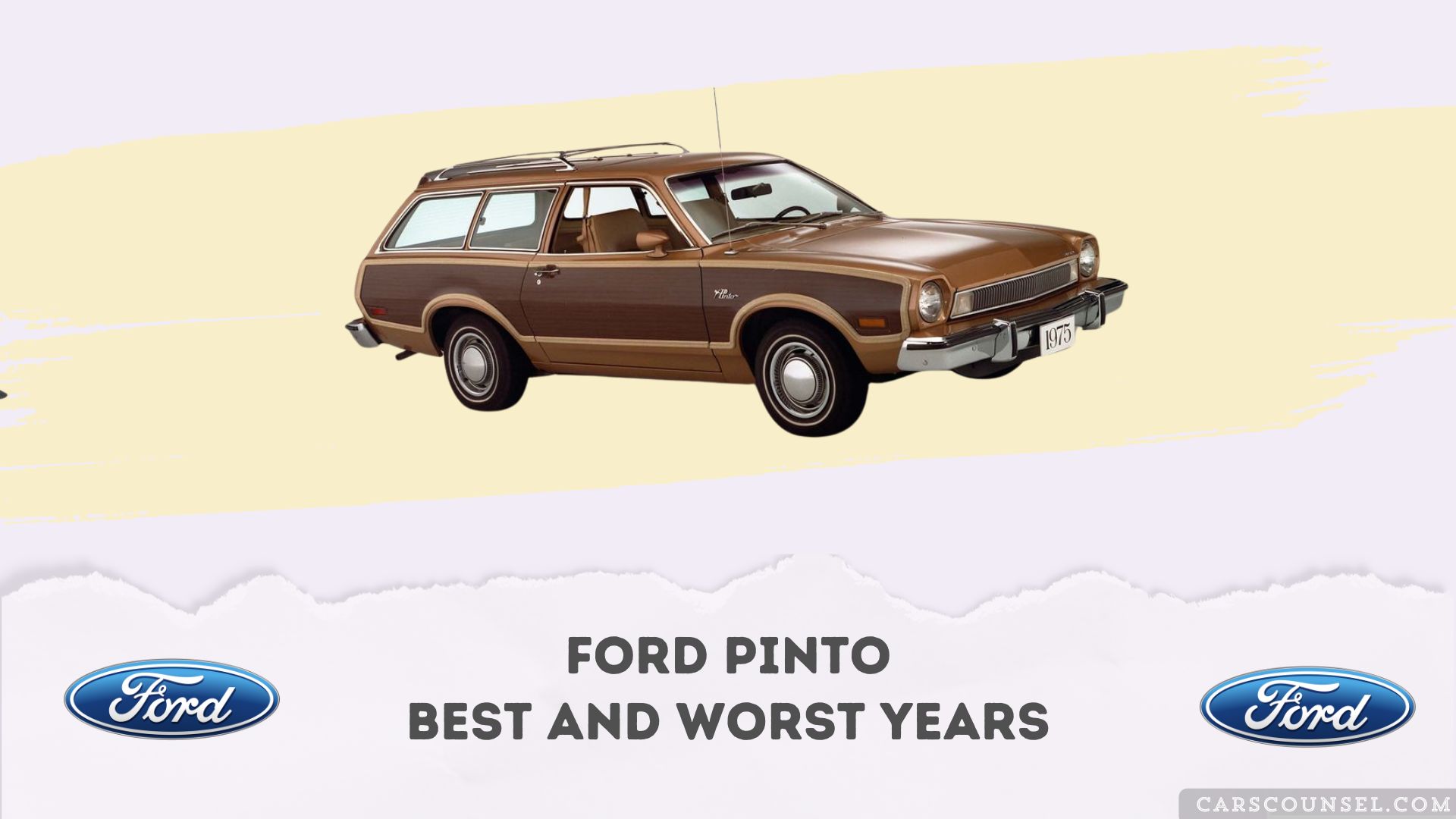
The 1974 Ford Pinto is the best year for collectors seeking peak production numbers and parts availability. Buyers should approach 1977 and 1978 models carefully due to intense safety controversies and declining build quality during those years.
Rankings for classic vehicles are comparative. No vintage Pinto is flawless. Survival depends heavily on rust prevention, proper storage, and whether critical factory safety modifications were completed.
Meaningful differences exist between early and late models. Later versions received larger bumpers and revised fuel systems. Engine options also shifted from the Kent four-cylinder to the 2.3-liter and V6 configurations.
Quick Navigation
Best and Worst Ford Pinto Years at a Glance
| Model Year | Verdict | Main Reason | Buyer Guidance |
|---|---|---|---|
| 1971-1973 | Good With Inspection | Early production; subject to fuel tank recall | Verify recall modification and inspect for rust |
| 1974 | Best Older Choice | Peak production year; highest parts availability | Check for aftermarket safety upgrades |
| 1975-1976 | Good With Inspection | Larger bumpers added; still subject to recall | Confirm fuel tank shield installation |
| 1977-1979 | Approach Carefully | Controversy peak; declining sales and build quality | Inspect thoroughly for neglected maintenance |
| 1980 | Best Late-Generation Choice | Final production year; most factory revisions applied | Verify originality and structural integrity |
Key Takeaways
- 1974 is the most sought-after year due to peak production volume.
- 1977 and 1978 models require careful inspection due to historical controversy.
- All 1971-1976 models were subject to a major fuel system recall.
- Rust is the primary enemy of surviving Pinto examples today.
- The 2.3-liter engine introduced in 1974 is generally more robust.
- Always verify the VIN for completed recall work before purchasing.
How We Evaluated the Ford Pinto Model Years
Our analysis considers historical sales data, factory recall records, and classic car survivor rates. We evaluate powertrain changes and generation updates over the ten-year production run.
Complaints from the 1970s do not equal modern failure rates. A recall does not automatically ruin a classic car’s collector value. Recent survivor condition matters most.
Best means comparatively stronger for collectors, not flawless. Long-term exposure is complete, but individual vehicle history dictates actual reliability and safety on the road today.
Exploring the Ford brand reveals many best and worst years across different classic models.
Best Ford Pinto Years
1974
The 1974 model year represents the peak of Pinto production. Ford built over half a million units, making replacement parts significantly easier to find today.
This year is highly sought after by collectors. However, buyers must verify that the factory fuel tank recall was addressed. Rust inspection remains critical.
1980
As the final production year, the 1980 Pinto benefits from a decade of factory revisions. The fuel system controversies had prompted engineering changes.
Survivor examples from 1980 are relatively rare. Finding an unmolested, rust-free model offers a unique piece of automotive history. Inspect the chassis carefully.
Best Year by Buyer Type
Best Overall for Collectors
The 1974 model year offers the best combination of parts availability and historical significance. Its massive production run ensures a robust aftermarket support network.
Best Late-Generation Choice
The 1980 model year appeals to buyers wanting the most refined version of the platform. It represents the end of the subcompact era for Ford.
Years to Approach Carefully
1977-1979
These years coincide with the height of the Pinto safety controversy. Sales plummeted, and dealership morale dropped, potentially affecting late-stage build quality.
While not inherently worse mechanically, surviving examples often suffered from deferred maintenance. Buyers should approach these years carefully and demand extensive documentation.
Worst Ford Pinto Years
1971-1973
Early production models face the strictest scrutiny. These years were the primary focus of the infamous 1978 fuel tank recall.
If the factory modification was never performed, these vehicles pose a severe safety risk. We classify them as Avoid unless definitive recall completion proof exists.
Ford Pinto Reliability by Generation
The Pinto spanned a single generation from 1971 to 1980. However, the platform evolved significantly. Early models featured the European-derived Kent engine.
In 1974, Ford introduced the 2.3-liter OHC engine. This powertrain proved much more durable and later powered the Ford Ranger and Ford Mustang.
Ford planned to turn the Mustang into a compact coupe using the Pinto platform. While they share architecture, their body panels and trim configurations differ significantly.
Common Ford Pinto Problems
Fuel-System Problems
The placement of the fuel tank behind the rear axle is the most documented issue. Rear-end collisions could rupture the tank.
Ford issued a massive recall for 1971-1976 models. Buyers must confirm the installation of the protective shield and extended filler neck.
Corrosion Problems
Like most vehicles from the 1970s, the Pinto is highly susceptible to rust. Floor pans, frame rails, and wheel arches are common failure points.
Structural rust compromises the unibody chassis. A thorough inspection on a lift is mandatory before purchasing any surviving example.
What to Check Before Buying a Used Ford Pinto
- Verify the VIN for open or completed historical recalls.
- Inspect the fuel tank shield and filler neck modifications.
- Check the floor pans and frame rails for severe structural rust.
- Review service history for timing belt and water pump replacements.
- Test the drum brakes and suspension components for wear.
- Scan for aftermarket electrical modifications that could cause fires.
- Inspect the carburetor and choke operation on cold starts.
- Arrange an independent inspection by a classic car specialist.
Related Buying Guides
- Ford Edsel best and worst years: Research another controversial classic that has become a prized collector item.
- Ford GT best and worst years: Discover Ford’s modern supercar if you want extreme performance over vintage economy.
- Ford Fiesta best and worst years: Explore Ford’s later subcompact successor for a more modern daily driver experience.
- Ford Excursion best and worst years: Look at Ford’s massive SUV if you need maximum towing capacity instead of vintage economy.
Frequently Asked Questions
Is the Ford Pinto safe to drive today?
A Pinto is only safe if the 1978 fuel tank recall modifications were completed. Unmodified early models remain a significant fire risk in collisions.
Why did the Ford Pinto fail?
The Pinto failed commercially due to intense negative publicity surrounding its fuel tank design. Competition from reliable Japanese imports also destroyed its market share.
What engine is best in a Pinto?
The 2.3-liter OHC four-cylinder introduced in 1974 is the most robust. It offers better torque and reliability than the earlier Kent engines.
Are Pinto parts easy to find?
Mechanical parts for the 2.3-liter engine are abundant. However, specific trim pieces and body panels for the Pinto are becoming increasingly difficult to source.
Is a Mercury Bobcat the same car?
The Mercury Bobcat is a badge-engineered Pinto. It shares the underlying platform and powertrains but features distinct front and rear styling elements.
How much is a Ford Pinto worth?
Values range from a few thousand dollars for drivers to over ten thousand for pristine examples. The Pinto Cruising Wagon and Squire trims command premiums.
Choosing the Right Ford Pinto Model Year
The 1974 model year remains the strongest choice for collectors. It offers peak production numbers and the best parts availability for long-term restoration projects.
Avoid unmodified 1971-1973 examples due to severe safety risks. Always verify the VIN and recall status before purchasing. Rust inspection is absolutely mandatory.
Maintenance and proper storage dictate a classic car’s survival. Arrange an independent inspection with a vintage Ford specialist to ensure your investment is sound.

