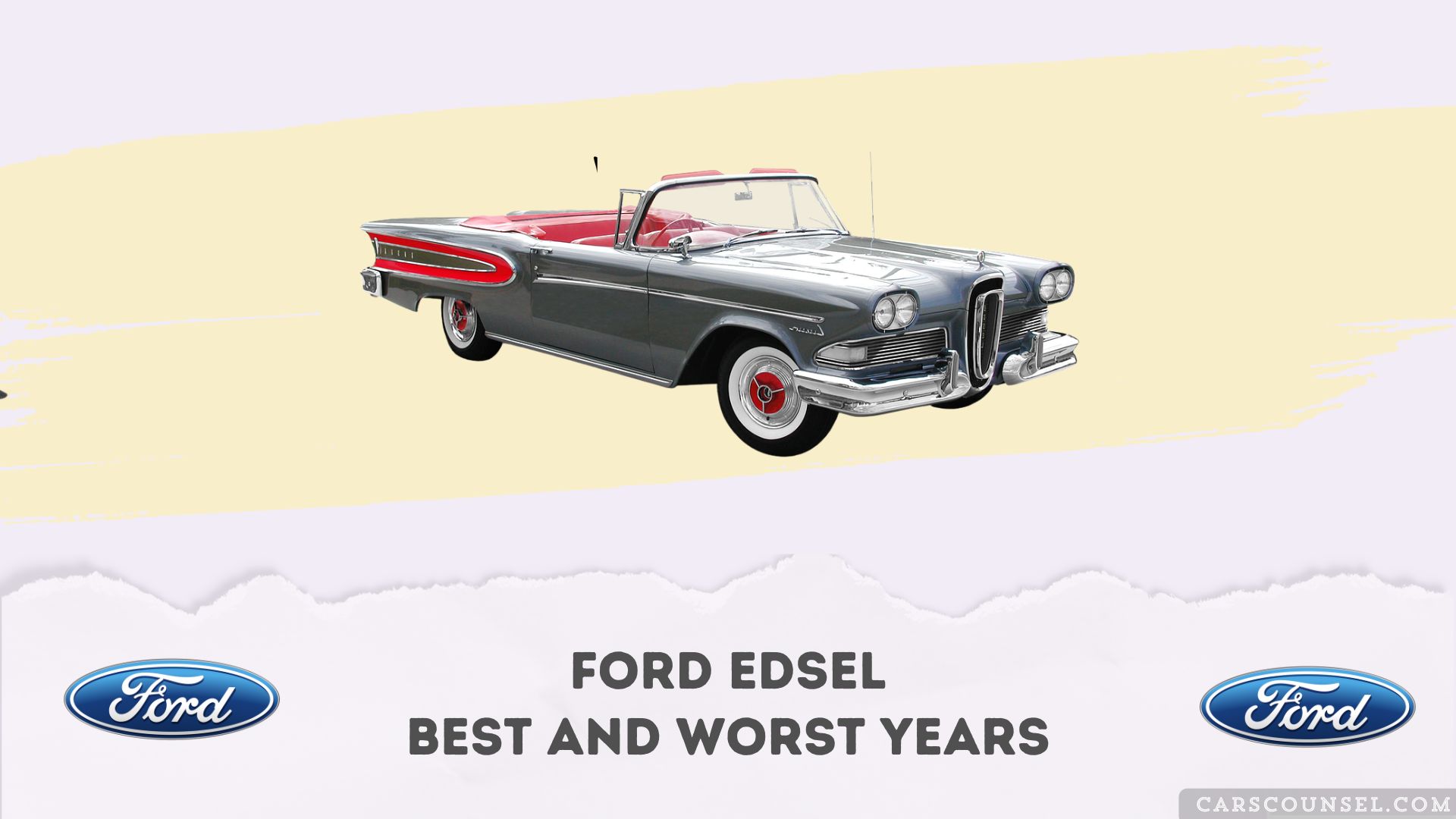
The best Ford Edsel year for collectors is 1958, featuring the iconic original design and highest enthusiast demand. Buyers should approach the final 1960 model year carefully, as it lost its unique styling and essentially became a rebadged standard Ford.
These rankings reflect classic car collector demand and historical build quality rather than modern reliability metrics. No surviving Edsel is flawless, and long-term preservation depends entirely on meticulous restoration, rust prevention, and climate-controlled storage.
Meaningful differences exist between the three production years. The 1958 models feature the controversial vertical grille, while 1959 and 1960 models received significant front-end restyling and shared more components with mainstream Ford and Mercury vehicles.
Quick Navigation
Best and Worst Ford Edsel Years at a Glance
| Model Year or Range | Verdict | Main Reason | Buyer Guidance |
|---|---|---|---|
| 1958 | Best Enthusiast Choice | Iconic first-year design, highest collector demand | Inspect for early build-quality flaws |
| 1959 | Good Choice | Restyled front end, slightly improved assembly | Verify originality and rust protection |
| 1960 | Good With Inspection | Final production year, highly rare | Check for standard Ford parts substitution |
Key Takeaways
- The 1958 models are the most desirable for collectors, featuring the uncompromised original design and unique Teletouch steering wheel controls.
- The 1959 models offer a slightly more conventional look with improved build quality, making them a solid choice for drivers.
- The 1960 models are the rarest but require careful inspection, as they share most body panels with standard Fords.
- Rust and parts scarcity are the primary enemies of any surviving Edsel, requiring specialized classic car knowledge.
- Always verify the vehicle’s provenance and arrange a specialized pre-purchase inspection by a classic Ford expert.
How We Evaluated the Ford Edsel Model Years
Our analysis examines historical production data, original build quality reports, and current classic car collector demand. We weigh the impact of the 1958 recession, shared assembly lines, and the rapid design changes across the three-year production run.
Consumer complaints are not relevant for vintage vehicles. Rust, originality, and mechanical restoration history dictate survival, while initial sales figures highlight the most desirable configurations for today’s enthusiasts.
Best Ford Edsel Years
1958: Best Enthusiast Choice
The inaugural 1958 model year is the most sought-after by collectors. It features the famous vertical horse-collar grille and the innovative Teletouch drive steering wheel, representing the original, uncompromised vision for the brand.
While early build quality suffered due to rushed production and shared assembly lines, surviving examples command premium prices. Buyers must carefully inspect the complex Teletouch electrical system and verify that original trim pieces remain intact.
Best Year by Buyer Type
Best Overall: The 1958 Citation or Corsair models offer the ultimate blend of iconic styling, historical significance, and strong collector appreciation potential.
Practical Alternative: Buyers seeking a more conventional classic car experience may cross-shop the contemporary Ford Thunderbird or Mercury models, which share underlying architecture but offer better parts availability.
Years to Approach Carefully
1959: Good Choice
The 1959 model year received a significant front-end restyling, replacing the controversial vertical grille with a wider, horizontal shield design. This change improved mainstream appeal but alienated some original design purists.
Build quality improved slightly as Ford integrated Edsel production more smoothly. Purchase only if the vehicle retains its unique 1959-specific trim and the engine runs without excessive oil consumption.
1960: Good With Inspection
The final 1960 model year is incredibly rare, with fewer than 3,000 units produced. However, it lost almost all unique Edsel styling, essentially becoming a rebadged Ford with a vertical grille and unique taillights.
Purists often avoid this year, but its extreme rarity appeals to some completionist collectors. Ensure the unique 1960-specific body panels and trim are present and not substituted with standard Ford parts.
Worst Ford Edsel Years
No Edsel model year earns a strict Avoid verdict for serious classic car collectors. The brand’s historical commercial failure is now its greatest asset, as low production numbers guarantee extreme rarity and strong enthusiast support.
However, buyers researching years to avoid should note that heavily modified examples, rusted project cars, or vehicles missing their unique Teletouch components present the highest financial and restoration risks.
Ford Edsel Reliability by Generation
Single Generation (1958–1960)
The Edsel was produced for only three model years before Ford discontinued the brand. All models shared underlying chassis and powertrain architecture with contemporary Ford and Mercury vehicles, ensuring basic mechanical robustness.
While the body styles and front-end designs changed drastically each year, the underlying V8 engines and automatic transmissions remain relatively easy to rebuild using shared classic Ford parts.
Common Ford Edsel Problems
Electrical and Teletouch Problems
The innovative Teletouch drive system, which placed transmission shift buttons in the center of the steering wheel, is notoriously complex. The electrical contacts wear out, and the specialized steering column is incredibly expensive to rebuild.
Verify that the push-button shifting operates smoothly. If the system has been converted to a standard column shift, the vehicle’s collector value drops significantly.
Corrosion Problems
Rust is the most critical threat to any surviving Edsel. The unibody and frame structures trap moisture in the floor pans, rocker panels, and trunk floors.
The unique front fenders and rear quarter panels are exceptionally difficult to replace due to parts scarcity. A professional lift inspection and magnet test are mandatory to ensure structural integrity.
What to Check Before Buying a Used Ford Edsel
Verify the VIN and engine numbers to ensure the vehicle retains its original, matching-numbers drivetrain. Inspect the complex Teletouch steering wheel system for proper electrical operation and mechanical engagement.
Check the unique body panels for severe structural rust and verify that original Edsel-specific trim is present. Review the restoration history and arrange an independent inspection by a classic Ford specialist.
When exploring other Ford models, buyers often consult our guides on the Ford Excursion, Ford Fiesta, Ford GT, and Ford Maverick.
Related Buying Guides
- Classic Ford Bronco best and worst years: A rugged, off-road alternative for collectors seeking vintage Ford heritage with massive aftermarket support and utilitarian charm.
Frequently Asked Questions
What is the most desirable Ford Edsel year?
The 1958 models are the most desirable, featuring the iconic original design and unique Teletouch steering wheel. They command the highest prices among collectors due to their historical significance and uncompromised styling.
Why did the Ford Edsel fail?
The Edsel failed due to poor market timing during the 1958 recession, controversial styling, confusing pricing that overlapped with Ford and Mercury, and early build quality issues from rushed shared-assembly production.
Is the Ford Edsel reliable for daily driving?
No, the Edsel is a vintage collector vehicle. While its shared Ford V8 engines are robust, the unique electrical systems, heavy steering, and lack of modern safety equipment make it unsuitable for regular daily driving.
How expensive are Edsel parts to find?
Mechanical parts shared with 1950s Fords are widely available. However, Edsel-specific trim, glass, grilles, and Teletouch steering components are exceptionally rare and can cost thousands of dollars to restore or replace.
What should I look for when buying a used Edsel?
Prioritize rust-free examples with intact, original body panels. Verify the Teletouch shifting system operates correctly, and ensure the vehicle retains its unique Edsel-specific trim rather than substituted Ford parts.
Does the Edsel share parts with other Fords?
Yes, the Edsel shares its underlying chassis, V8 engines, and automatic transmissions with contemporary Ford and Mercury models. This shared architecture ensures basic mechanical parts remain accessible for classic restorers.
Which Ford Edsel Year Should You Buy?
Target the 1958 models for the ultimate classic car ownership experience, benefiting from iconic styling and strong collector demand. The 1959 and 1960 models remain solid choices if their unique trim and rarity align with your collection goals.
Approach all model years with realistic expectations regarding vintage electrical gremlins and severe rust vulnerability. Always verify the vehicle’s provenance and arrange a specialized pre-purchase inspection before finalizing your purchase.

