
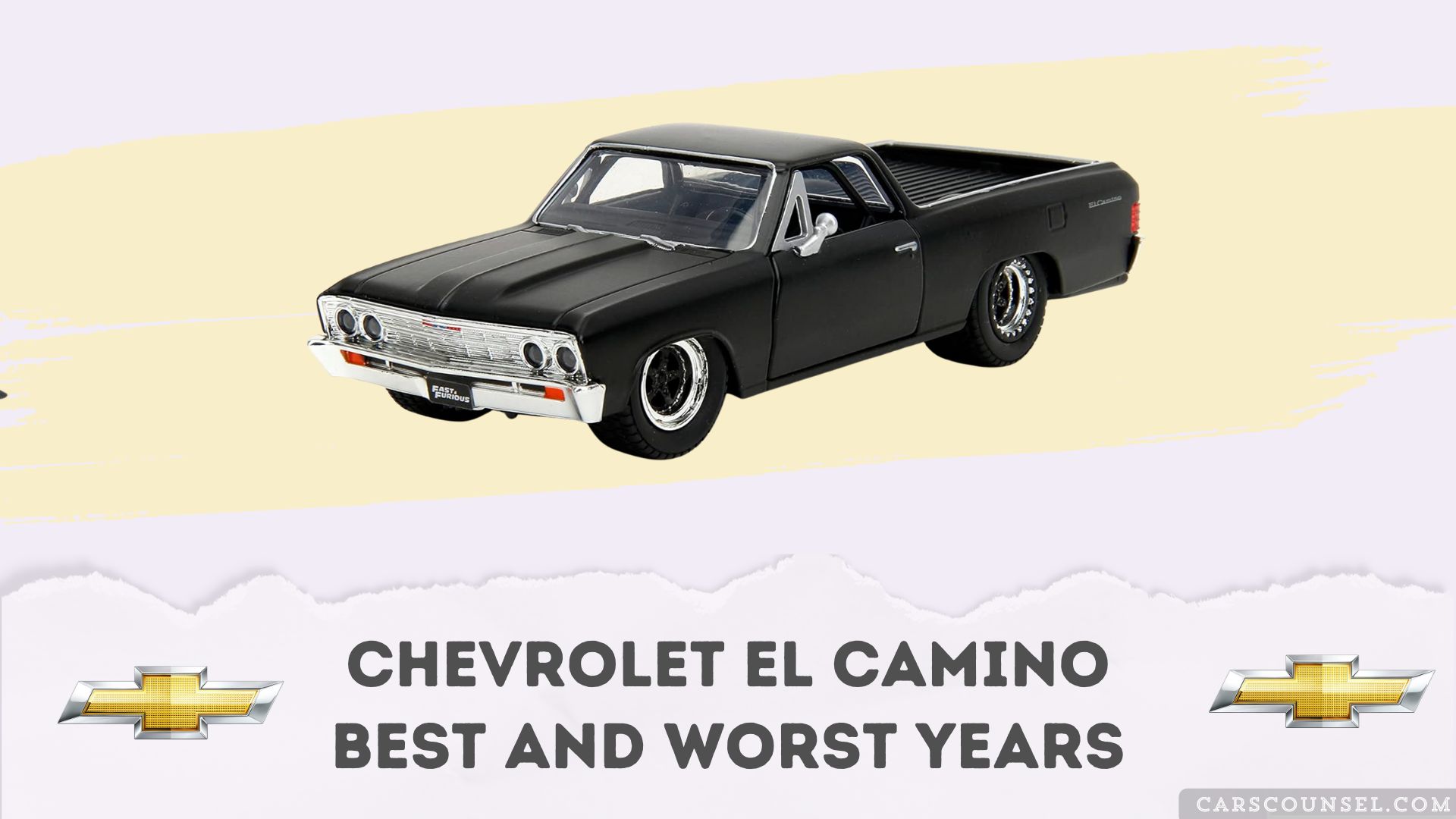
The Chevrolet El Camino is a coupé utility vehicle produced from 1959–1960 and 1964–1987. Based on Chevrolet car platforms, the El Camino blends car comfort with truck utility. This article breaks down the best and worst model years for the El Camino, focusing on reliability, performance, owner complaints, and long-term dependability.
Quick Navigation
Chevrolet El Camino Generational Overview
First Generation (1959–1960)
The El Camino debuted in 1959 on the full-size Chevrolet Biscayne platform. It featured car-like styling and a steel bed floor. Engine options ranged from inline-sixes to V8s, with up to 315 horsepower. Production was discontinued after 1960 due to low sales.
Second Generation (1964–1967)
Reintroduced on the Chevelle platform, the El Camino became a mid-size utility. It featured improved aerodynamics and air shocks in the rear. Engine options included small-block and big-block V8s, with horsepower up to 400. Air shocks and a fully boxed frame were standard.
Third Generation (1968–1972)
This generation featured a longer wheelbase and “Coke bottle” styling. The Super Sport (SS) version was introduced, with V8s up to 450 horsepower. Power front disc brakes and Positraction were optional. Engine power peaked in 1970, but decreased in later years due to emissions regulations.
Fourth Generation (1973–1977)
The El Camino grew larger, matching the Chevelle wagon. Engine options shifted to smaller V8s and inline-sixes due to the oil crisis. Horsepower dropped, but reliability improved with hardened engine parts. The SS remained an option, but performance was lower than previous generations.
Fifth Generation (1978–1987)
The final generation used the GM G-body platform. It featured modern amenities like air conditioning and power windows. Engine options included V6s and V8s, with electronic fuel injection on later models. Diesel engines were available but had reliability issues. Production ended in 1987.
Best Years for the Chevrolet El Camino
The most reliable and well-built El Camino years are generally found in the later generations, where engineering improvements and parts availability make ownership easier.
1981–1987
These models benefit from modern emissions controls, electronic fuel injection, and better overall build quality. They are easier to maintain, with more readily available parts. The V6 and V8 engines in this range are durable, and most owners report few major issues if basic maintenance is performed.1978–1980
These years saw the introduction of the new G-body chassis, improved suspension, and more comfort features. The 350 V8 option is particularly strong, and the chassis is robust. Early G-body El Caminos are generally considered reliable if rust is kept under control.1968–1970
These are the peak years for performance and build quality in the muscle car era. The SS models with the 396 or 454 V8 engines are highly regarded for their power and durability. Owners report fewer mechanical issues compared to later years, provided the vehicle has been well-maintained.
Worst Years for the Chevrolet El Camino
1973–1977
These models are notorious for rust issues, especially in the rear frame rails and smuggler’s box. Build quality declined, and engines were less powerful due to emissions controls. The 454 V8 was available but was downrated and less reliable than earlier versions.1959–1960
The first-generation El Camino is rare and expensive to maintain. Parts are hard to find, and the platform is outdated. Build quality was not as high as later models, and reliability is poor by modern standards.1982–1987 (Diesel Models)
The diesel V8 option is widely regarded as unreliable. These engines are expensive to repair and have a poor reputation for longevity. Gasoline-powered models from this era are generally better, but the diesel should be avoided.
Common Problems Across the Chevrolet El Camino Lineup
Rust Issues
El Caminos, especially from the 1970s, are prone to rust in the rear frame rails, smuggler’s box, and floorboards. This is a major concern for used buyers and can be expensive to repair.
Suspension and Steering
G-body models (1978–1987) often suffer from camber issues, leading to premature tire wear. Ball joints, tie rods, and wheel bearings require frequent inspection and replacement.
Electrical Faults
Wiring and electrical systems in older El Caminos are prone to faults, especially in the dashboard and lighting. Window switches, blower motors, and ignition systems are common failure points.
Engine and Transmission
Early V8 engines are generally reliable, but later models with emissions controls and electronic fuel injection can be finicky. The diesel V8 is particularly problematic. Automatic transmissions are robust, but manuals may require rebuilds if abused.
Reliability Breakdown by Year
1987 Chevrolet El Camino Reliability Rating
The final year is generally reliable for gasoline models, with modern emissions controls and fuel injection. Diesel engines are problematic. Rust remains a concern, but parts are readily available.
1981–1986 Chevrolet El Camino Reliability Rating
These years are solid for reliability, with durable engines and improved build quality. Electronic systems are more complex but manageable. Rust and suspension issues are the main concerns.
1978–1980 Chevrolet El Camino Reliability Rating
The G-body chassis is robust, but rust is still a major issue. Engines are reliable if maintained. Suspension and electrical systems may need attention.
1973–1977 Chevrolet El Camino Reliability Rating
These models are less reliable due to rust, emissions controls, and weaker engines. The SS option is desirable but not as dependable as earlier years.
1968–1972 Chevrolet El Camino Reliability Rating
The peak years for reliability and performance. Engines and transmissions are robust. Rust is less common than in later models, but suspension and electrical systems may need work.
1964–1967 Chevrolet El Camino Reliability Rating
Generally reliable, but parts are less common. Engines and transmissions are durable, but rust can be an issue.
1959–1960 Chevrolet El Camino Reliability Rating
Rare and difficult to maintain. Parts are scarce, and reliability is poor by modern standards.
Warranty & Ownership Costs
Chevrolet offered a standard warranty for new vehicles, typically 3 years/36,000 miles bumper-to-bumper and 5 years/100,000 miles for powertrain coverage. Used El Camino ownership costs are moderate, averaging around $887 per year for maintenance and repairs. Major repairs are more likely in older models, especially those with rust or diesel engines.
Buying Guide: What to Look For
Best Value Years: 1981–1987 (gasoline), 1968–1970 (muscle car)
Years to Avoid: 1973–1977 (rust), 1982–1987 (diesel)
Key Components to Inspect: Frame rails, floorboards, engine, transmission, suspension
Expected Mileage Thresholds: Well-maintained examples can exceed 200,000 miles, especially in the 1980s models
Known Trouble Spots: Rust, suspension wear, electrical faults, diesel engines
When looking at performance cars, make sure to check out our guides on models like the Chevrolet Vega, Chevrolet Express, Chevrolet blazer and Chevrolet Bolt. Knowing which model years to target and which to avoid is crucial. Our expert reviews break down these models, providing insights into the years that are celebrated for their engineering excellence and driving satisfaction, as well as those that are best to avoid due to potential issues.
FAQs
Is the Chevrolet El Camino reliable?
The El Camino is generally reliable if rust is controlled and basic maintenance is performed. Later generations are easier to maintain than earlier ones.
What year of the Chevrolet El Camino is most dependable?
The 1981–1987 gasoline models and the 1968–1970 muscle car years are the most dependable.
What year should you avoid?
Avoid 1973–1977 due to rust and reliability issues, and avoid diesel models from 1982–1987.
What are the most common problems?
Rust, suspension wear, electrical faults, and diesel engine failures are the most common issues.
How long does a Chevrolet El Camino last?
With proper care, El Caminos can last well over 200,000 miles, especially the later models.
Conclusion
The best years for the Chevrolet El Camino are 1981–1987 (gasoline) and 1968–1970 (muscle car). The worst years are 1973–1977 (rust) and diesel models from 1982–1987. Overall, the El Camino offers moderate reliability and ownership costs, with rust and engine choice being the main concerns for buyers.
