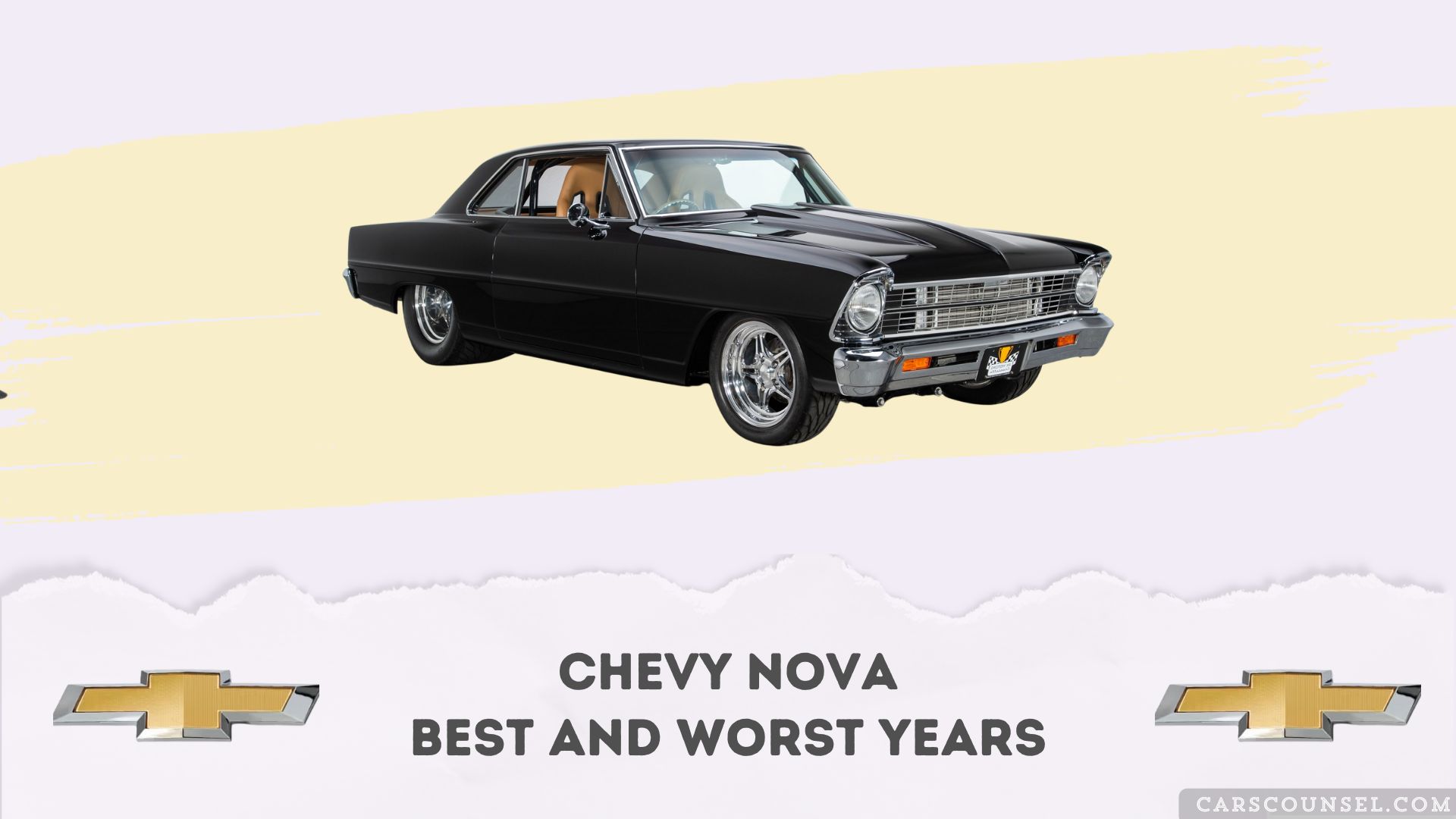
The best Chevy Nova model years for enthusiasts are 1968 through 1972, representing the peak of the classic muscle car era. Buyers should approach the 1975 through 1979 models carefully due to heavy smog equipment and severe performance drops.
Rankings for classic American muscle cars remain comparative. No fifty-year-old vehicle is flawless, and individual maintenance, rust prevention, and original matching-numbers components matter far more than the factory build year.
Meaningful differences exist across the generations. The early unibody compacts differ vastly from the subframed X-body muscle cars, while the later front-wheel-drive economy models share nothing with their V8 predecessors.
Quick Navigation
Best and Worst Chevy Nova Years at a Glance
| Model Year Range | Verdict | Main Reason | Buyer Guidance |
|---|---|---|---|
| 1962-1967 | Best Older Choice | Classic compact styling and early V8 options. | Inspect unibody for severe rust and check shock tower clearances. |
| 1968-1972 | Best Enthusiast Choice | Peak muscle car era with legendary SS and COPO models. | Demand matching-numbers documentation and inspect cowl area for rust. |
| 1973-1974 | Good Choice | Final years of classic styling before heavy downsizing. | Check for heavy 5-mph bumpers and early smog equipment issues. |
| 1975-1979 | Approach Carefully | Malaise-era performance drop and complex emissions systems. | Verify emissions compliance and inspect for severe structural rust. |
| 1985-1988 | Mixed | Reliable Toyota-based FWD economy cars, but lack V8 heritage. | Great for budget commuting, but expect zero muscle car aftermarket support. |
Key Takeaways
- The 1968-1972 models are the strongest choices, offering legendary SS performance and COPO big-block rarity.
- Buyers researching years to avoid should be wary of the 1975-1979 malaise-era models and the 1985-1988 front-wheel-drive economy cars.
- The 1962-1967 unibody compacts are highly desirable but require extreme vigilance for structural rust.
- Factory shock towers on classic models severely limit engine swap clearance for big-block V8s.
- The cowl and kick panel areas are notorious for trapping water and causing catastrophic hidden rust.
- Always verify matching-numbers documentation and arrange an independent inspection by a classic Chevy specialist.
How We Evaluated the Chevy Nova Model Years
Our analysis considers factory powertrain configurations, unibody structural integrity, and long-term enthusiast ownership patterns across the Chevy lineup. We evaluate engine variations, subframe differences, and the critical importance of rust prevention for classic X-body platforms.
Consumer complaints and forum reports highlight recurring structural flaws. Individual condition and service history dictate value and reliability. Best means comparatively stronger for collectors, not flawless.
Best Chevy Nova Years
1968-1972: Best Enthusiast Choice
The 1968 through 1972 model years represent the undisputed golden era of the Nova. These X-body coupes and sedans were available with legendary powertrains, including the 396 cubic-inch big-block V8 and the rare, dealer-ordered COPO 427 models.
These cars offer the perfect blend of lightweight unibody-style handling and massive V8 torque. However, buyers must demand rigorous documentation to verify matching-numbers drivetrains and original SS equipment, as cloned examples are common in the classic market.
1962-1967: Best Older Choice
The original Chevy II and early Nova compacts are highly sought after for their clean, straightforward styling and the introduction of the small-block V8 in 1964. The 1966 and 1967 models, in particular, are prized for their aggressive fastback rooflines and L79 327 V8 options.
While exceptionally desirable, these early unibody cars lack the robust front subframes of later models. Buyers must carefully inspect the front clip and inner fenders for fatigue, cracking, or poorly executed previous repairs.
1973-1974: Good Choice
The 1973 and 1974 models represent the final years of classic X-body styling before heavy downsizing. They feature massive 5-mph bumpers and early smog equipment, but still offer the robust subframe and classic coupe proportions that enthusiasts desire.
Best Chevy Nova Year by Buyer Type
Best Performance Configuration: 1969 COPO and SS 396
The 1969 model year stands alone for hardcore performance enthusiasts. The Central Office Production Order (COPO) 427 models and the highly optioned SS 396/375 four-speed cars represent the absolute pinnacle of factory lightweight drag racing heritage.
Years to Approach Carefully
1975-1979: Approach Carefully
The third-generation Novas suffered through the malaise era, burdened by heavy 5-mph bumpers, massive smog equipment, and severely detuned engines. Performance dropped dramatically, and the cars became heavier and more complex to maintain.
While they still carry the classic X-body styling, the complex vacuum-operated emissions systems and early catalytic converters frequently cause drivability issues. Buyers should prioritize pristine, low-mileage survivors over heavily modified examples.
1985-1988: Mixed
The fourth-generation Nova returned as a front-wheel-drive economy car built at the NUMMI plant in California. Essentially a rebadged Toyota Sprinter, these cars are remarkably reliable, fuel-efficient, and completely immune to the classic V8 rust issues.
However, they share absolutely no mechanical or architectural DNA with the classic rear-wheel-drive muscle cars. Enthusiasts generally avoid them, making them a practical daily driver but a poor investment for classic car collectors.
Chevy Nova Reliability by Generation
First and Second Generations (1962-1974)
The classic X-body platform relies on a unibody construction with a bolt-on front subframe (1968-1974). While this shared architecture defines the classic muscle car era, it also creates a universal vulnerability to severe structural rust across all body styles.
The 1968-1974 subframes feature prominent shock towers that intrude into the engine bay. This shared architecture makes big-block V8 swaps and custom header installations notoriously difficult without notching the towers or installing aftermarket front clips.
Third Generation (1975-1979)
The downsized third generation retained the X-body designation but adopted heavy, colonnade styling and strict federal emissions equipment. The added weight and complex vacuum lines significantly degraded the driving experience and long-term mechanical reliability.
Fourth Generation (1985-1988)
The final Nova generation utilized a front-wheel-drive Toyota platform. While it shares the Nova nameplate, its powertrain, suspension, and electrical systems are entirely distinct and unrelated to the classic Chevrolet engineering of the 1960s and 1970s.
Common Chevy Nova Problems
Corrosion Problems
Structural rust is the most critical and expensive problem affecting classic Novas. The unibody design traps moisture in the cowl area, kick panels, trunk pans, and rear quarter panels, leading to catastrophic structural failure if left untreated.
Buyers must physically probe the cowl vents and lower kick panels with a pick or awl. Surface rust on the quarters is common, but structural rot in the cowl boxes requires extensive, expensive metal fabrication to repair safely.
Engine Swap Clearance
The factory front subframes on the 1968-1974 models feature tall shock towers that severely limit engine bay clearance. This design flaw makes installing big-block V8s, tall-deck engines, or custom tubular headers incredibly frustrating for hot rodders.
Many owners resort to notching the factory shock towers or completely replacing the front suspension with aftermarket tubular control arms and coilover systems to achieve proper engine and steering clearance.
What to Check Before Buying a Used Chevy Nova
- Verify the VIN, cowl tag, and matching-numbers drivetrain documentation to ensure the car is a genuine SS or COPO model.
- Inspect the cowl area, lower kick panels, trunk pan, and rear frame rails for severe structural rust or cheap bondo repairs.
- Check the front subframe and shock towers for fatigue cracks, rust, or signs of aggressive notching from previous engine swaps.
- Test the original or restored carburetor, choke, and vacuum-operated smog equipment for proper cold-start behavior.
- Inspect the unibody roof rails and window channels for water leaks that accelerate interior floor pan rot.
- Arrange an independent pre-purchase inspection with a classic Chevrolet restoration specialist.
Related Buying Guides
- Chevy Impala years to avoid: A full-size classic alternative for buyers who want massive V8 power and comfortable cruising without the cramped X-body interior.
- Chevy Colorado years to avoid: A modern midsize truck alternative for buyers who need classic Chevy utility and payload capacity that the vintage Nova coupe cannot provide.
- Chevy Avalanche years to avoid: A versatile utility alternative for buyers who want a unique truck bed and passenger cabin configuration for family hauling and outdoor gear.
- Chevy Sonic years to avoid: A modern subcompact alternative for buyers who want the small footprint and fuel efficiency of the 1980s Nova but with contemporary safety features.
Frequently Asked Questions
Which Chevy Nova year is the most desirable?
The 1968 through 1972 model years are the most desirable. They represent the peak of the classic muscle car era, offering legendary SS performance, rare COPO big-block options, and aggressive styling.
Is the Chevy Nova reliable?
A well-maintained classic Nova with a simple small-block V8 is remarkably reliable for a vintage car. However, all classic models are highly susceptible to severe structural rust, which is the primary threat to their longevity.
What is the most common Chevy Nova problem?
Structural rust is the most common and severe problem. The unibody cowl area, kick panels, and trunk pans trap moisture, leading to catastrophic hidden rot that can compromise the entire vehicle’s structural integrity.
Will the Chevy Nova hold its value?
Yes, genuine, numbers-matching SS and COPO models from the 1968-1972 era have seen massive appreciation. They are highly sought after by collectors and drag racing enthusiasts as iconic, lightweight American muscle cars.
Does the 1985 Nova share parts with the classic Nova?
No, the 1985-1988 Nova is a front-wheel-drive economy car based on the Toyota Sprinter. It shares absolutely no mechanical, architectural, or body components with the classic rear-wheel-drive X-body Novas.
Should I buy a used Chevy Nova?
You should only buy a classic Nova if you can find a rust-free example with verified documentation. Individual condition, rust prevention, and matching-numbers authenticity are far more important than the specific model year.
Choosing the Right Chevy Nova Model Year
The 1968 through 1972 model years offer the ultimate classic muscle car experience, delivering legendary big-block performance and aggressive X-body styling. Buyers should approach the malaise-era 1975-1979 models and the front-wheel-drive 1985-1988 economy cars with caution.
Because these are fifty-year-old unibody vehicles, individual condition and comprehensive rust prevention dictate the car’s true value. Never finalize a purchase without verifying matching-numbers documentation and arranging an independent inspection from a qualified classic Chevy specialist.

