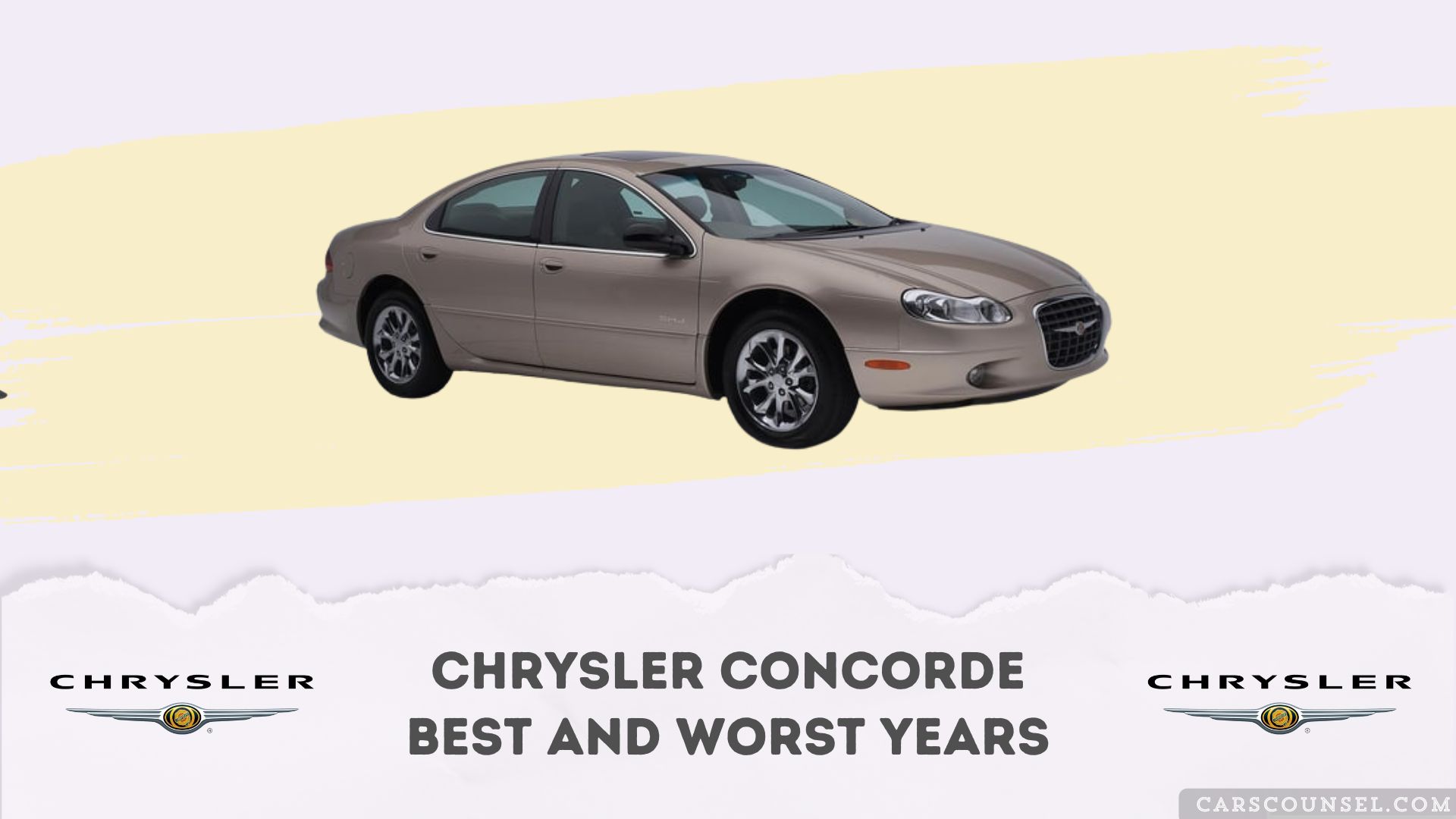
The best Chrysler Concorde years are the 2002–2004 models equipped with the 3.5-liter V6, offering a mature platform and robust performance. Buyers must strictly avoid any 1998–2004 model with the 2.7-liter V6 due to catastrophic engine sludge issues.
Rankings are comparative, and no aging full-size sedan is flawless. Long-term survival depends entirely on meticulous maintenance, verifying the engine configuration, and addressing minor electrical gremlins immediately.
Meaningful differences exist between the first and second generations, as well as between the available V6 engines. The 2.7-liter engine is a major liability, while the 3.3-liter and 3.5-liter engines are significantly more durable.
Quick Navigation
Best and Worst Chrysler Concorde Years at a Glance
| Model Year or Range | Verdict | Main Reason | Buyer Guidance |
|---|---|---|---|
| 1993–1997 | Approach Carefully | First-generation teething, aging electrical | Inspect wiring and transmission |
| 1998–2004 (2.7L V6) | Avoid | Catastrophic oil sludge and water pump failures | Do not purchase this configuration |
| 1998–2001 (3.2L/3.5L) | Good With Inspection | Intake plenum leaks, aging components | Verify engine and service history |
| 2002–2004 (3.5L V6) | Best Older Choice | Facelift, mature platform, robust V6 | Confirm timing belt and fluid services |
Key Takeaways
- The 2002–2004 models with the 3.5L V6 are the strongest choices, benefiting from late-production refinements.
- Avoid all 1998–2004 models equipped with the 2.7L V6 engine due to severe oil sludge and coolant contamination risks.
- The 1993–1997 first-generation models require careful inspection for aging electrical components and transmission health.
- Intake manifold plenum leaks are a known issue on the 3.2L and early 3.5L engines, requiring specific gasket replacements.
- Always verify the exact engine displacement using the VIN before purchasing any second-generation Concorde.
How We Evaluated the Chrysler Concorde Model Years
Our analysis examines NHTSA records, manufacturer service campaigns, and long-term ownership patterns across both generations. We weigh the severe impact of the 2.7-liter engine failures against the relative durability of the larger V6 options.
Consumer complaints are not confirmed defects or failure rates. A recall does not automatically make a vehicle unreliable, but aging LH-platform sedans require meticulous documentation of timing belt and water pump services.
Best Chrysler Concorde Years
2002–2004 (3.5L V6): Best Older Choice
These model years represent the final and most refined iteration of the Concorde. The 2002 facelift updated the exterior styling and interior materials, while the 3.5-liter V6 provides reliable power and smooth highway cruising.
While comparatively favorable, these vehicles still require strict adherence to maintenance schedules. Buyers should verify that the timing belt and water pump have been replaced at the recommended intervals to prevent interference engine damage.
Best Year by Buyer Type
Best Overall: The 2003–2004 Concorde Limited with the 3.5L V6 offers the best combination of late-generation refinements, premium features, and proven powertrain durability.
Practical Alternative: Buyers seeking a more modern, reliable full-size sedan should cross-shop the Chrysler 300, which replaced the Concorde and offers rear-wheel-drive dynamics and available V8 power.
Years to Approach Carefully
1993–1997: Approach Carefully
The first-generation Concorde introduced the innovative cab-forward LH platform. While spacious, these early models suffer from aging electrical gremlins, brittle interior plastics, and early-production transmission wear.
Purchase only if the vehicle has extensive service records. Inspect the wiring harnesses for corrosion and test all power accessories, as the body control modules can be difficult to source and replace.
1998–2001 (3.2L and 3.5L V6): Good With Inspection
The second generation brought improved safety and a redesigned interior. The 3.2-liter and 3.5-liter engines avoid the fatal flaws of the smaller V6, but they are prone to intake manifold plenum leaks.
These leaks can cause rough idling and lean running conditions. Ensure the plenum gasket has been updated or replaced, and verify the transmission shifts smoothly without hesitation.
Worst Chrysler Concorde Years
1998–2004 (2.7L V6): Avoid
Any second-generation Concorde equipped with the 2.7-liter V6 engine presents a massive financial risk. This engine is notorious for severe oil sludge buildup and premature water pump failures.
When the internal water pump fails, coolant mixes with the engine oil, rapidly destroying the bearings and cylinder walls. Because this failure is often sudden, no used 2.7L example is a safe purchase.
Chrysler Concorde Reliability by Generation
First Generation (1993–1997)
Built on the original LH platform, these models shared architecture with contemporary Dodge and Eagle sedans. While the larger engines are reasonably durable, the complex early multiplex wiring systems frequently cause frustrating electrical faults.
Second Generation (1998–2004)
The redesigned second generation improved structural rigidity and introduced new V6 options. While the 3.2-liter and 3.5-liter engines are solid, the inclusion of the 2.7-liter V6 severely tarnishes the generation’s overall reliability reputation.
Common Chrysler Concorde Problems
Engine Problems
The 2.7-liter V6 suffers from catastrophic oil sludge and water pump failures, leading to total engine seizure. The larger engines frequently develop intake manifold plenum leaks, requiring gasket replacement to restore proper idle.
Transmission Problems
The 4-speed automatic transmission is generally reliable but requires regular fluid changes. High-mileage examples may experience solenoid pack failures or harsh shifts if the fluid was neglected by previous owners.
Electrical Problems
First-generation models are particularly vulnerable to wiring harness corrosion and failing body control modules. Symptoms include erratic gauge cluster behavior, power window failures, and intermittent starting issues.
What to Check Before Buying a Used Chrysler Concorde
- Verify the exact engine displacement via the VIN to ensure it is not the 2.7L V6.
- Confirm timing belt and water pump replacement history on the 3.2L and 3.5L engines.
- Inspect the intake manifold for signs of vacuum leaks or rough idling.
- Test all power windows, locks, and dashboard gauges for electrical gremlins.
- Check the transmission fluid condition and test for smooth, hesitation-free shifting.
- Arrange an independent pre-purchase inspection to check for structural rust and suspension wear.
Related Buying Guides
- Chrysler 300 best and worst years: The direct successor to the Concorde, offering a more robust rear-wheel-drive platform and available HEMI V8 power.
- Chrysler Sebring best and worst years: A contemporary midsize sibling for buyers seeking a smaller footprint and available convertible body styles.
Frequently Asked Questions
What is the most reliable Chrysler Concorde year?
The 2002–2004 models equipped with the 3.5-liter V6 are the most reliable, benefiting from late-production refinements and a mature platform. Avoid all models with the 2.7-liter engine.
Did the Chrysler Concorde have a V8 engine?
No, the Concorde was exclusively offered with V6 engines, including the 3.3L, 2.7L, 3.2L, and 3.5L. Buyers wanting a V8 should look at the successor Chrysler 300.
Why is the 2.7L engine so problematic?
The 2.7L V6 is prone to severe oil sludge and internal water pump failures. When the water pump leaks internally, coolant contaminates the oil, causing rapid and catastrophic engine failure.
What causes the rough idle on the 3.5L engine?
A rough idle on the 3.2L and 3.5L engines is frequently caused by intake manifold plenum leaks. Replacing the plenum gasket usually resolves the vacuum leak and restores smooth operation.
Are first-generation Concorde parts hard to find?
Mechanical parts for the larger V6 engines remain available, but first-generation specific electrical components, interior trim, and body panels are becoming increasingly difficult to source for restorations.
How long can a Chrysler Concorde last?
Well-maintained examples with the 3.5L V6 can reach high mileage, provided the timing belt and water pump are serviced on time. Longevity depends entirely on strict maintenance and rust prevention.
Which Chrysler Concorde Year Should You Buy?
Target the 2002–2004 models with the 3.5-liter V6 for the most refined and dependable ownership experience. These years offer the best combination of late-generation styling and proven powertrain durability.
Strictly avoid any Concorde equipped with the 2.7-liter V6 engine due to the high risk of catastrophic failure. Always verify the engine configuration via the VIN and arrange a specialized pre-purchase inspection.