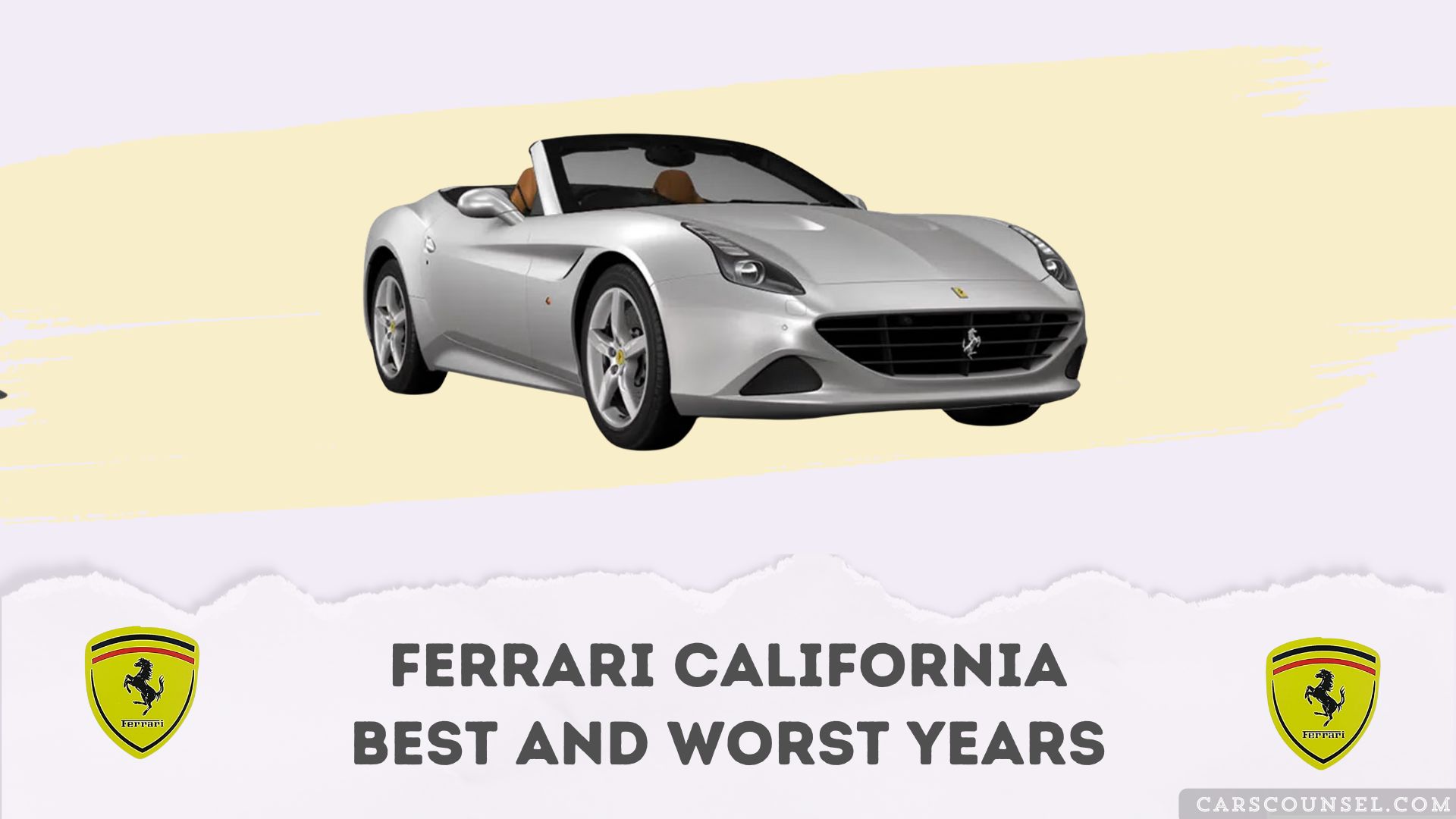
The best Ferrari California years are 2015 through 2017 (California T) for modern performance and 2012 through 2014 (California 30) for naturally aspirated reliability. Buyers should approach 2009 through 2011 models carefully due to early production teething issues and a major engine recall.
These rankings are comparative within the California lineup. No exotic car is flawless, and long-term reliability heavily depends on strict maintenance records, climate-controlled storage, and regular driving to prevent electrical and mechanical degradation.
Meaningful differences exist between the generations. The first generation uses a naturally aspirated V8, while the California T introduces a twin-turbo V8. Roof mechanism and transmission software also improved significantly in later production years.
Quick Navigation
Best and Worst Ferrari California Years at a Glance
| Model Year Range | Verdict | Main Reason | Buyer Guidance |
|---|---|---|---|
| 2015-2017 (California T) | Best Choice | Refined twin-turbo V8 and updated electronics | Prioritize for modern performance and daily usability |
| 2012-2014 (California 30) | Best Older Choice | Naturally aspirated V8 with weight reduction | Verify roof mechanism and exhaust manifold condition |
| 2009-2011 | Approach Carefully | Crankshaft recall and early roof mechanism issues | Confirm recall completion and inspect transmission |
Key Takeaways
- The 2015-2017 California T models offer the most refined ownership experience.
- The 2012-2014 California 30 provides the best naturally aspirated V8 option.
- Early 2009-2011 models require strict verification of the crankshaft recall.
- Retractable hardtop mechanisms require careful inspection on all first-generation models.
- Sticky interior buttons are a common age-related issue across all years.
- Always verify the VIN for open recalls before purchasing any Ferrari.
- Arrange an independent pre-purchase inspection by a qualified exotic car specialist.
How We Evaluated the Ferrari California Model Years
Our analysis considers official manufacturer recalls, service campaigns, and long-term ownership patterns. We evaluate powertrain differences, generation changes, and repair complexity to determine comparative reliability.
Consumer complaints are not confirmed defect rates, and a single recall does not automatically make a model year unreliable. Recent years have less long-term exposure, and our “Best” designation means comparatively stronger, not flawless.
Best Ferrari California Years
2015-2017 Ferrari California T
The California T represents the most refined iteration of the nameplate. The introduction of the 3.9-liter twin-turbo V8 dramatically improved torque and acceleration while updating the infotainment and transmission software.
These later models benefit from years of engineering refinements. The retractable hardtop mechanism is more robust, and electrical gremlins are less prevalent than in earlier builds.
2012-2014 Ferrari California 30
The California 30 update introduced a 30-horsepower bump and significant weight reduction. This naturally aspirated 4.3-liter V8 generation is highly regarded for its traditional exhaust note and mechanical simplicity.
By this production phase, Ferrari had resolved most early roof mechanism and transmission sensor issues. These years remain excellent choices for enthusiasts preferring naturally aspirated engines.
Best Ferrari California Year by Buyer Type
Best Overall Choice
The 2016 California T offers an excellent balance of modern turbocharged performance, refined dual-clutch shifting, and mature build quality from the middle of the second generation.
Best Enthusiast Choice
The 2013 California 30 appeals to buyers seeking the emotional sound of a naturally aspirated Ferrari V8 without the early first-generation reliability concerns.
Years to Approach Carefully
2009-2011 Ferrari California
The inaugural model years require careful scrutiny. Ferrari issued a major recall for potential crankshaft failure due to manufacturing defects on early 4.3-liter V8 engines.
Additionally, these early builds experienced more frequent hardtop mechanism failures and dual-clutch transmission sensor glitches. Buyers must verify that all recall work and software updates were completed.
Worst Ferrari California Years
While no Ferrari California year is universally terrible, the 2009 model year presents the highest risk. As the first production year, it suffered from the most unresolved engineering teething issues.
The combination of the crankshaft recall, fragile early roof plastic guides, and unrefined transmission software makes 2009 the most challenging year to own without an exhaustive service history.
Ferrari California Reliability by Generation
First Generation (2009-2014)
The original California introduced Ferrari’s first front-engine V8 and folding hardtop. While the engine block is robust, early ancillary components and roof mechanisms required mid-cycle revisions to reach peak reliability.
Enthusiasts often link this era to classic grand tourers like the Ferrari Testarossa regarding front-engine lineage, though the California is far more modern and usable.
Second Generation – California T (2015-2017)
The California T adopted the twin-turbo V8. This generation improved interior ergonomics, updated the dual-clutch transmission calibration, and strengthened the roof actuators for better long-term durability.
It serves as a practical daily-driver alternative to more extreme models like the Ferrari 488, offering grand touring comfort with supercar-level acceleration.
Common Ferrari California Problems
Retractable Hardtop Mechanism
First-generation models frequently experienced failures in the plastic guides within the roof sliders. When these guides break, the roof panels can bind or collide during operation.
Later models improved the guide materials, but any used example requires multiple operation cycles during a pre-purchase inspection to check for binding or warning lights.
Sticky Interior Switches
The rubberized coating applied to interior buttons and climate controls degrades over time. Heat and humidity cause the surfaces to become sticky or melt.
This is a widespread issue across many Ferrari models of this era. Refinishing or replacing the affected switchgear is a common maintenance expense for older examples.
Exhaust Manifold Cracking
The naturally aspirated V8 engines can develop cracks in the exhaust manifolds or suffer from failing manifold gaskets. This typically results in a ticking noise during cold starts.
Replacing the manifolds requires significant labor. Buyers should listen carefully for exhaust leaks during the initial startup phase of a test drive.
What to Check Before Buying a Used Ferrari California
- Verify the VIN for open recalls, especially the crankshaft campaign on early models.
- Operate the retractable hardtop multiple times to listen for binding or grinding noises.
- Inspect interior switches and climate control buttons for sticky or degrading rubber coatings.
- Review service records to confirm regular dual-clutch transmission fluid changes.
- Listen for ticking exhaust manifold noises during a cold engine start.
- Scan the vehicle for stored fault codes in the transmission and roof control modules.
- Arrange an independent pre-purchase inspection by a certified Ferrari specialist.
Related Buying Guides
- Ferrari FF best and worst years: Explore Ferrari’s first V12 shooting brake for more cargo space and all-wheel-drive capability.
- Ferrari Roma best and worst years: Discover the modern grand touring successor that carries on the California’s front-engine V8 legacy.
- Ferrari 812 best and worst years: Learn about Ferrari’s flagship front-engine V12 lineup for buyers seeking ultimate naturally aspirated performance.
Frequently Asked Questions
Is the Ferrari California reliable?
The California T is comparatively reliable for an exotic car when properly maintained. First-generation models require more careful inspection of the roof mechanism and engine components.
What year of the Ferrari California is most dependable?
The 2015 through 2017 California T models are the most dependable. They benefit from mature build quality, updated transmission software, and a robust twin-turbo V8 engine.
What year should you avoid?
Buyers should approach 2009 models with extreme caution. As the first production year, they experienced the most unresolved mechanical issues and require strict recall verification.
What are the most common problems?
Common issues include retractable hardtop guide failures, sticky interior buttons, and exhaust manifold cracks on naturally aspirated models. Battery drain also occurs if the car sits unused.
How long does a Ferrari California last?
Longevity depends entirely on maintenance and storage. Well-maintained examples driven regularly can provide reliable service, while neglected cars stored in poor conditions will suffer severe electrical degradation.
Is the California T better than the original?
The California T offers significantly better acceleration and modernized electronics. However, enthusiasts often prefer the original California 30 for its traditional naturally aspirated V8 exhaust note.
Which Ferrari California Year Should You Buy?
The 2015 through 2017 California T models represent the strongest choices for used buyers seeking modern performance and refined daily usability. The 2012 through 2014 California 30 remains an excellent naturally aspirated alternative.
Approach 2009 through 2011 models carefully, ensuring all recalls are completed. Regardless of the year chosen, prioritize examples with extensive service records and always arrange an independent inspection by a qualified specialist.