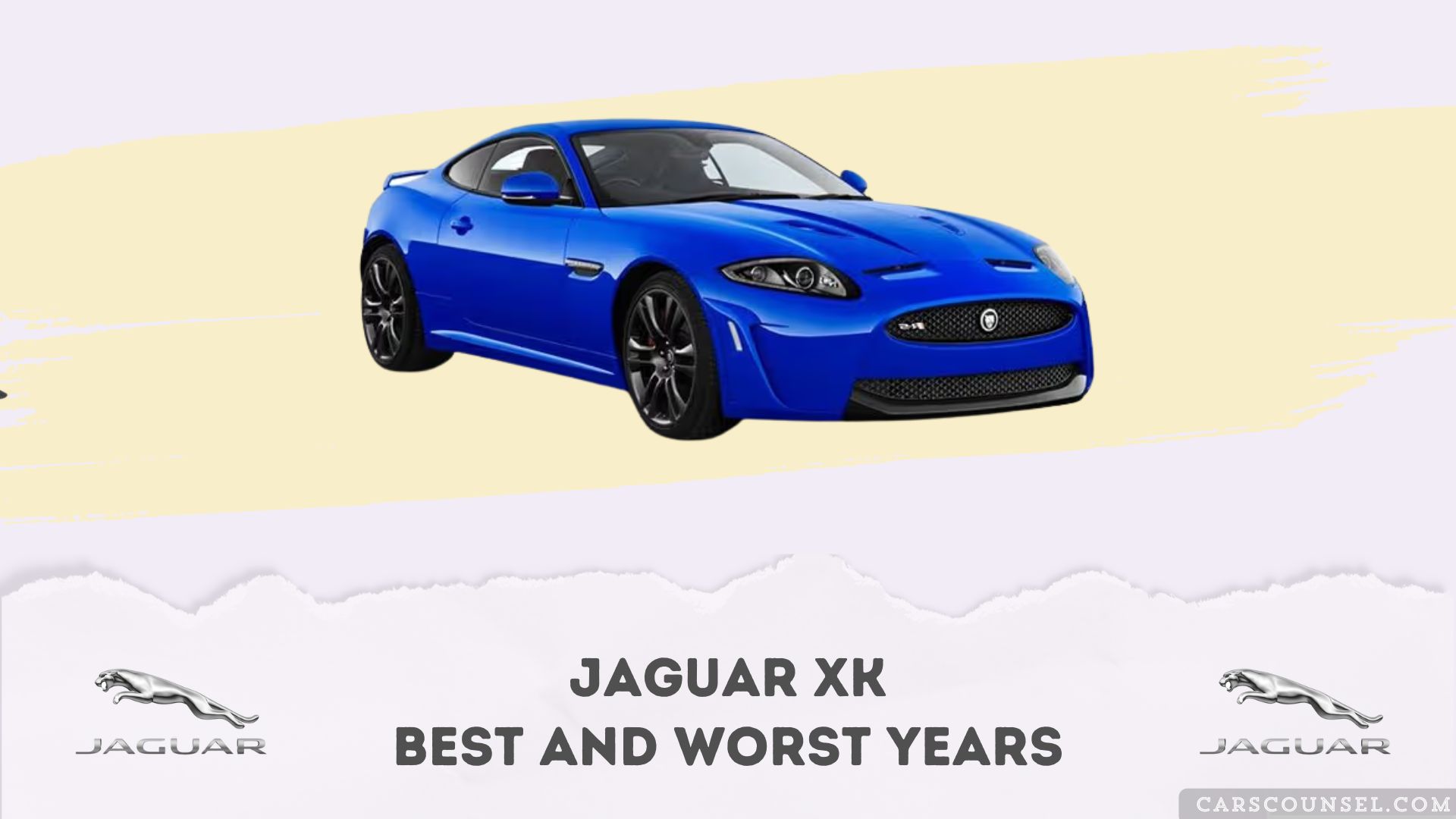
The best Jaguar XK years are 2012-2015, featuring a mature 5.0-liter V8 and updated electronics. Buyers should avoid 1997-1999 models due to severe historical engine flaws and approach 2010-2011 models carefully regarding cooling system upgrades.
These rankings are comparative, and no vintage luxury grand tourer is entirely flawless. Strict maintenance history, storage conditions, and previous ownership heavily influence long-term reliability and ownership costs for these aluminum-bodied vehicles.
Significant differences exist between the older 4.0-liter and 4.2-liter V8 engines and the modern 5.0-liter configurations. The transition to the aluminum X150 platform also introduced new electrical and rotary shifter complexities.
Quick Navigation
Best and Worst Jaguar XK Years at a Glance
| Model Year Range | Verdict | Main Reason | Buyer Guidance |
|---|---|---|---|
| 1997-1999 | Avoid | Nikasil cylinder liners and early timing chain flaws | Verify engine history |
| 2000-2003 | Approach Carefully | Age-related cooling components and early electronics | Inspect water pump and suspension |
| 2004-2006 | Best Older Choice | ZF 6-speed transmission and facelift refinements | Top choice for X100 generation |
| 2007-2009 | Good With Inspection | Rotary gear selector and early X150 electronics | Test shifter and scan for codes |
| 2010-2011 | Approach Carefully | Early 5.0L V8 plastic water pump impeller | Verify metal water pump upgrade |
| 2012-2015 | Best Choice | Facelift, mature 5.0L V8, and updated interior | Best overall choice for modern buyers |
Key Takeaways
- The 2012-2015 models represent the best choices, pairing the mature 5.0-liter V8 with the updated X150 interior and infotainment.
- Avoid 1997-1999 models due to the historical Nikasil cylinder liner degradation and early timing chain tensioner failures.
- The 2010-2011 models require strict verification of the plastic water pump impeller upgrade to prevent catastrophic overheating.
- The X150 generation features an aluminum body that resists traditional rust but requires careful inspection for galvanic corrosion.
- Always verify the vehicle identification number for open recalls and insist on a pre-purchase inspection by a Jaguar specialist.
How We Evaluated the Jaguar XK Model Years
Our analysis reviews official recalls, manufacturer service campaigns, technical service bulletins, and long-term ownership data. We weigh the severity of mechanical failures against repair costs and daily usability.
Complaints are not failure rates, and a recall does not automatically make a year unreliable. Recent models have less ownership history, so “best” means comparatively stronger.
Best Jaguar XK Years
2012-2015 (Late X150 Generation)
The final production years benefit from a comprehensive facelift and a thoroughly sorted 5.0-liter V8 engine. The updated interior features a much more responsive touchscreen infotainment system and improved material quality.
These grand tourers offer an excellent blend of daily comfort and effortless highway passing power. Buyers should verify that the active exhaust valves operate correctly and that all software updates have been applied.
2004-2006 (Late X100 Generation)
The final first-generation models introduced the excellent ZF six-speed automatic transmission and a refreshed exterior design. The 4.2-liter V8 engine is generally robust, avoiding the severe flaws of the earlier 4.0-liter units.
These classics offer a more analog driving experience. Buyers must budget for age-related suspension bushings, rubber cooling hoses, and regular fluid maintenance.
Best Year by Buyer Type
Best Overall
The 2012-2015 models provide the best balance of modern technology, daily comfort, and reliable supercharged or naturally aspirated V8 performance for most used luxury coupe buyers.
Best Enthusiast Choice
The 2004-2006 XKR models offer classic supercharged V8 whine and engaging driving dynamics for dedicated collectors seeking a vintage grand tourer.
Years to Approach Carefully
2010-2011 (Early 5.0L V8 Era)
These inaugural 5.0-liter models suffer from a fragile plastic water pump impeller that can shatter, causing sudden overheating and catastrophic engine failure. Upgrading to the revised metal impeller is mandatory.
Early 5.0-liter engines also require inspection of the timing chain guides. Buyers must demand physical proof of these expensive preventative upgrades before purchasing.
2000-2003 (Early X100 Era)
While avoiding the worst Nikasil issues, these early 2000s models still suffer from aging plastic cooling components and early electronic gremlins. The five-speed automatic transmission is also less refined than later units.
A thorough inspection of the entire cooling system and suspension is required. Budget for immediate age-related maintenance upon purchase.
2007-2009 (Early X150 Era)
The inaugural aluminum-bodied models introduced a complex rotary gear selector knob that frequently gets stuck or fails electronically. Early infotainment systems are also notoriously slow and prone to freezing.
Buyers should test the rotary shifter repeatedly and ensure the vehicle has been scanned for dormant electrical fault codes.
Worst Jaguar XK Years
1997-1999 (Early 4.0L V8 Era)
The earliest models are plagued by Nikasil cylinder liner degradation, where high-sulphur fuel caused the cylinder coatings to flake off, leading to massive oil consumption and engine failure.
Additionally, the early 4.0-liter engines suffer from fragile plastic timing chain tensioners that can snap, destroying the engine. These years carry the highest risk of catastrophic mechanical failure.
Jaguar XK Reliability by Generation
First Generation (1997-2006)
The original X100 generation brought classic grand touring styling and the AJ-V8 engine. Early years struggled with severe internal engine flaws, but the 2004 refresh introduced a much more reliable powertrain and transmission.
Second Generation (2007-2015)
The X150 generation introduced a bonded aluminum chassis and advanced electronics. While early models suffered from rotary shifter and cooling system issues, the 2012 facelift resulted in a highly dependable and modern luxury tourer.
Common Jaguar XK Problems
Water Pump Impeller Failure
Affecting the 2010-2011 5.0-liter V8 models, the original plastic water pump impeller can shatter under stress. This causes immediate coolant loss and overheating, requiring an updated metal replacement to prevent engine destruction.
Timing Chain Tensioner Wear
Found on the early 4.0-liter and some early 5.0-liter engines, the plastic timing chain guides and tensioners become brittle over time. If they fail, the timing chain jumps, resulting in complete engine failure.
Rotary Gear Selector Faults
Affecting the 2007-2009 X150 models, the electronic rotary shift knob can fail to raise or lower, or become stuck in gear. Repairing this requires replacing the entire shifter assembly or updating the software.
Aluminum Body Galvanic Corrosion
While the aluminum body resists traditional rust, it is susceptible to galvanic corrosion if steel panels or fasteners contact the aluminum without proper isolation. Inspect panel gaps and bubbled paint around edges.
What to Check Before Buying a Used Jaguar XK
- Verify the VIN for open recalls and software update completion.
- Demand proof of the updated metal water pump impeller on 2010-2011 5.0L V8 models.
- Listen for a rattling noise on cold starts, indicating timing chain or tensioner wear.
- Test the rotary gear selector knob to ensure it raises, lowers, and shifts smoothly.
- Inspect the aluminum bodywork for signs of galvanic corrosion or poorly repaired impact damage.
- Arrange a pre-purchase inspection with a certified British automotive specialist.
Related Buying Guides
- Jaguar F-Type best and worst years – Direct sports car successor for enthusiasts prioritizing raw performance and track dynamics over grand touring comfort.
- Jaguar XJ best and worst years – Full-size luxury flagship alternative for buyers requiring maximum rear-seat space and executive presence.
- Jaguar XF best and worst years – Sports sedan alternative for buyers needing four doors and daily practicality without sacrificing driving engagement.
Frequently Asked Questions
Which Jaguar XK year is most reliable?
The 2012-2015 models offer the strongest reliability records. They benefit from the mature 5.0-liter V8 and updated infotainment, avoiding the severe flaws of earlier engines and early X150 electronics.
Does the Jaguar XK have engine problems?
The 1997-1999 models are prone to catastrophic Nikasil cylinder liner and timing chain failures. The 2010-2011 models require a water pump upgrade. Later 5.0-liter and 4.2-liter engines are generally robust.
Is the Jaguar XK expensive to maintain?
Yes. While mechanically engaging, luxury components, aluminum bodywork, and specialized British powertrains require dedicated specialist servicing compared to mainstream luxury coupes.
Why was the Jaguar XK discontinued?
Jaguar discontinued the XK after the 2015 model year. The brand shifted its focus toward the F-Type sports car and its growing lineup of luxury SUVs and sedans.
Are there any common cooling system issues?
Yes. The plastic water pump impellers on early 5.0-liter V8 models are prone to shattering. This leads to sudden coolant loss and requires immediate replacement with an updated metal part.
Is the XK a good daily driver?
Yes, especially the 2012-2015 models. They offer an excellent blend of quiet luxury, comfortable seating, and effortless V8 performance for daily commuting and long-distance highway touring.
Choosing the Right Jaguar XK Model Year
Choosing the right Jaguar XK requires paying close attention to the engine configuration and generation. The 2012-2015 models provide the most secure and refined ownership experience for modern luxury buyers.
Buyers must carefully evaluate 2010-2011 examples due to the severe water pump impeller risks. Avoiding the 1997-1999 models is mandatory to prevent catastrophic engine failures.
Before purchasing, verify the VIN for open recalls and hire a specialist for a thorough inspection. Knowing which models stand out ensures driving satisfaction rather than severe financial consequences.

