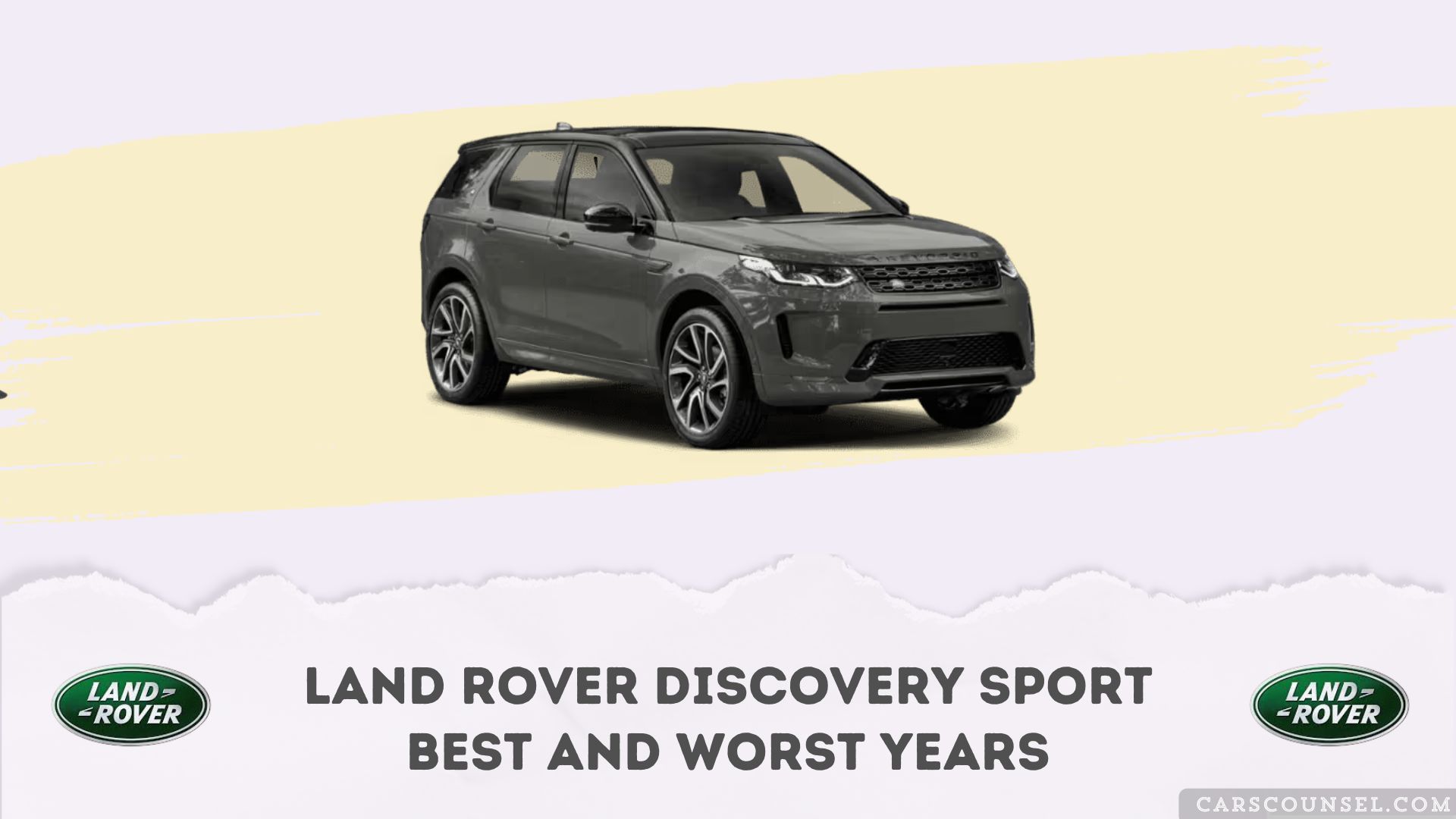
The best Land Rover Discovery Sport years are the 2018–2019 models, which benefit from the updated Ingenium engine, though they still require strict timing chain inspections. Buyers should avoid the 2015–2017 models due to severe EcoBoost engine coolant intrusion and timing chain failures.
These rankings are comparative, and no used luxury compact SUV is flawless. Long-term reliability depends heavily on meticulous maintenance, recall completion, and avoiding deferred repairs.
Meaningful differences exist between the early Ford-sourced engines, the later JLR Ingenium powertrains, and the recent mild-hybrid systems. The 2.2L diesel mentioned in some global reviews was never sold in the United States.
Quick Navigation
Best and Worst Land Rover Discovery Sport Years at a Glance
| Model Year or Range | Verdict | Main Reason | Buyer Guidance |
|---|---|---|---|
| 2015–2017 | Avoid | EcoBoost coolant intrusion, timing chain | Skip these early models |
| 2018–2020 | Approach Carefully | Ingenium timing chain, electrical quirks | Verify timing chain service |
| 2021–2025 | Too New to Judge | MHEV/PHEV complexity, limited data | Monitor long-term reliability |
Key Takeaways
- The 2018–2019 models are the comparatively stronger choices, provided the Ingenium timing chain has been inspected or replaced.
- Avoid the 2015–2017 models due to the Ford 2.0L EcoBoost engine’s notorious coolant intrusion and timing chain defects.
- The 2.2L diesel engine was never offered in the U.S. market; all domestic models use a 2.0L turbocharged four-cylinder.
- Recent 2021–2025 mild-hybrid and plug-in hybrid models lack sufficient long-term ownership data.
- Always verify the VIN for open recalls, including panoramic roof bonding and airbag inflator campaigns.
How We Evaluated the Land Rover Discovery Sport Model Years
Our analysis examines official safety recalls, government investigations, and consumer complaint patterns across the Discovery Sport’s production run. We also weigh powertrain changes, transmission reliability, and the impact of complex electrical architectures.
Consumer complaints are not confirmed defects or failure rates. A recall does not automatically make a vehicle unreliable, but recurring powertrain flaws require specialized diagnostic equipment and meticulous care.
Best Land Rover Discovery Sport Years
2018–2019: Approach Carefully
The 2018 and 2019 models transitioned to JLR’s in-house 2.0L Ingenium engine, replacing the Ford-sourced EcoBoost. This resolved the severe coolant intrusion issue that plagued earlier years.
However, the Ingenium engine is known for timing chain stretch and failure. Buyers must verify that the timing chain has been inspected or replaced with the updated heavy-duty components. Electrical gremlins in the InControl infotainment system also remain common.
Best Year by Buyer Type
Best Modern Alternative: The 2020+ mild-hybrid models offer updated styling and improved fuel economy, but they currently earn a Too New to Judge verdict due to the added complexity of the 48-volt electrical system and limited long-term data.
Years to Approach Carefully
2018–2020: Approach Carefully
While the Ingenium engine avoids the coolant intrusion flaws of its predecessor, it introduces its own timing chain vulnerabilities. The ZF 9-speed automatic transmission can also exhibit hesitant shifting and software-related jerkiness.
Purchase only if a specialized pre-purchase inspection confirms the timing chain is quiet on cold starts and all software updates have been applied by an authorized dealer.
Worst Land Rover Discovery Sport Years
2015–2017: Avoid
The inaugural U.S. model years are powered by the Ford-derived 2.0L EcoBoost engine. This specific engine is notorious for a fatal design flaw where coolant leaks past the cylinder head liner into the combustion chamber, causing catastrophic engine failure.
Additionally, the timing chain is located at the rear of the engine, making replacement a highly expensive engine-out procedure. Combined with early airbag inflator recalls, buyers researching years to avoid should skip these early models entirely.
Land Rover Discovery Sport Reliability by Generation
First Generation (2015–Present)
Built on the JLR D8 platform, the Discovery Sport shares its underlying architecture with the Land Rover Evoque. While this provides excellent off-road capability for a compact SUV with standard four-wheel drive, it also means both models share similar electrical and powertrain vulnerabilities.
The transition from Ford powertrains to JLR Ingenium engines in 2018 marked a significant shift, but neither setup has proven entirely bulletproof. The standard Land Rover Discovery offers more space but shares similar complex air suspension and electrical quirks in its higher trims.
Common Land Rover Discovery Sport Problems
Engine Problems
The 2015–2017 Ford 2.0L EcoBoost engine suffers from coolant intrusion, leading to hydro-lock and complete engine failure. The 2018+ Ingenium engines avoid this but are prone to timing chain stretch, which can cause the engine to jump time, damaging the camshaft and crankshaft.
Additionally, turbocharger failures and oil leaks are common across all model years, requiring expensive specialized repairs.
Transmission Problems
The ZF 9-speed automatic transmission is used across all years. Owners frequently report hesitant acceleration, rough shifting, and software-related jerkiness. While rarely catastrophic, the transmission requires regular fluid services and software updates to operate smoothly.
Electrical Problems
The InControl infotainment system and digital instrument clusters are prone to freezing, rebooting, and complete failure. The complex wiring harnesses and numerous control modules make electrical diagnostics time-consuming and expensive.
What to Check Before Buying a Used Land Rover Discovery Sport
Verify the VIN to ensure all safety recalls, including panoramic roof bonding and occupant classification systems, are completed. Listen carefully for a rattling noise from the timing chain on a cold start.
Inspect the coolant reservoir for low levels or signs of contamination, which could indicate early intrusion issues on 2015–2017 models. Test the 9-speed transmission for smooth shifting and ensure the infotainment system operates without freezing.
Related Buying Guides
- Land Rover Evoque best and worst years: A stylish platform sibling that shares the same D8 architecture, Ingenium engines, and timing chain vulnerabilities.
- Land Rover Discovery best and worst years: A larger, three-row alternative for families needing maximum passenger space and advanced off-road capability.
- Land Rover LR3 years to avoid: A classic off-road alternative for buyers wanting traditional Land Rover capability and V8 power.
- Land Rover Range Rover best and worst years: A flagship luxury alternative for buyers prioritizing supreme ride comfort and high-end bespoke materials over compact dimensions.
Frequently Asked Questions
What is the most reliable Land Rover Discovery Sport year?
The 2018 and 2019 models are comparatively stronger, featuring the updated Ingenium engine. However, they still require strict timing chain inspections and do not earn a flawless reliability rating.
Did the US market get the 2.2L diesel Discovery Sport?
No, the 2.2L diesel engine was never sold in the United States. All U.S.-market Discovery Sport models use a 2.0L turbocharged four-cylinder gasoline engine.
Why are 2015-2017 Discovery Sports considered unreliable?
These years use the Ford-derived 2.0L EcoBoost engine, which is notorious for coolant intrusion into the cylinders. This flaw can cause catastrophic engine failure and requires an expensive replacement.
Do Land Rover Discovery Sports have timing chain problems?
Yes, both the early EcoBoost and later Ingenium engines suffer from timing chain issues. The EcoBoost chain is located at the rear of the engine, making replacement an expensive engine-out procedure.
Is the Land Rover Discovery Sport a good daily driver?
A well-maintained 2018 or newer model can serve as a comfortable daily driver with excellent visibility and off-road capability. However, buyers must accept the reality of expensive European luxury maintenance costs.
What should I look for when buying a used Discovery Sport?
Prioritize examples with a flawless dealer service history. Listen for timing chain rattle on cold starts, check for coolant intrusion signs on early models, and verify all software updates and safety recalls are completed.
Which Land Rover Discovery Sport Year Should You Buy?
Target the 2018–2019 models for the comparatively better ownership experience, provided the Ingenium timing chain has been verified. The 2020+ mild-hybrid models offer modern tech but lack long-term reliability data.
Avoid the 2015–2017 models entirely due to the severe EcoBoost coolant intrusion and timing chain defects. Always verify the VIN for open campaigns and arrange a specialized pre-purchase inspection.

