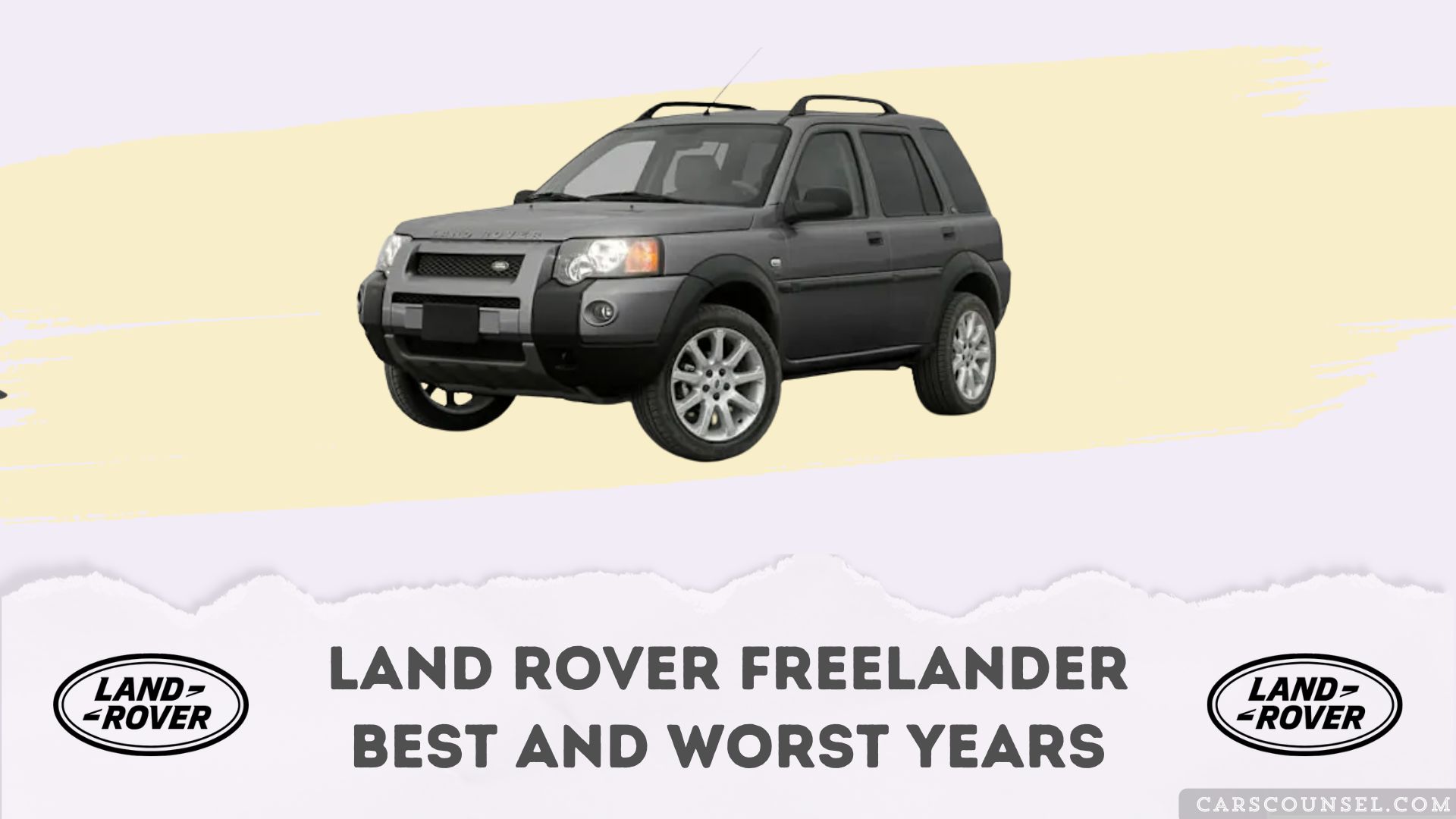
The best US-market Land Rover Freelander years are 2004 and 2005, which benefit from late-production refinements. Buyers should avoid 2002 and approach 2003 carefully due to higher rates of early drivetrain and cooling system failures.
These rankings are comparative. No Freelander year is flawless, and long-term survival depends entirely on strict maintenance of the viscous coupling and cooling system.
The US market only received the 2.5-liter V6 engine. Global markets received diesel and four-cylinder options, which have entirely different reliability profiles and parts availability.
Quick Navigation
Best and Worst Land Rover Freelander Years at a Glance
| Model Year | Verdict | Main Reason | Buyer Guidance |
|---|---|---|---|
| 2005 | Best Older Choice | Final production year with minor refinements | Verify VCU and timing belt service |
| 2004 | Good With Inspection | Post-facelift updates improve interior and exterior | Inspect IRD transfer case and cooling pipes |
| 2003 | Approach Carefully | Higher complaint volume and early electrical gremlins | Check for child lock recall completion |
| 2002 | Avoid | First US model year with prominent cooling and drivetrain flaws | Seek later years unless fully rebuilt |
Key Takeaways
- The 2005 model year is the strongest choice, provided the viscous coupling unit has been replaced.
- 2002 and 2003 models suffer from higher rates of intermediate reduction drive and cooling system failures.
- The US market exclusively received the 2.5-liter KV6 V6; the problematic 1.8-liter and diesel engines were never sold stateside.
- A failing viscous coupling will bind the drivetrain and destroy the transfer case, making strict replacement intervals mandatory.
- Always verify the timing belt and plastic coolant crossover pipes have been serviced, as failures cause catastrophic engine damage.
- Check the VIN for open recalls, particularly regarding the left rear door child lock on 2003 models.
How We Evaluated the Land Rover Freelander Model Years
Our analysis of the Land Rover Freelander focuses on official safety records, manufacturer campaigns, and verified owner complaints. We evaluate powertrain durability, drivetrain vulnerabilities, and generation-specific changes.
Complaints are not failure rates, and a recall does not automatically make a year unreliable. Recent years have less ownership history, but the Freelander was discontinued after 2005. Best means comparatively stronger, not flawless.
Best Land Rover Freelander Years
2005 (Best Older Choice)
The 2005 model year represents the final iteration of the Freelander in the United States. By this time, Land Rover had addressed several early assembly inconsistencies, making it the most refined option available.
Buyers still must verify that the viscous coupling unit has been replaced. If the previous owner neglected this component, the transfer case may already be compromised. A documented timing belt service is equally critical for this interference engine.
2004 (Good With Inspection)
The 2004 model year introduced a mild facelift with updated interior materials and exterior lighting. These updates improved daily usability, though the underlying mechanical architecture remained unchanged.
This year earns a cautious recommendation only if the drivetrain has been properly maintained. Inspect the transfer case for whining noises and ensure the plastic coolant pipes have been upgraded to metal replacements.
Best Year by Buyer Type
Best Overall
The 2005 model year offers the most sorted driving experience. It remains a niche classic SUV, but buyers must budget for immediate preventative maintenance upon purchase.
Best Budget Option
The 2004 model year is often priced lower than the final year. It can serve as a capable project vehicle for enthusiasts willing to tackle the required cooling system and drivetrain upgrades.
Years to Approach Carefully
2003 (Approach Carefully)
The 2003 model year sits in the middle of the US production run. It avoids some first-year assembly flaws but still suffers from the same fundamental viscous coupling vulnerabilities.
Additionally, this year was subject to a specific recall regarding the left rear door child lock. Buyers must verify that this safety campaign was completed and that the window regulators operate smoothly.
Worst Land Rover Freelander Years
When evaluating the years to avoid, the 2002 model year stands out.
2002 (Avoid)
The 2002 model year marked the Freelander’s debut in the United States. First-year imports frequently exhibited severe cooling system failures, including cracking plastic crossover pipes that led to blown head gaskets.
The intermediate reduction drive units on early models were also highly susceptible to premature destruction. Unless a specific example has a verifiable history of complete drivetrain and engine rebuilding, buyers should seek later years.
Land Rover Freelander Reliability by Generation
The US market only received the first-generation Land Rover Freelander, which was built on a unibody platform with a transverse engine layout. This architecture differed significantly from the body-on-frame designs of larger models.
While it offered car-like handling, the complex all-wheel-drive system proved fragile. The Freelander was discontinued after 2005 and eventually replaced by the LR2, which utilized an entirely different Volvo-derived platform. Enthusiasts looking for traditional off-road capability often prefer the Land Rover Defender instead.
Common Land Rover Freelander Problems
Drivetrain and VCU Failures
The most critical flaw affecting all US-market Freelanders is the viscous coupling unit. When this component seizes due to age or neglect, it binds the drivetrain and destroys the intermediate reduction drive and rear differential.
Cooling System and Head Gasket Issues
The 2.5-liter KV6 engine uses plastic coolant crossover pipes that become brittle and crack. This leads to sudden coolant loss, overheating, and catastrophic head gasket failure. Upgrading to aluminum pipes is a mandatory preventative measure.
Timing Belt Failures
The KV6 is an interference engine. If the timing belt snaps or jumps timing due to a failing tensioner, the pistons will strike the valves, requiring a complete engine replacement.
Electrical and ABS Gremlins
Owners frequently report failing window regulators, erratic dashboard warning lights, and ABS module failures. These issues are often caused by poor grounding or water intrusion into the wiring harnesses.
Repair-Cost Overview
| Problem | Commonly Affected Years | Approximate Repair Range | Important Notes |
|---|---|---|---|
| Viscous Coupling Unit | 2002–2005 | $300 – $500 | Must be replaced every 60,000 miles to save the transfer case |
| IRD Transfer Case | 2002–2005 | $1,500 – $2,500 | Often destroyed by a seized viscous coupling |
| Timing Belt & Water Pump | 2002–2005 | $800 – $1,200 | Critical interference engine service |
| Coolant Crossover Pipes | 2002–2005 | $200 – $400 | Upgrade to aluminum to prevent head gasket failure |
Repair costs vary significantly by region, labor rate, and parts choice. Independent specialists familiar with Rover V6 engines are often more affordable than franchised dealerships.
What to Check Before Buying a Used Land Rover Freelander
- Test the viscous coupling for proper resistance and rotational slip.
- Inspect the intermediate reduction drive fluid for metal shavings or whining noises.
- Verify the plastic coolant pipes have been replaced with aluminum upgrades.
- Confirm the timing belt and tensioners were replaced within the last 60,000 miles.
- Scan for ABS and traction control warning lights.
- Check the VIN for open recalls, including the 2003 child lock campaign.
- Arrange an independent inspection by a specialist who understands Rover drivetrains.
Related Buying Guides
- Land Rover Discovery 4 best and worst years: A larger, more capable alternative for buyers needing three rows of seating.
- Land Rover LR4 best and worst years: The direct successor to the Discovery 4, offering modernized V8 power and refined electronics.
- Land Rover LR3 years to avoid: The predecessor to the LR4, which shares similar air suspension vulnerabilities that buyers must inspect.
Frequently Asked Questions
What is the best year for a used Land Rover Freelander?
The 2005 model year is the strongest choice for US buyers. It represents the final production year with the most factory refinements, though strict drivetrain maintenance remains mandatory.
Why did Land Rover stop selling the Freelander in the US?
Land Rover discontinued the US Freelander after 2005 due to declining sales and reliability concerns. It was eventually replaced by the LR2, which utilized a completely different platform and powertrain.
What causes the Freelander IRD transfer case to fail?
The intermediate reduction drive usually fails because the viscous coupling seizes. This binds the front and rear axles together, creating immense mechanical stress that strips the internal gears.
Did the US market get the Freelander diesel?
No. The United States only received the 2.5-liter KV6 gasoline V6. The diesel and 1.8-liter four-cylinder engines mentioned in global guides were never officially imported to North America.
How often should the Freelander VCU be replaced?
The viscous coupling unit should be replaced every 60,000 miles or six years. Neglecting this relatively inexpensive part will inevitably lead to catastrophic transfer case and differential failures.
Is the 2.5-liter KV6 engine reliable?
The KV6 engine is generally smooth but vulnerable to cooling system failures. If the plastic coolant pipes are not upgraded to aluminum, the engine is highly prone to overheating and blown head gaskets.
Choosing the Right Land Rover Freelander Model Year
The 2005 model year remains the most sensible choice for US buyers seeking a Freelander. However, this compact SUV demands an owner who is committed to rigorous, preventative maintenance.
Avoid the 2002 debut year unless it has been completely rebuilt. Always verify the condition of the viscous coupling and cooling system before purchasing. An independent inspection is essential to avoid severe financial risk.

