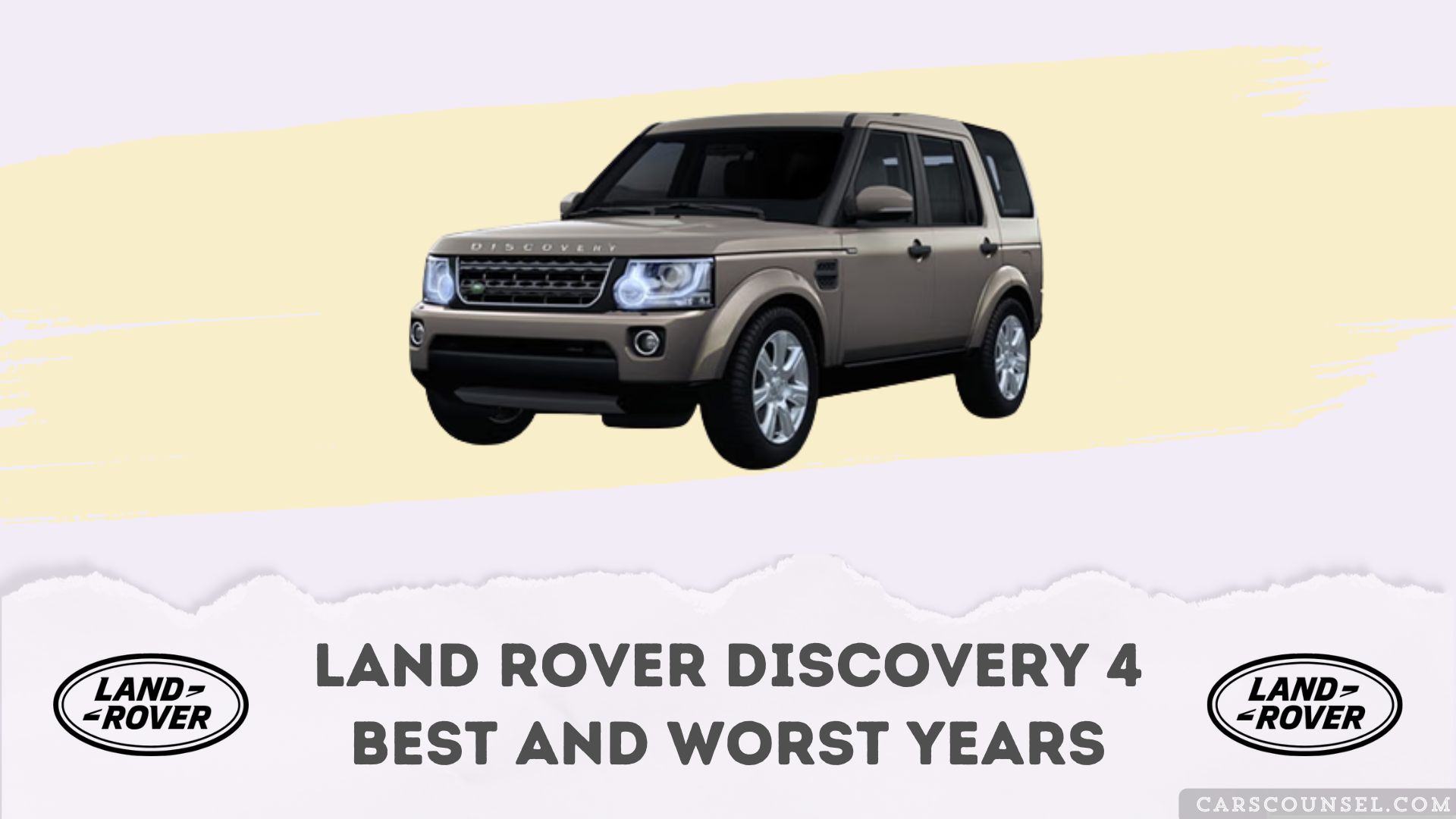
The best U.S.-market Land Rover LR4 (globally known as the Discovery 4) model years are 2013 and 2016. These years represent the most refined versions of their respective powertrains. Buyers should approach 2010 to 2012 models carefully due to a critical coolant pipe defect.
Reliability rankings are comparative, and no luxury vehicle from this era is flawless. Long-term dependability relies heavily on strict maintenance, rust prevention, and verifying that known design flaws have been corrected by previous owners.
The U.S. market never received the diesel engines found in global Discovery 4 models. Instead, the LR4 features a 5.0L V8 (2010–2013) or a 3.0L supercharged V6 (2014–2016), requiring different inspection priorities for each era.
Quick Navigation
Best and Worst Land Rover LR4 (Discovery 4) Years at a Glance
| Model Year | Verdict | Main Reason | Buyer Guidance |
|---|---|---|---|
| 2010–2012 | Good With Inspection | 5.0L V8 coolant crossover pipe failure risk | Verify the plastic pipe was replaced with an updated metal part. |
| 2013 | Best Older Choice | Final year of the 5.0L V8 with most bugs resolved | Confirm coolant pipe update and inspect air suspension. |
| 2014–2015 | Good Choice | Early 3.0L supercharged V6 with minor teething issues | Listen for supercharger isolator rattle and check for coolant leaks. |
| 2016 | Best Late-Generation Choice | Final production year with the most refined 3.0L V6 | Check service history and verify all electronic modules are dry. |
Key Takeaways
- The 2013 and 2016 model years are the strongest choices for U.S. buyers.
- Global diesel engines were not sold in the U.S.; the LR4 uses gasoline V8 and V6 engines.
- The 2010–2012 models require strict verification of the coolant crossover pipe repair.
- Air suspension compressors and sunroof drain leaks are common across all years.
- Always check the VIN for open recalls and arrange an independent pre-purchase inspection.
How We Evaluated the Land Rover LR4 (Discovery 4) Model Years
Our analysis focuses on U.S.-market specifications, NHTSA records, and verified owner reports for this SUV. We separate genuine mechanical defects from standard luxury maintenance costs.
Complaints are not failure rates, and a recall does not automatically make a year unreliable. Because these vehicles are now older, long-term exposure and maintenance history matter more than low initial complaint totals. Best means comparatively stronger, not flawless.
Best Land Rover LR4 (Discovery 4) Years
2013: Best Older Choice
The 2013 model year is the final iteration of the 5.0L naturally aspirated V8. By this year, Land Rover had addressed many early electrical gremlins from the 2010 launch.
The primary concern remains the plastic coolant crossover pipe, but many 2013 examples have already received the updated aluminum replacement part. If verified, this year offers excellent capability.
2016: Best Late-Generation Choice
As the final year of the LR4 in the U.S. market, the 2016 model benefits from several years of refinement to the 3.0L supercharged V6 and the ZF 8-speed transmission.
While complex, it represents the most sorted version of this generation. Buyers gain the most mature infotainment and safety features available before the platform was replaced.
Best Year by Buyer Type
- Best Overall: 2016 (Most refined, final production year)
- Best Budget Option: 2013 (Lower depreciation, provided the coolant pipe is fixed)
- Best Enthusiast Choice: 2013 (Naturally aspirated 5.0L V8 sound and throttle response)
Years to Approach Carefully
2010–2012: Good With Inspection
These early 5.0L V8 years are notorious for the plastic coolant crossover pipe located in the engine valley. This part becomes brittle, cracks, and dumps coolant directly onto the engine and electronics.
This can cause catastrophic failure. Only buy these years if you have documented proof that the updated metal pipe was installed by a previous owner or dealership.
2014–2015: Good Choice
These years introduced the 3.0L supercharged V6 and the 8-speed automatic transmission. While generally reliable, early versions of this engine can suffer from supercharger isolator rattle and water pump failures.
They are solid choices, but require a careful cold-start inspection to listen for unusual noises from the engine bay.
Worst Land Rover LR4 (Discovery 4) Years
We do not assign a strict “Avoid” verdict to any LR4 year, as proper maintenance can mitigate most risks. However, the 2010 to 2012 models come closest to this category if the coolant crossover pipe has not been updated.
The financial risk of an ignored coolant leak on the 5.0L V8 is severe, often requiring complete engine replacement. If a pre-purchase inspection reveals the original plastic pipe is still in place, walk away or negotiate the repair cost.
Land Rover LR4 (Discovery 4) Reliability by Generation
The U.S.-market LR4 spans a single generation from 2010 to 2016, representing a heavy refresh of the previous LR3 platform.
- 2010–2013 (5.0L V8 Era): Features a powerful naturally aspirated V8. Reliability is heavily tied to the cooling system and timing chain guides.
- 2014–2016 (3.0L SC V6 Era): Land Rover switched to a smaller, supercharged V6 to improve fuel economy. This era is generally more reliable but introduces supercharger-specific maintenance needs.
For buyers looking at newer alternatives, the subsequent Land Rover Discovery generation introduced a lighter aluminum architecture, though it shifted away from the utilitarian feel of the LR4.
Common Land Rover LR4 (Discovery 4) Problems
Cooling System Failures (2010–2013)
The plastic coolant crossover pipe on the 5.0L V8 is a major failure point. When it cracks, coolant leaks into the engine valley, damaging wiring harnesses and potentially hydro-locking the engine. The fix requires replacing the plastic part with an updated aluminum component.
Air Suspension Leaks (All Years)
The LR4 relies on an adjustable air suspension system. Air struts and the compressor frequently fail as rubber components age and dry out. Symptoms include the vehicle sagging overnight or a suspension fault warning on the dash.
Sunroof Drain Clogs (All Years)
The panoramic sunroof drains can clog with debris. When this happens, water backs up and leaks into the cabin, often pooling in the rear right quarter panel where the main battery and sensitive electronic modules are housed.
Supercharger Isolator Rattle (2014–2016)
The 3.0L supercharged V6 can develop a rattling noise at idle or during cold starts. This is typically caused by the supercharger isolator spring wearing out. While not immediately catastrophic, it requires specialized service to prevent long-term damage.
Repair-Cost Overview
| Problem | Commonly Affected Years | Approximate Repair Range | Important Notes |
|---|---|---|---|
| Coolant Crossover Pipe | 2010–2013 | $1,200 – $1,800 | Must use updated aluminum part. |
| Air Suspension Compressor | 2010–2016 | $800 – $1,400 | Aftermarket options are available and cheaper. |
| Sunroof Drain Clearance | 2010–2016 | $150 – $300 | Critical to prevent module destruction. |
| Supercharger Isolator | 2014–2016 | $1,500 – $2,500 | Labor-intensive repair requiring specialized tools. |
Repair costs vary significantly by region, labor rate, parts choice, and whether you use a dealership or an independent Land Rover specialist. Always get multiple quotes for major repairs.
What to Check Before Buying a Used Land Rover LR4 (Discovery 4)
- Verify the VIN for open recalls and manufacturer service campaigns.
- Inspect the engine valley for crusty green or orange coolant residue.
- Confirm the coolant crossover pipe has been updated to the metal version (2010–2013).
- Test the air suspension by raising and lowering the vehicle through all ride heights.
- Check the rear right quarter panel carpet and battery compartment for moisture.
- Listen for supercharger rattle during a cold start (2014–2016).
- Review service records for regular oil changes and differential fluid services.
- Arrange an independent pre-purchase inspection with a Land Rover specialist.
Related Buying Guides
- Land Rover Defender best and worst years: Explore the rugged, body-on-frame alternative for buyers who prioritize off-road durability over family passenger space.
- Land Rover Discovery Sport best and worst years: A smaller, more fuel-efficient unibody alternative for buyers who do not need the LR4’s maximum towing capacity.
- Land Rover Freelander best and worst years: A compact, discontinued alternative for buyers seeking a smaller footprint and lower running costs than the full-size LR4.
- Land Rover Range Rover best and worst years: The flagship luxury option for buyers willing to accept higher maintenance costs for premium refinement.
Frequently Asked Questions
What is the best year for the Land Rover LR4?
The 2016 model year is the best overall choice, offering the most refined 3.0L supercharged V6. For buyers preferring the 5.0L V8, the 2013 model year is the strongest older option.
Did the U.S. get the Discovery 4 diesel?
No. The U.S. market only received the gasoline-powered LR4, featuring either the 5.0L V8 or the 3.0L supercharged V6. The TDV6 and SDV6 diesel engines were not sold in the United States.
Why are 2010 to 2012 models risky?
These years use a plastic coolant crossover pipe on the 5.0L V8 that becomes brittle and cracks. If it fails, coolant floods the engine valley, potentially destroying the engine and electrical modules.
Is the LR4 expensive to maintain?
Yes. The LR4 is a heavy, complex luxury SUV with specialized air suspension and supercharged components. Routine maintenance and unexpected repairs cost significantly more than average mainstream SUVs.
What causes electrical issues in the LR4?
Many severe electrical failures stem from clogged sunroof drains. Water leaks into the rear right quarter panel, corroding the battery terminals and the main electronic control modules housed in that compartment.
Can the LR4 tow heavy trailers?
Yes. When properly equipped, the LR4 has a maximum towing capacity of 7,716 pounds. Ensure the transmission and differential fluids are serviced regularly if the vehicle has a history of heavy towing.
Which Land Rover LR4 (Discovery 4) Year Should You Buy?
For U.S. buyers, the 2016 model year offers the most sorted and reliable experience, benefiting from late-generation refinements to the 3.0L supercharged V6. If you prefer the older 5.0L V8, target the 2013 model year.
Regardless of the year, avoid any 2010–2012 example that still has the original plastic coolant pipe. Always verify the air suspension operation, check for sunroof water leaks, and insist on an independent inspection before purchasing.