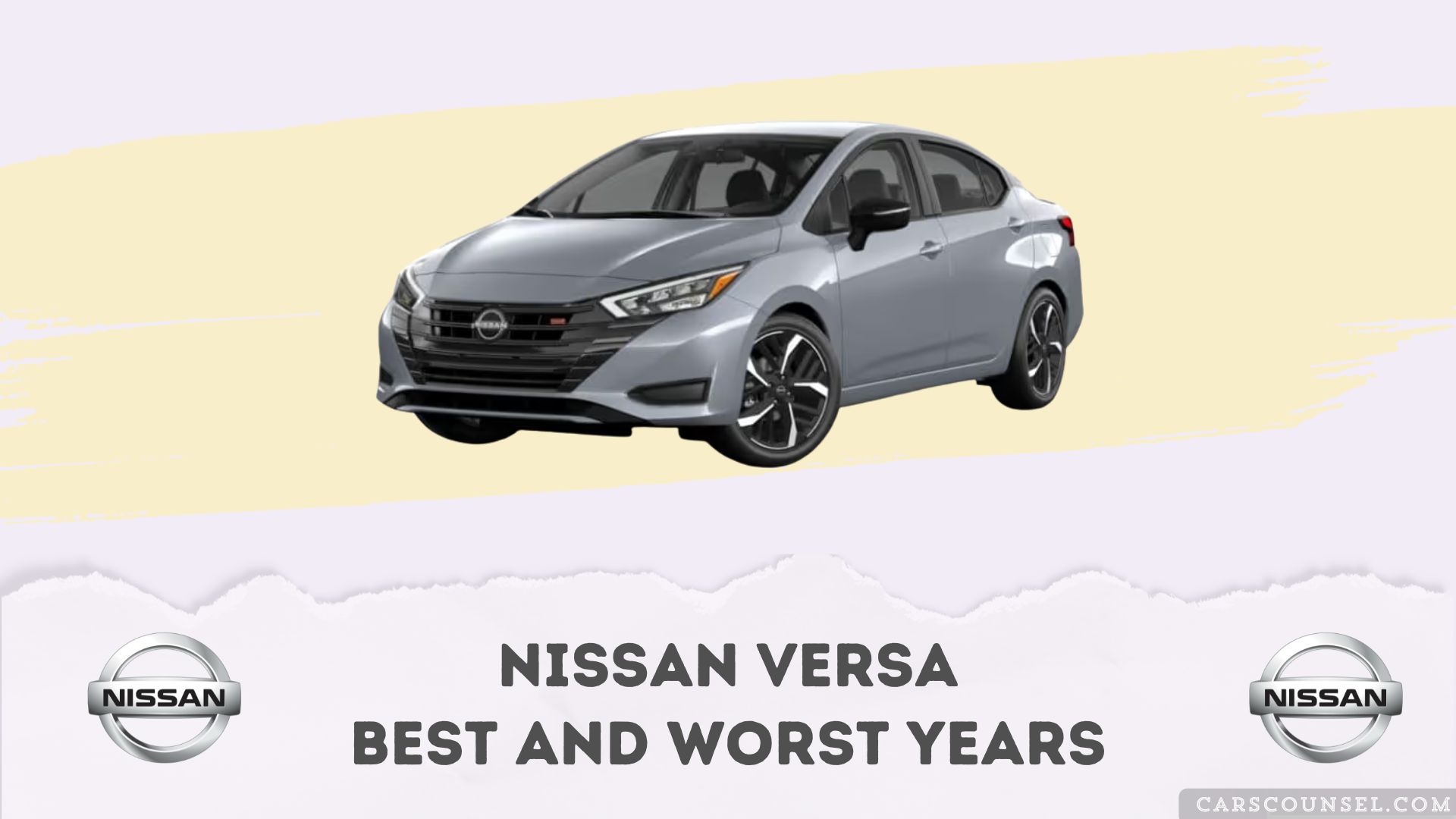
The best Nissan Versa years are 2010, 2011, and 2021 through 2024. These models offer proven reliability and modern safety features. Buyers should strictly avoid the 2012 through 2014 model years due to widespread transmission failures and severe steering column defects.
These rankings are comparative. No used vehicle is flawless, and individual condition depends heavily on maintenance history, mileage, and environmental exposure. Always verify service records before purchasing any budget-friendly commuter car.
Reliability varies significantly by generation and transmission type. Early models with conventional automatic transmissions generally outperform early continuously variable transmissions. Later generations feature updated powertrains and standard advanced safety equipment.
Quick Navigation
Best and Worst Nissan Versa Years at a Glance
| Model Year Range | Verdict | Main Reason | Buyer Guidance |
|---|---|---|---|
| 2021–2024 | Best Choice | Modern safety tech, improved powertrain | Top pick for daily commuting |
| 2010–2011 | Best Older Choice | Conventional automatic, reliable 1.8L engine | Great budget option, inspect for rust |
| 2018–2019 | Good Choice | Late second-generation refinements | Verify CVT service history |
| 2015–2017 | Mixed | Improved styling, lingering CVT concerns | Approach carefully, demand warranty proof |
| 2012–2014 | Avoid | Widespread CVT failures, steering recalls | Strictly avoid these model years |
| 2007–2009 | Approach Carefully | Age-related wear, timing chain concerns | Require thorough independent inspection |
Key Takeaways
- The 2021 through 2024 models represent the strongest overall choices for modern commuters.
- Buyers seeking a bargain should target 2010 and 2011 models with conventional automatic transmissions.
- Strictly avoid 2012 through 2014 model years due to catastrophic transmission and steering defects.
- Continuously variable transmissions require strict adherence to fluid service intervals.
- Always check for open recalls, especially regarding Takata airbags and steering column locks.
How We Evaluated the Nissan Versa Model Years
Our analysis reviews official safety recalls, government investigations, and manufacturer service campaigns. We also track consumer complaint patterns and long-term ownership data.
Complaints are not confirmed defects, and a recall does not automatically make a vehicle unreliable. Recent models have less long-term exposure, while older models face age-related wear. Best means comparatively stronger, not flawless.
Best Nissan Versa Years
2021–2024: Best Choice
The third generation features a comprehensive suite of standard safety technology and a significantly improved powertrain. The updated continuously variable transmission operates smoothly and avoids the severe failures of earlier generations.
These models offer excellent fuel economy and modern infotainment. Long-term reliability data is still accumulating, but early ownership trends are highly favorable compared to previous redesigns.
2010–2011: Best Older Choice
Late first-generation models are exceptionally durable. These years utilize a conventional four-speed automatic transmission, completely avoiding the continuously variable transmission issues that plagued later models.
The 1.8-liter engine is robust, though buyers must inspect the timing chain and suspension components. These are ideal for buyers needing a highly affordable, basic commuter vehicle.
2018–2019: Good Choice
These late second-generation models benefit from years of manufacturing refinements. Nissan addressed many early transmission calibration issues, resulting in a smoother and more reliable driving experience.
Safety features improved, and interior materials feel more substantial. Buyers should still verify that the transmission fluid was changed on schedule to ensure long-term durability.
Best Nissan Versa Year by Buyer Type
- Best Overall: 2022 offers a mature third-generation platform with excellent standard safety features and refined transmission tuning.
- Best Budget Option: 2011 provides incredible affordability and mechanical simplicity without the risk of early continuously variable transmission failures.
- Best Modern Alternative: 2019 delivers updated styling and better technology for buyers who cannot stretch to the newest generation.
Years to Approach Carefully
2015–2017: Mixed
These mid-cycle refresh years feature updated exterior styling and improved interior quality. However, they still utilize the earlier generation of continuously variable transmissions that require meticulous maintenance.
Some owners report hesitation during acceleration. Purchase only if the previous owner can provide strict service records proving regular transmission fluid exchanges.
2007–2009: Approach Carefully
Early first-generation models are generally simple and cheap to repair. However, they suffer from age-related suspension wear and potential timing chain stretch on high-mileage examples.
Rust is also a significant concern for the exhaust system and undercarriage. An independent mechanical inspection is mandatory before purchasing any vehicle from this era.
Worst Nissan Versa Years
2012–2014: Avoid
These early second-generation years are notorious for catastrophic continuously variable transmission failures. The cost to replace the transmission often exceeds the vehicle’s total market value.
Additionally, these years were subject to massive recalls for defective steering column locks and Takata airbag inflators. The sheer volume of mechanical and safety defects makes these years strictly unadvisable.
Nissan Versa Reliability by Generation
First Generation (2007–2011)
This generation prioritized interior space and affordability. Models equipped with the manual or conventional four-speed automatic transmission are remarkably reliable. The primary concerns involve basic suspension wear and exhaust corrosion.
Second Generation (2012–2019)
Nissan introduced the continuously variable transmission to improve fuel economy. Unfortunately, early iterations suffered severe reliability issues. Later years saw incremental improvements, but the transmission remains the weakest mechanical link.
Third Generation (2020–Present)
A complete redesign brought standard automatic emergency braking and a more rigid chassis. The updated powertrain is much more robust, making this the most dependable generation for long-term daily commuting.
Common Nissan Versa Problems
Transmission Failures
Early continuously variable transmissions are prone to overheating and premature belt failure. Symptoms include severe hesitation, shuddering during acceleration, and eventual total loss of forward movement.
Steering Column Lock Issues
Many second-generation models experienced failures with the electronic steering column lock. This defect can prevent the vehicle from starting entirely and required extensive manufacturer recalls to resolve.
Timing Chain Stretch
Some first-generation 1.8-liter engines experience timing chain stretch if oil changes are neglected. This causes a rattling noise on cold starts and can lead to severe internal engine damage.
Suspension and Exhaust Wear
Older models frequently require premature replacement of front struts and sway bar links. Additionally, exhaust flanges are highly susceptible to rust, leading to loud exhaust leaks.
What to Check Before Buying a Used Nissan Versa
- Verify the vehicle identification number for any open safety recalls, especially regarding airbags and steering components.
- Review service records to confirm regular engine oil and transmission fluid changes.
- Test the transmission for shuddering, hesitation, or unusual whining noises during a prolonged test drive.
- Listen for timing chain rattle during a cold engine start.
- Inspect the undercarriage and exhaust system for severe structural rust.
- Ensure the electronic steering lock engages and disengages properly without triggering dashboard warning lights.
Related Buying Guides
- Nissan Kicks best and worst years: A practical subcompact crossover alternative for buyers needing slightly higher ground clearance and modern hatchback utility.
- Nissan Juke best and worst years: An older, quirky subcompact crossover option that shares some underlying architecture but offers a very different driving experience.
- Nissan Altima best and worst years: A midsize sedan alternative for buyers who find the Versa too small and require more highway passing power and rear legroom.
Frequently Asked Questions
Is the Nissan Versa a reliable car?
Reliability depends heavily on the model year. Third-generation models and early first-generation automatics are quite reliable, while early second-generation models suffer severe transmission defects.
What year Nissan Versa should I avoid?
Strictly avoid the 2012 through 2014 model years. These vehicles are plagued by widespread transmission failures and significant steering column safety recalls.
How long does a Nissan Versa last?
Well-maintained examples can easily reach high mileage. Longevity depends entirely on strict adherence to fluid service intervals, rust prevention, and avoiding known problematic model years.
Does the Nissan Versa have a timing belt or chain?
All Nissan Versa engines utilize a timing chain. While designed to last the life of the engine, poor maintenance can cause premature stretch and require expensive repairs.
Are Nissan Versa parts expensive?
Parts and labor are generally very affordable. The subcompact segment benefits from widespread availability and simple mechanical designs, keeping routine maintenance costs exceptionally low.
Is the Nissan Versa good for highway driving?
Older generations feel unstable and underpowered at high speeds. The third generation offers a significantly stiffer chassis and better sound insulation, making it much more capable for highway commuting.
Choosing the Right Nissan Versa Model Year
The Nissan Versa remains a staple of the affordable commuter segment, but year selection is critical. Target the 2021 through 2024 models for modern safety and refined reliability.
Budget buyers should seek out 2010 or 2011 models with conventional automatic transmissions. Strictly avoid the 2012 through 2014 model years due to catastrophic transmission and steering defects.
Always verify the vehicle identification number for open recalls. Demand complete service records and arrange an independent mechanical inspection before finalizing any purchase.

