The Lincoln Aviator is a mid-size luxury SUV produced by Ford Motor Company’s Lincoln division across two generations. The first generation ran from 2003 to 2005, followed by a 14-year hiatus, before returning with a redesigned second generation starting in 2020.
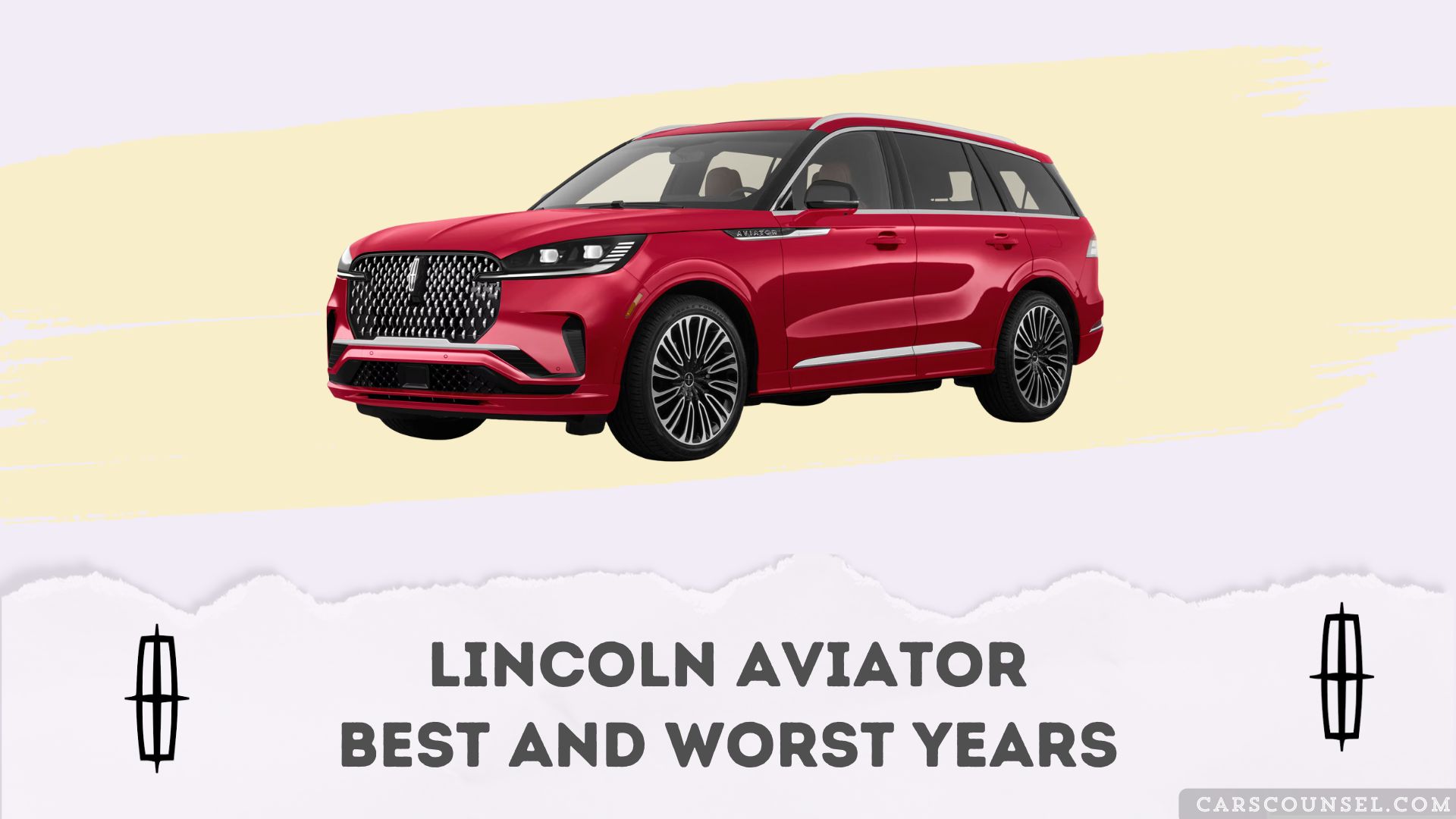
This article breaks down the best and worst model years of the Lincoln Aviator based on reliability, performance, owner complaints, and long-term dependability. Understanding which years to pursue and which to avoid can save you thousands in repair costs and frustration.
Quick Navigation
Lincoln Aviator Generational Overview
First Generation (2003-2005)
The first-generation Lincoln Aviator debuted in 2003 as a rebadged variant of the third-generation Ford Explorer. Assembled at the St. Louis Assembly plant in Hazelwood, Missouri, it featured a 4.6-liter V8 engine producing 302 horsepower and 300 lb-ft of torque.
This generation suffered from numerous reliability issues, including transmission failures, exhaust leaks, and cracked rear panels. The 2003 model year faced multiple recalls ranging from cosmetic flaws to severe mechanical problems, while the 2004 model became notorious for transmission slipping and rough idling. Production ended after just three model years due to poor sales and reliability concerns.
Second Generation (2020-Present)
The second-generation Aviator made its comeback in 2020 after a complete redesign unveiled at the 2018 New York Auto Show. Available in both traditional and plug-in hybrid models, it features a 3.0-liter twin-turbocharged V6 engine producing 400 horsepower.
Despite modern technology and luxurious interiors, the 2020 and 2021 models received poor reliability ratings from Consumer Reports, scoring just 8 out of 100. Major trouble spots included in-car electronics, climate systems, steering, suspension, power equipment, and body hardware. Later model years showed gradual improvements as Ford addressed initial launch issues.
Best Years for the Lincoln Aviator
The Lincoln Aviator’s best years come from the most recent production runs, though overall reliability remains average compared to competitors.
2023 Lincoln Aviator: The 2023 model represents the most refined version of the second generation with fewer reported issues and improved build quality. Lincoln addressed many of the electronics and climate system problems that plagued earlier years. The Carbon Edition introduced for this year added dark accents and premium paint options.
2022 Lincoln Aviator: The 2022 model year benefited from three years of production refinements and software updates that resolved many infotainment glitches. Owners reported fewer electrical system failures compared to 2020-2021 models.
2021 Lincoln Aviator: While still facing some reliability challenges, the 2021 model showed improvement over the problematic 2020 launch year. Ford implemented fixes for several early production issues, resulting in slightly better owner satisfaction ratings.
Worst Years for the Lincoln Aviator
Several model years stand out as particularly problematic and should be avoided by used car buyers.
2003 Lincoln Aviator: The inaugural year is well known for transmission issues and exhaust leaks. The 2003 model faced multiple recalls and suffered from engine misfires due to cylinder leakage, causing poor performance and unusual noises. Owners reported the vehicle suddenly shutting down while driving.
2004 Lincoln Aviator: This model year has a bad reputation for cracked rear panels and severe transmission problems. Twelve NHTSA complaints specifically addressed automatic transmission failures at an average of 55,594 miles. The gear shift selector frequently broke, preventing drivers from shifting gears, while transmission slipping caused the engine to race unexpectedly.
2005 Lincoln Aviator: The final year of first-generation production is known as a noisy vehicle with AC units that often required replacement shortly after purchase. Temperature blend door problems caused incorrect cabin temperatures, requiring replacement of the entire heater case.
2020 Lincoln Aviator: Despite being a completely redesigned model, the 2020 relaunch received the worst possible reliability rating from Consumer Reports. Major issues included malfunctioning digital gauge clusters, emergency brake engaging unexpectedly while driving, computer malfunctions triggering false crash detection, and widespread infotainment system failures.
Common Problems Across the Lincoln Aviator Lineup
Transmission Failures
Transmission problems plague both generations of the Aviator, particularly 2003-2005 models. Symptoms include slipping out of gear, rough idling, transmission noise, and complete failure. The gear shift selector breaking is a recurring complaint that prevents drivers from changing gears.
Infotainment and Radio Issues
The infotainment system represents one of the most common problems in second-generation Aviators. Radio malfunctions, frozen screens, and complete system failures occur frequently. The 2020-2023 models experienced widespread electronics issues that contributed to their poor reliability scores.
Cracked Tailgate Glass
Both generations suffer from cracked tailgate glass, with the problem appearing across multiple model years. The rear liftgate also develops cracks, particularly on 2004 models where the rear panel cracking became a well-documented issue.
Engine and Cooling System Problems
Engine misfires due to cylinder leakage cause poor performance, unusual noises, and gas smell. Water pump impeller corrosion leads to erratic engine coolant temperature and intermittent overheating. EGR system malfunctions in dusty areas cause the engine to stall due to clogged filters.
Climate Control Malfunctions
Climate system problems rank among the top trouble spots for 2020-2023 models. Broken temperature blend doors cause incorrect cabin temperatures, while AC units frequently fail and require premature replacement. The heater case often needs complete replacement to fix temperature control issues.
Electrical System Failures
Widespread electrical problems affect second-generation models, including malfunctioning digital gauge clusters while driving and computer malfunctions triggering false alarms. Emergency brake systems engage unexpectedly while driving, creating serious safety concerns.
Fuel System Issues
Fuel system problems appear across multiple model years as a recurring complaint. Spark plug failures contribute to engine performance issues, while fuel filter clogs cause drivability problems.
Power Equipment and Body Hardware
Door handles, power liftgates, and various power equipment components fail prematurely on 2020-2023 models. Body hardware issues include paint problems, trim failures, and excessive noises and leaks throughout the cabin.
Reliability Breakdown by Year
2023 Lincoln Aviator Reliability Rating
The 2023 model shows improved reliability over previous second-generation years, though it still faces recalls related to seat belt warning systems with Revel Audio Systems. Electronic issues remain present but occur less frequently than 2020-2021 models.
2022 Lincoln Aviator Reliability Rating
The 2022 Aviator benefits from production experience and software updates that addressed many infotainment glitches. Climate system problems persist but with lower frequency, while recalls for seat belt warning chimes affected 2020-2023 models equipped with Revel Audio Systems.
2021 Lincoln Aviator Reliability Rating
The 2021 model received the worst possible reliability metric from Consumer Reports, matching the problematic 2020 launch. In-car electronics, climate systems, and steering components remained major trouble spots.
2020 Lincoln Aviator Reliability Rating
The 2020 relaunch scored just 8 out of 100 in Consumer Reports’ predicted reliability assessment. Major problems included in-car electronics, climate system, steering, suspension, power equipment, body hardware, drive system, paint, trim, noises, and leaks. The Aviator ranked behind every other vehicle in its class.
2005 Lincoln Aviator Reliability Rating
The final first-generation year suffered from noisy operation and AC failures. Temperature control problems required expensive heater case replacements, while engine overheating from water pump corrosion caused reliability concerns.
2004 Lincoln Aviator Reliability Rating
The 2004 model faced 12 NHTSA complaints for automatic transmission failures at an average of 55,594 miles. Cracked rear panels became a widespread issue, while transmission slipping and gear selector failures plagued owners.
2003 Lincoln Aviator Reliability Rating
The inaugural year experienced transmission issues, exhaust leaks, and multiple recalls. Engine misfires from cylinder leakage caused poor performance, while vehicles suddenly shut down during operation. The 2003 model set a poor reliability precedent for the entire first generation.
Warranty & Ownership Costs
Lincoln Aviator maintenance costs approximately $12,346 for the first 10 years of service, beating the luxury SUV segment average by $107. The vehicle has a 34.45% chance of requiring major repairs during that time, which is 4.06% better than similar vehicles.
First-year maintenance averages $530, increasing to $1,829 by year ten. Major repair probability starts at 3.41% in year one and climbs to 34.45% by year ten. The likelihood of needing significant repairs jumps to 51.67% in year eleven and 64.28% by year twelve.
Lincoln’s warranty coverage varies by generation, with newer models offering competitive coverage for luxury SUVs. Extended warranty options typically cost around $3,620 for 72 months/100,000 miles. Insurance costs average $3,985 per year, totaling approximately $19,925 after five years of ownership.
Buying Guide: What to Look For
When shopping for a used Lincoln Aviator, avoid 2003-2005 models entirely due to transmission failures and widespread mechanical issues. The 2020 model year should also be avoided despite being newer, as it received the worst reliability ratings.
For second-generation models, target 2022-2023 years for improved reliability and fewer electronic problems. Inspect the infotainment system thoroughly during test drives, checking for screen freezes, radio malfunctions, and slow response times. Test the climate control system at various temperatures to identify blend door issues.
Examine the tailgate glass and rear panel carefully for cracks, a common problem across both generations. Check transmission operation for smooth shifting, unusual noises, and slipping between gears. Review service records for water pump replacements and overheating repairs.
Request a pre-purchase inspection focusing on electrical systems, including the digital gauge cluster, emergency brake function, and computer diagnostics. Vehicles with mileage approaching 55,000-60,000 miles require extra scrutiny for transmission problems based on complaint patterns. Consider purchasing an extended warranty given the 34.45% major repair probability within ten years.
When looking at performance cars, make sure to check out our guides on models like the Lincoln MKT, Lincoln MKC, Lincoln MKX and Lincoln MKZ. Knowing which model years to target and which to avoid is crucial. Our expert reviews break down these models, providing insights into the years that are celebrated for their engineering excellence and driving satisfaction, as well as those that are best to avoid due to potential issues.
FAQs
Is the Lincoln Aviator reliable?
The Lincoln Aviator receives mixed reliability ratings with scores ranging from 7.2 to 7.7 out of 10. Second-generation models (2020-present) initially scored just 8 out of 100 from Consumer Reports, though recent years show improvement. First-generation models (2003-2005) suffer from poor reliability with numerous transmission and mechanical failures.
What year of the Lincoln Aviator is most dependable?
The 2023 Lincoln Aviator represents the most dependable year currently available. It benefits from four years of production refinements that addressed electronics, climate system, and build quality issues plaguing 2020-2021 models. The 2022 model year also offers improved reliability over earlier second-generation years.
What year should you avoid?
Avoid the 2003, 2004, and 2005 model years due to severe transmission failures, exhaust leaks, and cracked panels. The 2020 model should also be avoided despite being newer, as it received the worst possible reliability rating with widespread electrical and mechanical problems.
What are the most common problems?
The most common Lincoln Aviator problems include transmission failures, infotainment system malfunctions, cracked tailgate glass, climate control issues, engine overheating, and electrical system failures. Radio troubles, power equipment failures, and fuel system issues also occur frequently across multiple model years.
How long does a Lincoln Aviator last?
The Lincoln Aviator has an average lifespan of approximately 111,489 miles or 8.2 years. Proper maintenance can extend vehicle life, though the 34.45% chance of major repairs within ten years suggests reliability challenges. First-generation models rarely exceed 100,000 miles without significant repairs, while second-generation longevity remains uncertain due to limited service history.
Should I buy an extended warranty for a Lincoln Aviator?
An extended warranty is strongly recommended for the Lincoln Aviator. With a 34.45% probability of major repairs within ten years and average maintenance costs of $12,346, extended coverage provides financial protection. Extended warranty packages typically cost around $3,620 for 72 months/100,000 miles.
Conclusion
The Lincoln Aviator presents a mixed reliability profile across its two generations. The worst years to avoid are 2003, 2004, 2005, and 2020 due to transmission failures, electrical problems, and poor build quality. The best years are 2022 and 2023, which benefit from production refinements and resolved engineering issues.
First-generation models (2003-2005) suffer from widespread transmission and mechanical failures that make them poor used car choices. Second-generation models (2020-present) show gradual improvement, though early years received historically poor reliability ratings. Buyers should budget for maintenance costs averaging $12,346 over ten years and consider extended warranty coverage given the 34.45% major repair probability.
For those seeking a used Lincoln Aviator, target 2022-2023 model years while thoroughly inspecting infotainment systems, climate controls, and transmission operation. Avoid all first-generation years and the problematic 2020 relaunch to minimize ownership headaches and repair expenses.