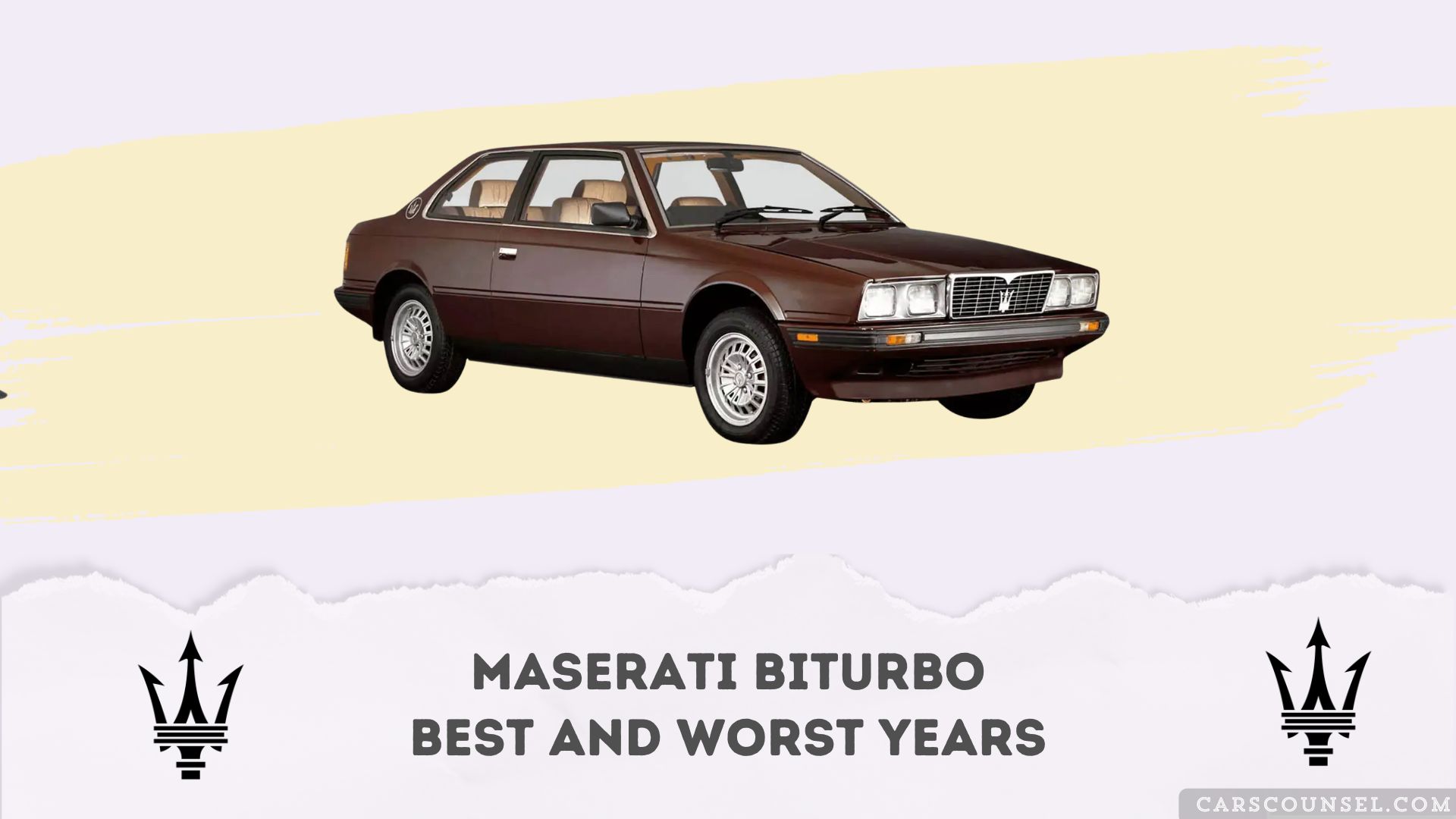
The best Maserati Biturbo model years are 1987 through 1994. These fuel-injected and intercooled examples offer significantly improved drivability. Buyers should avoid the 1984 and 1985 model years due to the notoriously troublesome carbureted engine setup that plagues early United States examples.
Rankings for classic Italian sports cars remain comparative. No vintage Biturbo is flawless, and individual maintenance history matters far more than the model year. A thorough pre-purchase inspection by a marque specialist remains absolutely essential.
Meaningful differences exist between the powertrains. Early United States models rely on a complex single carburetor, while later models utilize Weber-Marelli fuel injection and intercoolers for vastly superior performance and reliability.
Quick Navigation
Best and Worst Maserati Biturbo Years at a Glance
| Model Year Range | Verdict | Main Reason | Buyer Guidance |
|---|---|---|---|
| 1984-1985 | Avoid | Carbureted US models suffer from severe drivability and vapor lock issues. | Require complete EFI conversion or avoid entirely. |
| 1986 | Approach Carefully | Transition year with early fuel injection but lacking factory intercoolers. | Verify fuel system sorting and turbo health. |
| 1987-1994 | Best Enthusiast Choice | Fuel-injected and intercooled “Si” models offer the best drivability. | Demand strict timing belt and turbo maintenance records. |
Key Takeaways
- The 1987-1994 fuel-injected models are the strongest choices for enthusiasts.
- The 1984-1985 carbureted United States models should be avoided due to severe reliability flaws.
- The 1986 model year is a transition year that requires careful inspection of the early fuel injection system.
- Timing belt failures are catastrophic, making strict maintenance records mandatory.
- Turbocharger and cooling system health must be verified before purchase.
- Always verify the vehicle’s history and arrange an independent specialist inspection.
How We Evaluated the Maserati Biturbo Model Years
Our analysis considers the unique realities of vintage Italian sports cars, factory updates, and long-term ownership patterns. We evaluate powertrain differences, fuel system revisions, and the critical importance of specialist maintenance.
Consumer complaints and forum reports highlight recurring mechanical flaws. Individual condition and service history dictate value and reliability. Best means comparatively stronger for collectors, not flawless.
Best Maserati Biturbo Years
1987-1994: Best Enthusiast Choice
The introduction of Weber-Marelli fuel injection and factory intercoolers transformed the Biturbo. The 1987 “Si” models and later variants finally delivered the drivability and performance that the original design promised.
These later models benefit from sorted engine management and improved cooling. However, the twin-turbo V6 remains a high-maintenance powertrain that demands strict adherence to service schedules to prevent catastrophic failures.
Best Maserati Biturbo Year by Buyer Type
Best Enthusiast Choice: 1987-1994 Intercooled Models
The fuel-injected, intercooled coupes and Spyders offer the ultimate classic Biturbo experience. They provide genuine 1980s twin-turbo performance without the constant tuning nightmares of the early carbureted examples.
Years to Approach Carefully
1986: Approach Carefully
The 1986 model year represents a major transition. Maserati began replacing the troublesome carburetor with Weber-Marelli fuel injection, significantly improving throttle response and cold-start behavior.
However, these early fuel-injected models lacked the factory intercoolers found on later cars. Buyers must verify that the early electrical and fuel systems remain sorted and that the turbochargers are healthy.
Worst Maserati Biturbo Years
1984-1985: Avoid
The earliest United States-market Biturbos are notorious for their complex and unreliable single Weber carburetor setup. Housed in a pressurized airbox, this system was prone to vapor lock, poor drivability, and constant tuning issues.
These early models also suffered from inconsistent build quality and early-production cooling system flaws. Unless a previous owner has professionally converted the car to modern electronic fuel injection, these years represent a massive financial and mechanical risk.
Maserati Biturbo Reliability by Generation
First Generation (1981-1994)
The Biturbo spans a single generation of original production, featuring a twin-turbocharged 90-degree V6 engine. The United States market received a larger 2.5L displacement to compensate for emissions equipment and the lack of a manual choke.
While the basic architecture remained consistent, the transition from carburetion to fuel injection in the mid-1980s marks the most critical dividing line for used buyers. Later models also received cosmetic facelifts and improved interior materials.
Common Maserati Biturbo Problems
Timing Belt Failures
The twin-turbo V6 is an interference engine. If the timing belt snaps or jumps time, the pistons will strike the valves, resulting in catastrophic engine damage. Strict, documented replacement intervals are non-negotiable.
Turbocharger and Cooling Issues
The early IHI turbochargers operate under intense heat and rely on proper oil flow and cooling. Deferred maintenance or aggressive driving without proper cool-down periods frequently leads to premature turbo failure and oil starvation.
Electrical and Build Quality
Italian sports cars of this era are famous for fragile electrical systems. Buyers should expect to troubleshoot aging wiring, failing dashboard instruments, and brittle plastic connectors that degrade over decades of heat cycling.
What to Check Before Buying a Used Maserati Biturbo
- Verify comprehensive service records proving strict timing belt and water pump replacements.
- Inspect the turbochargers for excessive shaft play, oil leaks, or wastegate rattle.
- Test the fuel injection system for smooth idle, crisp throttle response, and cold-start reliability.
- Check the limited-slip differential for proper operation and fluid leaks.
- Inspect the unibody chassis for structural rust, particularly in the sills and floor pans.
- Arrange an independent pre-purchase inspection with a Maserati specialist.
Related Buying Guides
- Maserati Quattroporte best and worst years: A luxury sedan alternative for buyers who want Italian styling and V8 performance with more modern reliability and daily-driving comfort.
- Maserati Granturismo best and worst years: A modern grand tourer alternative that offers the classic Maserati V8 soundtrack and stunning design without the extreme maintenance burden of the 1980s Biturbo era.
Frequently Asked Questions
Which Maserati Biturbo year is the most desirable?
The 1987 through 1994 fuel-injected and intercooled models are the most desirable. They offer vastly improved drivability, better cooling, and a much more reliable ownership experience than the early carbureted examples.
Is the Maserati Biturbo reliable?
The Biturbo is a vintage Italian sports car, not a reliable daily driver. It requires constant, meticulous maintenance by specialized technicians to prevent catastrophic engine and turbocharger failures.
What is the most common Maserati Biturbo problem?
Timing belt failures and carburetor tuning issues are the most common problems. The engine is an interference design, meaning a snapped belt will destroy the motor, while early carburetors are notoriously difficult to keep sorted.
Will the Maserati Biturbo hold its value?
Well-maintained, fuel-injected examples, particularly the Spyder and “Si” models, have seen steady appreciation among collectors. However, neglected or carbureted examples remain difficult to sell and expensive to restore.
Does the Biturbo share parts with other Maseratis?
The Biturbo platform underpinned almost all Maserati models of the 1980s and early 1990s. However, its specific twin-turbo V6 and early fuel injection components are unique to this era and require specialized sourcing.
Should I buy a used Maserati Biturbo?
You should only buy a Biturbo if you have access to a marque specialist and a substantial maintenance budget. Individual condition, documented service history, and fuel injection are far more important than the specific model year.
Choosing the Right Maserati Biturbo Model Year
The 1987 through 1994 fuel-injected and intercooled models offer the ultimate classic Biturbo experience, delivering genuine 1980s twin-turbo performance with acceptable drivability. Buyers should strictly avoid the 1984-1985 carbureted examples.
Because these are high-maintenance vintage sports cars, individual condition and comprehensive service records dictate the vehicle’s true value. Never finalize a purchase without an independent inspection from a qualified Maserati specialist.

