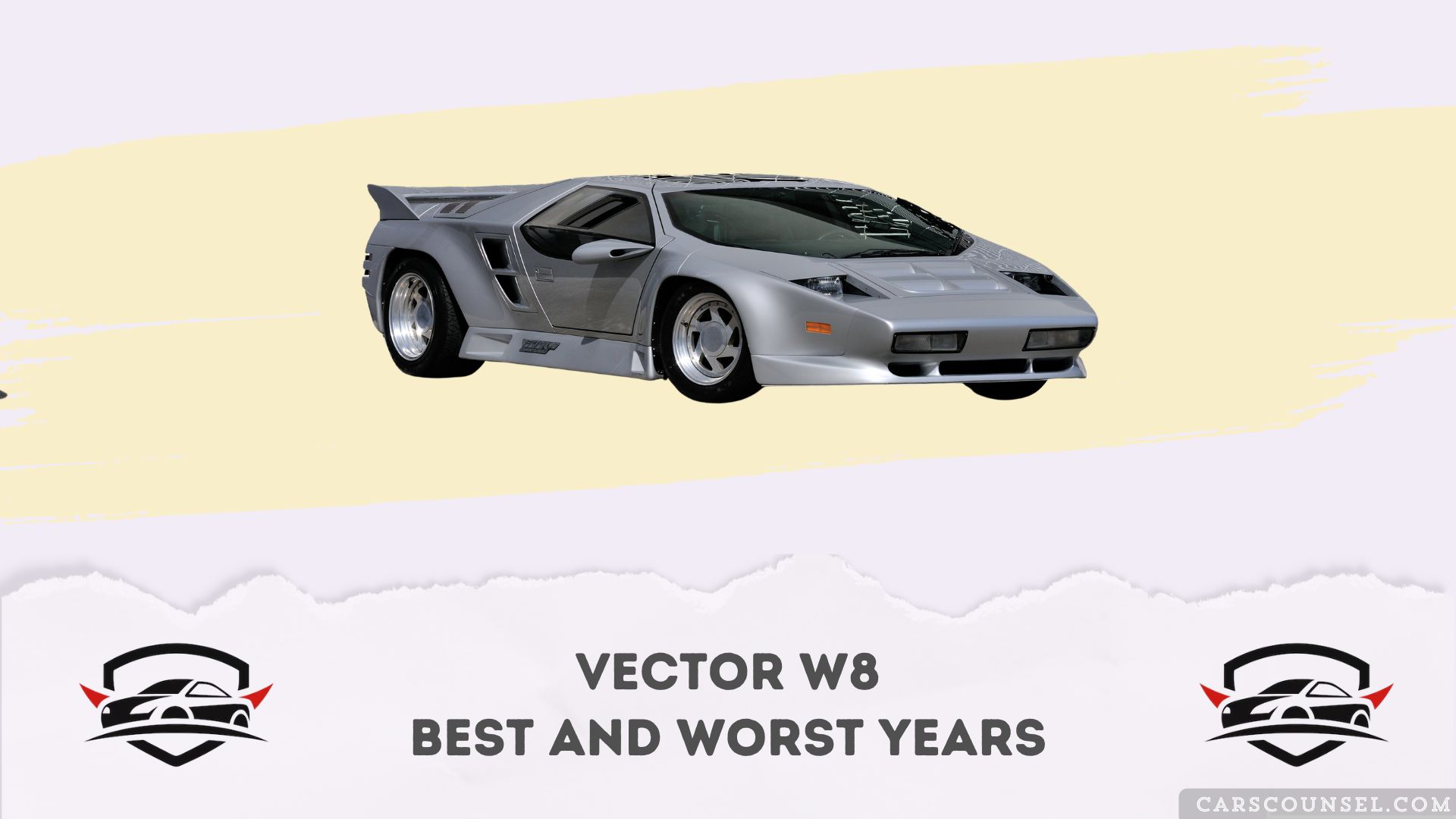
The best Vector W8 years are the 1992 and 1993 models, which represent finalized customer deliveries of this ultra-rare American supercar. Buyers should approach the 1990 and 1991 models carefully due to documented early-production overheating and transmission teething issues.
Rankings for this aerospace-inspired machine are strictly comparative. With only 22 units ever built, individual condition, bespoke maintenance, and complete provenance matter far more than the model year.
Meaningful differences exist between the early prototypes and later customer cars. The 6.0-liter twin-turbo V8 and 3-speed automatic transaxle were highly experimental, requiring specialist aerospace-level servicing regardless of the badge year.
Quick Navigation
Best and Worst Vector W8 Years at a Glance
| Model Year | Verdict | Main Reason | Buyer Guidance |
|---|---|---|---|
| 1990-1991 | Approach Carefully | Early production teething issues. | Verify cooling system and transmission health. |
| 1992-1993 | Best Enthusiast Choice | Finalized customer deliveries. | Confirm aerospace-grade maintenance history. |
Key Takeaways
- The 1992-1993 models represent the strongest collector examples of the finalized W8.
- The 1990-1991 models require careful inspection for early cooling and transmission quirks.
- Only 22 units were produced before the company’s hostile takeover and bankruptcy.
- The 6.0-liter twin-turbo V8 produces 625 horsepower and 649 pound-feet of torque.
- The 3-speed automatic transaxle is sourced from the Oldsmobile Toronado.
- Always verify the chassis number and complete bespoke service history.
- Arrange an independent inspection by a specialist familiar with prototype supercars.
How We Evaluated the Vector W8 Model Years
Our analysis considers historical media tests, manufacturer records, and the unique ownership realities of ultra-low-volume supercars. We evaluate prototype evolution, bespoke component complexity, and the lack of factory support following the company’s demise.
Complaints and traditional reliability metrics do not apply to a 22-car production run. Recent collector sales and auction results provide the only tangible evidence of long-term survivability for these experimental machines.
Best Vector W8 Years
1992-1993 Vector W8
The 1992 and 1993 model years represent the finalized customer deliveries of the W8. By this time, Vector Aeromotive had sorted the most egregious assembly inconsistencies that plagued the initial rollout.
These models feature the 6.0-liter Rodeck twin-turbo V8 producing 625 horsepower. The aerospace-inspired interior and fighter-jet canopy styling were fully realized, making these the most desirable examples for serious collectors.
Best Year by Buyer Type
Best Enthusiast Choice: 1992-1993 Vector W8
For collectors seeking a piece of eccentric American automotive history, the later W8 models offer unparalleled exclusivity. Their fighter-jet aesthetic and raw twin-turbo V8 performance provide a driving experience unlike any contemporary European supercar.
Years to Approach Carefully
Approach Carefully: 1990-1991 Vector W8
The 1990 and 1991 model years encompass the earliest production examples and pre-production prototypes. Media testing of a 1991 model documented significant overheating and transmission problems, highlighting the teething issues of a hand-built startup.
Buyers should approach these early cars carefully, ensuring that the complex cooling circuits and the Oldsmobile-sourced 3-speed automatic transaxle have been thoroughly upgraded or rebuilt by specialists.
Worst Vector W8 Years
There are no definitively worst years to avoid, as every W8 is a hand-built collector’s item. However, buyers should strictly avoid any example that lacks a verifiable, specialist-stamped service history or has undocumented modifications.
Neglecting the experimental aerospace components will result in catastrophic repair bills and a total loss of the vehicle’s operational capability. Always prioritize documented mechanical sorting over low mileage alone.
Vector W8 Reliability by Generation
First Generation (1990-1993)
The Vector W8 exists as a single, highly experimental generation. Conceived by Gerald Wiegert to rival European powerhouses, it utilized an aluminum semi-monocoque chassis and a 6.0-liter twin-turbo V8.
Production halted in 1993 following a hostile takeover by MegaTech and severe financial controversies, including a highly publicized refund demand from tennis star Andre Agassi. Consequently, long-term factory support is entirely non-existent.
Common Vector W8 Problems
Cooling System Overheating
The mid-mounted twin-turbo V8 generates immense heat within a tightly packaged engine bay. Early media tests documented severe overheating issues, requiring owners to constantly monitor custom radiator setups and auxiliary oil coolers.
Transmission and Transaxle Strain
The W8 utilizes a 3-speed automatic transaxle sourced from the Oldsmobile Toronado. While robust in a standard sedan, adapting it to handle 649 pound-feet of torque in a mid-engine supercar places extreme stress on internal components.
Electrical and Bespoke Component Failures
Given the fighter-jet-inspired digital dashboards and custom aerospace wiring harnesses, electrical gremlins are frequent. Sourcing replacement screens or custom gauges is nearly impossible, often requiring bespoke fabrication by specialized restorers.
What to Check Before Buying a Used Vector W8
- Verify the chassis number and confirm the car’s original build specification.
- Inspect the custom cooling system for leaks, corrosion, and auxiliary fan operation.
- Test the 3-speed automatic transaxle for smooth shifting under load.
- Review service records to ensure the twin-turbo plumbing has been maintained.
- Check the digital dashboard and aerospace-inspired switches for functionality.
- Arrange an independent inspection by a specialist familiar with prototype supercars.
Related Buying Guides
- Saleen S7 best and worst years: Explore another rare, mid-engine American supercar that offers extreme performance with slightly more modern engineering and established track credentials.
- Lamborghini Countach best and worst years: Discover the iconic European wedge-shaped rival that defined the supercar era alongside the Vector’s ambitious debut.
Frequently Asked Questions
Is the Vector W8 reliable?
The W8 is an experimental, hand-built prototype that requires constant specialist attention. Traditional reliability metrics do not apply, and ownership is a massive financial and mechanical undertaking.
What engine is in the Vector W8?
The W8 features a 6.0-liter Rodeck twin-turbo V8 engine. In its highest state of tune, it produces 625 horsepower and 649 pound-feet of torque.
How many Vector W8s were made?
Only 22 units were produced, including pre-production prototypes and customer cars. This extreme scarcity makes the W8 one of the rarest American supercars ever built.
Why did Vector Aeromotive fail?
The company suffered from severe financial controversies, public funding disputes, and a hostile takeover by MegaTech in 1993, ultimately leading to its bankruptcy.
What transmission does the W8 use?
The W8 uses a 3-speed automatic transaxle sourced from the Oldsmobile Toronado. It was heavily modified to handle the immense torque of the mid-mounted twin-turbo V8.
Did Andre Agassi really buy a Vector W8?
Yes, tennis star Andre Agassi placed a deposit for a W8 but demanded delivery before the car was fully developed. He received a refund, generating significant negative publicity.
Choosing the Right Vector W8 Model Year
The 1992 and 1993 Vector W8 models are the definitive choices for serious collectors. They represent the finalized, customer-ready versions of America’s most eccentric aerospace-inspired supercar.
Avoid any example with an incomplete service history or neglected cooling system. The bespoke nature of these vehicles demands meticulous, verifiable maintenance to ensure they remain operational and retain their immense collector value.
Always verify the chassis number and arrange an independent inspection. Checking the experimental turbo plumbing and custom transaxle is essential for securing a piece of authentic automotive history.

