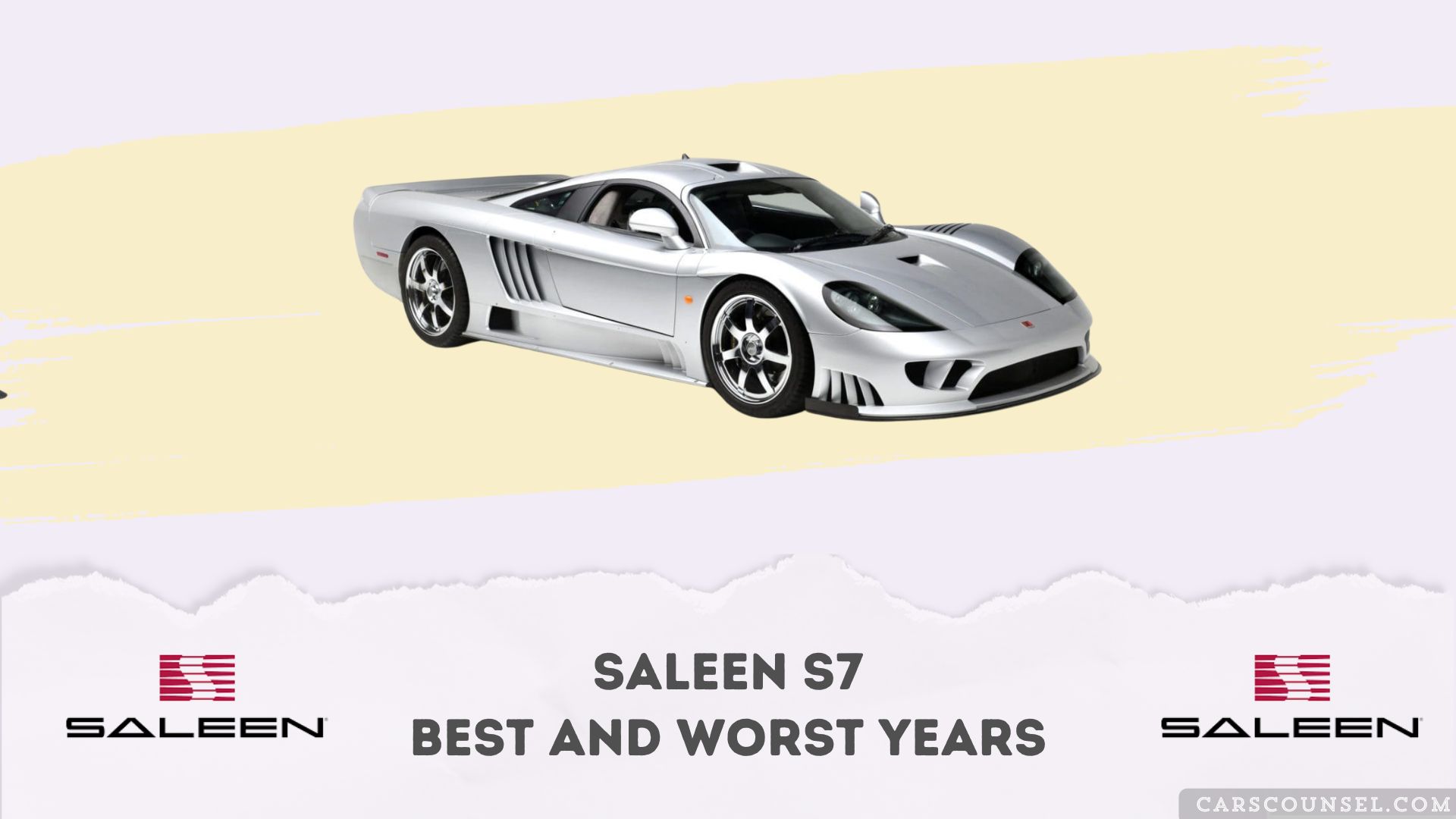
The best Saleen S7 model years are the 2005 through 2009 Twin Turbo variants, offering massive performance upgrades and high collector desirability. Buyers should approach all years with extreme caution, as individual maintenance history and specialist care matter far more than the model year for this ultra-rare, hand-built supercar.
Rankings for boutique, low-volume exotics remain entirely comparative. No hand-built supercar is flawless, and individual maintenance history dictates long-term survivability. A thorough pre-purchase inspection by a marque specialist remains absolutely essential.
Meaningful differences exist between the powertrains. The early naturally aspirated models offer a raw, analog experience, while the later Twin Turbo variants deliver immense, modern supercar performance.
Quick Navigation
Best and Worst Saleen S7 Years at a Glance
| Model Year Range | Verdict | Main Reason | Buyer Guidance |
|---|---|---|---|
| 2000-2004 | Good With Inspection | Naturally aspirated V8 offers raw, analog supercar dynamics. | Verify cooling system upgrades and specialist service history. |
| 2005-2009 | Best Enthusiast Choice | Twin-turbo V8 delivers massive performance and high collector demand. | Demand comprehensive records for turbo and transaxle maintenance. |
Key Takeaways
- The 2005-2009 Twin Turbo models are the most desirable for collectors and enthusiasts.
- The 2000-2004 naturally aspirated models require careful inspection of early cooling and electrical systems.
- Traditional mass-market reliability metrics do not apply to this ultra-low-volume production run.
- Bespoke parts availability and specialist lead times are the primary ownership challenges.
- Individual maintenance history completely overrides model-year generalizations.
- An independent pre-purchase inspection by a boutique supercar specialist is mandatory.
How We Evaluated the Saleen S7 Model Years
Our analysis considers the unique realities of ultra-low-volume, hand-built American supercars. We evaluate powertrain configurations, bespoke engineering quirks, and the critical importance of specialist maintenance over traditional mass-market reliability metrics.
Consumer complaints and NHTSA data are irrelevant for a 100-unit production run. Individual condition and service history dictate value and reliability. Best means comparatively stronger for collectors, not flawless.
Best Saleen S7 Years
2005-2009: Best Enthusiast Choice
The introduction of the Twin Turbo variant in 2005 transformed the S7 from a raw track car into a legitimate hypercar rival. The twin-turbocharged 7.0L V8 produces 750 horsepower, offering immense straight-line performance that modern supercars still struggle to match.
These later models benefit from factory refinements to the cooling system and aerodynamics. However, the extreme performance places immense stress on the transaxle and clutch, making documented specialist maintenance absolutely critical for long-term survivability.
2000-2004: Good With Inspection
The original naturally aspirated models feature a 550-horsepower 7.0L Ford-based V8. They offer a raw, analog, and unassisted driving experience that appeals to purists seeking a visceral connection to the road.
However, early examples can suffer from cooling system limitations in low-speed traffic. Buyers must verify that any factory or aftermarket cooling upgrades have been properly installed and that the bespoke electrical systems remain sorted.
Best Saleen S7 Year by Buyer Type
Best Performance Configuration: 2005-2009 Twin Turbo
The Twin Turbo models offer the ultimate expression of the S7’s potential. They deliver hypercar-rivaling acceleration and remain the most sought-after variants among serious American supercar collectors.
Saleen S7 Reliability by Generation
First Generation (2000-2009)
The S7 spans a single generation of original production, featuring a mid-engine layout and a bespoke chassis. Because total production was limited to roughly 100 road cars, traditional mass-market defect patterns simply do not exist.
Every vehicle is essentially a hand-built prototype that requires constant specialist attention. The naturally aspirated and Twin Turbo variants share the same basic architecture, but the forced-induction models require significantly more rigorous maintenance schedules to prevent catastrophic failures.
Common Saleen S7 Problems
Cooling System Stress
Mid-engine supercars with massive V8 engines generate immense heat. Early naturally aspirated models can struggle with cooling in stop-and-go traffic, and the bespoke cabin insulation can degrade over time from the thermal stress.
Bespoke Parts Availability
Unlike mass-market exotics, the S7 relies on proprietary, hand-fabricated components. Sourcing replacement body panels, bespoke suspension components, or specific transaxle parts requires dealing directly with Saleen Automotive or specialized fabricators, leading to long lead times.
Clutch and Transaxle Wear
The heavy clutch effort and the unique rear-mounted transaxle are subjected to extreme stress, especially on the 750-horsepower Twin Turbo models. Premature wear is common if the vehicle is frequently driven in traffic or launched aggressively.
What to Check Before Buying a Used Saleen S7
- Verify the vehicle’s provenance, production number, and original factory specifications.
- Review comprehensive service records from recognized boutique supercar specialists.
- Inspect the cooling system, radiators, and ducting for any signs of overheating or aftermarket modifications.
- Evaluate the condition of the bespoke clutch and rear-mounted transaxle.
- Check the quality of the original paint and carbon-fiber body panels for cracking or delamination.
- Arrange an independent pre-purchase inspection with a marque expert.
Related Buying Guides
- Ford GT best and worst years: A legendary American mid-engine supercar alternative that offers similar exclusivity but with significantly better factory support and parts availability.
- Dodge Viper best and worst years: A raw, naturally aspirated American performance alternative for buyers who want massive V10 power without the extreme financial burden of a boutique hypercar.
Frequently Asked Questions
Which Saleen S7 year is the most desirable?
The 2005 through 2009 Twin Turbo models are the most desirable. They offer a massive 750-horsepower upgrade over the naturally aspirated variants, making them the ultimate expression of the American supercar.
Is the Saleen S7 reliable?
The S7 is a hand-built, ultra-low-volume exotic car. It is not reliable in the traditional mass-market sense, and it requires constant, meticulous maintenance by specialized technicians to remain operational and safe.
What is the most common Saleen S7 problem?
Cooling system stress and bespoke parts availability are the most common ownership challenges. The mid-engine V8 generates immense heat, and sourcing proprietary replacement components can involve significant lead times.
Will the Saleen S7 hold its value?
Yes, the Saleen S7 is a highly collectible American supercar. Well-maintained, low-mileage examples, particularly the rare Twin Turbo variants, have shown strong appreciation and remain highly sought after by serious collectors.
Does the S7 share parts with the Ford Mustang?
While the engine block is derived from a Ford V8 architecture, the S7 is a bespoke, mid-engine supercar. The chassis, body, suspension, and transaxle are entirely proprietary and share no meaningful components with the Mustang.
Should I buy a used Saleen S7?
You should only buy an S7 if you have access to specialized supercar mechanics and a substantial maintenance budget. Individual condition and comprehensive service history are far more important than the specific model year.
Choosing the Right Saleen S7 Model Year
The 2005 through 2009 Twin Turbo models offer the ultimate American supercar experience, delivering hypercar-rivaling performance and immense collector desirability. The earlier naturally aspirated models appeal to purists seeking a raw, analog driving experience.
Because total production was so low, traditional model-year reliability rankings do not apply. Individual maintenance history, specialist care, and overall condition dictate the vehicle’s true value and drivability.
Always verify the vehicle’s provenance and production number before purchasing. Finally, never finalize a purchase without an independent inspection from a qualified boutique supercar specialist.

