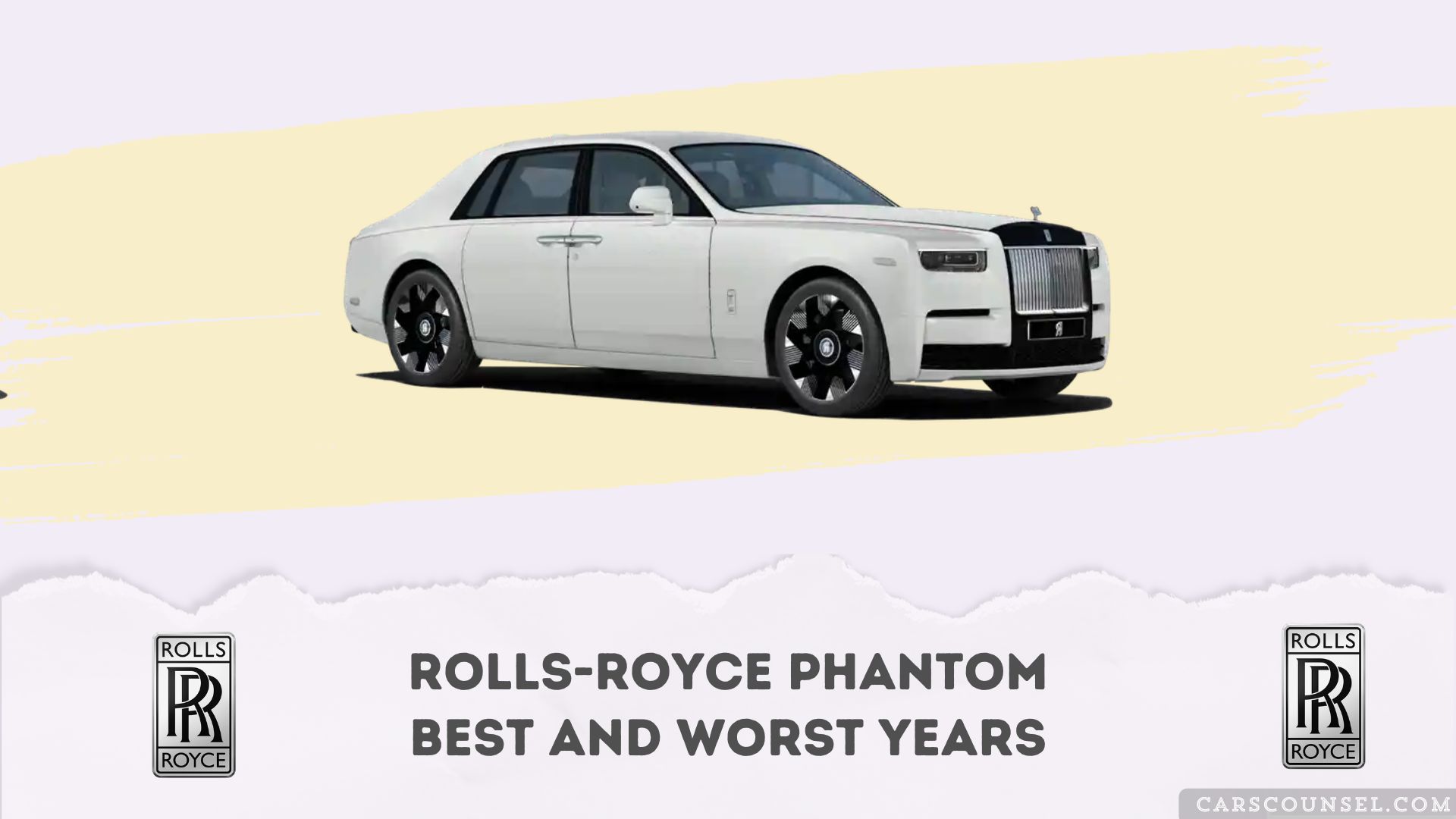
The best modern Rolls-Royce Phantom years are the 2003 through 2017 models, offering a mature ultra-luxury experience. Buyers should approach early examples carefully due to complex air suspension. The current 2018 through 2026 models remain too new to judge for long-term reliability.
Rankings are strictly comparative, and no bespoke luxury vehicle is entirely flawless. Individual condition, meticulous maintenance, and careful storage matter far more than the model year when evaluating these highly customized, low-volume sedans.
Meaningful differences exist between the Phantom VII and Phantom VIII generations. The VII uses a naturally aspirated V12, while the VIII features a twin-turbo V12 and an entirely new aluminum spaceframe architecture with updated electronics.
Quick Navigation
Best and Worst Rolls-Royce Phantom Years at a Glance
| Model Year | Verdict | Main Reason | Buyer Guidance |
|---|---|---|---|
| 1925-1990 | Best Enthusiast Choice | Rare classic collector vehicles. | Verify provenance and specialist restoration history. |
| 2003-2017 | Good With Inspection | First BMW-era generation; complex systems. | Inspect cooling system, air struts, and service records. |
| 2018-2026 | Too New to Judge | Current generation; limited long-term data. | Verify completion of software and headlight recalls. |
Key Takeaways
- The 2003-2017 Phantom VII models represent the strongest used purchases for daily driving.
- The 2018-2026 Phantom VIII models are highly refined but lack long-term ownership data.
- The Phantom VII uses a 6.75-liter naturally aspirated V12 engine.
- The Phantom VIII features a 6.75-liter twin-turbo V12 and an aluminum spaceframe.
- Air suspension and complex electronics are the primary maintenance concerns.
- Always verify the VIN to ensure all open safety recalls are completed.
How We Evaluated the Rolls-Royce Phantom Model Years
Our analysis considers official NHTSA recalls, manufacturer service campaigns, and verified owner reports to identify the best models and years to avoid. We evaluate generation changes, bespoke complexity, and maintenance demands.
Complaints are not confirmed failure rates, and a recall does not automatically make a vehicle unreliable. Recent model years have less ownership history, meaning long-term evidence remains limited for these highly specialized machines.
Best Rolls-Royce Phantom Years
2003-2017 Rolls-Royce Phantom VII
The 2003 through 2017 model years represent the most sorted examples of the modern Phantom. By this time, Rolls-Royce had refined the complex air suspension and early infotainment software that occasionally plagued the initial launch.
These models feature the 6.75-liter naturally aspirated V12 engine. The Phantom VII established the brand’s modern presence, sharing underlying architecture with contemporary BMW platforms but featuring entirely unique bodywork and interior appointments.
Best Year by Buyer Type
Best Enthusiast Choice: 1925-1990 Classic Phantoms
For collectors seeking automotive history, the classic models offer unparalleled prestige. These vehicles require specialist care and are best suited for concours events, much like a classic Bentley from the same era.
Years to Approach Carefully
Good With Inspection: 2003-2017 Phantom VII
While the Phantom VII is a landmark luxury sedan, early examples require careful inspection. Some pre-2008 models experienced cooling system leaks, and the complex air suspension can be costly to repair if neglected.
Buyers should approach these models carefully, ensuring that all software updates and suspension revisions have been performed by an authorized dealer. A comprehensive pre-purchase inspection is absolutely mandatory.
Worst Rolls-Royce Phantom Years
There are no definitively worst years to avoid for the modern Phantom, as the underlying architecture is fundamentally robust. However, buyers should strictly avoid any example that lacks a verifiable, dealer-stamped service history.
Neglecting the complex air suspension or bespoke electronic systems will result in catastrophic repair bills, regardless of the model year. Always prioritize documented maintenance over low mileage alone.
Rolls-Royce Phantom Reliability by Generation
Phantom VII (2003-2017)
The Phantom VII debuted for 2003, marking the first model developed under BMW ownership. It introduced a massive aluminum spaceframe and a 6.75-liter V12 engine, setting a new benchmark for modern ultra-luxury sedans.
Phantom VIII (2018-Present)
The Phantom VIII introduced an entirely new aluminum architecture and a 6.75-liter twin-turbo V12. While the mechanical underpinnings are highly refined, the advanced electronic suites and bespoke gallery dashboards require time to prove their long-term reliability.
Common Rolls-Royce Phantom Problems
Air Suspension and Ride Height
The Phantom relies on a complex self-leveling air suspension system to deliver its signature ride quality. Owners occasionally report failing air struts, leaking air lines, or weak suspension compressors, especially on vehicles driven in harsh climates.
Cooling System Leaks
The massive V12 engines operate under high thermal stress. Common failure points on the Phantom VII include radiator leaks and coolant transfer pipe degradation. Addressing these leaks promptly is critical to prevent engine damage.
Electronics and Infotainment Glitches
Given the immense amount of bespoke electronics, automated features, and power-closing doors, software glitches are frequent. Certain models were recalled for display issues, while others suffer from battery drain or control module faults.
What to Check Before Buying a Used Rolls-Royce Phantom
- Verify the VIN to confirm all open safety recalls are completed.
- Inspect the air suspension for proper ride height and compressor operation.
- Test all power-closing coach doors and electronic cabin features.
- Review service records to ensure strict adherence to dealer maintenance schedules.
- Scan for pending software updates that may resolve known electronic gremlins.
- Arrange an independent inspection by a certified ultra-luxury technician.
Related Buying Guides
- Rolls-Royce Ghost best and worst years: Explore the smaller sedan alternative that shares underlying architecture but offers a more driver-focused experience and manageable exterior dimensions.
- Rolls-Royce Wraith best and worst years: Discover the brand’s ultra-luxury fastback coupe for buyers who prioritize striking design and V12 performance over rear-seat passenger space.
- Rolls-Royce Cullinan best and worst years: A practical SUV alternative for buyers who need maximum cargo capacity and all-weather capability alongside extreme luxury.
- Rolls-Royce Spectre best and worst years: Learn about the brand’s first all-electric coupe, representing the future of ultra-luxury mobility as internal combustion models evolve.
Frequently Asked Questions
Is the Rolls-Royce Phantom reliable?
The Phantom is mechanically robust when maintained to strict dealer standards. However, the complex air suspension and bespoke electronics require constant attention and can be costly to repair if neglected.
What engine is in the Phantom?
The Phantom VII features a 6.75-liter naturally aspirated V12 engine. The current Phantom VIII uses a 6.75-liter twin-turbo V12, providing immense torque for effortless highway acceleration.
Are there any recalls for the Phantom?
Certain 2019-2022 models were recalled for Central Information Display software issues. Some 2023 models faced a headlight coating recall. Always verify the VIN to ensure all campaigns are completed.
How much does a used Phantom cost?
Pricing varies wildly based on bespoke customizations, wheelbase length, and mileage. Early 2003 models have depreciated significantly, while current Phantom VIII examples command massive premiums on the collector market.
What is the difference between the VII and VIII?
The Phantom VIII introduced a new aluminum spaceframe, a twin-turbocharged engine, and a modernized interior with the signature Gallery dashboard. It is significantly lighter and more technologically advanced than the VII.
Is the Phantom a good daily driver?
The Phantom is surprisingly usable, but its massive dimensions can be challenging in tight urban environments. It excels as a grand touring companion or a chauffeured luxury transport for long highway journeys.
Choosing the Right Rolls-Royce Phantom Model Year
The 2003 through 2017 Phantom VII models are the smartest choices for used buyers. They offer a mature, sorted ownership experience while retaining the immense presence and prestige of the V12 powertrain.
Avoid any example with an incomplete service history or neglected air suspension. The bespoke nature of these vehicles demands meticulous, verifiable maintenance to ensure long-term durability and prevent massive repair expenses.
Always verify the VIN and arrange an independent inspection. Checking the complex electronics and suspension components is essential for securing a capable and reliable ultra-luxury sedan.