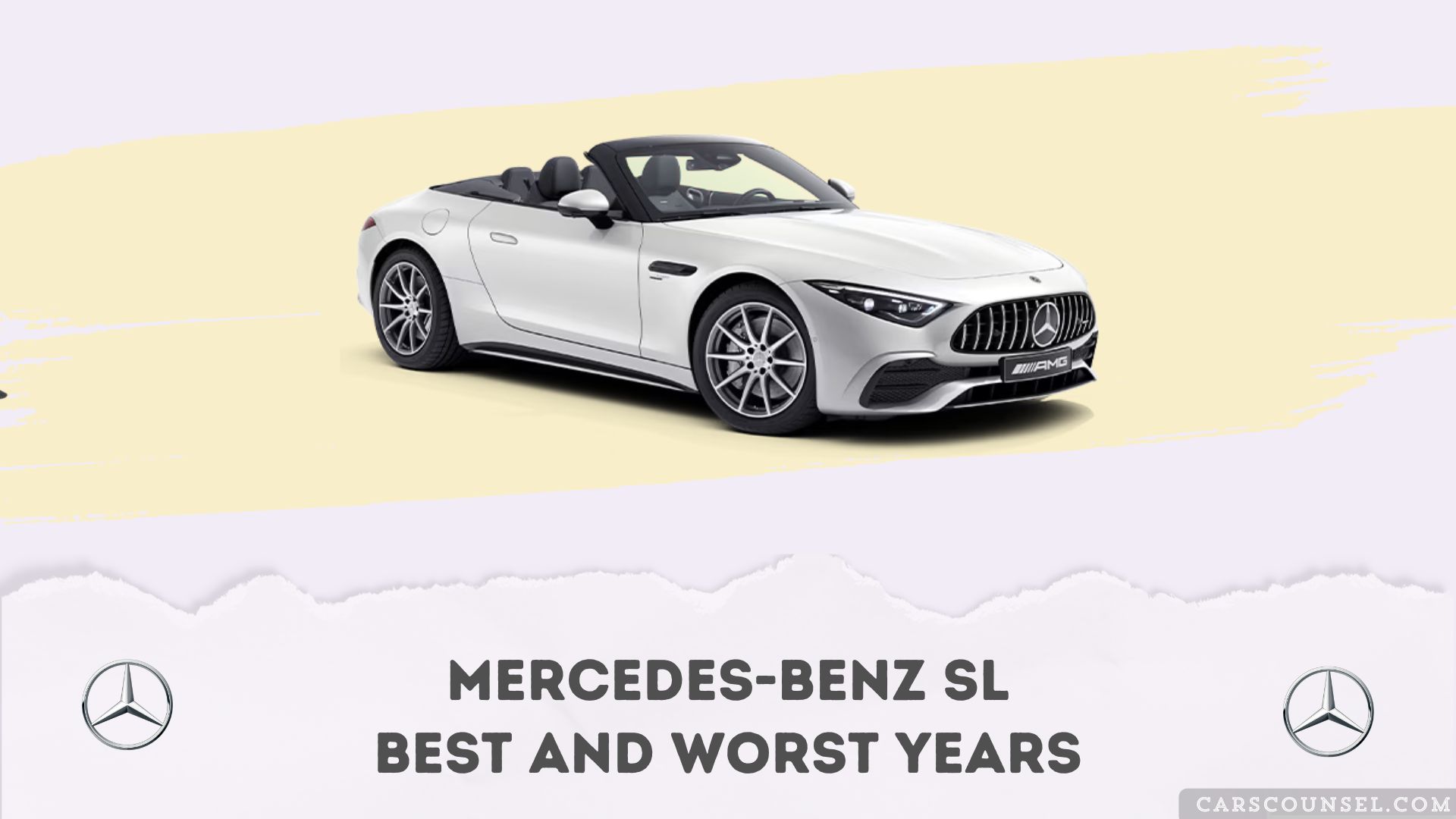
The best used Mercedes-Benz SL years are 2013 through 2020. These models avoided major hydraulic suspension flaws. Buyers should avoid the 2003 through 2005 model years due to severe brake system failures and expensive hydraulic leaks.
Rankings are comparative, and no luxury convertible is flawless. Routine maintenance heavily influences longevity. A well-serviced older model can outlast a neglected newer one, making service records essential for any used purchase.
Reliability varies significantly by generation and powertrain. Early 2000s models introduced complex hydraulic systems that plague owners today. Later generations returned to more conventional, dependable suspension designs while maintaining high performance.
Quick Navigation
Best and Worst Mercedes-Benz SL Years at a Glance
| Model Year Range | Verdict | Main Reason | Buyer Guidance |
|---|---|---|---|
| 1990–2002 | Best Older Choice | Reliable engines, aging electronics | Inspect wiring and roof hydraulics |
| 2003–2005 | Avoid | SBC brake failures, ABC suspension leaks | Seek later R230 models instead |
| 2006–2011 | Approach Carefully | Improved brakes, lingering suspension costs | Verify ABC suspension rebuilds |
| 2013–2020 | Best Choice | Aluminum chassis, dependable powertrains | Check for standard air suspension leaks |
| 2022–Present | Too New to Judge | New AMG platform, limited long-term data | Wait for more reliability history |
Key Takeaways
- The 2013 through 2020 models are the safest modern choices for used buyers.
- Avoid 2003 through 2005 models due to the faulty Sensotronic Brake Control system.
- Active Body Control (ABC) suspension on 2003 through 2011 models causes massive repair bills.
- Late 1990s and early 2000s R129 models offer classic reliability but require rust inspection.
- Always verify open recalls and check the VIN before purchasing any used SL.
How We Evaluated the Mercedes-Benz SL Model Years
Our analysis evaluates the best and worst years by reviewing official recalls and service campaigns. We weigh consumer complaints against sales volume to identify genuine defects across the Mercedes-Benz lineup.
Complaints are not confirmed failure rates. A recall does not automatically make a vehicle unreliable if the remedy was performed. Recent models have limited long-term ownership data, affecting their final rankings.
Best Mercedes-Benz SL Years
2013–2020 (R231 Generation)
The R231 generation represents a massive reliability improvement. Mercedes-Benz abandoned the problematic Active Body Control system in favor of standard or adaptive air suspension. The aluminum chassis reduced weight and improved structural rigidity.
The twin-turbo V8 engines in the SL550 are robust when maintained properly. Later models received an updated infotainment system and a smooth nine-speed transmission. These years offer the best balance of modern luxury and dependable engineering.
Best Year by Buyer Type
Best Overall: 2017 Mercedes-Benz SL550
The 2017 refresh introduced the nine-speed automatic transmission and updated styling. It avoids early R231 teething issues while providing modern technology, making it the most well-rounded used SL on the market today.
Best Enthusiast Choice: 1999–2002 Mercedes-Benz SL500
Late R129 models feature the legendary M113 V8 engine. While electronics and roof hydraulics need inspection, the powertrain is exceptionally durable. These years offer classic roadster styling without the hydraulic suspension nightmares of later generations.
Years to Approach Carefully
2006–2011 (Late R230 Generation)
Mercedes-Benz eliminated the faulty SBC brake system for the 2006 model year, returning to conventional brakes. However, the complex Active Body Control suspension remained standard on most trims.
Hydraulic strut and hose failures are common and extremely expensive to repair. Buyers should only consider these years if the ABC system has been recently rebuilt or converted to standard coilovers by a specialist.
Worst Mercedes-Benz SL Years
2003–2005 (Early R230 Generation)
These model years introduced the Sensotronic Brake Control (SBC) system. The hydraulic brake pump frequently fails, triggering a limp-home mode that severely limits braking power. Mercedes-Benz issued massive warranty extensions and recalls to address this.
Combined with early Active Body Control suspension leaks and failing roof cylinder seals, these years represent a massive financial risk. Unless the vehicle has documented proof of complete system overhauls, buyers should strictly avoid them.
Mercedes-Benz SL Reliability by Generation
R129 (1990–2002)
The R129 is a modern classic. Early models suffered from biodegradable wiring harness issues, but 1996 and later models corrected this. The M119 and M113 V8 engines are robust, though aging soft-top hydraulics require attention.
R230 (2003–2011)
This generation prioritized cutting-edge technology over reliability. The SBC brakes and ABC suspension define its poor ownership experience. It shares its underlying architecture with the contemporary Mercedes-Benz S-Class, meaning complex electrical gremlins are common.
R231 (2013–2020)
A return to form, the R231 features an aluminum body and eliminated the ABC suspension. Powertrains are strong, and interior electronics are much more stable. It remains a highly capable and reliable grand tourer.
R232 (2022–Present)
Developed entirely by AMG, this current generation shares more in common with the Mercedes-Benz AMG GT than previous SL models. Long-term reliability data is currently insufficient to judge its lasting durability.
Common Mercedes-Benz SL Problems
Active Body Control (ABC) Suspension
Found primarily on 2003 through 2011 models, this high-pressure hydraulic suspension system is notorious for leaking. Hydraulic fluid can leak into the power steering reservoir or onto the ground, leading to pump failure and collapsed corners.
Roof Hydraulic Cylinders
Both the R129 and R230 generations use hydraulic cylinders to operate the convertible top. The seals degrade over time, leaking fluid onto the interior or failing to raise the roof. Rebuilding all cylinders simultaneously is recommended.
Timing Chain and Guide Wear
Some V8 engines, particularly the M273 and early M278, can experience premature timing chain guide wear. Listen for rattling on cold starts. Ignoring this can lead to catastrophic engine damage, requiring immediate inspection.
Repair-Cost Overview
| Problem | Affected Years | Approximate Range | Notes |
|---|---|---|---|
| ABC Suspension Rebuild | 2003–2011 | $3,000–$6,000 | Requires specialized hydraulic flushing |
| SBC Brake Pump | 2003–2005 | $1,500–$2,500 | Check for warranty extension coverage |
| Roof Cylinder Rebuild | 1990–2011 | $1,200–$2,000 | Best done as a complete set |
Repair costs vary significantly by region, labor rates, and parts availability. Independent European specialists often charge less than dealerships. Always obtain multiple quotes and verify if any manufacturer warranty extensions still apply to your specific VIN.
What to Check Before Buying a Used Mercedes-Benz SL
Always run the VIN to check for open recalls and verify if SBC or ABC warranty extensions were performed. Review service records for hydraulic fluid flushes and suspension component replacements.
Test the convertible top multiple times to ensure smooth operation without whining noises from the hydraulic pump. Inspect the trunk and cabin floors for moisture, and verify the climate control blows cold.
Have an independent specialist scan the vehicle for hidden fault codes or warning lights. Pay special attention to the engine timing chain on cold startup, check the headlights, and inspect for hydraulic leaks.
Related Buying Guides
If you want a smaller, more agile roadster from the same brand, explore our guide on the Mercedes-Benz SLK best and worst years. It offers similar luxury in a more compact, affordable package.
For buyers who prefer a grand touring coupe with similar performance credentials, review the Mercedes-Benz CLS best and worst years. It provides four-door practicality without sacrificing the brand’s signature driving dynamics.
Frequently Asked Questions
What is the most reliable Mercedes-Benz SL generation?
The R231 generation, produced from 2013 through 2020, is widely considered the most reliable modern SL. It eliminated the problematic hydraulic suspension found in earlier models, resulting in significantly lower long-term maintenance costs.
Why should I avoid the 2003 to 2005 SL models?
These years feature the Sensotronic Brake Control system, which is prone to sudden hydraulic pump failures. Combined with expensive Active Body Control suspension leaks, they present a massive financial risk for used car buyers.
Do all Mercedes-Benz SL models have air suspension?
No. The 2003 through 2011 models used a hydraulic Active Body Control system. The 2013 and newer models switched to adaptive air suspension or conventional steel springs, depending on the trim and options selected.
Is the Mercedes-Benz SL expensive to maintain?
Maintenance costs are higher than average, especially for models equipped with hydraulic suspensions or complex retractable hardtops. Routine servicing by a qualified European specialist is essential to prevent minor issues from becoming catastrophic failures.
Are older R129 SL models a good investment?
Late-model R129 vehicles from 1996 through 2002 are becoming desirable classics. While they offer robust engines, buyers must budget for aging rubber components, wiring repairs, and expensive roof hydraulic rebuilds.
How do I check for open recalls on a used SL?
Enter the vehicle’s 17-digit VIN into the official NHTSA website or the Mercedes-Benz USA owner portal. This will reveal any outstanding safety recalls or active service campaigns that require dealer attention.
Which Mercedes-Benz SL Year Should You Buy?
For modern reliability and daily usability, target the 2013 through 2020 models. They offer excellent performance without the crippling hydraulic repair bills of the previous generation. Always verify the service history before purchasing.
If you prefer a classic roadster, the 1996 through 2002 models offer legendary engine durability. Avoid the 2003 through 2005 model years entirely due to severe brake system defects and complex suspension failures.
Regardless of the year you choose, always perform a thorough pre-purchase inspection. Verify the VIN for open recalls, check the hydraulic systems carefully, and ensure all maintenance records are present and up to date.


Comments are closed.