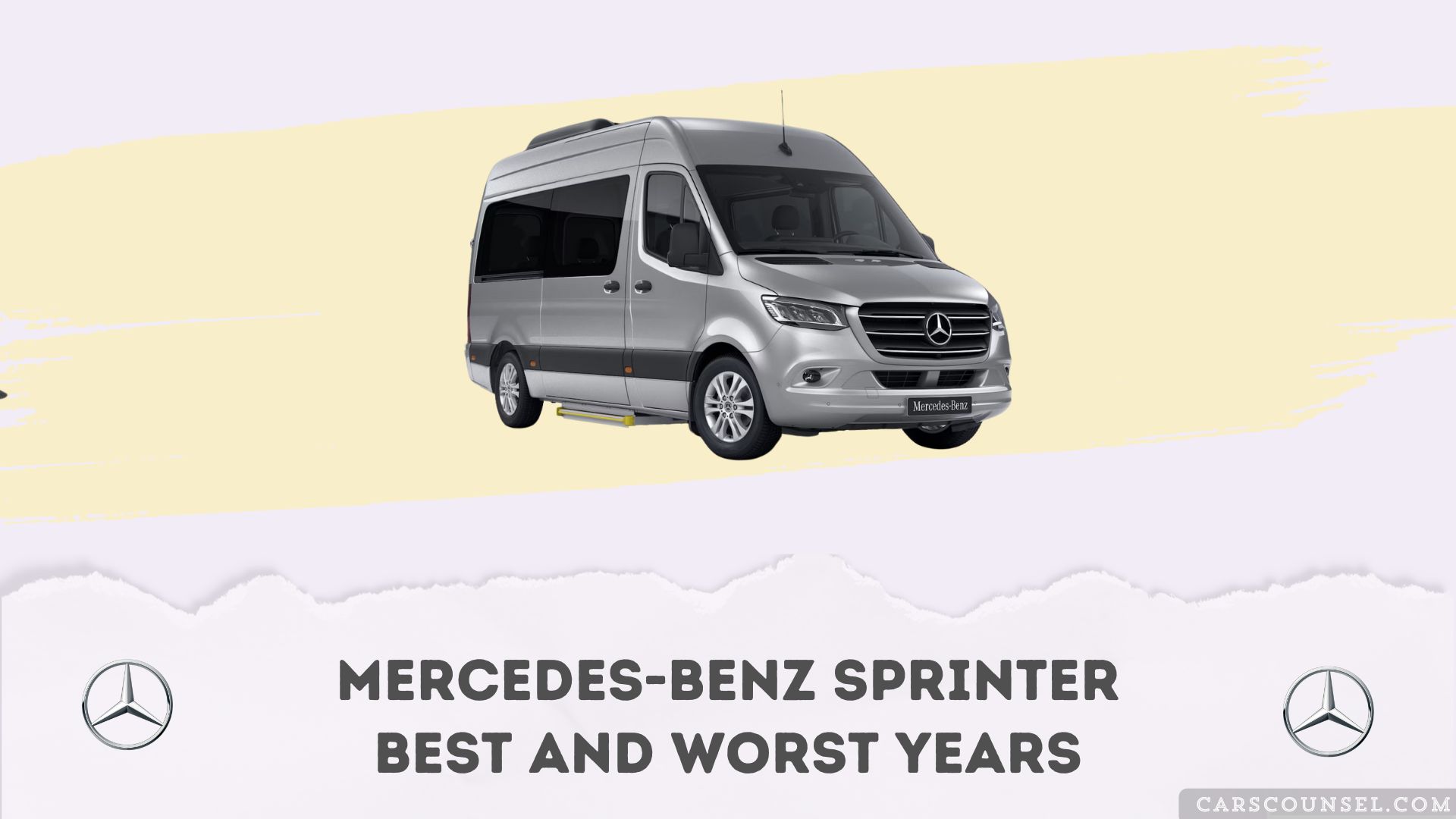
The best Mercedes-Benz Sprinter years are 2020 through 2022 and 2014 through 2018. These models offer mature engineering and sorted electronics. Buyers should avoid the 2007 through 2009 model years due to early engine and emissions complications.
Rankings are comparative, and no commercial van is entirely flawless. Proper maintenance, rust prevention, and verified service history matter more than the badge on the grille.
Meaningful differences exist between the inline-five, V6, and new four-cylinder diesel engines. Drivetrain configurations and generation changes also heavily influence long-term ownership costs and reliability.
Quick Navigation
Best and Worst Mercedes-Benz Sprinter Years at a Glance
| Model Year Range | Verdict | Main Reason | Buyer Guidance |
|---|---|---|---|
| 2023-2024 | Too New to Judge | New OM654 engine | Wait for long-term data. |
| 2020-2022 | Best Choice | Mature VS30 platform | Prioritize maintenance records. |
| 2019 | Approach Carefully | First-year VS30 bugs | Inspect electronics thoroughly. |
| 2014-2018 | Good Choice | Sorted NCV3 generation | Check oil cooler seals. |
| 2010-2013 | Mixed | Emissions system wear | Verify DEF system repairs. |
| 2007-2009 | Avoid | Early OM642 V6 issues | Look for later NCV3 models. |
| 2001-2006 | Approach Carefully | Severe rust risk | Inspect undercarriage carefully. |
Key Takeaways
- 2020-2022 models represent the strongest blend of modern tech and proven V6 diesel reliability.
- 2014-2018 models are solid used options, provided the OM642 oil cooler seals have been addressed.
- Avoid 2007-2009 models due to early V6 engine complications and rust vulnerabilities.
- The 2023 and newer models feature a new four-cylinder engine and remain too new to judge.
- Always verify the VIN for open recalls and inspect the undercarriage for structural rust.
How We Evaluated the Mercedes-Benz Sprinter Model Years
Our analysis considers official recalls, manufacturer service campaigns, and long-term ownership patterns. We evaluate powertrain differences, generation changes, and repair complexity.
Complaints are not failure rates, and a recall does not automatically make a year unreliable. Recent models have less ownership history, and best means comparatively stronger.
Best Mercedes-Benz Sprinter Years
2020-2022 (Best Choice)
These years benefit from the mature VS30 platform and the proven 3.0L OM642 V6 turbodiesel. Early first-year electrical gremlins were largely resolved. They offer advanced safety features and modern infotainment.
Buyers should still verify that AdBlue and emissions components are functioning correctly. A documented service history remains essential for any used commercial vehicle purchase.
2014-2018 (Good Choice)
The late NCV3 generation received a facelift and improved interior materials. Mercedes-Benz addressed many early V6 teething issues during this production run.
The primary concern remains the oil cooler seal, which requires expensive labor to replace. A documented replacement is a major plus for used buyers.
Best Year by Buyer Type
The 2021 model stands out as the best overall choice for its mature electronics and proven V6 engine.
Budget buyers should look at 2015 through 2017 models, provided the oil cooler service is verified.
Enthusiasts often prefer the 2004 through 2006 T1N generation for its simple inline-five engine, despite the constant battle against rust.
Years to Approach Carefully
2019 (Approach Carefully)
As the first year of the VS30 generation, 2019 models experienced typical early-production electrical and build-quality issues. Sensor failures are more common here than in later years.
A thorough pre-purchase diagnostic scan is essential to identify hidden fault codes. Buyers should budget for potential electronic module replacements.
2001-2006 (Approach Carefully)
The T1N generation is beloved for its robust inline-five diesel engine. However, severe structural rust and injector seal leaks are highly prevalent in surviving examples.
Only buy if the undercarriage is pristine and the injector seats have been professionally rebuilt. Dry-climate examples are significantly safer investments.
2023-2024 (Too New to Judge)
Mercedes-Benz introduced the new 2.0L OM654 four-cylinder turbodiesel in these recent models. While it promises better efficiency, long-term durability data is currently insufficient.
Buyers should rely on factory warranty coverage rather than proven reliability. It is too early to confirm the longevity of this new powertrain.
Worst Mercedes-Benz Sprinter Years
2007-2009 (Avoid)
These early NCV3 models introduced the 3.0L OM642 V6 diesel, which suffered from early swirl motor failures and exhaust temperature sensor issues.
Combined with poor rust protection on early chassis, these years present high financial risks. Buyers are much safer seeking later NCV3 or VS30 models.
Mercedes-Benz Sprinter Reliability by Generation
T1N Generation (2001-2006)
Known for mechanical simplicity and durable inline-five engines. The main enemy is corrosion, which can destroy the frame and suspension mounting points.
If stored indoors or in dry climates, these vans can reach exceptionally high mileage with basic maintenance.
NCV3 Generation (2007-2018)
This generation introduced the V6 diesel and modern emissions systems. Early years are problematic, but later models are generally dependable if maintained properly.
The oil cooler and DEF systems require strict adherence to service intervals. Neglecting these systems leads to expensive limp-mode repairs.
VS30 Generation (2019-Present)
Features a car-like interior and advanced driver aids. The 2020 through 2022 V6 models are excellent choices for modern fleet and private buyers.
The newer four-cylinder models are still proving their long-term worth. Warranty support is highly recommended for these latest configurations.
Common Mercedes-Benz Sprinter Problems
OM642 Oil Cooler Leaks
Affecting 2007 through 2022 V6 models, the oil cooler is located deep in the engine valley. The factory seals degrade over time.
The part is inexpensive, but labor is extensive. Expect significant repair bills if the previous owner deferred this critical maintenance.
Structural Rust
Rust compromises the frame, suspension mounting points, and body panels across all generations. Early models are particularly vulnerable to severe structural decay.
Regular undercoating is critical in snowy or coastal regions. Always inspect the chassis with a flashlight before purchasing any used Sprinter.
Black Death Injector Seals
Affecting 2001 through 2006 inline-five models, copper crush washers fail and allow hot gases to escape. This bakes diesel fuel into a hard tar.
This makes injector removal incredibly difficult and risks cylinder head damage. Proper installation of updated seals prevents this frustrating issue.
DEF and Emissions Faults
AdBlue heaters, NOx sensors, and DEF tank crystallization frequently trigger limp mode in 2010 through 2018 models.
These components are expensive and require specialized diagnostic tools. Verify that all emissions recalls and software updates have been completed.
Repair-Cost Overview
| Problem | Commonly Affected Years | Approximate Repair Range | Important Notes |
|---|---|---|---|
| OM642 Oil Cooler Seals | 2007-2022 | $1,500 – $2,500 | Labor-intensive due to engine valley location. |
| Injector Seal (“Black Death”) | 2001-2006 | $400 – $800 | Requires careful extraction to prevent head damage. |
| DEF Heater / Tank Assembly | 2010-2018 | $1,200 – $2,000 | Often requires software recalibration after replacement. |
Repair costs vary significantly by region, labor rate, parts choice, and whether you use a specialized diesel shop or a dealership. These approximate ranges exclude illegal emissions modifications.
What to Check Before Buying a Used Mercedes-Benz Sprinter
- Verify the VIN for open recalls and emissions campaigns.
- Inspect the undercarriage and frame rails for structural rust.
- Check for oil residue in the engine valley (OM642 oil cooler).
- Review service history for timing chain and DEF system repairs.
- Perform a cold-start test to listen for injector knock or chain rattle.
- Scan for hidden emissions or AdBlue fault codes.
- Arrange an independent inspection by a certified Sprinter or diesel specialist.
Related Buying Guides
- Mercedes-Benz GLB best and worst years: A compact luxury SUV alternative for families who need passenger space without commercial van dimensions.
- Mercedes-Benz GLC best and worst years: A midsize luxury crossover offering unibody comfort and car-like handling compared to the Sprinter’s commercial roots.
- Mercedes-Benz GLE best and worst years: A larger luxury SUV providing premium towing and family hauling capabilities for buyers who do not need a cargo van.
- Mercedes-Benz G-Class best and worst years: An iconic off-roader offering extreme durability and prestige for enthusiasts seeking a different type of heavy-duty Mercedes-Benz.
Frequently Asked Questions
What is the most reliable Mercedes-Benz Sprinter engine?
The OM647 inline-five and the later OM642 V6 are highly regarded. The inline-five is simpler, while the V6 offers more power but requires strict maintenance.
Do Sprinter vans have rust problems?
Yes, structural rust is a major concern across all generations, especially early models. Buyers in snowy or coastal regions must thoroughly inspect the frame.
Is the 2019 Sprinter a good year?
The 2019 model is the first year of the VS30 generation and has more electrical complaints than later years. Approach carefully and verify all sensors.
Why are 2007-2009 Sprinters considered bad?
These early NCV3 models introduced the V6 diesel and complex emissions systems before they were fully sorted, leading to expensive sensor and oil cooler failures.
How long do Mercedes-Benz Sprinters last?
Well-maintained examples can reach high mileage, often exceeding 300,000 miles. Longevity depends heavily on rust prevention, emissions upkeep, and timely oil cooler service.
Should I buy a 2023 or newer Sprinter?
The 2023 and newer models use a new four-cylinder diesel engine. They are currently too new to judge, so buyers should rely on factory warranty coverage.
Choosing the Right Mercedes-Benz Sprinter Model Year
The 2020 through 2022 Sprinters offer the best combination of modern technology and proven V6 diesel reliability. The 2014 through 2018 models remain strong choices if maintained.
Avoid the 2007 through 2009 models due to early engine complications. Always prioritize a rust-free chassis, verify the VIN, and secure an independent diesel inspection before purchasing.

