Oregon window tint laws set the legal visible light transmission, or VLT, for each vehicle window. For most drivers, the key number is the front side window limit: 35% final VLT. Rear-window and windshield rules can change based on vehicle type, mirrors, medical authorization, and how the tint is measured.
Use this page to check the main legal tint limits in Oregon, understand what the percentages mean, avoid common installation mistakes, and know what to verify before you respond to a citation or apply for a medical exemption.
Quick Navigation
Oregon Legal Window Tint Limits
Important: A tint film percentage is not always the same as the final measured window percentage. Factory glass can already reduce light transmission, so ask for the final measured VLT after installation.
Oregon Window Tint Law Table
| Window | Legal Limit | What It Means |
|---|---|---|
| Windshield | top 6 inches | Windshield rules are usually stricter than side-window rules. Do not assume a dark windshield strip is legal without checking the state rule. |
| Front side windows | 35% final VLT | This is the most important compliance point because these windows affect driver and officer visibility. |
| Rear side windows | 35% final VLT | Rear side limits may differ for sedans, SUVs, vans, pickups, or multipurpose vehicles. |
| Rear window | 35% final VLT | Rear window tint may depend on outside mirrors or vehicle classification. |
| Reflective tint | 13% max reflectance | Mirror-like tint can create glare and may be restricted even if the darkness percentage is legal. |
Windshield Tint Rule in Oregon
For Oregon, the windshield rule should be checked separately from the side-window rule. Windshield tint is commonly limited to the upper strip, AS-1 area, or a specific medical authorization. Do not use the rear-window tint percentage as a windshield rule.
Key Oregon Tint Compliance Notes
- Oregon distinguishes 50%+ film transmittance from 35%+ final total window transmittance.
- A certificate/documentation must be kept in the vehicle.
- MPV rear-of-driver and AS-3 glazing exceptions should be handled in text.
Medical Window Tint Exemptions in Oregon
Medical tint exemptions vary by state. Before installing darker tint for a health condition, confirm the required form, medical provider certification, vehicle documentation, expiration rules, and whether proof must be carried in the vehicle.
Tint Tickets, Inspections, and Penalties
Illegal tint may lead to a citation, failed inspection, required removal, or other penalties depending on state law and how the violation is handled locally. Verify fine amounts and court options with the official agency or court listed for your state.
What VLT Means Before You Buy Tint
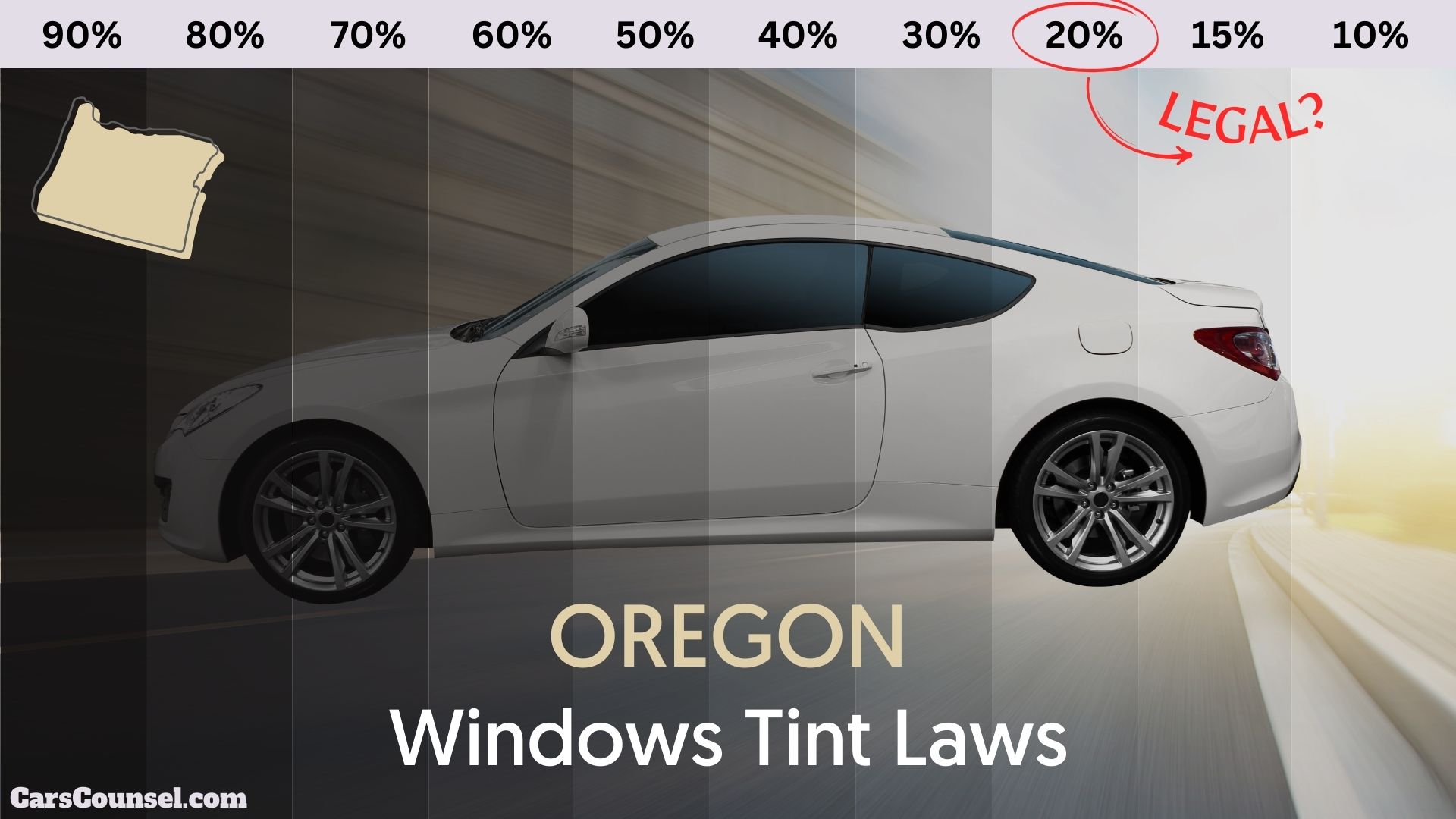
VLT means visible light transmission. A lower VLT number means darker tint. For example, 20% VLT is darker than 35% VLT because less visible light passes through the window.
The legal reading usually depends on the glass and film together, not just the film box. That is why a film sold as 35% can test lower after it is installed on factory-tinted glass.
Before You Install Window Tint in Oregon
- Check the legal VLT limit for each window, not just the front windows.
- Confirm whether your vehicle is a passenger car, SUV, van, pickup, or multipurpose vehicle.
- Ask the installer for the final measured VLT through the glass and film together.
- Verify whether labels, certificates, inspection rules, or medical authorization documents are required.
- Keep proof of any medical exemption or installer certificate in the vehicle if your state requires it.
Common Oregon Tint Questions
What is the legal tint limit in Oregon?
The main front side window limit is 35% final VLT. Rear side, rear window, windshield, and reflective tint rules are different, so use the full table above before installing film.
Is 5% tint legal in Oregon?
5% tint is usually not legal on front side windows in Oregon without a medical exemption. Rear-window rules can differ by vehicle type, so check the table and the official source before installing it.
Is 20% tint legal in Oregon?
20% tint is usually not legal on front side windows in Oregon without a medical exemption. Rear-window rules can differ by vehicle type, so check the table and the official source before installing it.
Is 35% tint legal in Oregon?
35% tint may be legal on some Oregon windows, but legality depends on the window position, vehicle type, final measured VLT, and any medical authorization.
Is windshield tint legal in Oregon?
Windshield tint in Oregon is limited to: top 6 inches. Medical exemptions may create separate rules, but you should verify before installing any windshield film.
Can I get a ticket for illegal tint in Oregon?
Yes. Illegal tint can lead to a citation, inspection issue, removal requirement, or other enforcement action depending on state law and local handling.
Car Window Tinting Laws By State
Use the table below to compare window tint limits across all states. Open each state guide for vehicle-type rules, medical exemptions, penalties, and official source notes.
| State | Front Side Windows | Back Side Windows | Rear Windows | Windshield |
|---|---|---|---|---|
| Alabama | 32% | 32% | 32% | top 6 inches |
| Alaska | 70% | 40% | 30% | top 5 inches |
| Arizona | 33% | Any darkness | Any darkness | above manufacturer AS-1 line |
| Arkansas | 25% | 25% passenger / 10% MPV | 10% | top 5 inches |
| California | 70% total / 88% clear film | Any darkness behind driver | Any darkness with dual side mirrors | topmost portion only; special conditions apply |
| Colorado | 27% | 27% | 27% | top 4 inches |
| Connecticut | 35% | 35% | Any darkness with dual mirrors | above AS-1 line / top edge |
| Delaware | 70% | Any darkness | Any darkness | above AS-1 line / top edge |
| Florida | 28% | 15% passenger / 6% MPV | 15% passenger / 6% MPV | transparent strip above AS-1 only |
| Georgia | 32% | 32% | 32% | top 6 inches |
| Hawaii | 35% | 35% | 35% | top 4 inches / AS-1 limit |
| Idaho | 35% | 20% | 35% | above AS-1 line / top 6 inches if no AS-1 |
| Illinois | 35% | 35% | 35% | top 6 inches |
| Indiana | 30% | 30% | 30% | above AS-1 line |
| Iowa | 70% until Jul 1, 2026; 50% after | Any darkness | Any darkness | 70% windshield / AS-1 strip only |
| Kansas | 35% | 35% | 35% | above AS-1 line |
| Kentucky | 35% | 18% passenger / 8% MPV | 18% passenger / 8% MPV | AS-1 / direct-viewing-area limits |
| Louisiana | 25% | 25% | 12% | top 5 inches; no red or amber |
| Maine | 35% | 35% | 35% | AS-1 line / top 5 inches |
| Maryland | 35% | 35% | 35% | AS-1 line / top 5 inches |
| Massachusetts | 35% | 35% | 35% | top 6 inches |
| Michigan | top 4 inches only | Any darkness | Any darkness with dual side mirrors | top 4 inches / shade band only |
| Minnesota | 50% | 50% | 50% | restricted / no transmittance-reducing windshield tint |
| Mississippi | 28% | 28% | 28% | upper manufacturer-authorized sunshield area |
| Missouri | 35% | Any darkness | Any darkness | above AS-1 line / top 6 inches |
| Montana | 24% | 14% | 14% | above AS-1 line / top 6 inches |
| Nebraska | 35% | 20% | 20% | clear below AS-1; no red/yellow/amber above AS-1 |
| Nevada | 35% | Any darkness with dual mirrors | Any darkness with dual mirrors | topmost area; 29-inch measurement rule |
| New Hampshire | 70% | 35% | 35% | no aftermarket tint without waiver |
| New Jersey | Not allowed without medical exemption | Any darkness | Any darkness | Not allowed without medical exemption |
| New Mexico | 20% | 20% | 20% | top 5 inches or AS-1 line; no red/yellow/amber |
| New York | 70% | 70% for passenger cars | 70% unless dual side mirrors | 70%; uppermost 6 inches may differ |
| North Carolina | 32% practical meter threshold | 32% | 32% | top 5 inches or AS-1 line |
| North Dakota | 35% | Any darkness with dual mirrors | Any darkness with dual mirrors | 70% windshield except AS-1/top 5 inches |
| Ohio | 50% | Any darkness | Any darkness | 70% windshield / top 5 inches |
| Oklahoma | 25% | 25% | 25% | top 5 inches or AS-1 line; no red or amber |
| Oregon | 35% final VLT | 35% final VLT | 35% final VLT | top 6 inches |
| Pennsylvania | 70% | 70% passenger cars | 70% passenger cars | top 3 inches |
| Rhode Island | 70% | 70% | 70% | above AS-1 line / top 6 inches |
| South Carolina | 27% | 27% | 27% | above AS-1 line; no red/yellow/amber |
| South Dakota | 35% | 20% | 20% | above AS-1 line / top 6 inches |
| Tennessee | 35% | 35% | 35% | 70% windshield except manufacturer shade band |
| Texas | 25% | Exempt behind driver | No limit with dual side mirrors; otherwise 25% | above AS-1 line or top 5 inches; 25%+ VLT |
| Utah | 35% | Any darkness with dual mirrors | Any darkness with dual mirrors | 70% windshield / AS-1 strip only |
| Vermont | No aftermarket tint without exemption | Any darkness with dual mirrors | Any darkness with dual mirrors | No aftermarket tint without exemption |
| Virginia | 50% | 35% passenger / no limit MPV | 35% passenger / no limit MPV | no sun-shading without medical authorization |
| Washington | 24% | 24% | 24% | top 6 inches / AS-1 limit |
| West Virginia | 35% | 35% | 35% | top 5 inches / AS-1; no red/yellow/amber |
| Wisconsin | 50% | 35% | 35% | above AS-1 line / top 6 inches |
| Wyoming | 28% | 28% | 28% | top 5 inches or AS-1 line; no red/yellow/amber |
Official Source Notes
This guide was updated after a state-by-state batch verification pass using the official or best-available statute, DMV, highway safety, inspection, enforcement, or medical exemption sources listed below. Verify local enforcement and court handling before acting on a citation.
Disclaimer
This guide is for general informational purposes only and should not be treated as legal advice. Window tint laws, DMV rules, inspection requirements, court procedures, fine amounts, and enforcement practices can change or vary by location, vehicle type, and case details.
Before installing window tint, removing tint, responding to a citation, applying for a medical exemption, or making a legal or vehicle-compliance decision, verify the current rule with your state DMV, local law enforcement agency, inspection station, qualified tint installer, or an attorney familiar with your situation.
If you believe any information on this page is outdated or inaccurate, please contact CarsCounsel so the page can be reviewed.

