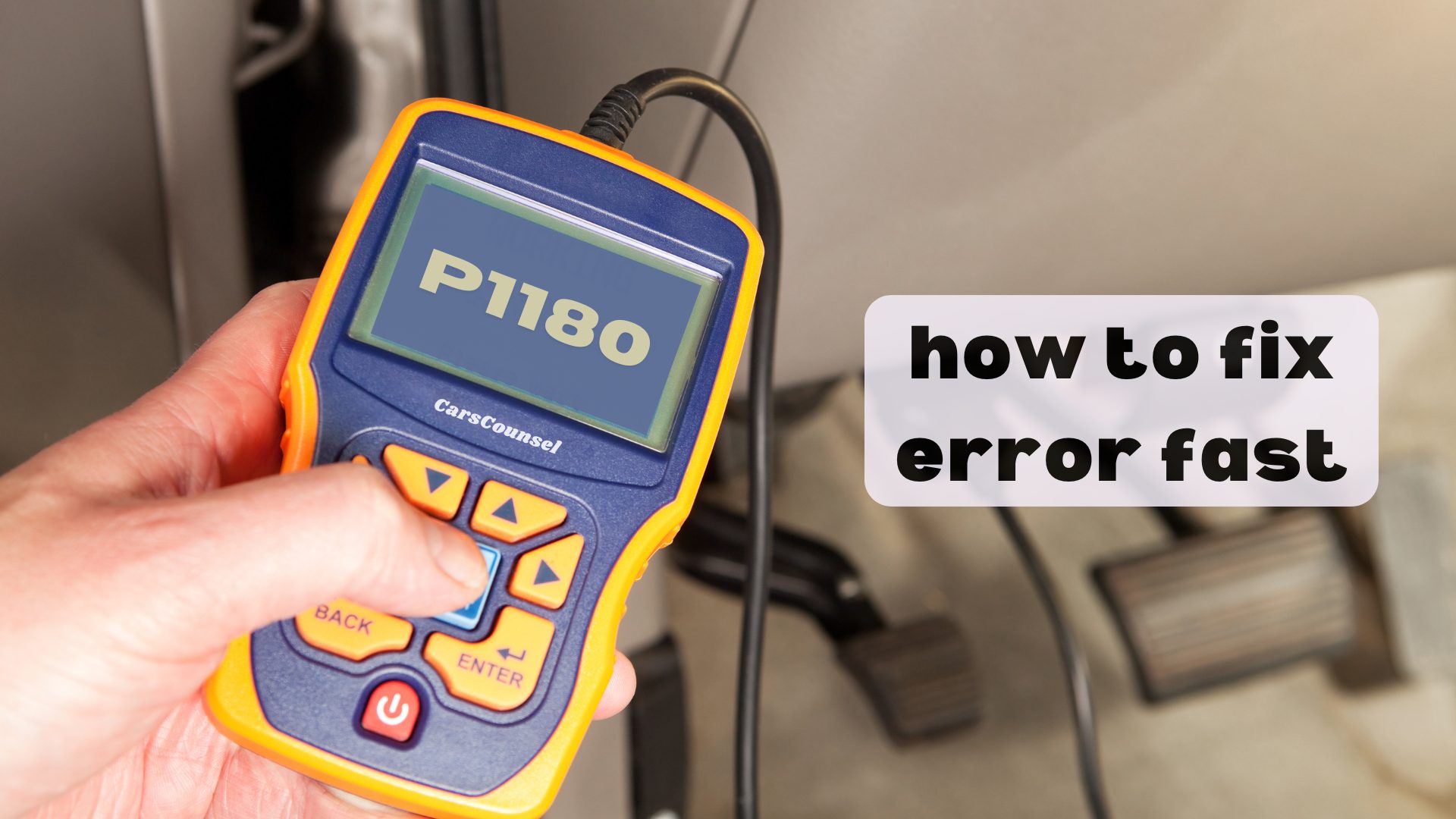
The P1180 code is a manufacturer-specific diagnostic trouble code. Its exact definition depends heavily on the vehicle application, ranging from fuel delivery system malfunctions to lateral G-sensor circuit faults.
Because P1180 applies to different systems across various automakers, exact application verification is required. A diagnostic trouble code indicates a detected condition, but testing is necessary to identify the root cause.
Quick Navigation
Key Takeaways
- P1180 is a manufacturer-specific code, meaning its exact definition varies by automaker and vehicle platform.
- On certain Ford and Kia applications, it typically indicates a fuel delivery system or fuel pressure sensor malfunction.
- On specific Subaru applications, it often points to a lateral G-sensor or neutral position switch circuit issue.
- Accurate diagnosis requires verifying the exact factory definition for your specific vehicle before testing components.
P1180 Code Description and Implications
Some Ford and Kia applications: P1180 indicates a fuel delivery system malfunction, often related to low fuel pressure, a failing fuel pump, or a fuel pressure sensor circuit fault.
Certain Subaru applications: P1180 is assigned to the lateral G-sensor circuit or neutral position switch circuit, indicating a high input voltage or signal rationality fault.
Other European applications: The code may monitor oxygen sensor heater circuits or mass airflow sensor resistor networks, depending on the exact manufacturer calibration.
Because this is a manufacturer-specific fault code, generic OBD-II scanners may display a generic definition that does not match the actual system being monitored by the control module.
Common Causes of the P1180 Code
On fuel system applications, causes include a failing fuel pump, clogged fuel filter, faulty fuel pressure regulator, or wiring issues in the fuel pressure sensor circuit.
On Subaru G-sensor applications, causes involve a faulty lateral G-sensor, damaged wiring harness, corroded connectors, or poor sensor grounding.
Control module software glitches or internal module failures can also trigger manufacturer-specific network or sensor circuit codes if external wiring is intact.
Symptoms Associated With P1180
Depending on the application, symptoms vary widely. Fuel delivery faults may cause engine misfires, rough idling, hesitation during acceleration, or stalling.
G-sensor or chassis-related faults may trigger stability control warning lights, disable traction control systems, or cause erratic transmission shifting on affected models.
In all cases, the check engine light or a specific system warning lamp will illuminate to alert the driver of the detected condition.
Diagnosing the P1180 Trouble Code
Diagnosis must begin by confirming the exact factory definition for your specific make, model, and engine using manufacturer service information.
For fuel system variants, verify actual fuel pressure with a mechanical gauge and compare it to the fuel pressure sensor live data to isolate mechanical versus electrical faults.
For G-sensor variants, inspect the sensor mounting, verify the reference voltage and ground circuits, and monitor the live sensor data while the vehicle is stationary and turning.
Repairing the P1180 Issue
If testing confirms a mechanical fuel delivery issue, replacing the fuel pump or fuel filter and clearing the codes is required to restore proper pressure.
If a sensor circuit is diagnosed as open or shorted, repair the wiring harness or replace the confirmed failed sensor according to the manufacturer procedure.
Control module replacement or reprogramming is only performed after all external circuits and components have been verified as functional.
Cost Considerations for P1180 Repairs
Repair costs vary widely depending on the underlying fault and the specific vehicle application. Diagnosing complex sensor or fuel system faults requires specialized equipment.
Replacing a fuel pressure sensor or G-sensor involves moderate parts and labor costs. However, replacing a high-pressure fuel pump or performing extensive wiring repairs requires significant labor.
Prevention Strategies for Future Occurrences
Using high-quality fuel and replacing fuel filters at recommended intervals helps maintain proper fuel system pressure and protects sensitive fuel delivery components.
Inspecting exposed chassis wiring and sensor connectors for moisture intrusion or physical damage can help prevent intermittent G-sensor or circuit faults.
Troubleshooting Tips and Best Practices
Never assume a fuel delivery code automatically means the fuel pump has failed. Always verify actual fuel pressure and inspect the fuel pump relay and fuses first.
When diagnosing G-sensor or stability control codes, ensure the sensor is mounted perfectly level and that the vehicle is on a flat surface during live data monitoring.
Keep a reference of manufacturer-specific codes to help prioritize diagnostic steps, as generic definitions often mislead the diagnostic process.
More OBD-II Codes
| P1172 | P1173 | P1174 | P1175 |
| P1176 | P1178 | P1185 | P1186 |
| P1187 | P1188 | P1189 | P1190 |
| P1191 | P1192 | P1193 | P1194 |
| P1195 | P1196 | P1197 | P1198 |
| P1199 | P1201 | P1202 | P1203 |
Frequently Asked Questions
Is P1180 a generic OBD-II code?
No. P1180 is a manufacturer-specific code. Its exact definition depends entirely on the vehicle make, model, and engine configuration.
Can I drive my vehicle with a P1180 code?
It depends on the application. If it indicates a fuel delivery malfunction, the engine may stall or run lean, risking catalytic converter damage. Seek immediate diagnosis.
Will a tune-up fix a P1180 code?
No. A standard tune-up focuses on ignition components. P1180 typically monitors fuel delivery pressure, fuel pressure sensors, or chassis G-sensors, which are unrelated to spark plugs.
Can a clogged catalytic converter cause P1180?
No. A clogged catalytic converter restricts exhaust flow and triggers efficiency codes. P1180 monitors entirely different fuel or chassis systems depending on the manufacturer.
Can I reset the ECM without fixing the underlying issue?
Clearing the code without repairing the root cause will only turn off the light temporarily. The monitor will detect the fault again, and readiness monitors will remain incomplete.
What Should You Do About the P1180 Code?
Confirm the exact factory definition for your specific vehicle, then follow the applicable manufacturer diagnostic procedure.
Because P1180 is manufacturer-specific and applies to different systems, testing the relevant system and components identified by your vehicle’s service information is required to find the root cause.
Once the fault is confirmed, perform the necessary repairs and verify the fix by clearing the codes and completing a test drive.

