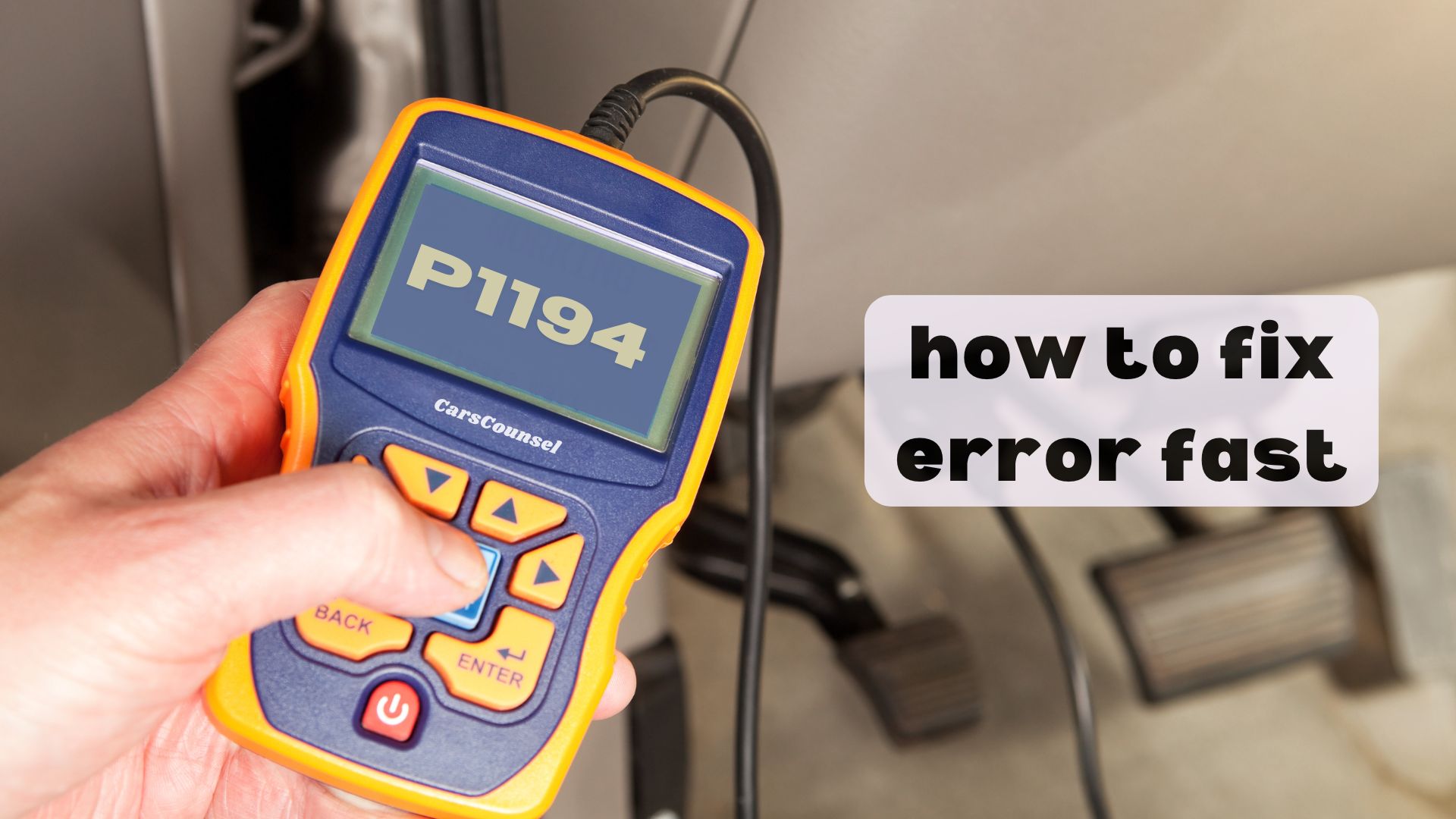
P1194 is a manufacturer-specific powertrain code. On verified applications like Volkswagen, Audi, Hyundai, and Kia, it indicates a fault in the fuel pressure regulator control circuit or fuel pressure sensor circuit.
Because it is manufacturer-specific, you must verify the exact factory definition. The code identifies an electrical condition but does not automatically prove the fuel pressure regulator has failed.
Quick Navigation
Key Takeaways
- P1194 indicates a fault in the fuel pressure regulator control circuit or fuel pressure sensor on specific manufacturer applications.
- Possible causes include damaged wiring, corroded connectors, a failed fuel pressure regulator control valve, or a faulty fuel pressure sensor.
- Symptoms may include an illuminated Check Engine Light, extended cranking times, poor engine performance, or stalling.
- Diagnosis requires verifying the exact factory definition and testing the specific fuel system control circuits with a multimeter.
- Repairs involve fixing the confirmed electrical fault or replacing the confirmed failed fuel system component.
P1194 Code Description and Implications
P1194 is a manufacturer-specific diagnostic trouble code. Its definition is strongly tied to the fuel pressure regulation system on several major brands.
Volkswagen and Audi applications: P1194 indicates a Fuel Pressure Regulator Circuit Open or Short to B+. The engine control module detects an open circuit or a short to voltage in the control circuit for the fuel pressure regulator on the fuel rail.
Hyundai and Kia applications: P1194 points to a Fuel Pressure Regulator Control Valve Circuit High condition. The module detects a higher than expected voltage in the fuel pressure control valve circuit.
When the control module detects this error code, it does not confirm the regulator is mechanically broken. It only confirms an electrical fault exists in the control circuit.
Common Causes of the P1194 Code
Identifying the root cause requires inspecting the fuel pressure regulator control circuit and related power supplies.
- Damaged, shorted, or corroded wiring in the fuel pressure regulator control circuit, often caused by engine heat or chafing.
- Poor electrical connections or pushed-out pins at the fuel pressure regulator harness connector.
- An internal open or short in the fuel pressure regulator control valve solenoid, requiring regulator replacement.
- A failed fuel pressure sensor on applications where P1194 monitors the sensor circuit rather than the regulator valve.
Symptoms Associated With P1194
Because this code monitors the fuel pressure regulation system, drivability symptoms can vary depending on how the system defaults.
The most common symptom is an illuminated Check Engine Light. You may also experience extended cranking times or hard starting if the fuel rail pressure is incorrect during engine start.
If the system defaults to a limp-home high-pressure state, you might notice poor engine performance, hesitation, or stalling. In some cases, the vehicle may run normally but fail an emissions inspection.
Diagnosing the P1194 Trouble Code
Diagnosis must begin by confirming the exact factory definition for your specific make, model, and engine using manufacturer service information.
Relieve the fuel system pressure before inspecting any fuel rail components. Visually inspect the wiring harness and connectors at the fuel pressure regulator or sensor for physical damage, chafing, or fuel contamination.
Use a digital multimeter to measure the resistance across the fuel pressure regulator control valve pins. Compare the reading to the exact manufacturer specifications.
Check for reference voltage and ground at the connector with the key on and engine off to verify the wiring harness integrity.
Repairing the P1194 Issue
If testing confirms damaged wiring or corroded connectors, repair or replace the affected harness sections and clean the connection points.
If the fuel pressure regulator control valve fails the resistance test or shows an internal open circuit, replace the fuel pressure regulator or the complete fuel rail assembly as required by the manufacturer.
After completing the repair, clear the diagnostic trouble codes and monitor the live fuel pressure data with a scan tool to verify the system operates within specifications.
Cost Considerations for P1194 Repairs
Repair costs depend heavily on diagnostic time, component accessibility, and whether the entire fuel rail must be removed.
Replacing a standalone fuel pressure regulator involves standard parts costs and moderate labor. However, if the regulator is integrated into the fuel rail, the entire rail assembly may need replacement, increasing parts costs.
Wiring repairs are generally less expensive but require precise diagnostic time to locate the exact point of failure.
Prevention Strategies for Future Occurrences
Inspect exposed engine wiring harnesses near the fuel rail for signs of heat damage, chafing against engine components, or rodent activity.
Ensure that all electrical connectors in the engine bay remain clean and properly sealed to prevent moisture intrusion and corrosion in the fuel system circuits.
Troubleshooting Tips and Best Practices
Do not assume a P1194 code means the in-tank fuel pump is failing. This code specifically targets the pressure regulator or sensor circuit on the engine’s fuel rail, not the low-pressure supply pump.
Always relieve the high pressure in the fuel system before disconnecting any fuel lines or electrical connectors on the fuel rail to prevent injury or fire hazards.
Check for related fuel system codes that might indicate a broader issue with the high-pressure fuel pump or fuel volume control valve.
More OBD-II Codes
| P1193 | P1192 | P1191 | P1190 |
| P1189 | P1188 | P1195 | P1196 |
| P1197 | P1198 | P1199 | P1201 |
| P1202 | P1203 | P1204 | P1205 |
| P1206 | P1227 | P1289 | P1290 |
| P1295 | P1296 | P1297 | P1298 |
Frequently Asked Questions
Is P1194 a generic OBD-II code?
No. P1194 is a manufacturer-specific code. While it indicates a Fuel Pressure Regulator or Sensor circuit fault on many applications, the generic equivalents for fuel pressure issues fall under the P0087-P0098 or P0190-P0193 ranges.
Can I drive with a P1194 code?
It depends on the application. If the fuel pressure defaults to a safe limp-home mode, you may be able to drive to a repair shop. However, hard starting or stalling can make driving unsafe. Prompt diagnosis is recommended.
Will a P1194 code affect my fuel economy?
Yes. If the fuel pressure regulator cannot properly adjust the fuel rail pressure, the engine may run excessively rich or lean, leading to decreased fuel efficiency and increased emissions.
Does P1194 mean my fuel injectors are bad?
No. P1194 specifically targets the fuel pressure regulator control circuit or the fuel pressure sensor. It does not indicate a mechanical or electrical failure of the individual fuel injectors.
Can a bad battery cause P1194?
Low system voltage can cause electronic modules to behave erratically and set false circuit codes. Always verify the vehicle battery and alternator are healthy before condemning the fuel pressure regulator circuit.
What Should You Do About the P1194 Code?
Confirm the exact factory definition for your vehicle, then follow the applicable manufacturer diagnostic procedure. Inspect the relevant system and components for electrical faults, and repair or replace the confirmed failed parts to restore proper operation.

